How to brush your dog's teeth
Researched by Abu Bakar Saadat7 min read
Last updated: 15 November 2026References
On this page 10 sections
In short
Use a dog toothbrush or finger brush and dog toothpaste, never human toothpaste. Build up over several days: taste, lip lift, then the brush. Brush the outer surfaces at the gumline with light strokes, ideally every day. Brown tartar needs a vet.
At a glance
- You need
- Dog toothbrush or finger brush, dog toothpaste, treats
- How often
- Daily is best (PDSA, AVMA); a few times a week still helps (SF SPCA)
- Never
- Human toothpaste or baking soda (VCA)
- See a vet if
- Brown tartar, red swollen gums, loose teeth, pawing at the mouth
- Advice from
- VCA, PDSA, AVMA, SF SPCA, VOHC, ASPCA and Texas A&M vet hospital, read 28 October 2026
- Checked
- November 2026
It can be discouraging when your dog won't let you near it with a toothbrush, wriggling, clamping its mouth shut or walking off. You're not alone in that. As long as you go slowly and give plenty of treats along the way, you can build a nice, calm routine for you both.
The PDSA describes plaque as a sticky layer of saliva, food and bacteria that hardens into brown tartar and can lead to gum disease and tooth loss. The AVMA, quoting the American Veterinary Dental College, says most dogs show some sign of gum disease by the age of three, and the Veterinary Oral Health Council calls brushing the best daily way to keep a pet's teeth clean. The plan below goes gently because your dog should never learn to dread the brush.
Where should you start?
A puppy
VCA says to start as soon as it comes home, with a finger brush or gauze. Keep the sessions short and happy.
An adult dog that's never been brushed
VCA says it's never too late. Begin at the first stage below, even if your dog seems relaxed.
Brown tartar
See the vet first, because the PDSA says brushing alone is unlikely to clean off tartar.
Your dog growls or snaps when you touch its mouth
Stop and ask your vet. VCA says your veterinary health care team can help with your technique.
How to brush your dog's teeth
Let your dog lick a little toothpaste off your finger.
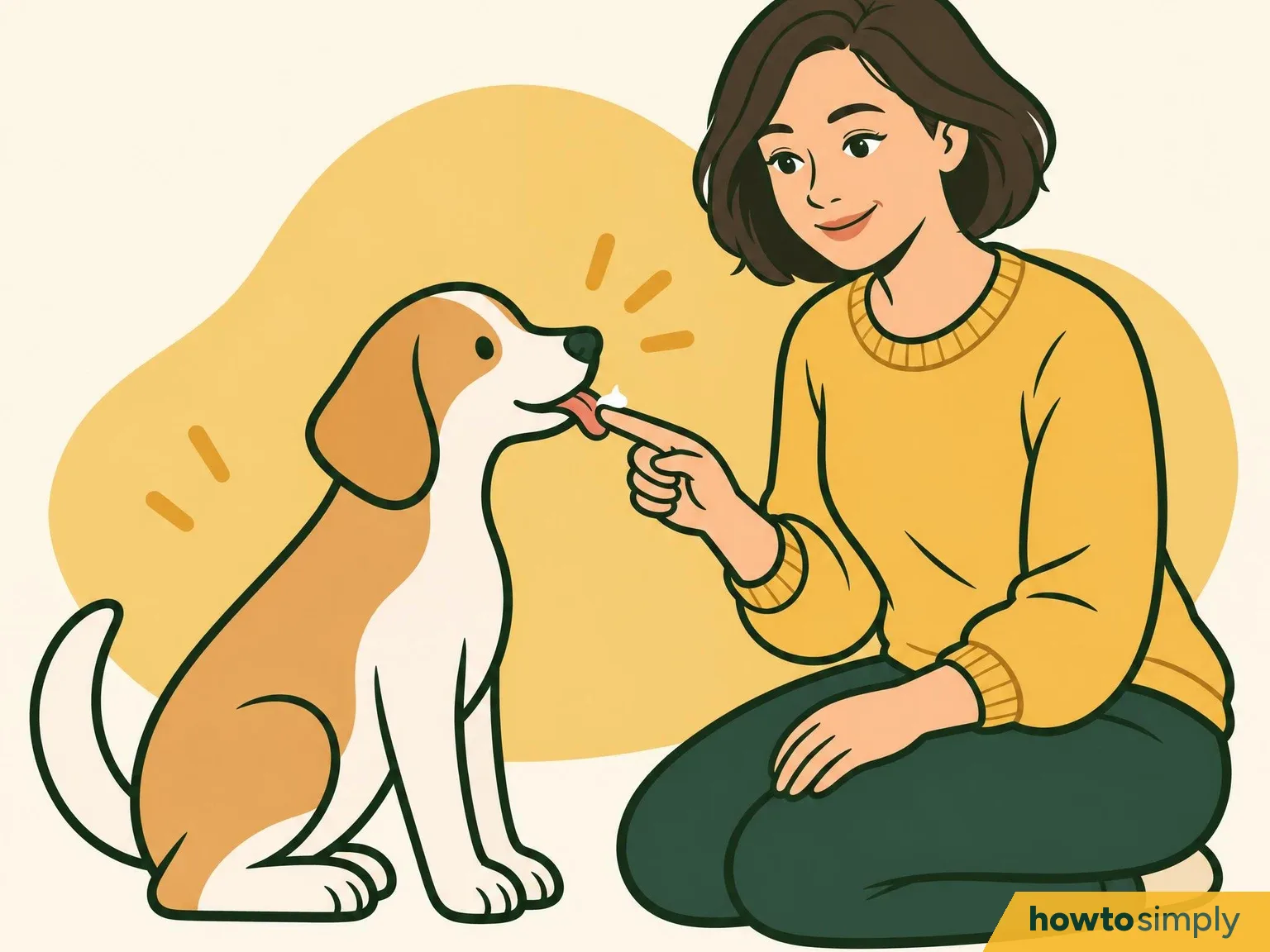
Illustration This first stage is only about taste: let your dog sniff and lick the paste (VCA, SF SPCA). If your dog isn't keen, Texas A&M's vet hospital suggests starting with a little beef or chicken broth instead (we'd pick a low-salt one).
You should see: your dog licking eagerly and coming back for more.
Lift the lip for short periods and rub your finger along the gums.
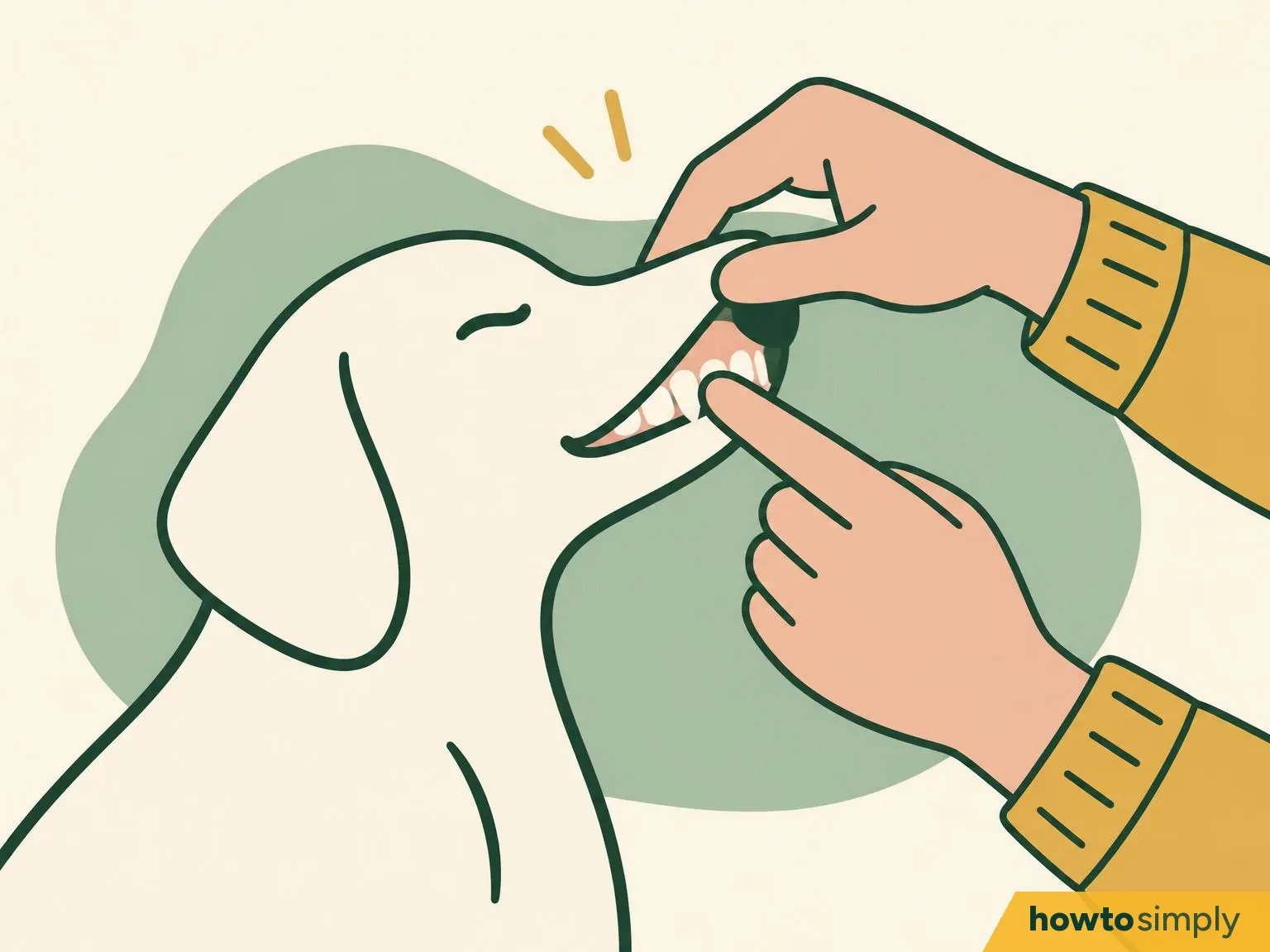
Illustration VCA suggests practising lifting the lips for short periods over several days. Then rub a little paste onto the gums and teeth with your finger (SF SPCA). Treat after each go. Don't be put off if it feels awkward for both of you at first; that is how everyone starts.
You should see: your dog staying still while you lift the lip on both sides, without turning its head away.
Let your dog sniff and lick the brush with paste on it.
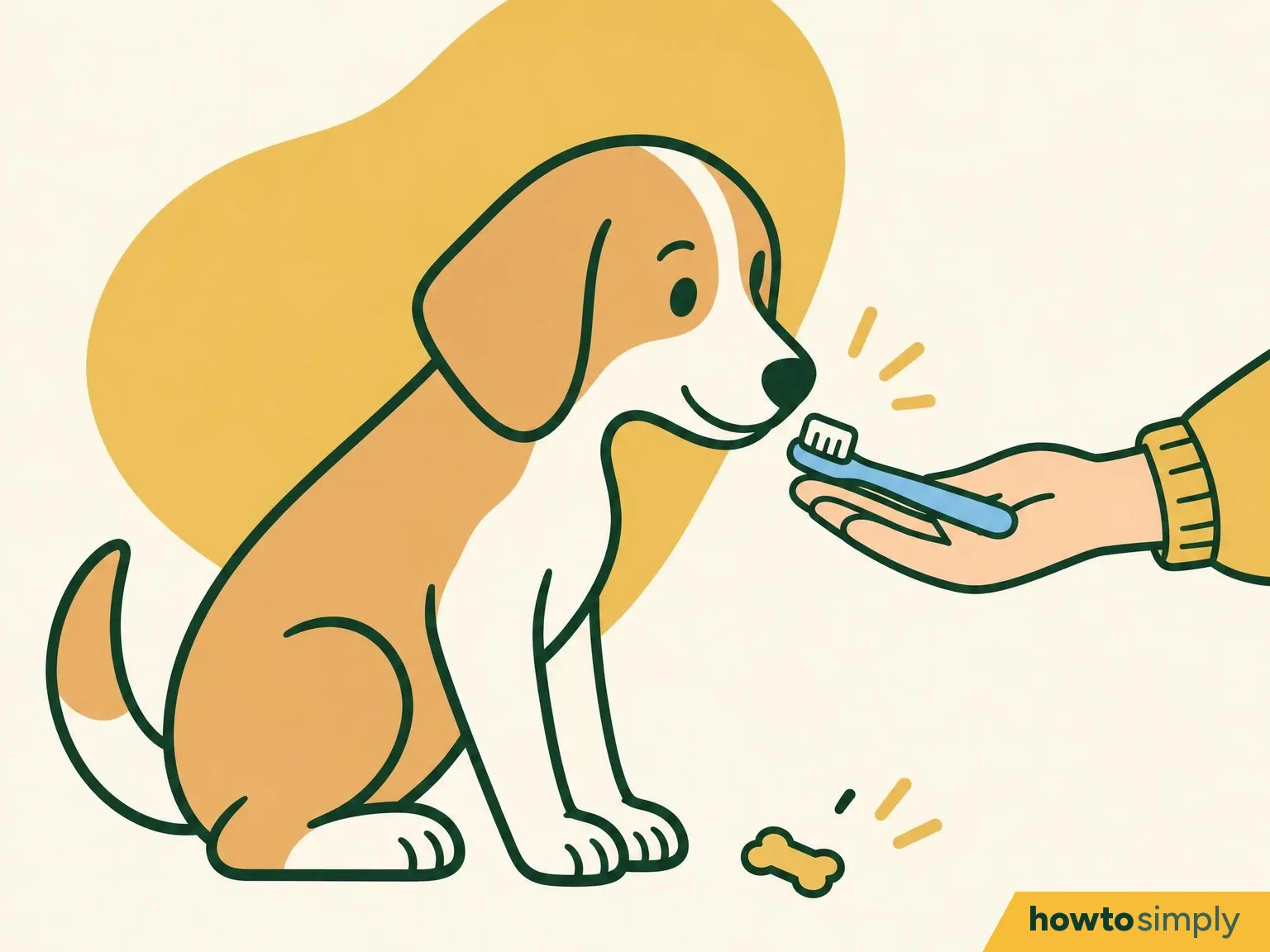
Illustration Introduce the brush slowly and pair each stage with treats and praise (SF SPCA). Let your dog sniff and lick the toothbrush (VCA).
You should see: a relaxed dog that treats the brush like a treat dispenser.
Careful: press lightly. If the bristles flatten, you're pressing too hard (SF SPCA).
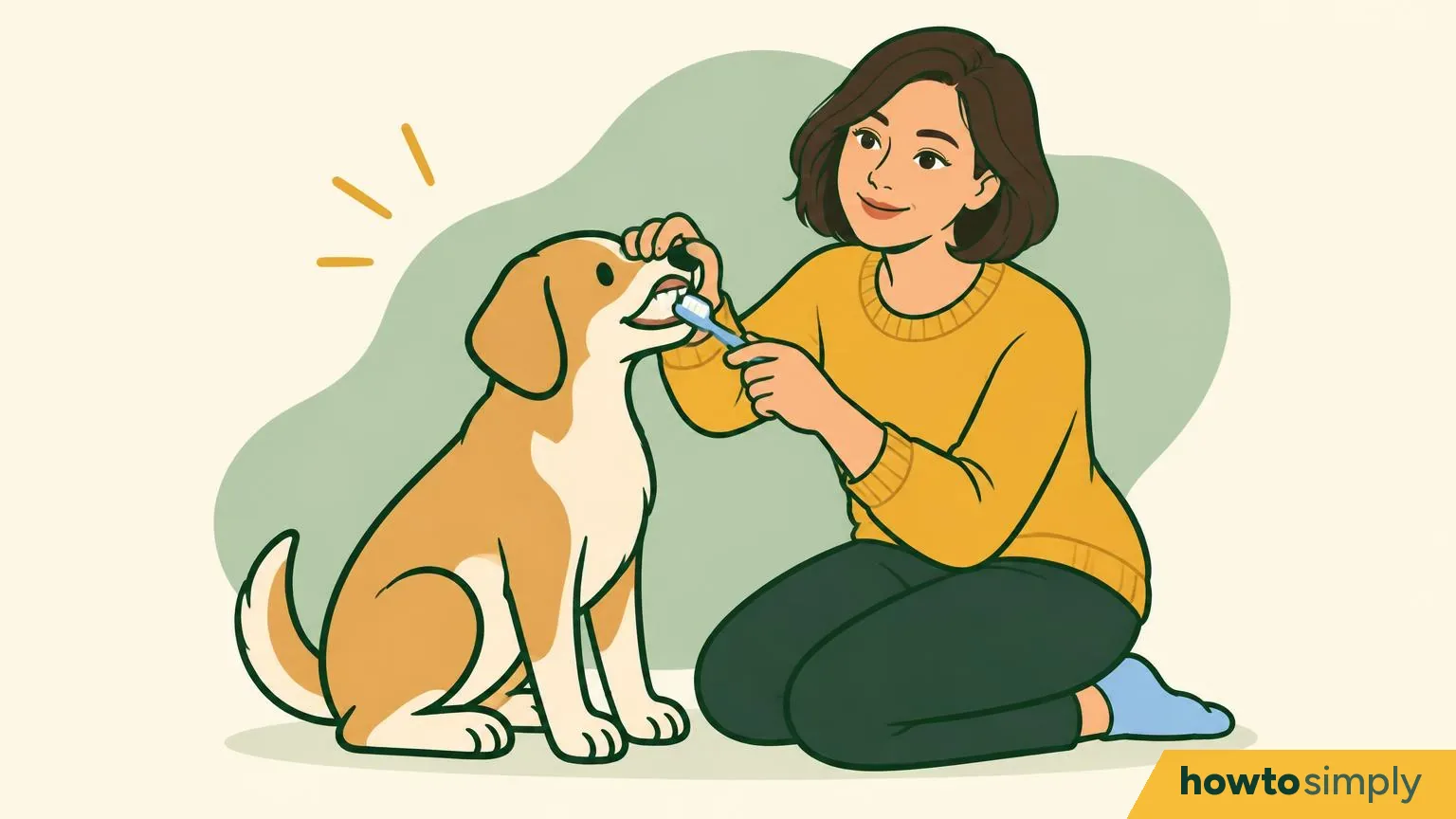
Brush the outside of the teeth where they meet the gum, with small, gentle strokes.
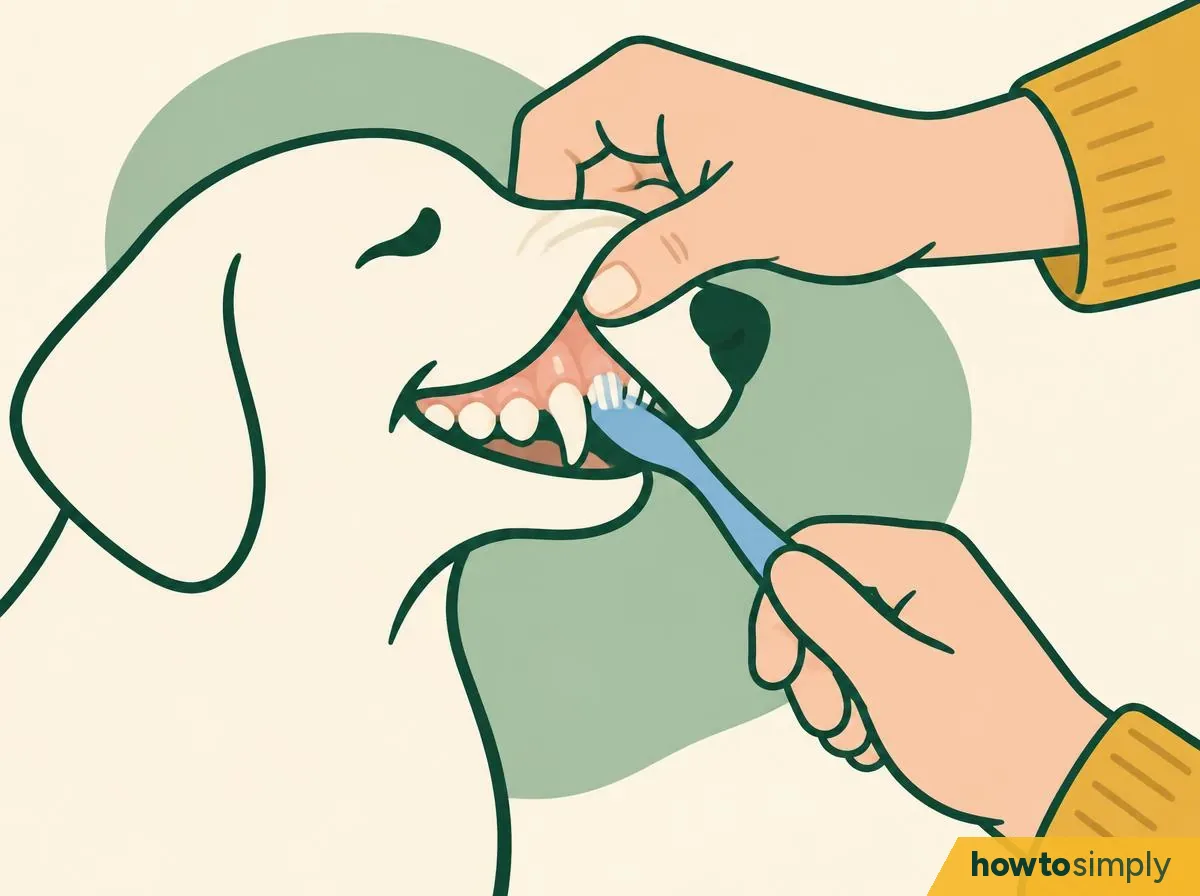
Illustration: bristles angled towards the gumline Lift the lip so you can see where the brush goes. SF SPCA suggests holding the brush at about 45 degrees towards the gums and using light back-and-forth strokes; Texas A&M's vet hospital describes small circles. Either way, work along the outer surfaces (VCA).
Don't worry about the inside of the teeth: VCA says most pets won't let you brush there.
You should see: the bristles reaching the line where tooth meets gum, not just the tips of the teeth.
Reward your dog at the end.
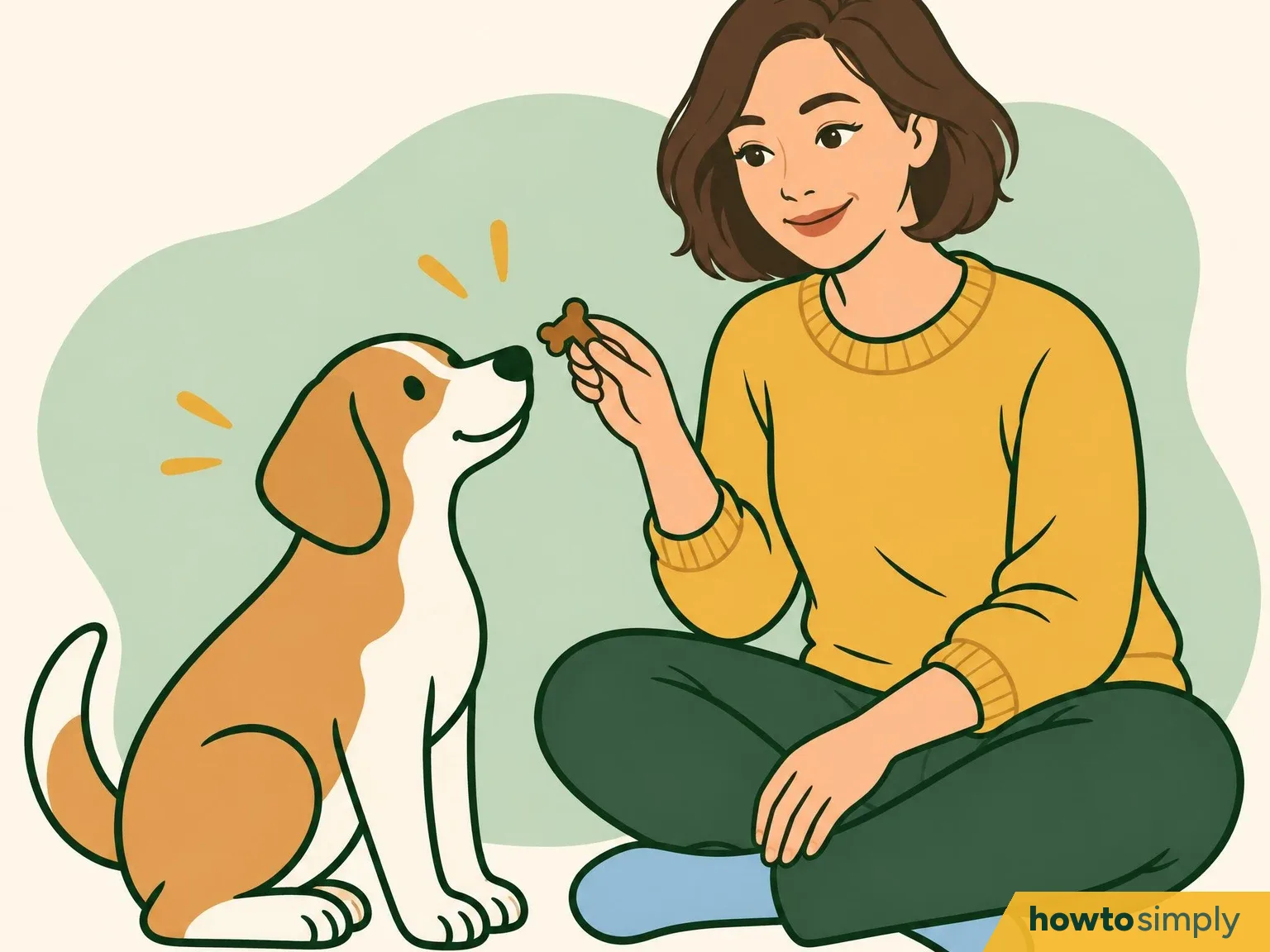
Illustration If your dog gets agitated, stop, even if you've done only a few teeth, and try again later (VCA). Short sessions are fine, especially at first (SF SPCA). End with praise, a treat or a game (VCA).
You should see: a dog that is still happy when you finish. That is what makes tomorrow's session easier.
Brush at the same time every day.
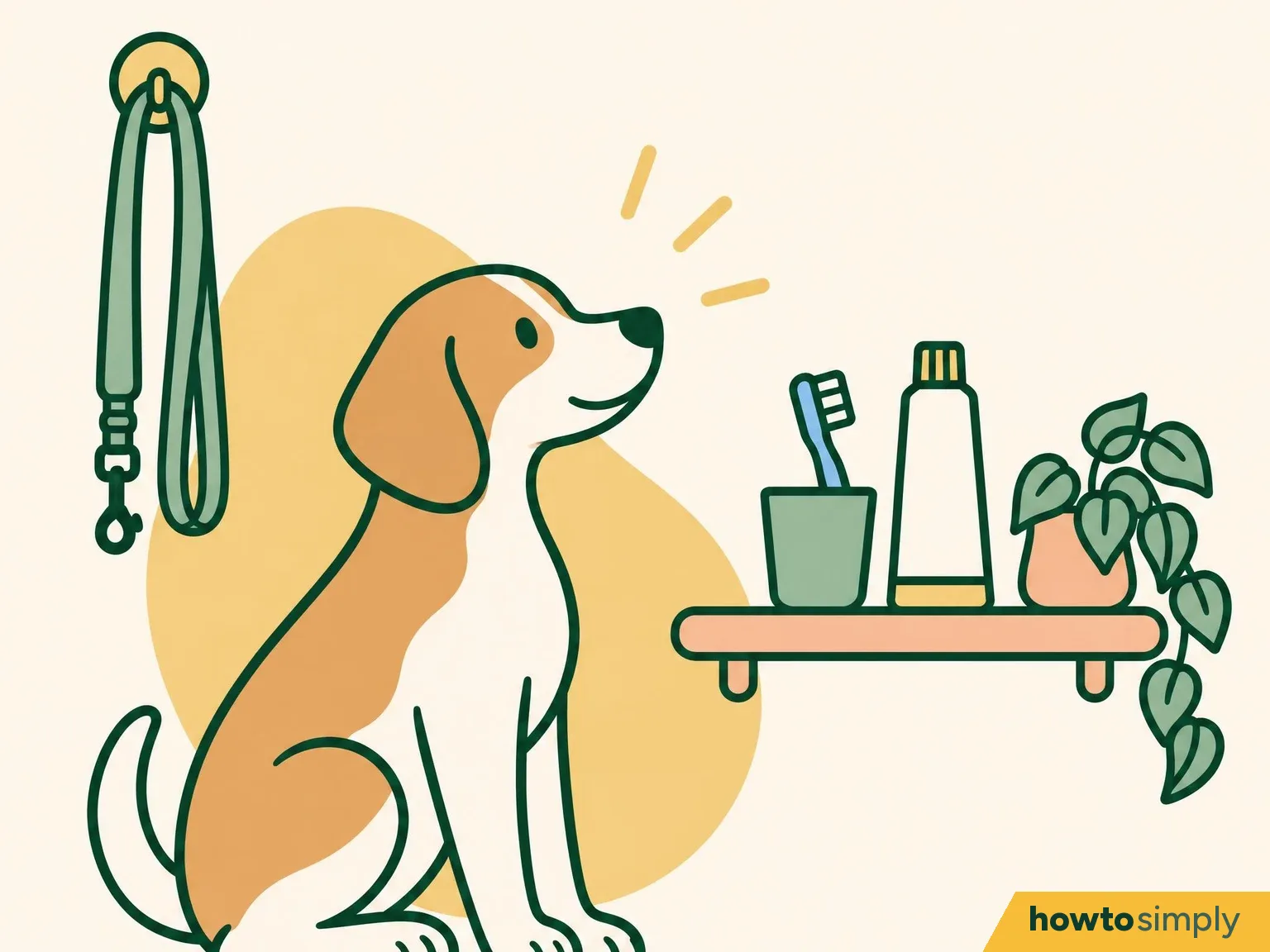
Illustration PDSA and the AVMA both recommend daily brushing; occasional brushing won't shift a build-up (PDSA). If daily isn't realistic, SF SPCA says a few times a week can still make a meaningful difference, and consistency matters more than perfection. The AVMA notes a study in which only 2% of dog owners managed daily brushing, so a routine you can keep is the goal.
You should see: over time, your dog getting used to having its teeth brushed (PDSA).
Training plan at a glance
| Stage | What you do | Move on when |
|---|---|---|
| 1. Taste | Paste (or broth) on your finger | Your dog licks it eagerly |
| 2. Lip lift | Lift the lip, rub the gums with your finger | Your dog stays still on both sides |
| 3. Brush | Sniff and lick the brush | Your dog is relaxed with the brush near its mouth |
| 4. A few teeth | Brush a few outer surfaces, then stop | Your dog is still calm at the end |
| 5. Full mouth | All outer surfaces, both sides | Keep it up daily, or as often as you can |
VCA's advice is to spend several days on the early stages, and if your dog becomes agitated at any stage, to stop and try again later. Stopping isn't failure. It's part of teaching your dog with kindness.
How to tell it's working
- You can brush the outer surfaces of all the teeth, on both sides, without a struggle.
- There's no brown, hard layer building up near the gums (PDSA).
- The gums don't look red or swollen at the base of the teeth (Texas A&M vet hospital).
- Your dog has regular check-ups at the vet, and the SF SPCA and Texas A&M both recommend a professional clean about once a year.
If something goes wrong
A wobbly session now and then is completely normal, so please don't be hard on yourself or your dog. Find what happened below and carry on from there.
| What happens | What it means | What to do |
|---|---|---|
| Your dog pulls away when you lift the lip | Take it slowly (VCA) | Stop and try again later (VCA) |
| Your dog chews the brush | The brush feels like a toy | Use a finger brush or gauze for a while (VCA) |
| You can't reach the inside of the teeth | Normal: most pets won't allow it (VCA) | Concentrate on the outer surfaces |
| A brown, hard layer won't brush off | That's tartar (PDSA) | Ask your vet; a toothbrush on its own probably won't be enough (PDSA) |
| The gums look red or swollen | A sign of gum disease (Texas A&M vet hospital) | Stop brushing that area and see your vet |
Questions readers ask
Is it too late to start brushing an older dog's teeth?
No. VCA says it's never too late to start with an adult dog. If there is already tartar, ask your vet first: brushing alone is unlikely to be enough, and your vet can tell you if the teeth need further treatment (PDSA).
Do I have to use toothpaste?
Not at first. Texas A&M's vet hospital suggests starting with no cleaning product, just a little beef or chicken broth on gauze or a finger brush (we'd pick a low-salt one), and moving to a pet toothpaste once your dog accepts brushing. Dog toothpaste is safe to swallow (SF SPCA).
Why does a vet clean need an anaesthetic?
The AVMA says most dental disease is below the gumline, where you can't see it. Anaesthesia lets the vet clean and check there, take X-rays, and spares your dog stress and pain.
Are dental chews as good as brushing?
No. They can help reduce plaque and tartar, but PDSA points out that dogs chew mostly with their back teeth, so chews do little for the front ones. Look for the VOHC seal, and cut back your dog's food a little to make up for the treats (PDSA).
Sources and method
- Researched by
- Abu Bakar Saadat
- Tested by our team
- No. We have no record of anyone on our team trying these steps, so treat them as researched instructions from the sources below.
- Pictures
- 8 illustrations drawn for this article: drawings, not photos.
- Sources
- 7 named sources, linked below.
- What this page adds
- A close-up of the brush angled at a dog's gumline, a five-stage training plan table showing when to move on, and a table for when your dog pulls away or chews the brush.
What to do next
Everyday care for your dog Step 1 of 6
Did this solve the problem?
Where did you get stuck?
What did you think?
Reaction counts are loading.
Sources
We use primary, official and specialist sources appropriate to the topic.
- VCA Animal Hospitals: How to brush your pet's teeth
- PDSA: Vet Q&A: How do I remove plaque from my dog's teeth? (8 March 2021)
- AVMA: "Doggie breath" could be a sign of serious disease (1 February 2023)
- San Francisco SPCA: How to brush your dog's teeth (3 April 2026)
- Veterinary Oral Health Council: About the VOHC seal
- ASPCA: Updated safety warning on xylitol (23 May 2019)
- Texas A&M Veterinary Medical Teaching Hospital: Periodontal disease (archived copy of 18 April 2026; page since removed)