How to introduce a new cat to your home
Researched by Abu Bakar Saadat7 min read
Last updated: 15 November 2026References

On this page 9 sections
In short
Start your new cat in one quiet room with food, water, litter tray, bed and a hiding place. Let it come to you. Open up the house room by room, swap scents with other pets before they meet, and keep it indoors for at least 3 to 4 weeks.
At a glance
- First
- One quiet room with everything the cat needs
- Other cats
- Scent swap, then slow, supervised first meetings
- Litter trays
- One per cat, plus one extra (SPCA NZ)
- Outdoors
- Adults after at least 3-4 weeks; desexed first
- Advice from
- Feline Veterinary Medical Association, SPCA New Zealand and Cats Protection, read 28 October 2026
- Checked
- November 2026
Bringing a new cat home is exciting, but it's natural to wonder whether they'll settle in and get along with your other pets. Letting the cat set the pace is the kindest approach, and every stage is set out for you below.
Moving house is a lot for a cat to take in. The SPCA NZ guide begins with one safe room, then moves on to the rest of the house, then to other pets, always at the cat's speed. If you already have cats, try to be patient: SPCA NZ says it can take a few weeks or even months for the newcomer to settle.
Which steps do you need?
No other pets
Steps 1 to 4, then step 8. After 2 to 3 days in one room, you can start letting your cat explore the rest of the house, a little at a time.
A resident cat
All the steps. Don't move on until every cat is relaxed at the current step.
A dog
All the steps, with the dog on a lead for the first meetings and a high shelf the cat can escape to. Never let the dog chase the cat.
A kitten
As above, plus a warm, low bed. Keep it away from dogs unless you're watching closely.
How to settle your new cat in
Get one room ready just for the new cat.
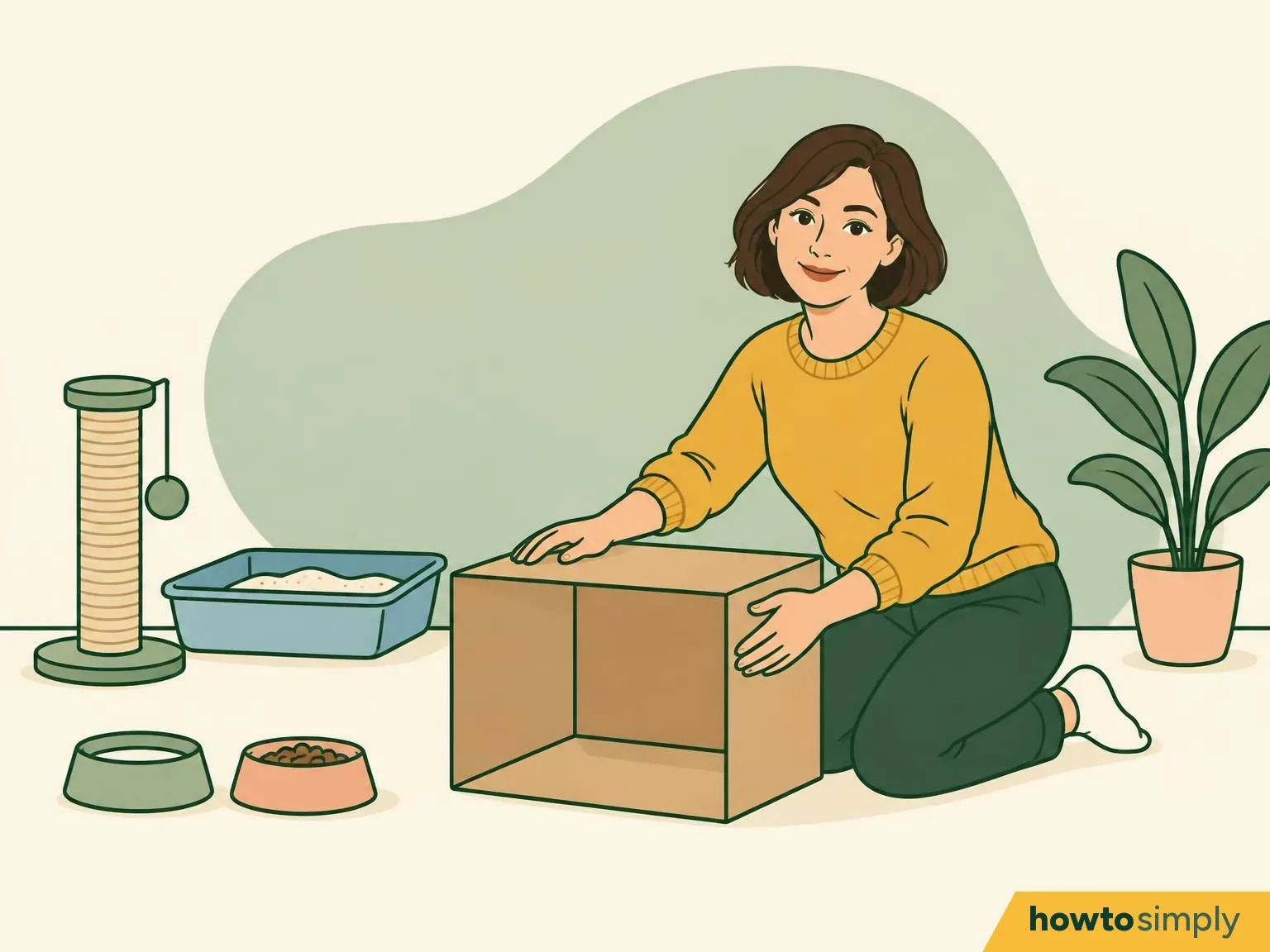
Illustration Pick a quiet, secure room and put everything from the list above in it.
You should see: a room your cat could live in happily for a few days without needing anything else.
Source
SPCA NZ
Carry the cat in its carrier straight to that room, and only then open the carrier door.
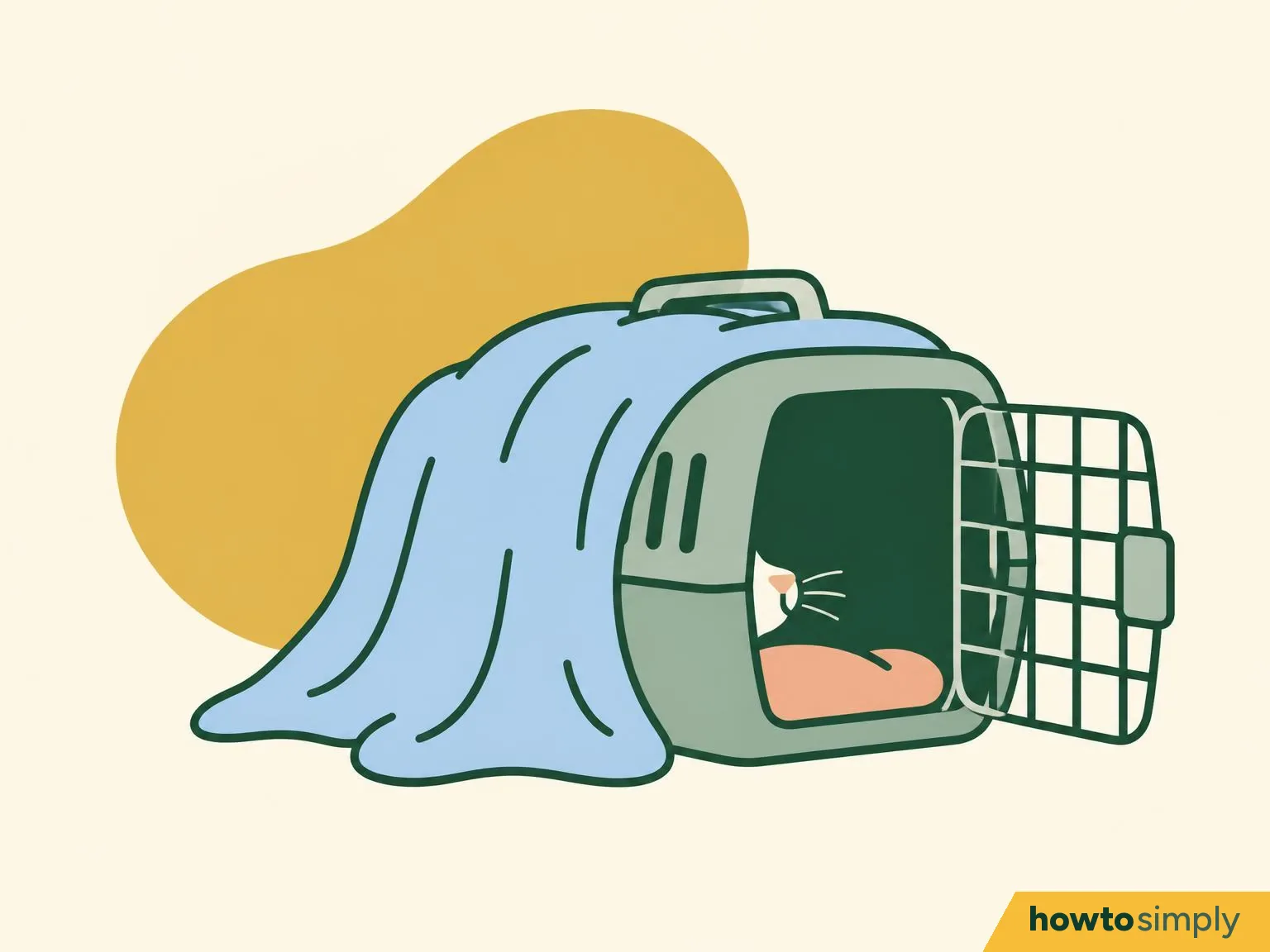
Illustration Bring the cat directly to its room before opening the carrier, and let it come to you when it is ready (SPCA NZ). It may take a while, and that is perfectly fine.
You should see: the cat stepping out in its own time, perhaps after many minutes.
Source
SPCA NZ
Sit nearby, talk gently and let it come to you.
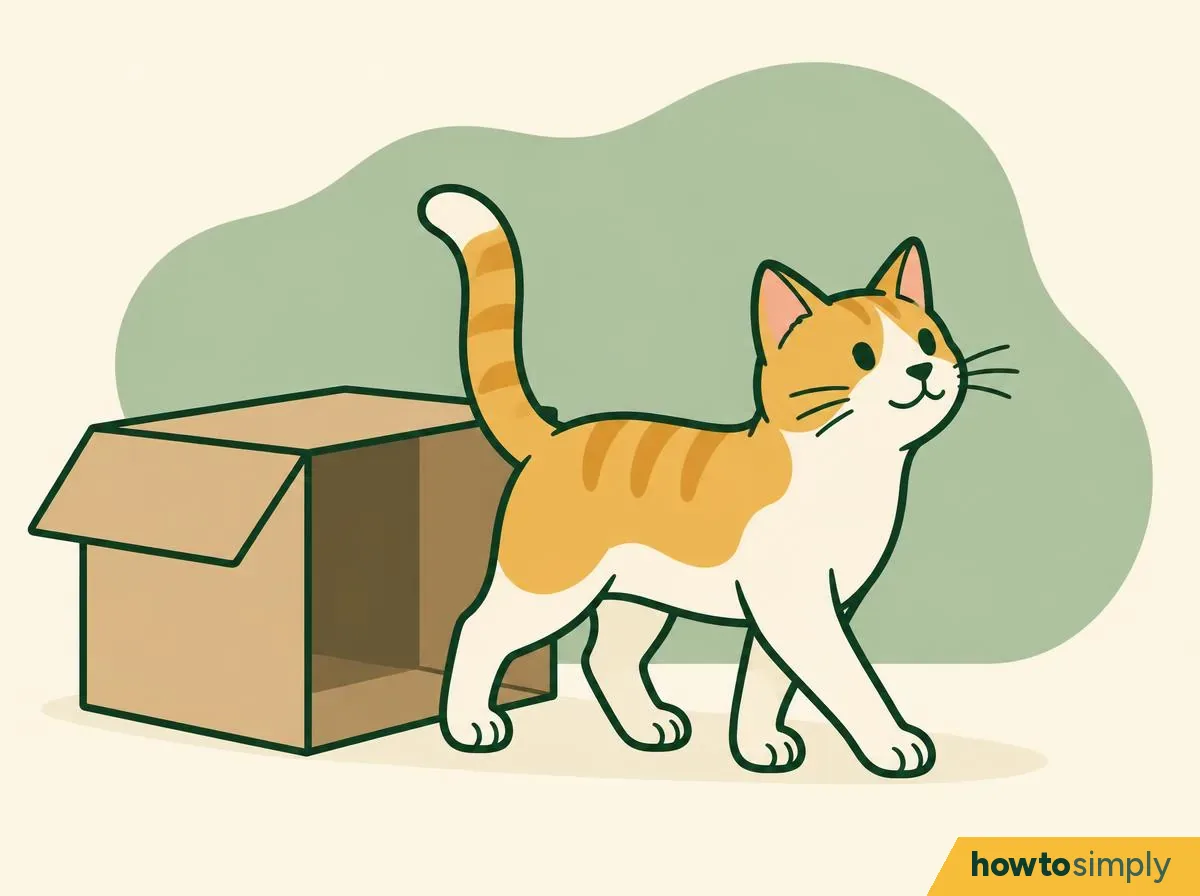
Illustration Cats Protection suggests leaving an adult cat for about an hour, then getting down to its level and calling softly. Hiding for a few days is normal: don't pull the cat out. Sit nearby and talk gently so it can relax (SPCA NZ).
You should see: the cat eating and using the litter tray. Cats Protection says these are good signs.
Source
SPCA NZ, Cats Protection
Open up the rest of the house one room at a time.
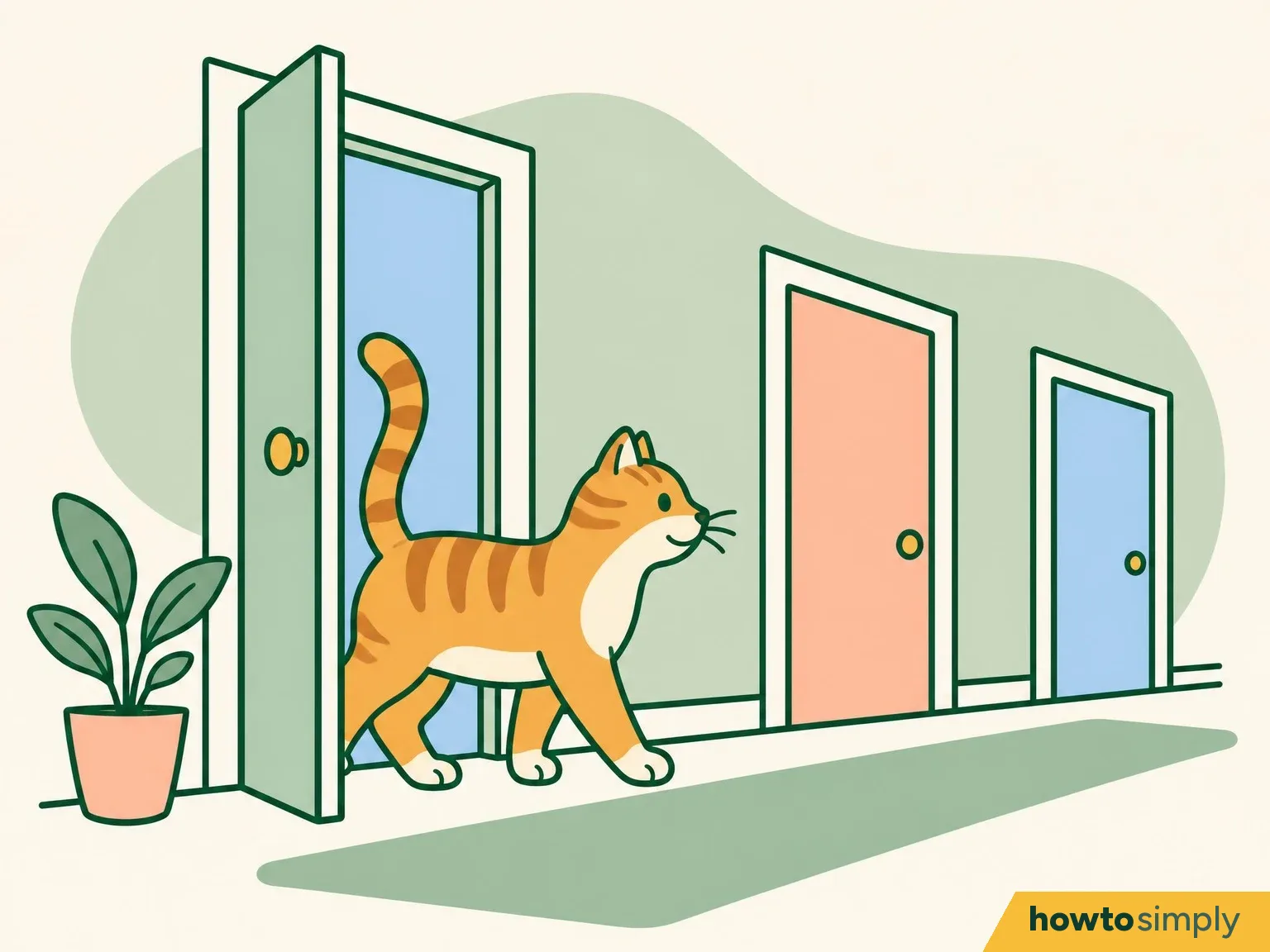
Illustration SPCA NZ suggests the first room for 2 to 3 days. The FelineVMA's test is when the cat explores its room confidently. Keep outside doors and windows closed. With other cats in the house, confine them to the new cat's room while the new cat explores the house on its own (SPCA NZ).
You should see: a cat walking about with its tail up, not slinking along the walls.
Source
SPCA NZ, FelineVMA
Swap smells with your other pets before they meet.
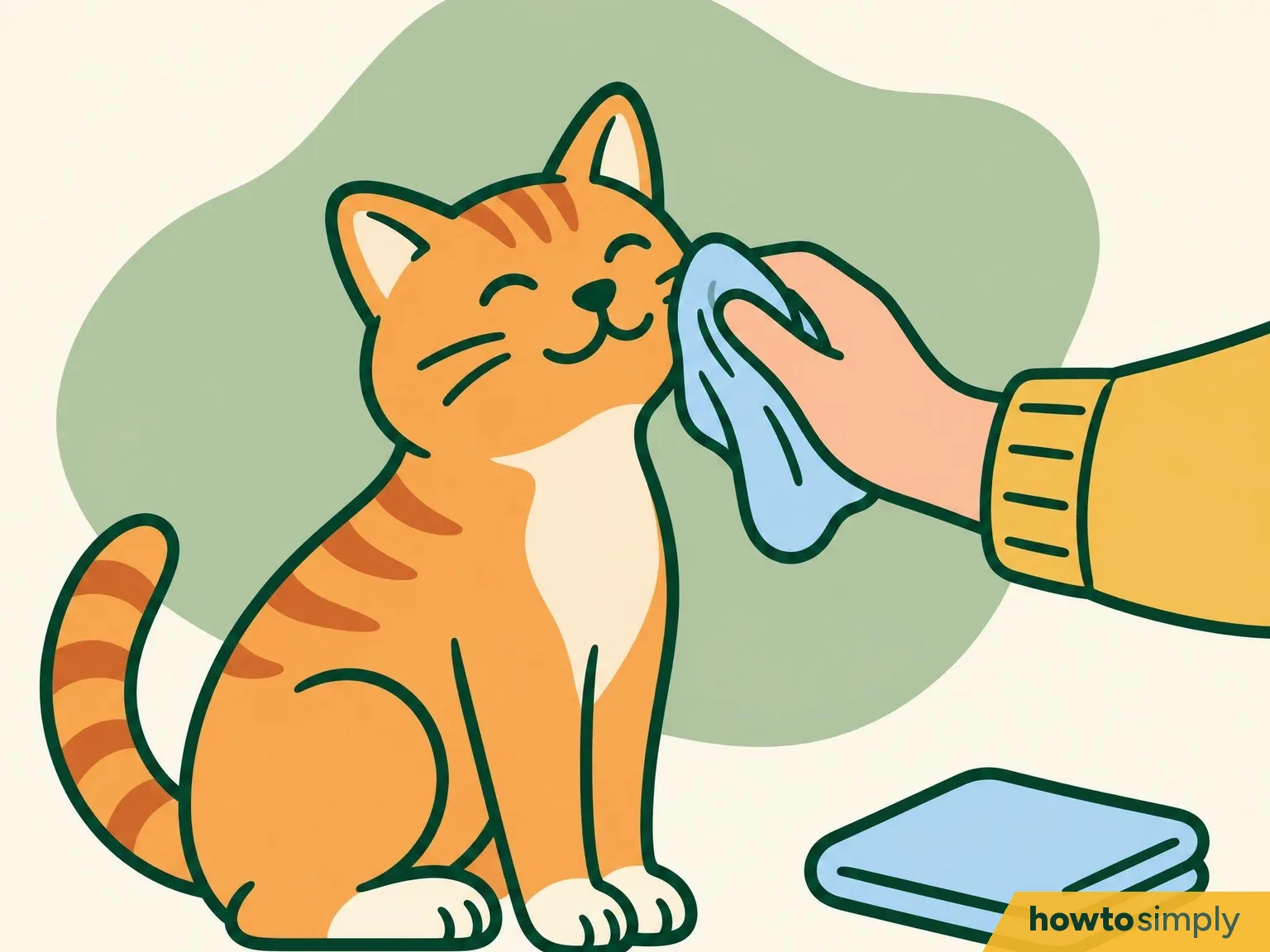
Illustration It can feel as if nothing much is happening at this stage, but please stick with it. Swap the sleeping blankets or beds between the animals so they get used to each other's scents (SPCA NZ).
You should see: each cat sniffing the other's cloth calmly, without hissing or avoiding it.
Source
FelineVMA, Cats Protection
Feed them on either side of a door before they meet face to face.
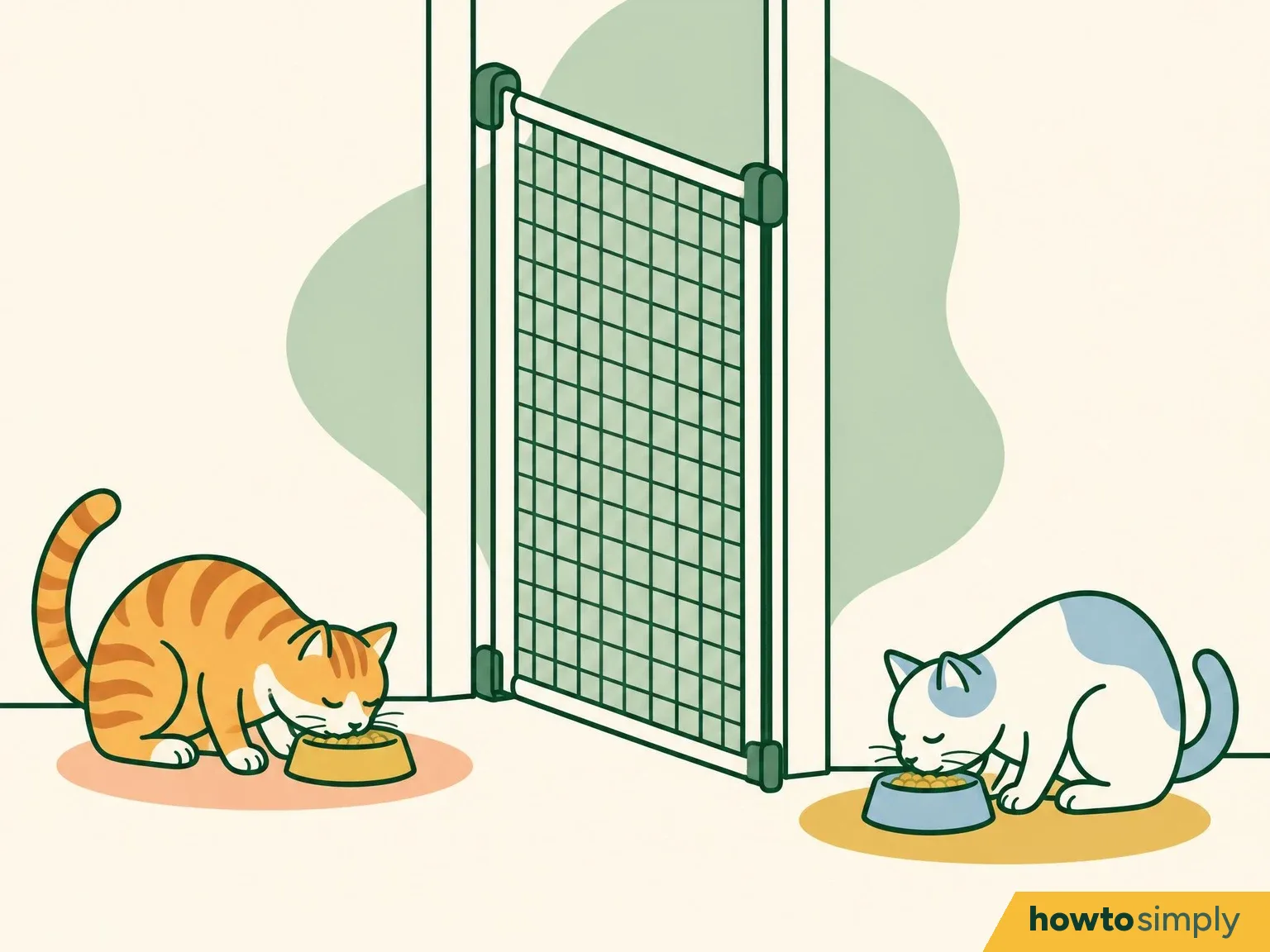
Illustration Feed them with a closed door between them, then let them see each other through glass or a door opened just a crack. Keep play sessions on either side of the door to about 5 to 20 minutes.
You should see: both animals eating calmly. A bit of hissing can be expected (SPCA NZ). If either one gets scared or aggressive, part them and try again on another day (SPCA NZ).
Source
SPCA NZ
Careful: don't scoop up a cat or scold it while things are tense. Speak gently and stay calm instead; SPCA NZ says this eases tension. Never leave a dog and cat alone together until you're sure they're comfortable.
Hold the first face-to-face meetings briefly, with you watching.
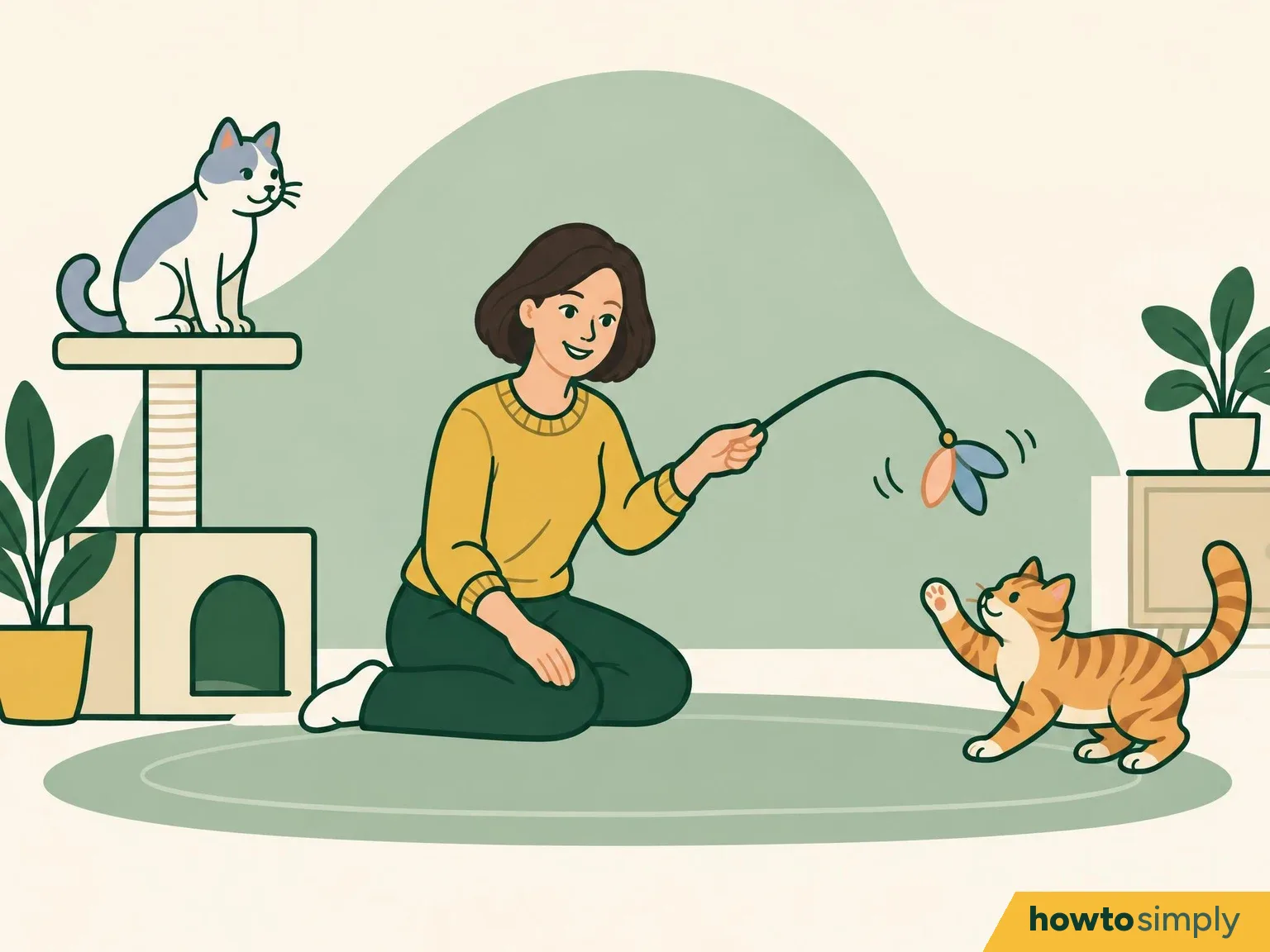
Illustration Always watch first meetings and separate the animals straight away if it doesn't go well (SPCA NZ). Dogs should be on a lead, with calm behaviour rewarded. Don't worry if the first meeting is over quickly; brief is exactly what you want here.
You should see: both animals being around each other calmly, without fear or aggression (SPCA NZ).
Source
SPCA NZ
Keep your cat indoors for at least 3 to 4 weeks before letting it out.
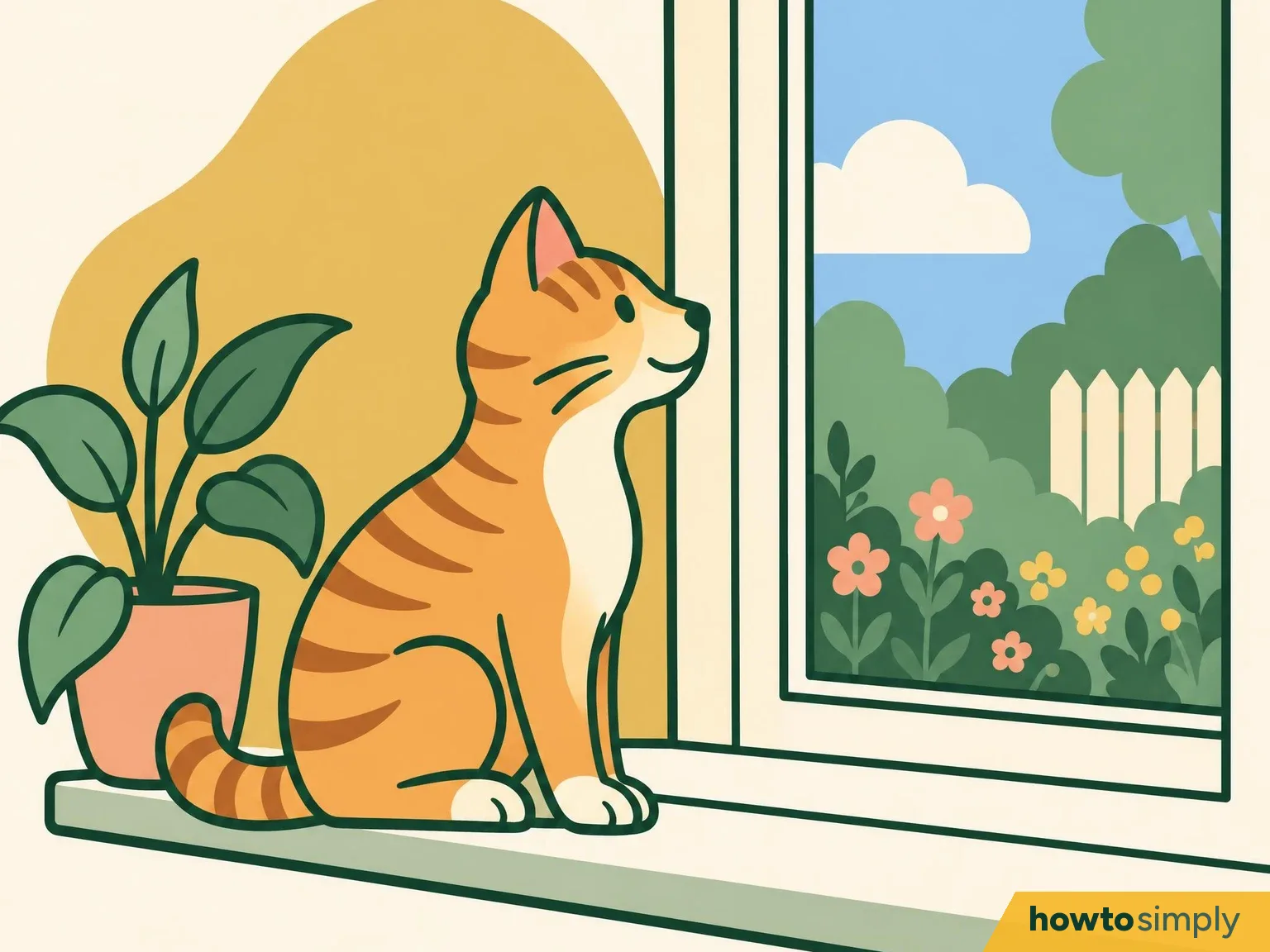
Illustration Cats Protection says settling in usually takes three to four weeks, and that the cat must be neutered, vaccinated and microchipped before it goes out. SPCA NZ says longer for timid cats, and at least 6 to 8 weeks for kittens, with supervision outside at first.
You should see: a cat that eats, sleeps and plays normally around the house before its first trip outside.
How many of everything?
This is a detail that's easy to overlook. In a home with several cats, SPCA NZ says giving each cat enough space and resources is the key to keeping the peace.
| Resource | How many | Where |
|---|---|---|
| Litter trays | One per cat, plus one (SPCA NZ) | Private, in separate locations (SPCA NZ) |
| Food and water bowls | One per cat (SPCA NZ) | Water away from the food dish (SPCA NZ) |
| Beds, hiding places, perches, scratching posts | One per cat (SPCA NZ) | Include high places such as cat trees (SPCA NZ) |
How to tell your cat has settled
Each cat settles in its own time, so try not to compare yours with anyone else's. Here are the signs to watch for:
- It eats normally and uses the litter tray (Cats Protection).
- It comes out to explore instead of hiding for most of the day.
- With other pets: they put up with each other's company without fear or aggression (SPCA NZ).
- The cats can walk past each other or share a room without staring or hunching up (Cats Protection).
Signs to slow down
Stepping back a stage isn't failing; it's part of doing this properly. If you notice any of these, slow things down for a while.
| What happens | What it means | What to do |
|---|---|---|
| A cat avoids or hisses at the other's scent cloth | It isn't ready for the next step (FelineVMA) | Keep swapping scents for a few more days |
| Hissing or pawing at the shared door | Too close, too soon (FelineVMA) | Stop, add distance, and add a second barrier (FelineVMA) |
| Either animal becomes fearful or aggressive | Moving too fast (SPCA NZ) | Separate them and start again another day (SPCA NZ) |
| Weeing or pooing outside the tray | Most often caused by stress (SPCA NZ) | Never punish accidents (SPCA NZ) |
| A timid cat won't come out to eat | A concern, says Cats Protection | Put food near its hiding place and speak to your vet |
Questions readers ask
How long does it take for a new cat to get on with my other cat?
SPCA New Zealand says you could be looking at a few weeks, or even a few months. Move to the next step only when every cat is calm with the current one (SPCA NZ).
Should I use a pheromone diffuser?
It can help. The FelineVMA suggests plugging one feline pheromone diffuser into the main living area and one into the cat's room 24 to 48 hours before the new cat arrives.
Where should the litter tray go?
Away from food, water and the bed. SPCA New Zealand suggests a private spot at least 1.5 metres from them.
How do I introduce my new cat to children?
Introduce family members gradually, not all at once, and let the cat decide when it is ready (SPCA NZ). Supervise young children and show them how to stroke gently (SPCA NZ).
Sources and method
- Researched by
- Abu Bakar Saadat
- Tested by our team
- No. We have no record of anyone on our team trying these steps, so treat them as researched instructions from the sources below.
- Pictures
- 11 illustrations drawn for this article: drawings, not photos.
- Sources
- 3 named sources, linked below.
- What this page adds
- A 'how many of everything?' table for trays, bowls and beds, and a 'signs to slow down' table of what tense behaviour means and what to do.
What to do next
Settle in and care for your cat Step 1 of 4
- Houseplants poisonous to cats: how to check yours and what to doCheck your plants before your cat does.
- How to give a cat a pill: a calm, safe technique (with or without help)Without the scratches.
- Is my cat dehydrated? Signs to check and when to call the vetKnow the signs of a cat that is not drinking enough.
Did this solve the problem?
Where did you get stuck?
What did you think?
Reaction counts are loading.
Sources
We use primary, official and specialist sources appropriate to the topic.