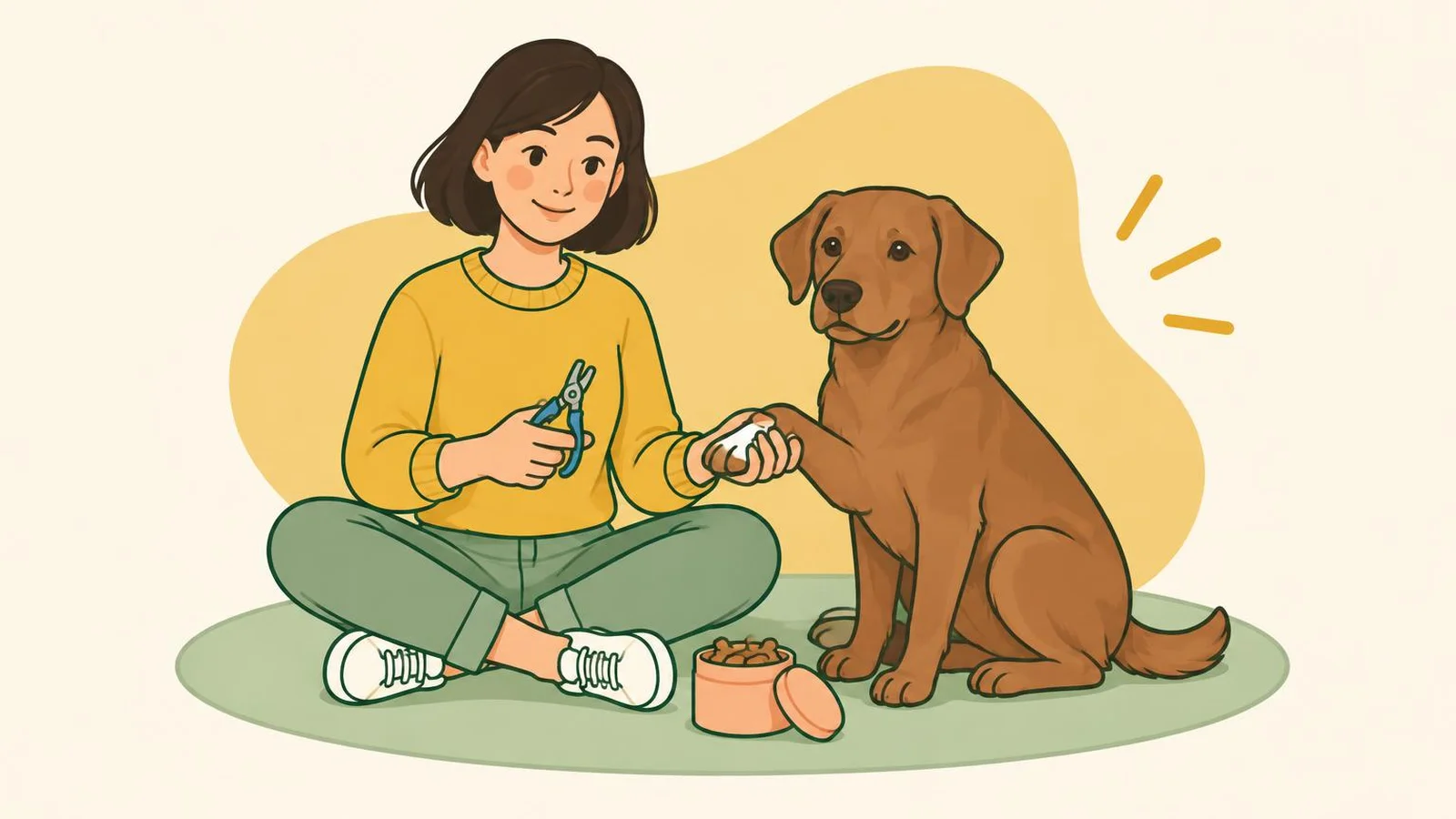
Is my dog too hot? Heatstroke signs and how to cool your dog fast
In short: Heavy panting, red gums, drooling, weakness or collapse in the heat can be heatstroke. Get the dog into shade, soak it with water cooler than the dog (cold is best), fan it, phone the vet, then drive there in a cooled car. Cool first, transport second.
By Abu Bakar SaadatPublished 28 October 20265 min readPublisher: Saadat Rafiq
✓ Reviewed by Dr Ramin Khan, veterinarian (DVM) · 29 October 2026
 Illustration
At a glance
- Early signs
- Heavy panting, reluctance to move, red gums and tongue, thick drool
- Do first
- Shade, then soak with cool or cold water and fan (RVC, RSPCA)
- Don't
- Cover with wet towels, pour water on the head, drive off before cooling
- Then
- Phone the vet and go, in a cooled car
- Advice from
- RSPCA, Royal Veterinary College, British Veterinary Association, read 28 October 2026
- Checked
- October 2026
Heatstroke is an emergency. In UK research, heatstroke cases seen by vets rose about five-fold during heatwave alerts, and one in four affected dogs died (BVA, citing the Royal Veterinary College). Fast cooling saves lives (RVC). Yet in an RVC study of over 800 dogs, only 22% were cooled before they were taken to the vet.
Is my dog too hot? The signs
| Look for | What it may mean | Source |
|---|---|---|
| Heavy panting, reluctance to move | Early sign: stop and cool now | RVC; RSPCA |
| Red gums and tongue, thick sticky drool | Overheating | RSPCA |
| Fast heartbeat (feel just behind the elbow of the front leg) | Overheating | RSPCA |
| Dry nose, sunken eyes, tiredness, less wee | Dehydration | RSPCA |
| Shaking, weakness, wobbliness, vomiting | Serious: call the vet now | RSPCA |
| Collapse, confusion, seizures, bloody diarrhoea | Life-threatening | RSPCA; RVC |
Which way to cool your dog?
Awake, and otherwise healthy
Put it in water: a paddling pool, a stream or a cool bath (RSPCA). Cold-water immersion was the most effective method in the RVC study, with no harmful effects seen.
Unconscious, elderly or unwell
Don't put it in water. Pour or spray water over it and keep air moving with a fan (RVC). The RSPCA suggests room-temperature water for these dogs.
Use whatever water you can get fastest. Any water cooler than the dog helps, and cold is best (RVC). You don't need ice.
How to cool a dog with heatstroke
Stop all exercise and get your dog into the shade.
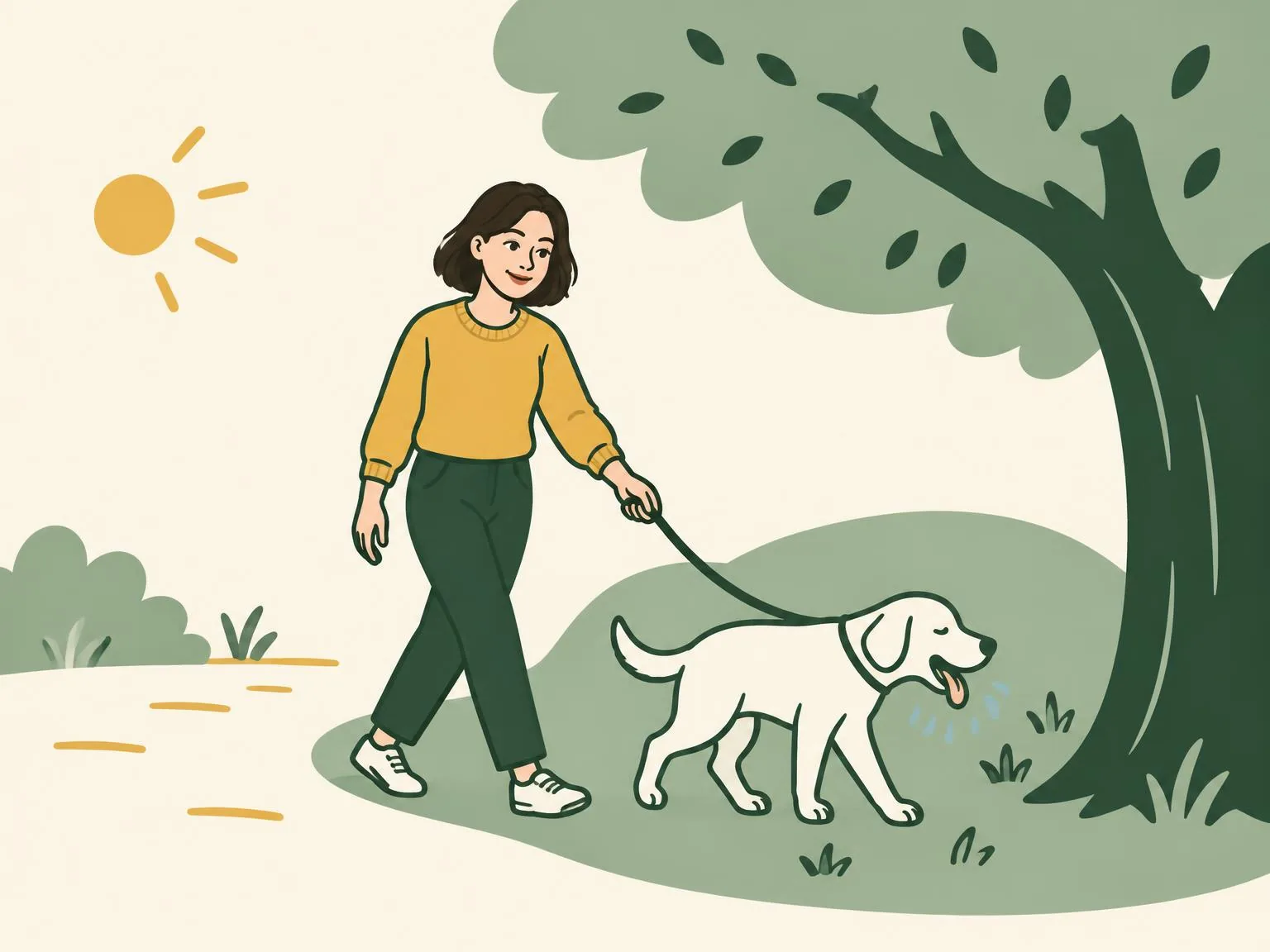
Illustration Get it out of the sun, or out of the hot car or building (RSPCA). Carry a small dog if you can. Stopping exercise alone may not be enough once signs appear (BVA).
You should see: your dog lying or standing still in full shade.
Ask someone to phone the nearest vet while you start cooling.
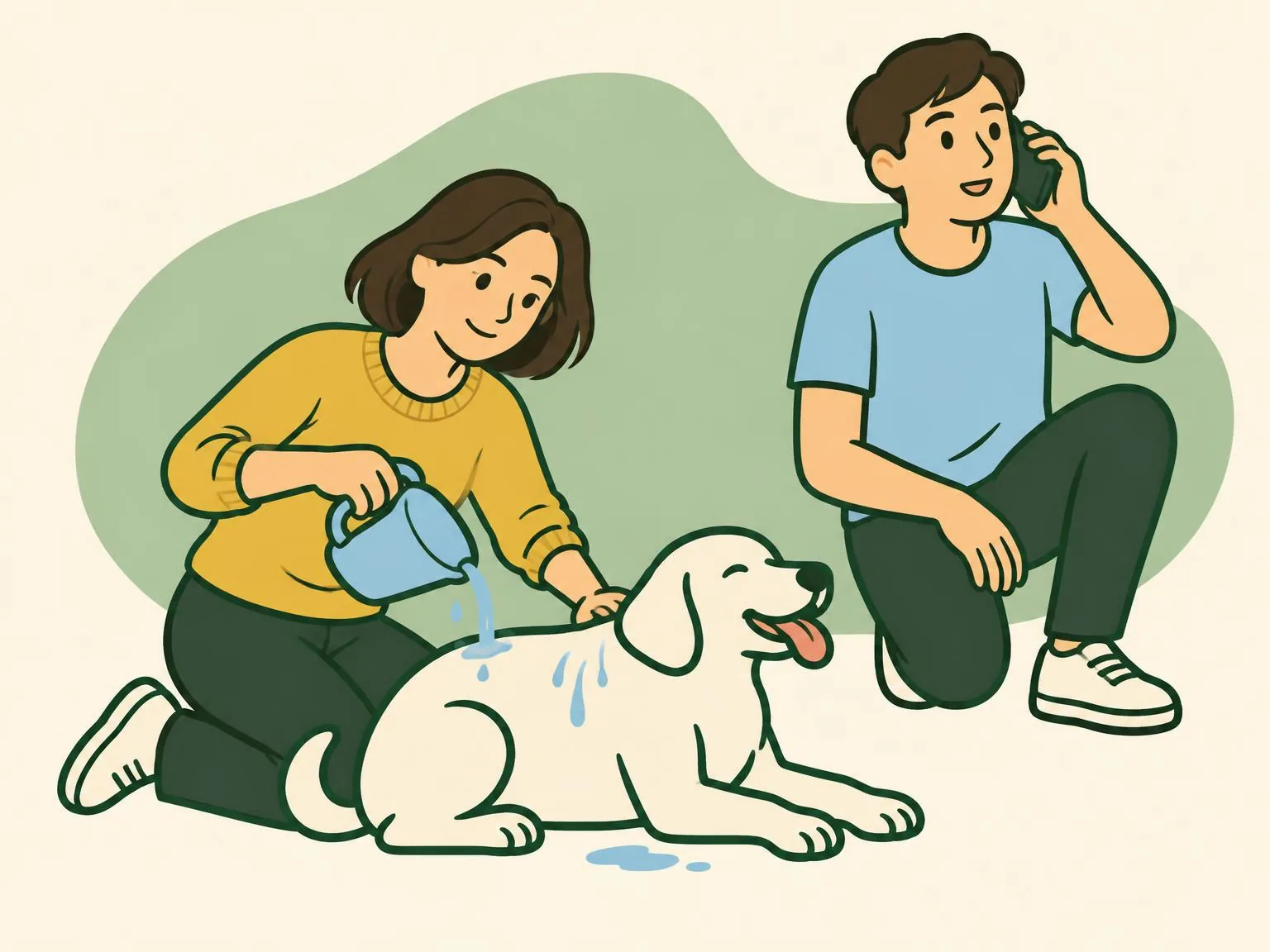
Illustration Phoning ahead lets the vet get ready for an emergency (RSPCA). If you're alone, start cooling first and make the call while the water works. Don't wait to get veterinary advice (RVC).
You should see: the vet expecting you, and cooling already under way.
Careful: don't pour water over the head (RSPCA), and don't put an unconscious, elderly or unwell dog into water (RSPCA; RVC).
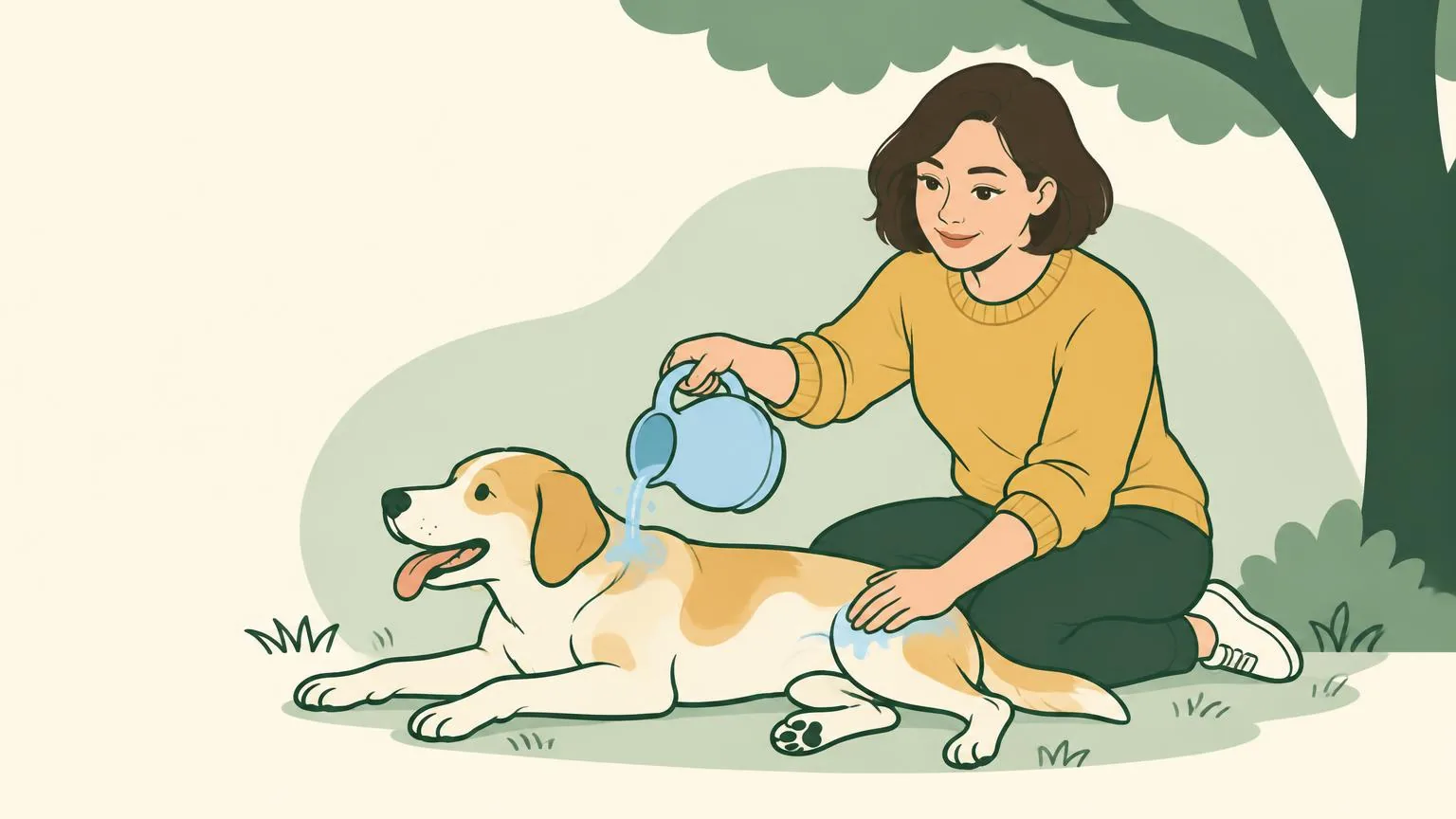
Soak the neck, belly and inner thighs with water, or put the dog in water.
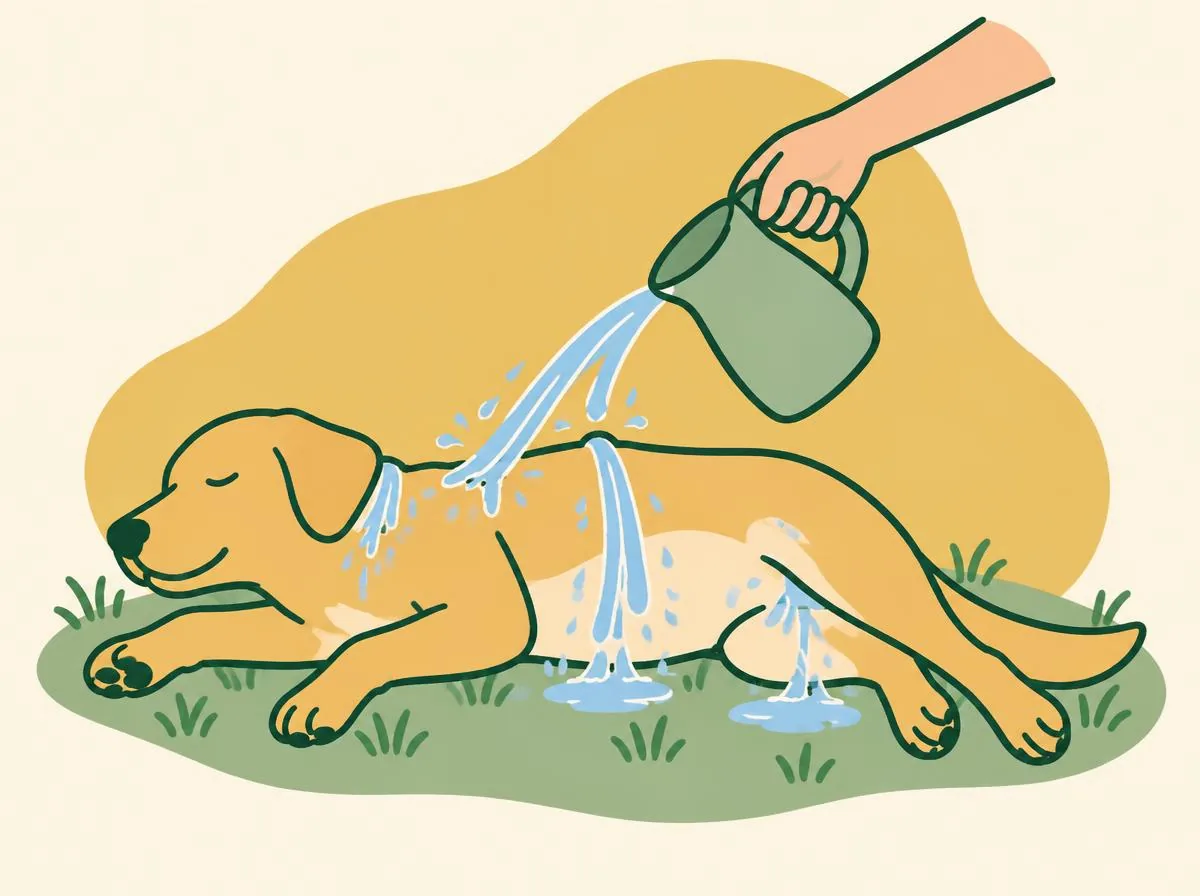
Illustration The RSPCA says pour water over the neck, stomach and thighs. A garden hose, bottles from the car, a stream or a paddling pool all work: use whatever is quickest (RVC).
You should see: the coat soaked right through to the skin on the neck, belly and thighs.
Keep air moving over your dog.
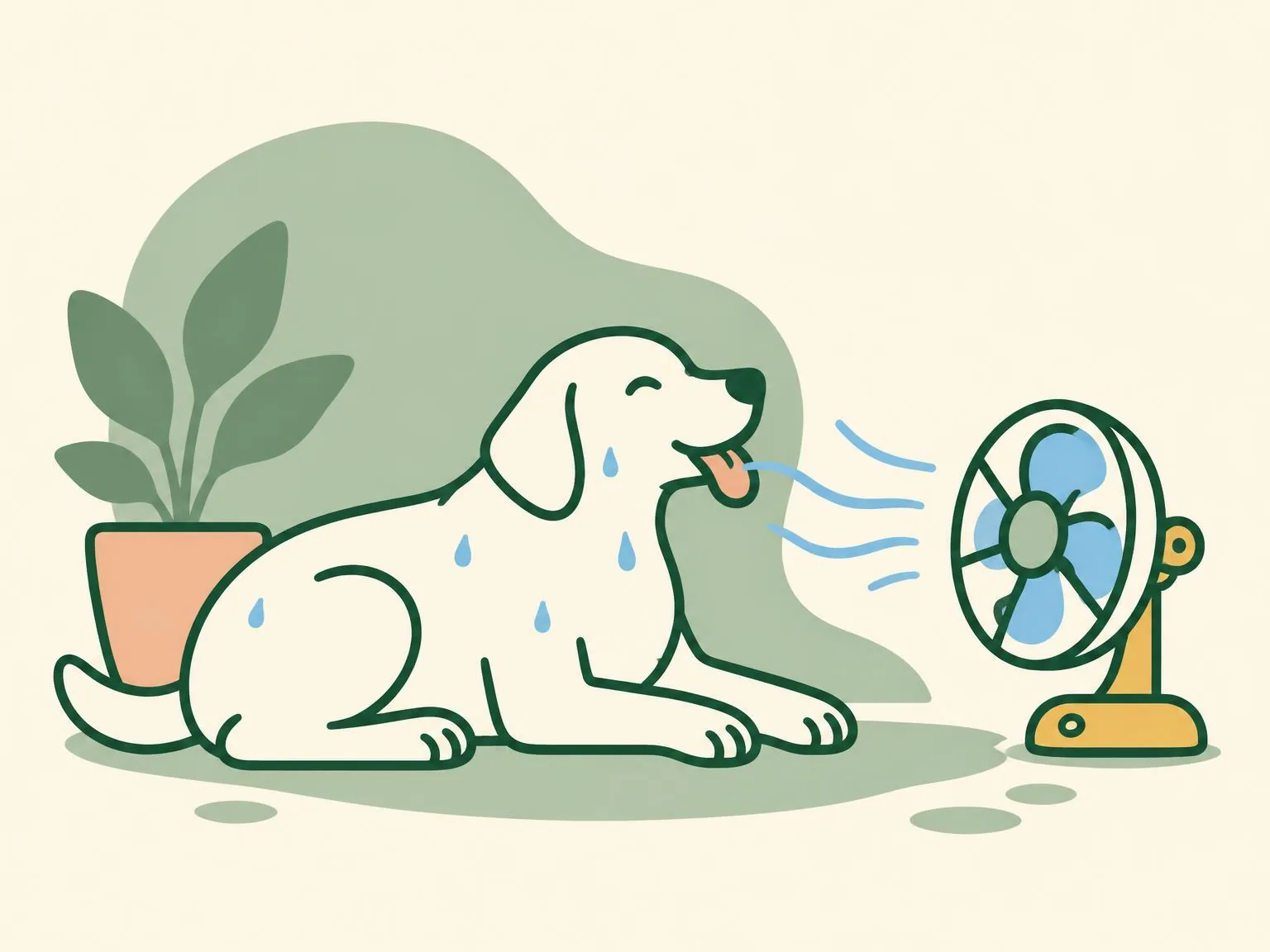
Illustration Use a fan or air conditioning, or fan with anything flat. Water plus moving air cools by evaporation, and the RVC says this works for any dog, including unconscious or unwell ones.
You should see: air flowing over the wet coat. Keep re-wetting it as it dries.
Careful: don't lay wet towels over your dog. They trap heat (RSPCA).
If you use towels, put them under the dog, and keep them wet.
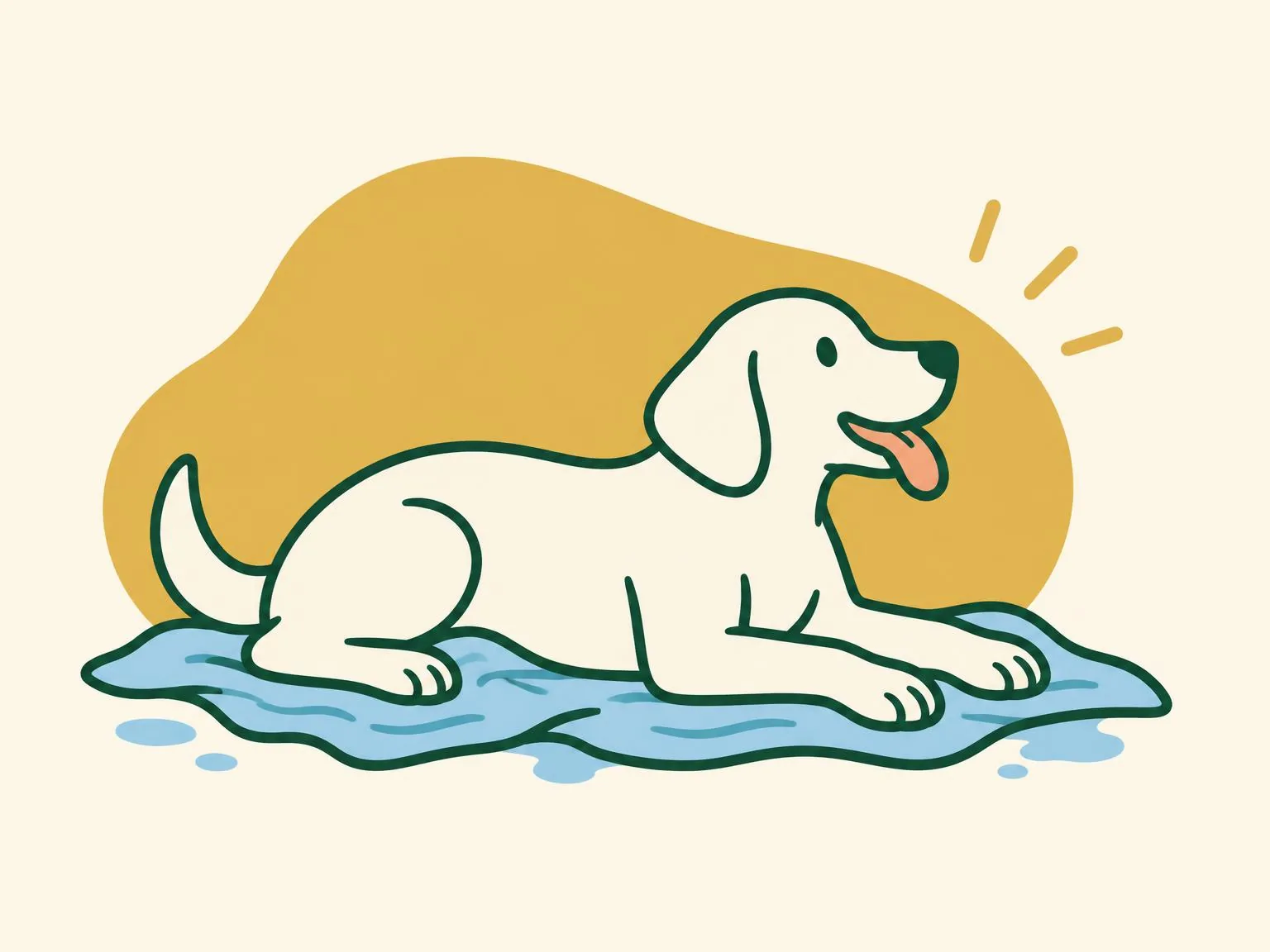
Illustration The RSPCA says wet towels can go beneath the dog, re-wetted often. Its back and sides stay uncovered so heat can escape.
You should see: nothing covering the dog's back.
Cool the car, then drive to the vet with air moving.
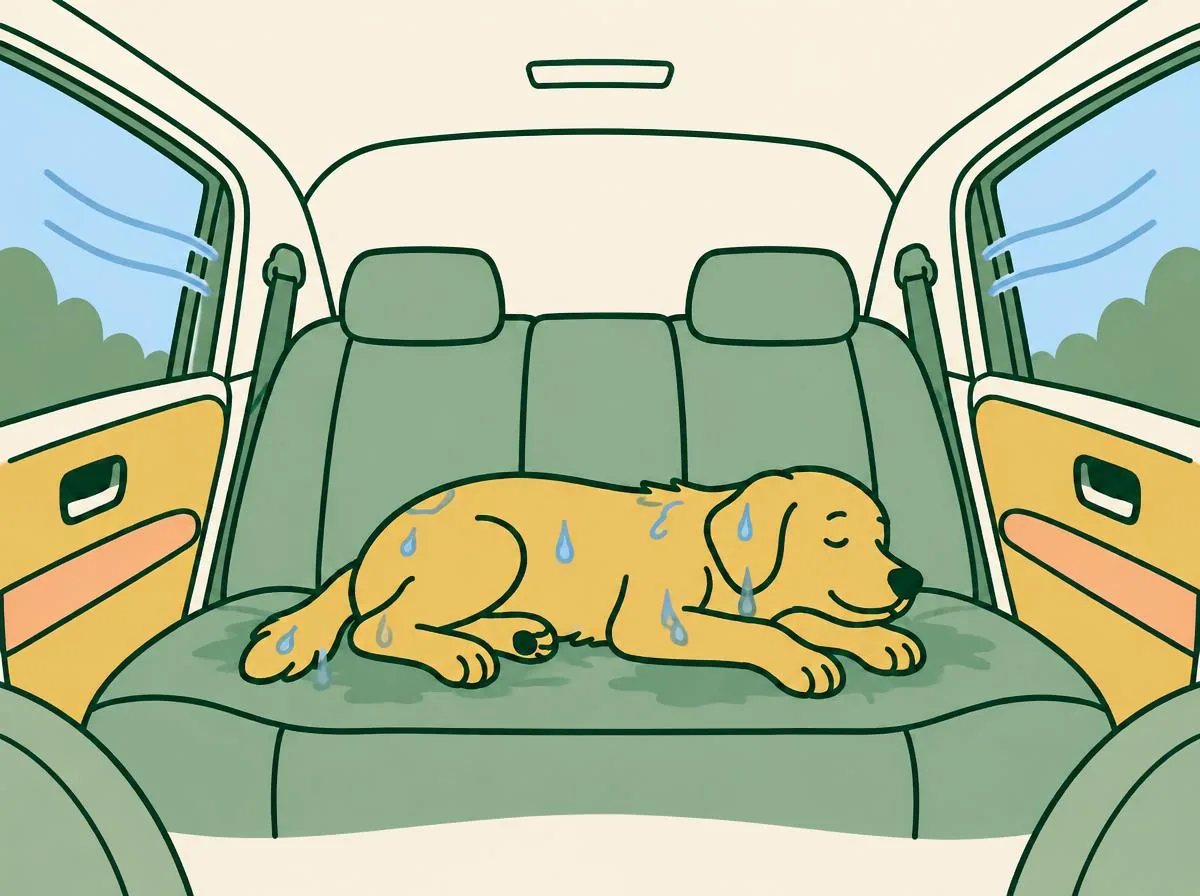
Illustration Cool the dog before it gets in, and cool the vehicle before the dog goes in. Then keep air moving with air conditioning or open windows (RVC; RSPCA). Offer water on the way if possible (RSPCA).
You should see: a cool car and a wet dog. Keep cooling during the journey.
Before you drive off, check
- The vet has been phoned and knows you're coming (RSPCA).
- Your dog has been cooled with water, not just put in the shade (RVC).
- The car is already cool, with air conditioning on or windows open (RVC).
- Nothing wet is lying over your dog's back (RSPCA).
If something goes wrong
| What happens | What it means | What to do |
|---|---|---|
| Only cold water is available | Old advice said use tepid water; the RVC calls this a myth | Use it: cold works best for a conscious, healthy dog (RVC) |
| There's no fan | Moving air speeds cooling (RVC) | Fan with a map or a book, or open the car windows |
| Your dog collapses or becomes unresponsive | Severe heatstroke (RSPCA) | Don't put it in water. Pour water over it, fan it, and get to a vet (RVC; RSPCA) |
| Your dog seems better after cooling | It still needs checking | Go to the vet anyway (RSPCA) |
Questions readers ask
What should I do if I see a dog in a hot car?
In the UK, the RSPCA says to dial 999 if the dog shows any signs of heatstroke, and to stay with it until help arrives. In other countries, call the local emergency number or police.
Can a dog get heatstroke on a walk, not just in a car?
Yes, and more often. In a BVA survey, 38% of small-animal vets had treated a dog with heatstroke after a walk on a hot day, against 9% after it was left in a hot car. The RSPCA says dogs are far more likely to suffer on hot walks than in cars.
Can it happen when it's not that hot?
Yes. The British Veterinary Association warns that all dogs are at risk and that lower temperatures can still be dangerous, especially for flat-faced, overweight, older, large or double-coated dogs.
My dog seems fine after cooling. Does it still need a vet?
Yes. The RSPCA's advice is to cool the dog, then take it to the nearest vet, and the RVC says not to wait to get veterinary help once signs appear.
Sources
We base our articles on the makers' official documentation.