Seven questions on everyday tooth and gum care, from the NHS, the American Dental Association, MedlinePlus and Germany's health ministry, as cited on our dentist-reviewed pages. This is not a substitute for seeing a dentist.
Fun with friends? Share it:WhatsApp
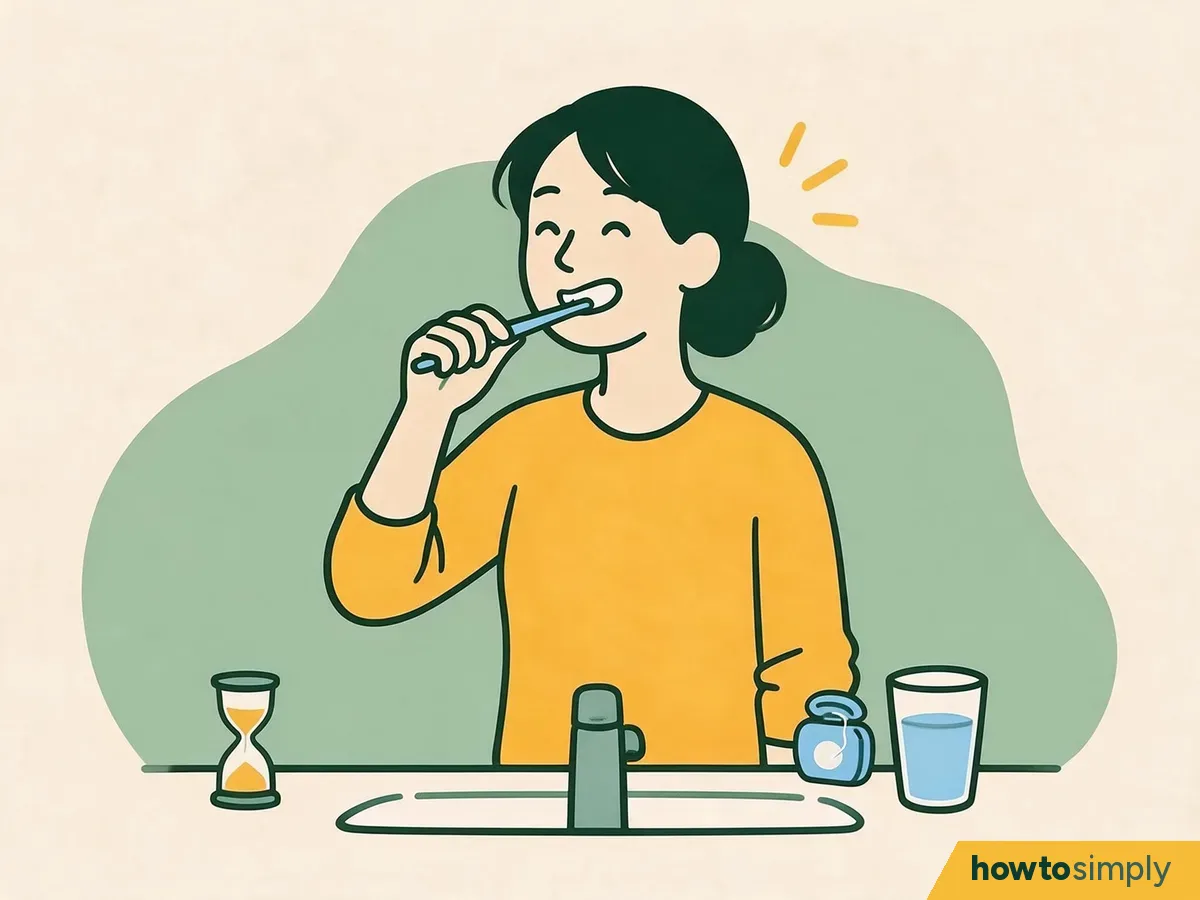
All the questions
- How long should you brush your teeth each time?
- 30 seconds
- About 2 minutes
- 10 minutes
- Until the toothpaste runs out
- At what angle does the ADA say to hold the brush against your gums?
- Flat, at 0 degrees
- About 45 degrees
- Straight on, at 90 degrees
- It doesn't matter
- After brushing, the NHS says to…
- Rinse well with water
- Spit out the toothpaste, but don't rinse
- Use mouthwash straight away
- Drink a glass of milk
- Floss or interdental brushes: which does the Bundeszahnärztekammer say is still best for tight gaps?
- Floss
- Interdental brushes
- Wooden toothpicks
- Neither
- Your gums bleed when you brush. Should you stop brushing that area?
- Yes, until it heals
- No: keep brushing gently with a soft brush, twice a day
- Only brush once a week
- Scrub harder to clear it
- How does MedlinePlus suggest stopping a gum bleed that won't settle?
- Rinse with hot water
- Press a gauze pad soaked in ice water on the spot
- Brush the spot harder
- Leave it open to the air
- Which of these means asking for an urgent dentist appointment, according to the NHS?
- Gums that bled once after flossing
- A loose tooth with very sore, swollen gums
- A new toothbrush feels stiff
- Toothpaste tastes minty
More quizzes
 Life & family
Who does the hidden housework?
5 questions · about 3 min Money
Guess the price: the iPhone 18 Pro world tour
6 questions · about 3 min Phones & tech habits
Splash! The wet phone rescue quiz
6 questions · about 3 min Phones & tech habits
Frozen phone? Know your button combo
6 questions · about 3 min Phones & tech habits
Charging port detective
6 questions · about 3 min Kitchen & cleaning
Shiny screen: clean your phone the right way
6 questions · about 3 minLearn more: 3 tips
- Make your last brush of the day the one before bed (NHS). Source: NHS: How to keep your teeth clean (reviewed 30 June 2025)
- Change your toothbrush at least every 3 months, or sooner if the bristles are frayed (gesund.bund.de, ADA). Source: gesund.bund.de (Federal Ministry of Health): Preventive dental care and oral hygiene (9 June 2021); ADA MouthHealthy: Brushing your teeth
- MedlinePlus says bleeding and tenderness should ease within 1 or 2 weeks after a professional clean and good care at home. If not, go back to your dentist. Source: MedlinePlus: Bleeding gums (reviewed 5 February 2026)
You might also like
Sources
Every answer comes from our own pages and the sources they cite:
- NHS: How to keep your teeth clean (reviewed 30 June 2025)
- ADA MouthHealthy: Brushing your teeth
- Bundeszahnärztekammer: Zahnseide (German, January 2024)
- MedlinePlus: Bleeding gums (reviewed 5 February 2026)
- NHS: Gum disease (reviewed 20 April 2026)
- gesund.bund.de (Federal Ministry of Health): Preventive dental care and oral hygiene (9 June 2021)
Did you enjoy this quiz?