How to trim a cat's claws without a fight
Reviewed by Dr Ramin Khan✓, veterinarian (DVM)
By Abu Bakar Saadat7 min readPublisher: Saadat Rafiq
Last updated: 9 November 2026References
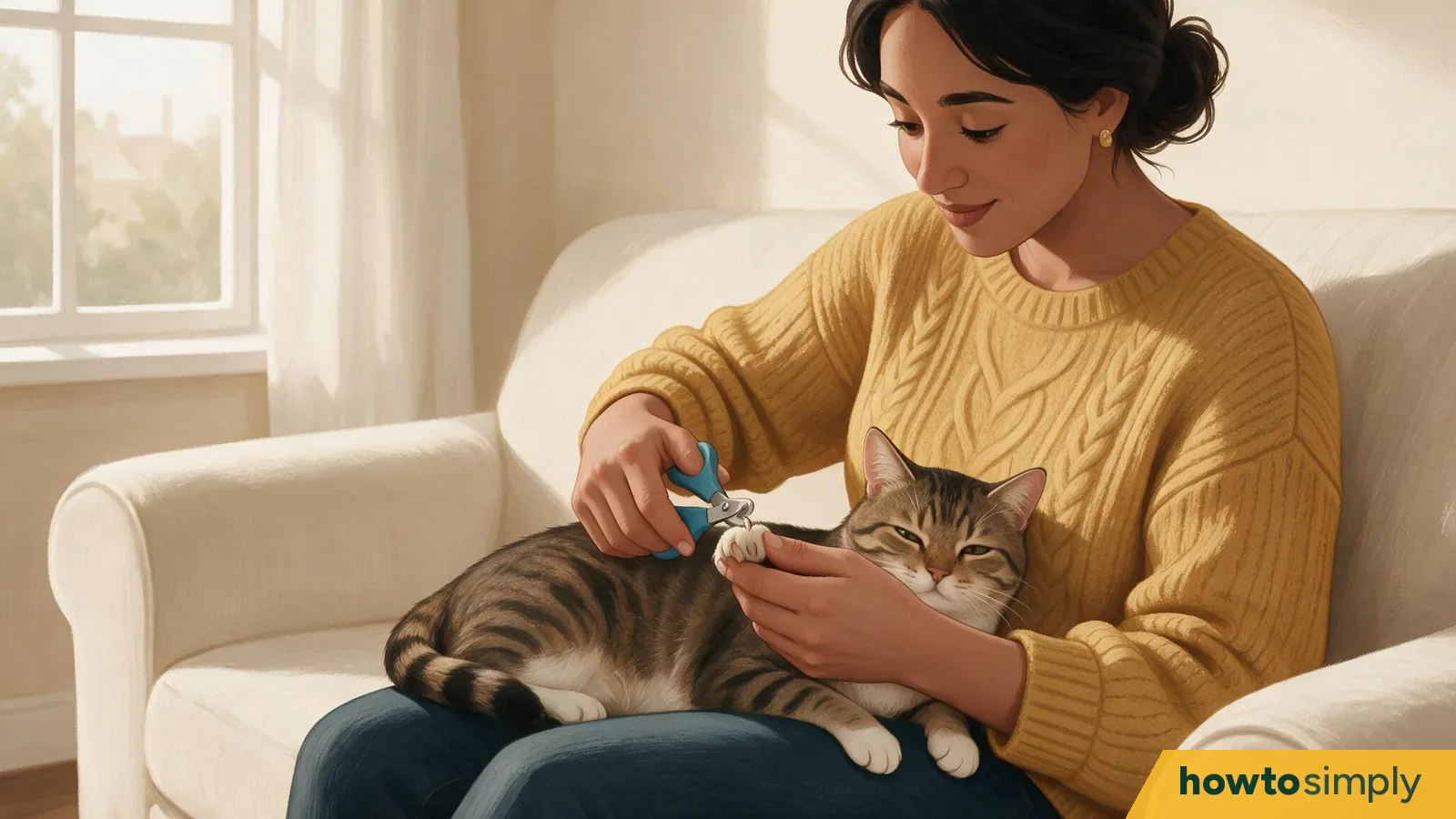 Illustration
On this page 11 sections
In short
Press gently on the toe to push the claw out, find the pink quick, and snip only the sharp white tip a couple of millimetres in front of it, one or two claws at a time, with a treat after each.
At a glance
- Cut
- Only the white tip, about 2 mm in front of the pink quick (PDSA, WSU)
- How many
- A few claws per session, then stop (PDSA)
- Claws
- 18: five on each front paw including the dewclaw, four on each back paw (PDSA)
- If it bleeds
- Cornflour or cotton wool on the tip; vet if not stopped in about 5 minutes
- You need
- Cat nail clippers, treats, cornflour, cotton wool, good light
- Checked
- Sources read 30 October 2026
- Checked
- November 2026
Trimming a cat's claws can feel nerve-racking the first time, especially if your cat is not keen on having their paws touched. Go slowly, keep the treats close, and you can do this calmly and kindly together.
Biscuit is a brown tabby who lives indoors. His front claws have started catching on the sofa and tapping on the kitchen floor, which are two of the signs PDSA's vets list. Follow Nadia as she gets Biscuit used to it over a week, then trims his claws on a quiet weekend without a struggle. Honestly, patience matters far more than speed here, and a few calm claws are a good result.
Know the claws first
Most cats have 18 claws: five on each front paw, including the dewclaw on the inside of the leg, and four on each back paw (PDSA). The quick is the pink part inside the claw. It has blood vessels and nerves, so cutting it hurts and bleeds. That is why every step below takes only the white tip. Many active cats never need a trim; indoor, older and less active cats are more likely to (PDSA).
Part 1: Get your cat used to it (over a few days)
Handle the paws, then reward.
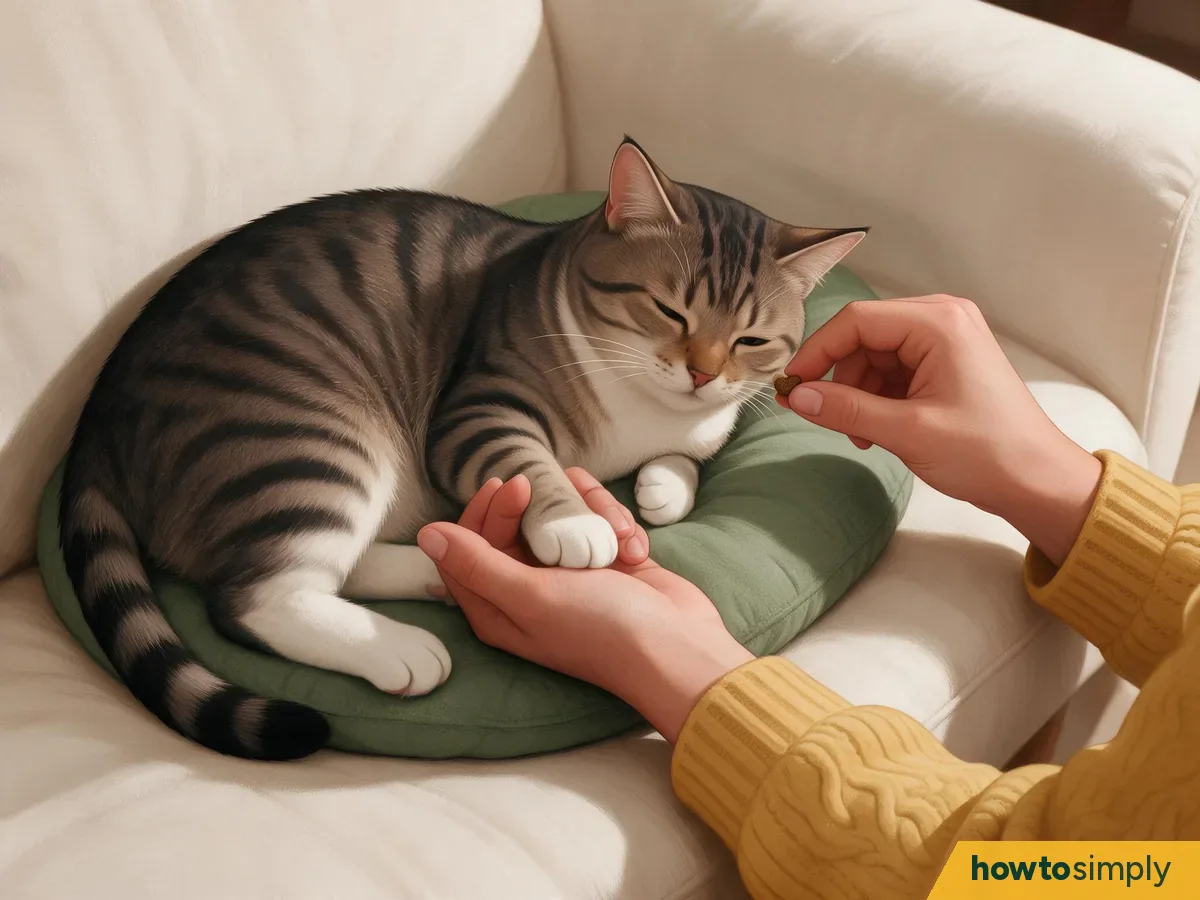
Illustration Every evening for a week, while Biscuit dozes on his cushion, Nadia holds his front paw for a moment, then gives him a treat.
Touch and hold the paws only when your cat is relaxed, and reward each time. Stop if your cat seems stressed. You're aiming for a cat who stays relaxed while you hold a paw. There is no rush, because a relaxed cat now makes the trim much easier later.
Let your cat sniff the clippers.
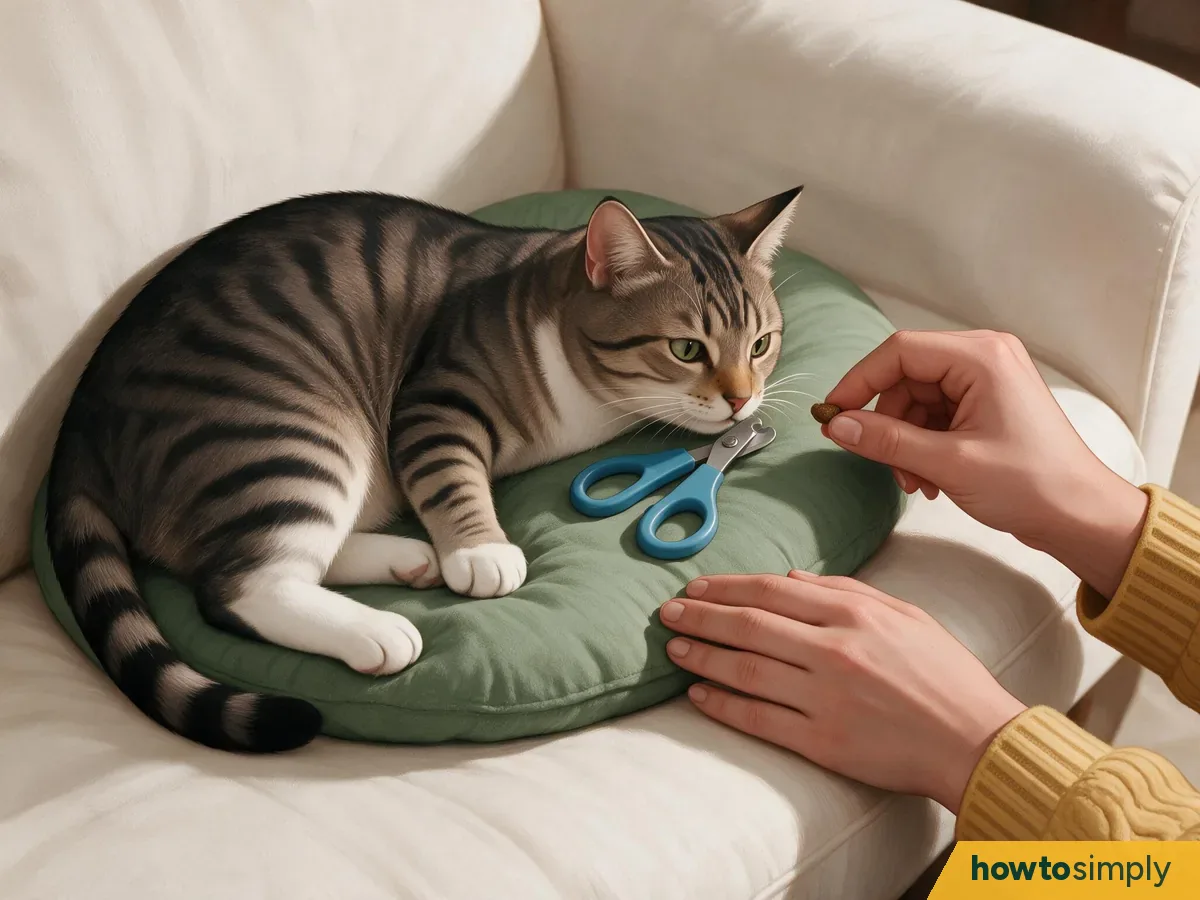
Illustration On Thursday she lays the closed clippers on the cushion. Biscuit sniffs them and gets a treat.
Next time, touch a paw with the closed clippers and reward again. Take it at your cat's pace.
Part 2: Trim
Pick a calm moment and settle your cat on your lap.
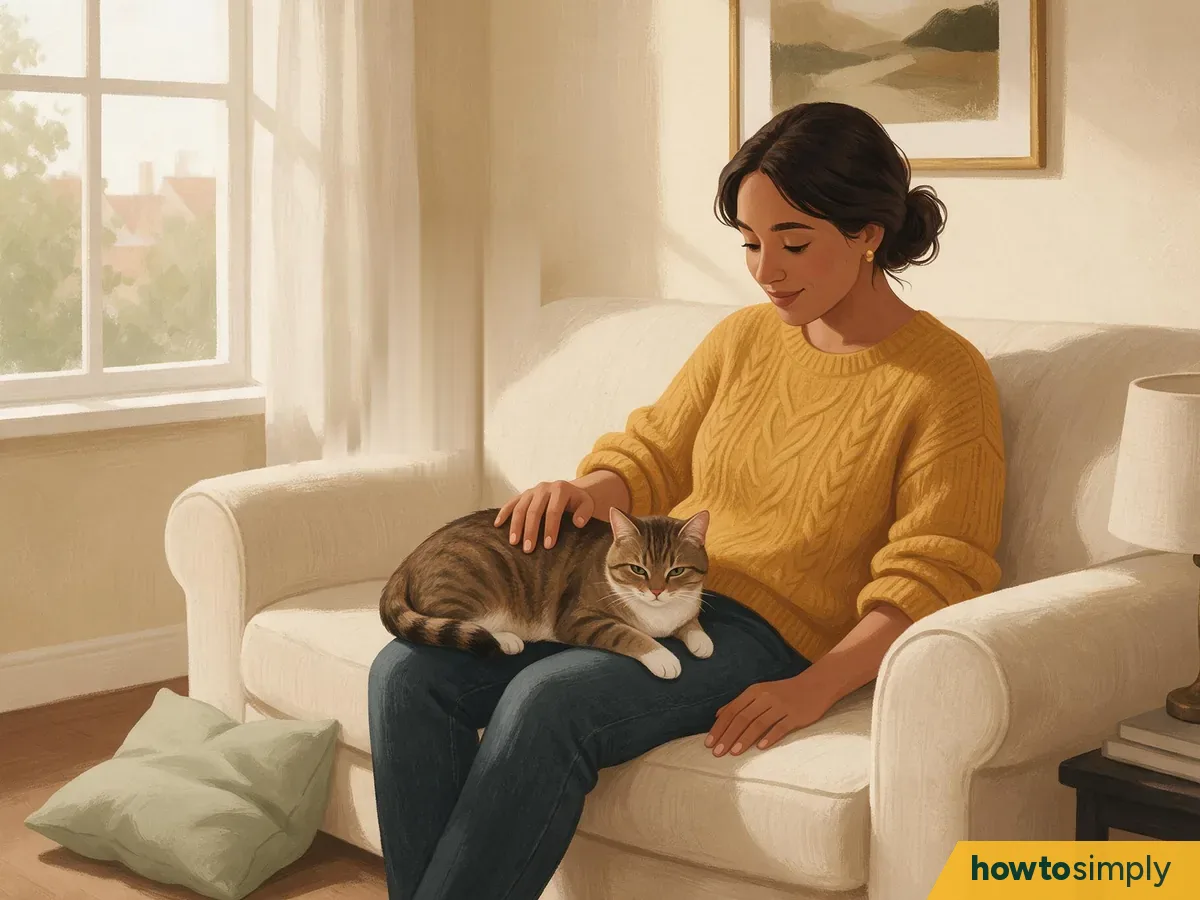
Illustration On Saturday after lunch Biscuit is sleepy. Nadia sits by the window with him on her lap, facing away from her, and drops a cushion on the floor.
Choose a quiet time, such as after a meal or a nap, in good light. PDSA suggests cushions on the floor in case your cat jumps. Don't hold your cat tightly.
Push out one claw.
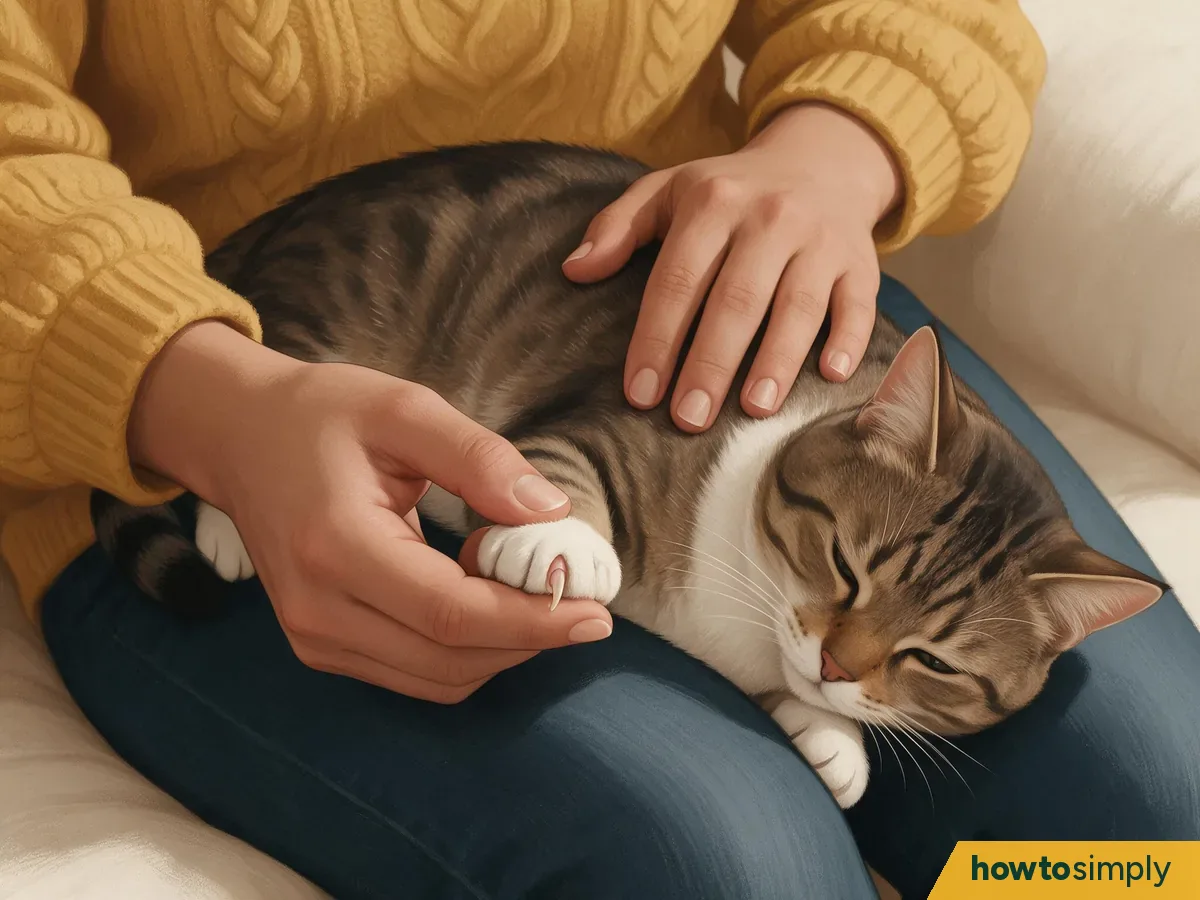
Illustration He dozes while she holds one white paw, her thumb on top of one toe and a finger under it. She squeezes gently and one claw slides out.
Press just behind the claw, gently. You should see the claw extend.
Find the pink quick.
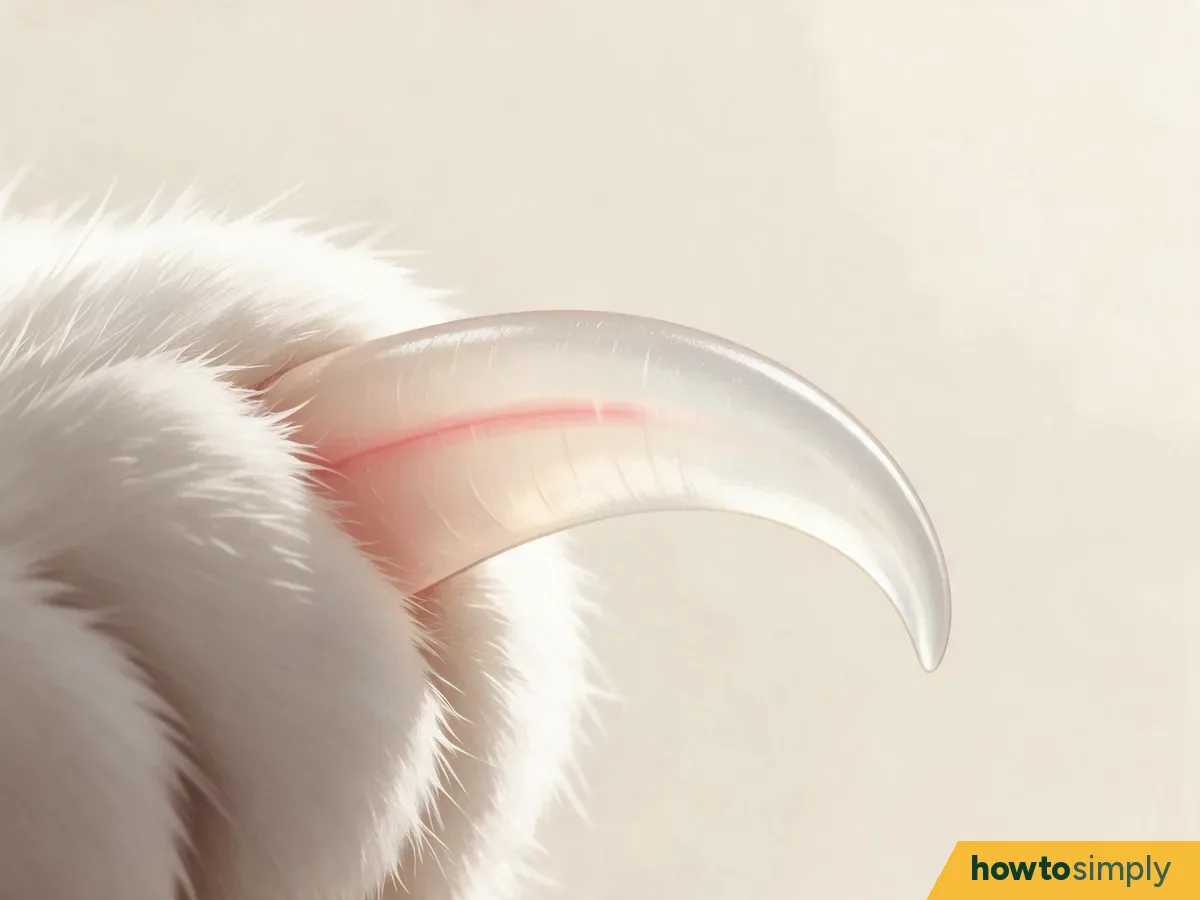
Illustration Against the window light Nadia can see the pink part near the toe and the clear, white hooked tip.
Look at the claw from the side. Only the white tip can be cut.
Snip the white tip only.
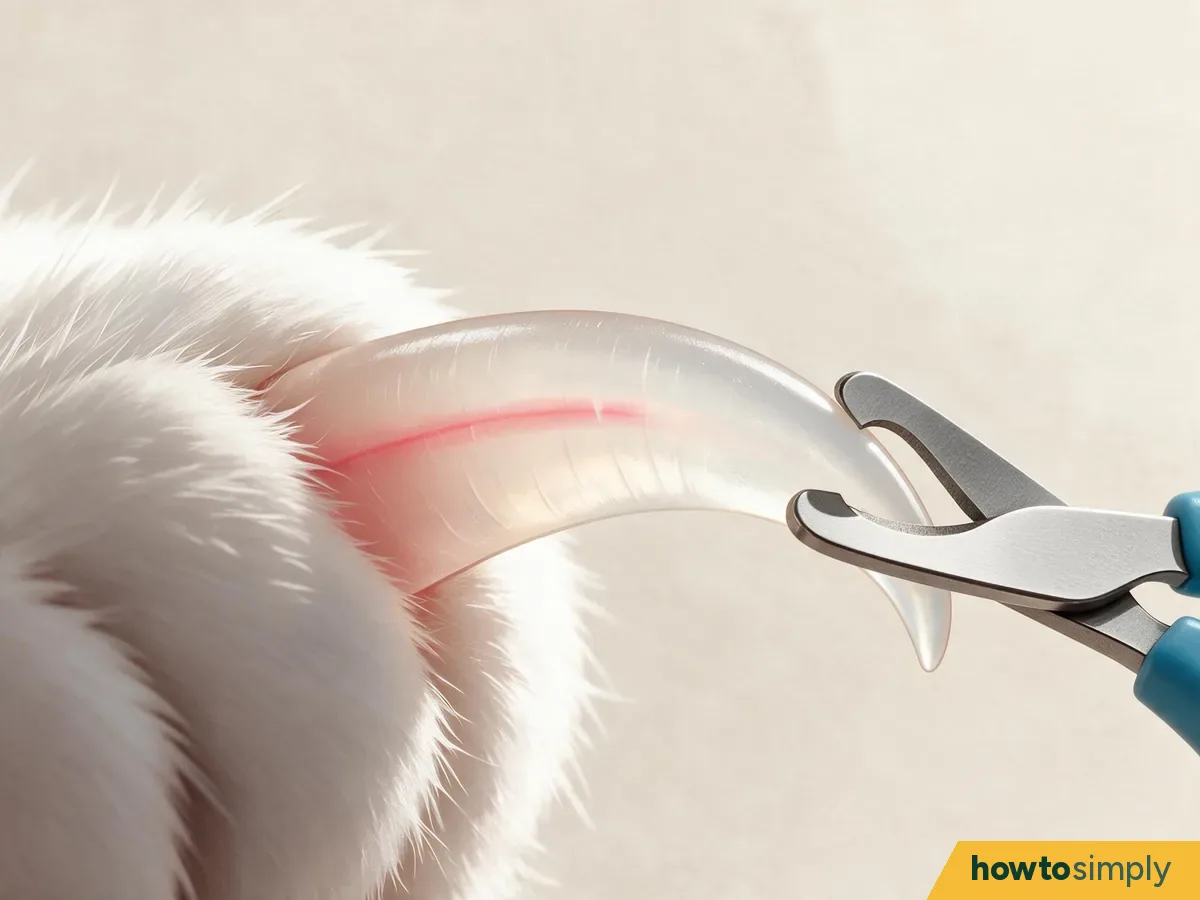
Illustration She places the clippers across the white tip, well in front of the pink, and snips once.
Cut in one quick, firm squeeze. You should see a clean, flat end with no pink showing.
Reward straight away.
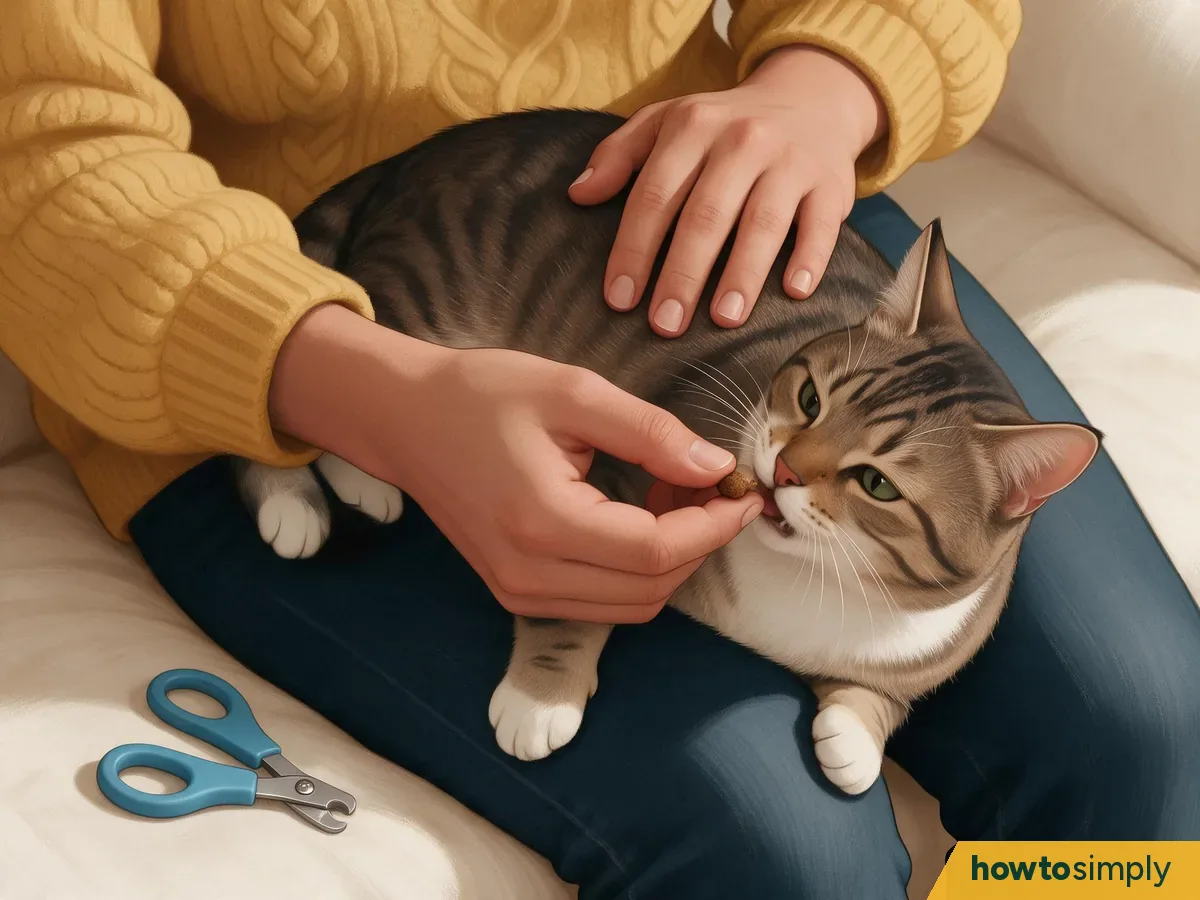
Illustration Biscuit gets a treat after every claw.
PDSA says a reward after each claw keeps trims positive.
Stop while it's going well.
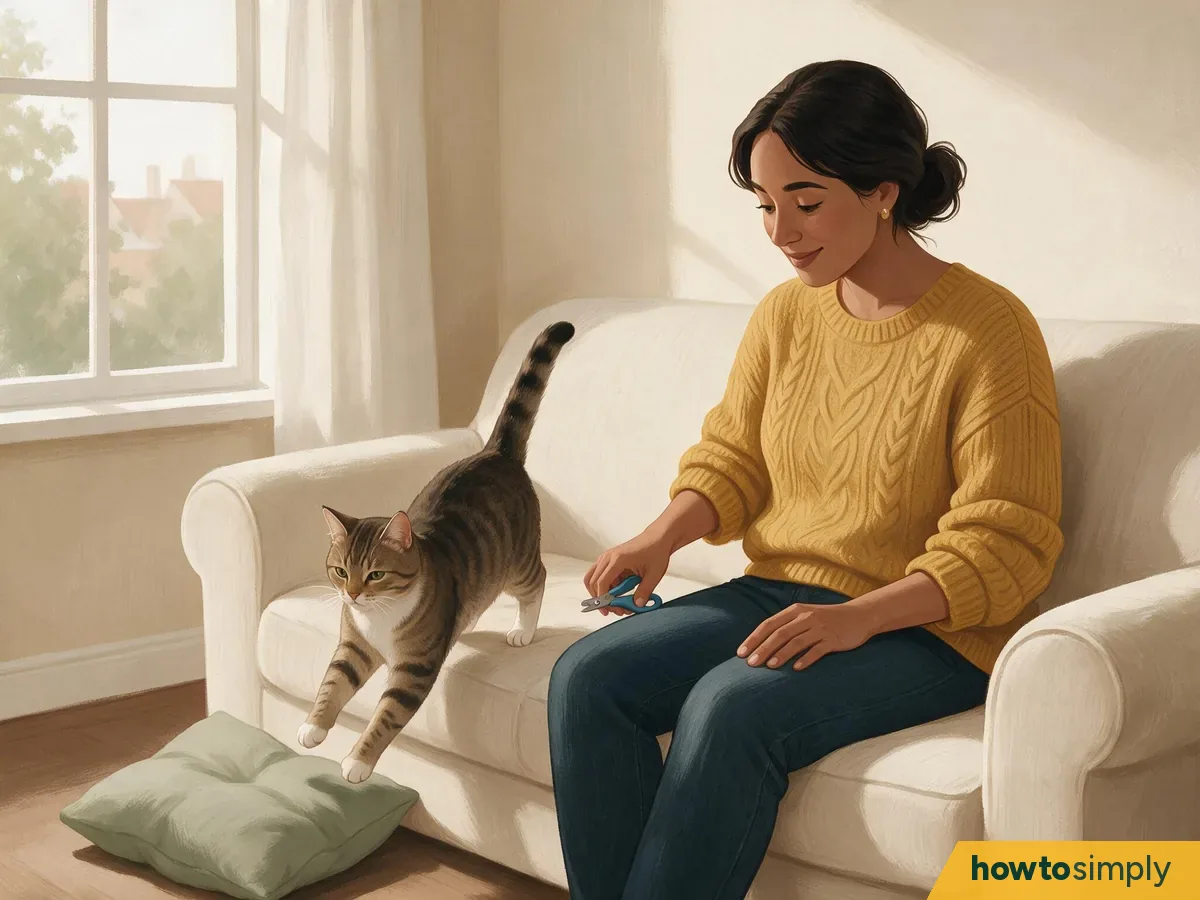
Illustration After three claws, Biscuit's tail starts to flick. Nadia lets him go and puts the clippers away until tomorrow.
Don't do every claw in one go (PDSA). One or two calm trims beat forcing a full set (Humane World for Animals). Stop at once if your cat struggles, flattens its ears or tries to leave. Stopping early is not giving up; it keeps the next session calm.
Remember the dewclaw.
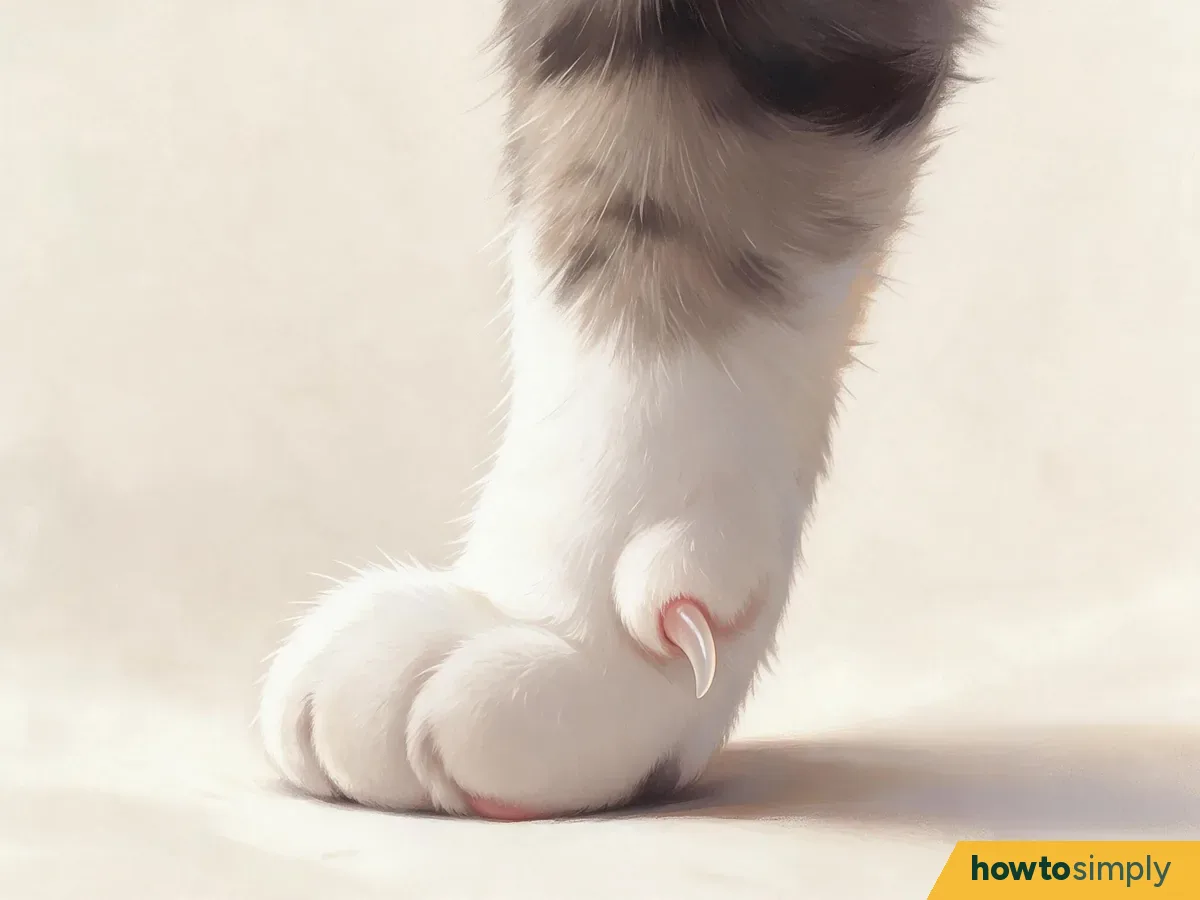
Illustration On Sunday she finishes the front paws and finds the dewclaw, higher up on the inside of his front leg. She trims just its tip.
The dewclaw doesn't touch the ground, so it doesn't wear down and can curl round into the skin (Woodgreen; WSU). Push it out the same way and trim only the tip. If it has already grown into the skin, see your vet.
Check the back paws, and trim only if needed.
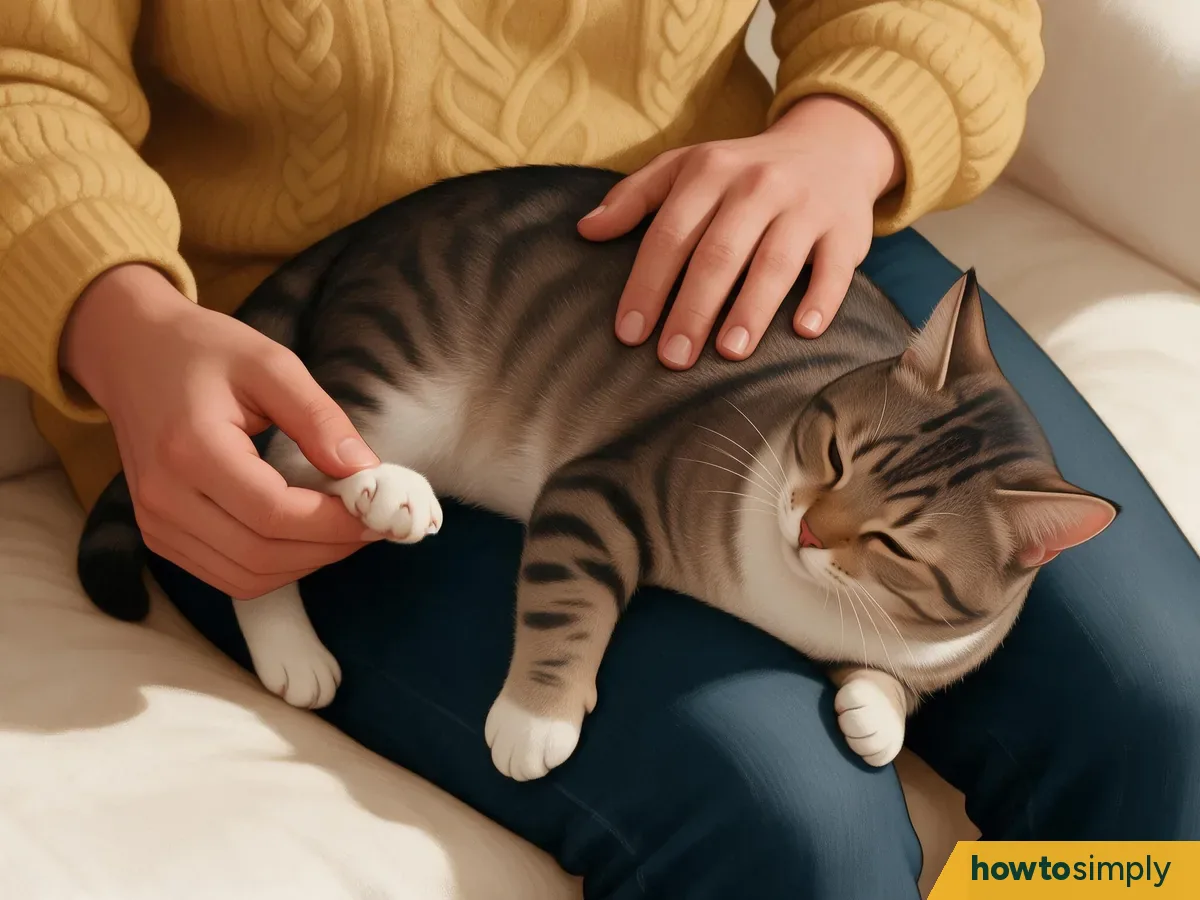
Illustration She looks at his back paws: the claws are short and blunt, so she leaves them.
Back claws usually wear down through walking (Humane World for Animals). Trim them only if they're long or snagging.
Part 3: Afterwards
Check each cut claw for bleeding.
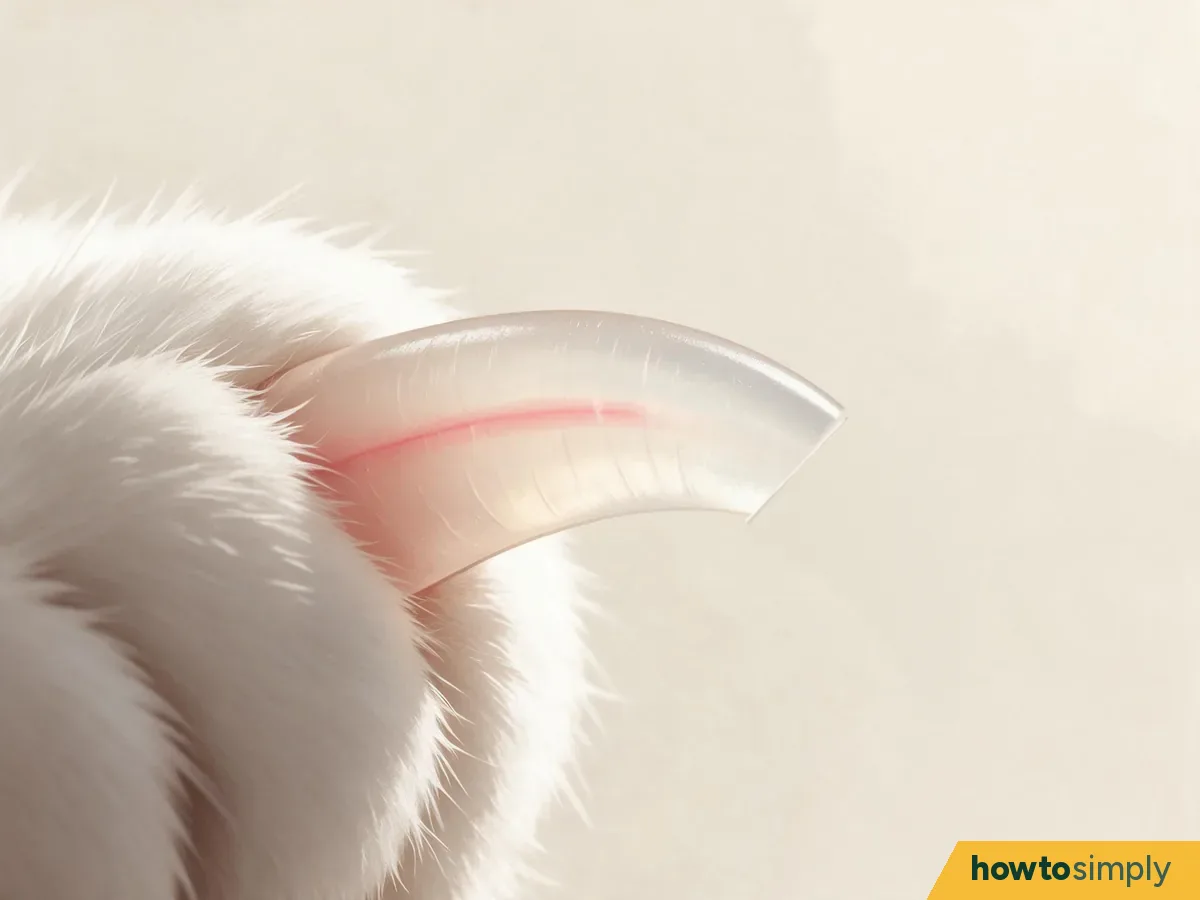
Illustration Every end is clean and flat, with no pink showing and no blood, so the cornflour and cotton wool from her kit stay unused.
If a claw bleeds, stay calm: dip it in cornflour or hold cotton wool on the tip until it stops (PDSA); styptic powder also works (Humane World for Animals). End the session there. If it's still bleeding after about 5 minutes of pressure, call your vet; WSU says bleeding may take about that long to stop without styptic powder.
Expect more scratching.
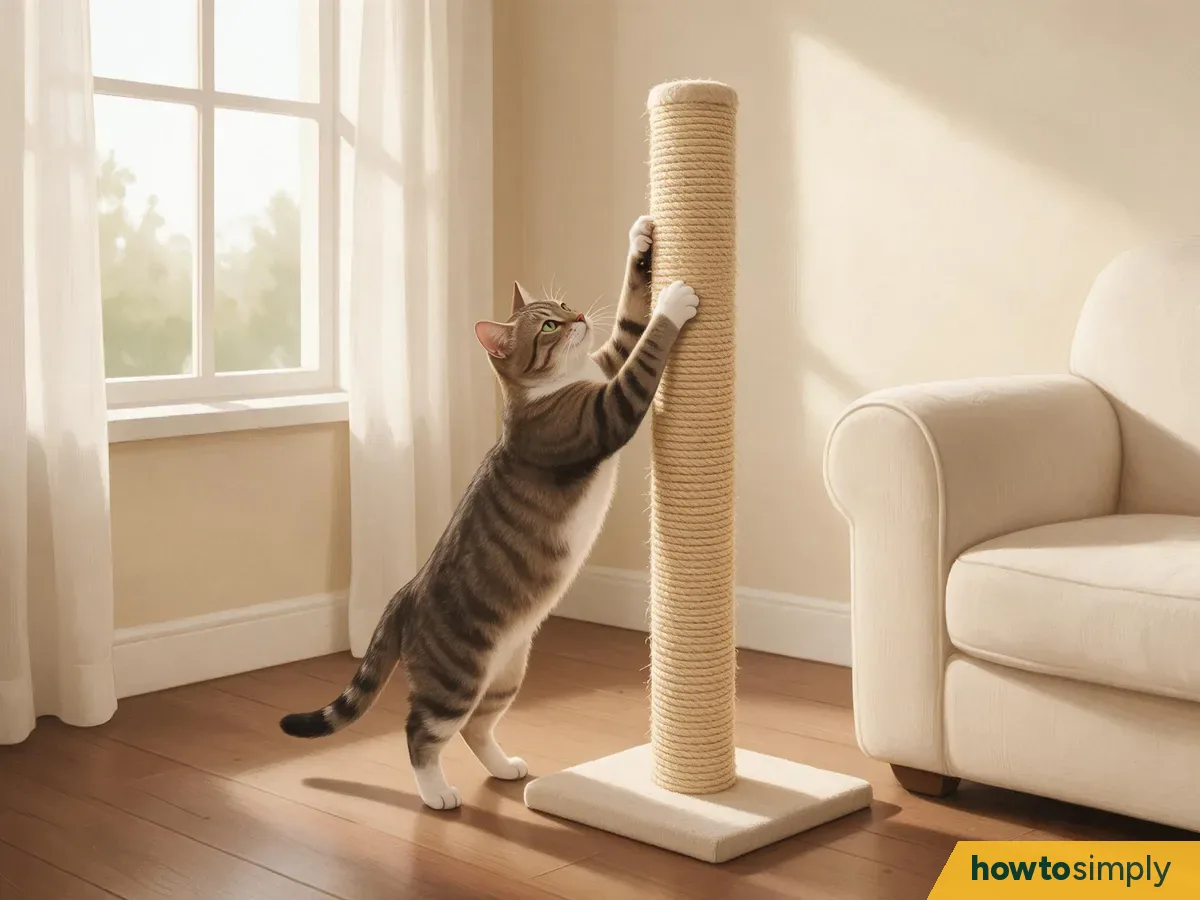
Illustration Biscuit heads straight for his tall scratching post and gives it a long stretch.
Cats often scratch more after a trim (PDSA). Have at least one tall upright post and one flat scratcher where your cat likes to scratch.
How to tell it worked
A week later, Biscuit's claws no longer catch on the sofa or tap on the kitchen floor.
- Claws no longer snag on fabric or click on hard floors.
- Each cut end is flat, with no pink showing.
- Your cat still lets you hold its paws.
Or let a professional do it
There is no shame in handing this job over. If home trims upset you or your cat, ask your vet practice or a reputable groomer (PDSA). Woodgreen says your vet should be able to help, and WSU's vet hospital recommends learning the technique from a vet or vet nurse before trying at home.
If it doesn't work
Don't worry if the first try doesn't go to plan. Find what happened below and take the next small step.
| What happens | Likely cause | What to do |
|---|---|---|
| Your cat pulls the paw away every time | Not used to paws being held | Go back to Part 1 for a week. Try one claw a day. |
| The claw splits or frays | Blunt or crushing clippers | Use sharp cat clippers; replace them if blunt |
| You can't see the quick | Dark claws | Take a tiny sliver only, or ask your vet to show you |
| Bleeding doesn't stop after about 5 minutes of pressure | Cut too close | Keep pressure on and ring your vet |
| A claw grows into the pad, or a toe is swollen | Overgrown or ingrown claw | Don't trim it yourself. See your vet. |
| Your cat panics or bites | Fear | Stop. Never force a trim. Ask your vet or a groomer. |
Questions readers ask
How often should I trim my cat's claws?
There's no fixed rule. Humane World for Animals suggests checking every 2 to 4 weeks; PDSA says trim only when the claws are too long.
Do I need to trim an outdoor cat's claws?
Usually not, says PDSA, because climbing and running wear them down. Check older and less active cats.
What if I cut the quick?
Press cornflour, styptic powder or cotton wool on the tip until it stops (PDSA, Humane World for Animals). Stop for the day. If it hasn't stopped after about 5 minutes of pressure, call your vet.
Can I use human nail clippers?
Sources disagree. PDSA says no, because they can crush and split the claw; Humane World for Animals lists clean human clippers as an option. If you can, use cat clippers.
Can I use scissors?
Not household scissors: PDSA says they can crush the claw. Cat nail scissors made for the job are fine (PDSA vet Q&A).
Is declawing an option?
No. PDSA notes it is illegal in the UK. Trims and scratching posts are the answer.
Did this solve the problem?
What needs work?
What did you think?
Reaction counts are loading.
Sources
We use primary, official and specialist sources appropriate to the topic.