How to stretch watercolour paper so it dries flat
Researched by Abu Bakar Saadat5 min read
Last updated: 14 November 2026References
 Illustration
On this page 7 sections
In short
Soak the sheet in clean water (from 30 seconds to 20 minutes, depending on the paper and its weight), lay it on a board, tape all four edges with dampened gummed tape, half on the paper and half on the board, and leave it flat overnight.
At a glance
- You need
- Board, brown gummed paper tape, sponge, bath or tray, craft knife
- Soak
- About 3 to 20 minutes, by paper weight
- Tape
- Half on the paper, half on the board
- Dry
- Flat, overnight, no hairdryer
- Advice from
- Winsor & Newton, artsupplies.co.uk and TALAS, read 28 October 2026
- Checked
- November 2026
Well, it is a sad moment when a painting you were proud of buckles into hills and valleys as it dries. Stretching the paper first asks for a little patience overnight, but the job itself is not hard, and your next wash will sit beautifully flat.
The reason watercolour paper ripples (cockles) when it gets wet is that the fibres swell (TALAS), and paint then pools in the dips. Stretching gets that swelling over with before you start. You soak the sheet first and fix it to a board while it is swollen. As it dries it shrinks tight and flat, and it stays flat when you paint.
How long to soak, by paper weight
The sources don't quite agree. artsupplies.co.uk quotes Saunders Waterford: 30 seconds to 2 minutes, with lighter papers needing less time. The others are below. When in doubt, go shorter, because soaking too long can wash out the sizing, and paint then sinks into the paper (artsupplies.co.uk, TALAS).
| Paper weight | Winsor & Newton | artsupplies.co.uk | TALAS |
|---|---|---|---|
| 90lb (about 190gsm) | 4 to 5 minutes | 3 minutes | - |
| 140lb (about 300gsm) | - | 8 minutes | About 5 to 10 minutes |
| 300lb (about 640gsm) | 15 to 20 minutes | 20 minutes | - |
How to stretch the paper
Get the board ready and cut four strips of tape.
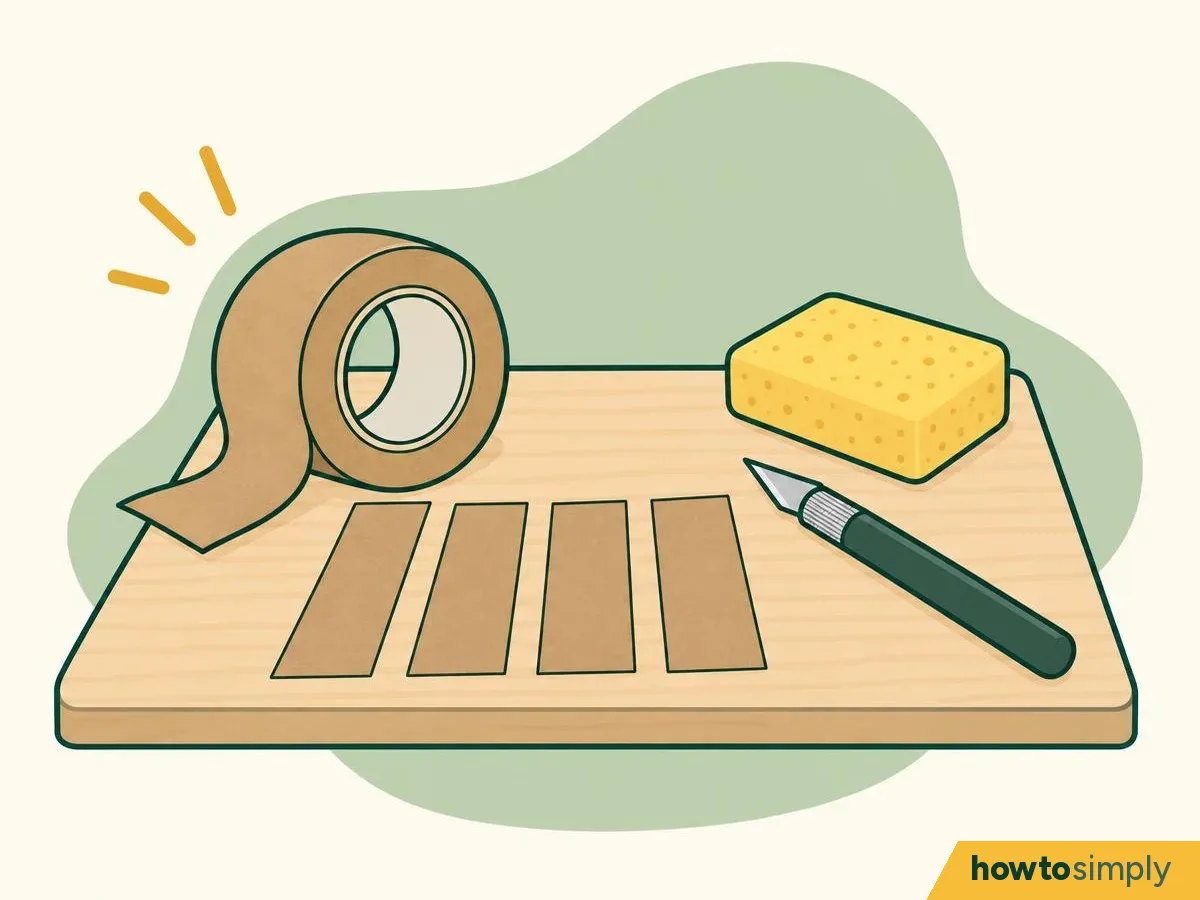
Illustration Cut four strips of brown gummed paper tape, a little longer than each edge, and keep them dry until you need them.
You should see: the board (sealed first, if it is MDF) and four dry strips of tape laid out within reach.
Careful: don't soak it longer than the table says. Too long can wash out the sizing (artsupplies.co.uk, TALAS).
Soak the sheet in clean water.
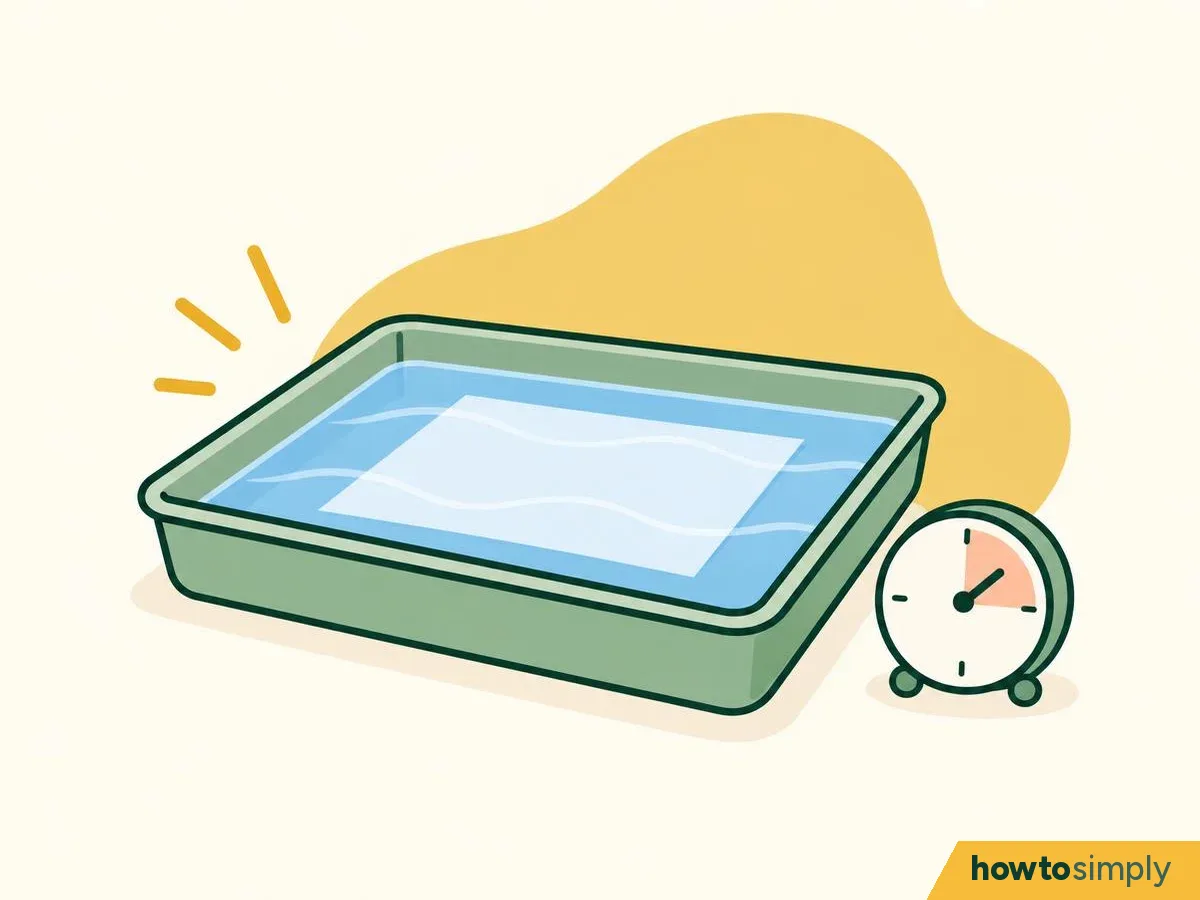
Illustration Put the sheet fully under clean water, with no detergent, in a bath, sink or tray (Winsor & Newton, artsupplies.co.uk). Don't crease it. Time it using the soaking table.
You should see: paper that feels floppy, like wet cloth. That's TALAS's test that it is ready.
Lay it on the board from the middle outwards.
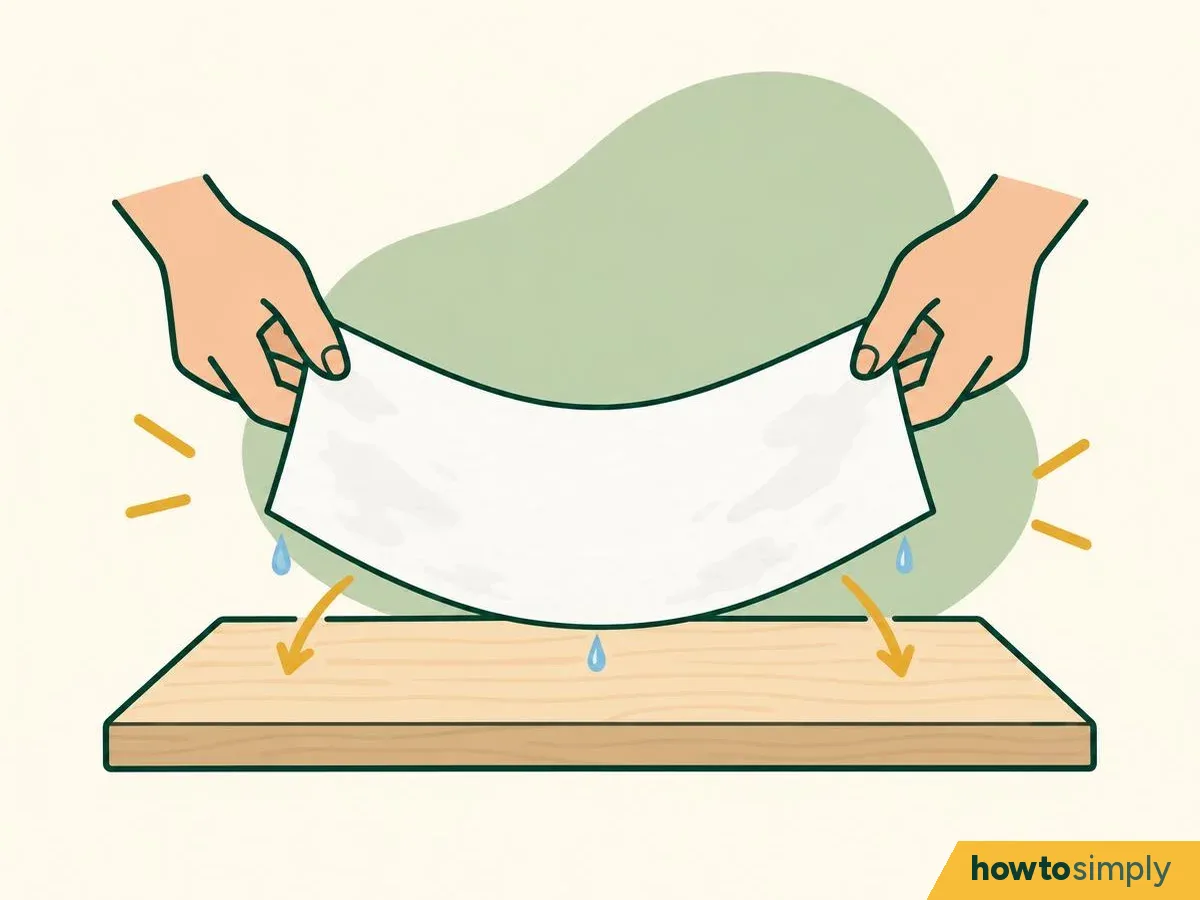
Illustration Lift the sheet out by one corner and let the water drip off. Bow it slightly and lay it down from the middle so trapped air is pushed out to the edges (artsupplies.co.uk). Blot any pools of water.
You should see: the sheet lying flat on the board, with no air bubbles under it and no pools of water on top.
Careful: dampen the tape, don't soak it. Too much water washes the glue off (TALAS, artsupplies.co.uk).
Tape all four edges, half on the paper and half on the board.
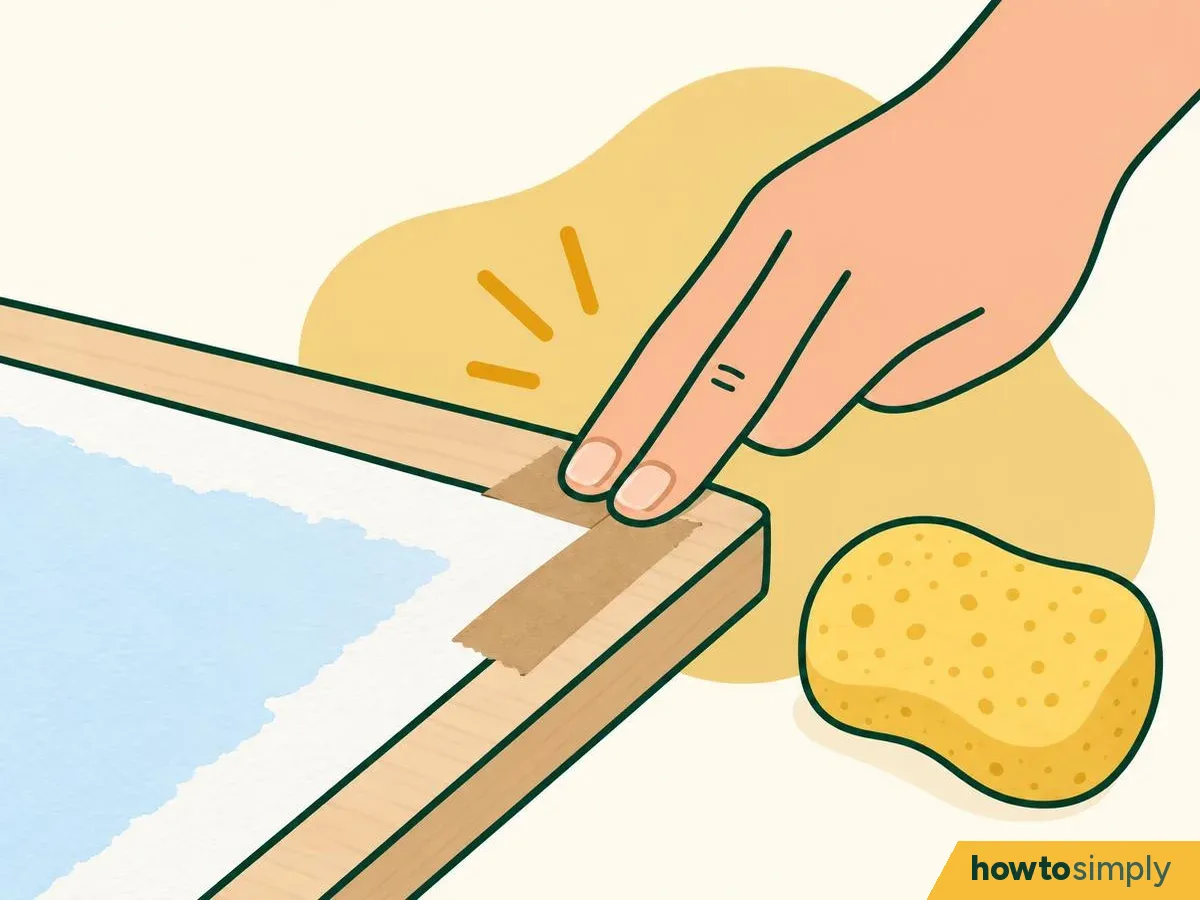
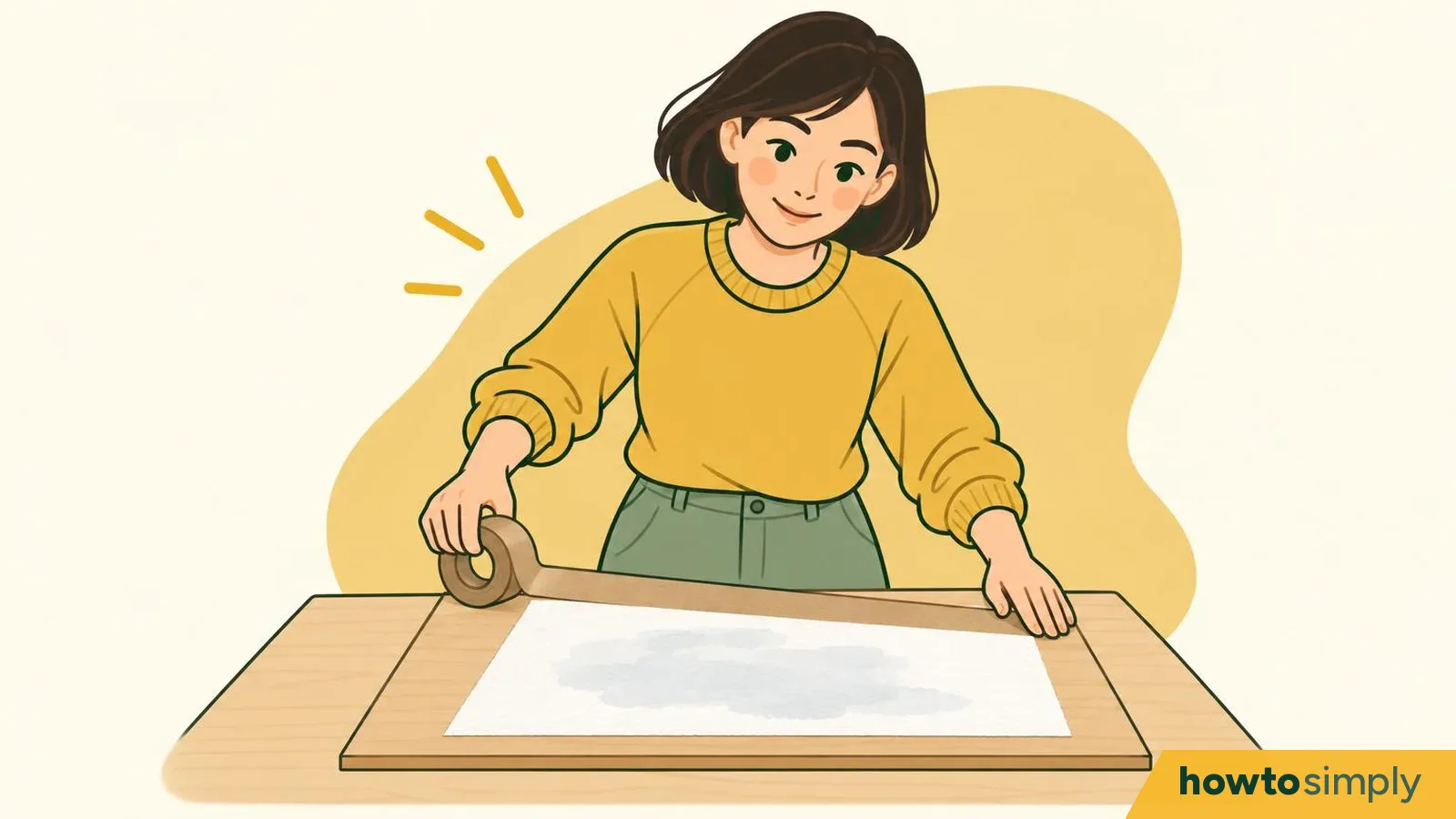
Illustration Dampen each strip lightly with a squeezed-out sponge, just enough to make it sticky. Press it down so about half is on the paper and half on the board (TALAS), and smooth it without stretching the tape. Do all four sides.
Keep glue drips off the paper, because they could damage your painting surface (artsupplies.co.uk).
You should see: a strip of tape along every edge, stuck flat with no loose corners.
Leave it to dry flat, ideally overnight.
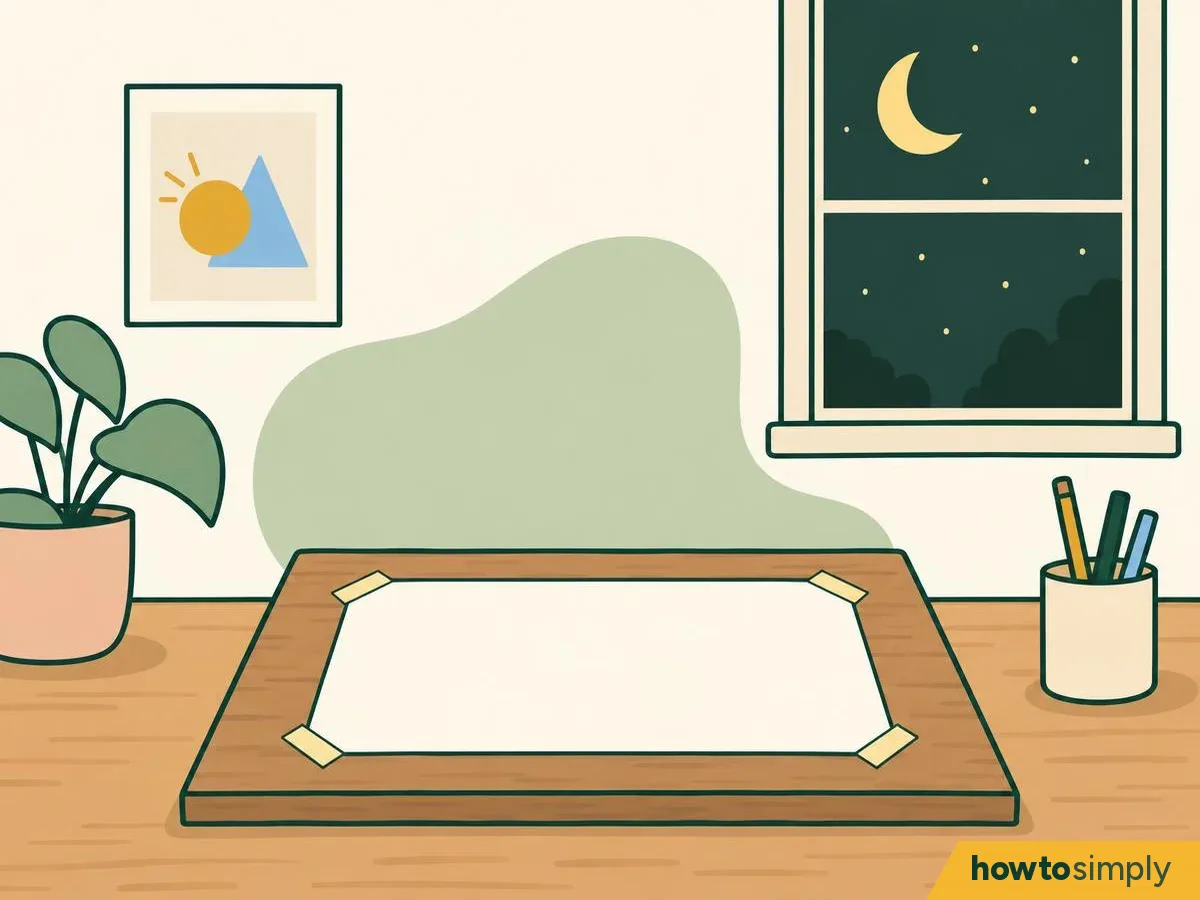
Illustration Leave the board lying flat so water doesn't run to one edge, ideally overnight (artsupplies.co.uk, TALAS). Don't speed it up with a hairdryer, because uneven drying can cockle the surface of the paper (artsupplies.co.uk). So if your habit is to rush every drying job along with hot air, tonight the paper gets to take its own time.
You should see: the dry sheet tight and flat, like a drum skin, and the tape stuck down all the way round.
Paint, then cut the finished painting free.
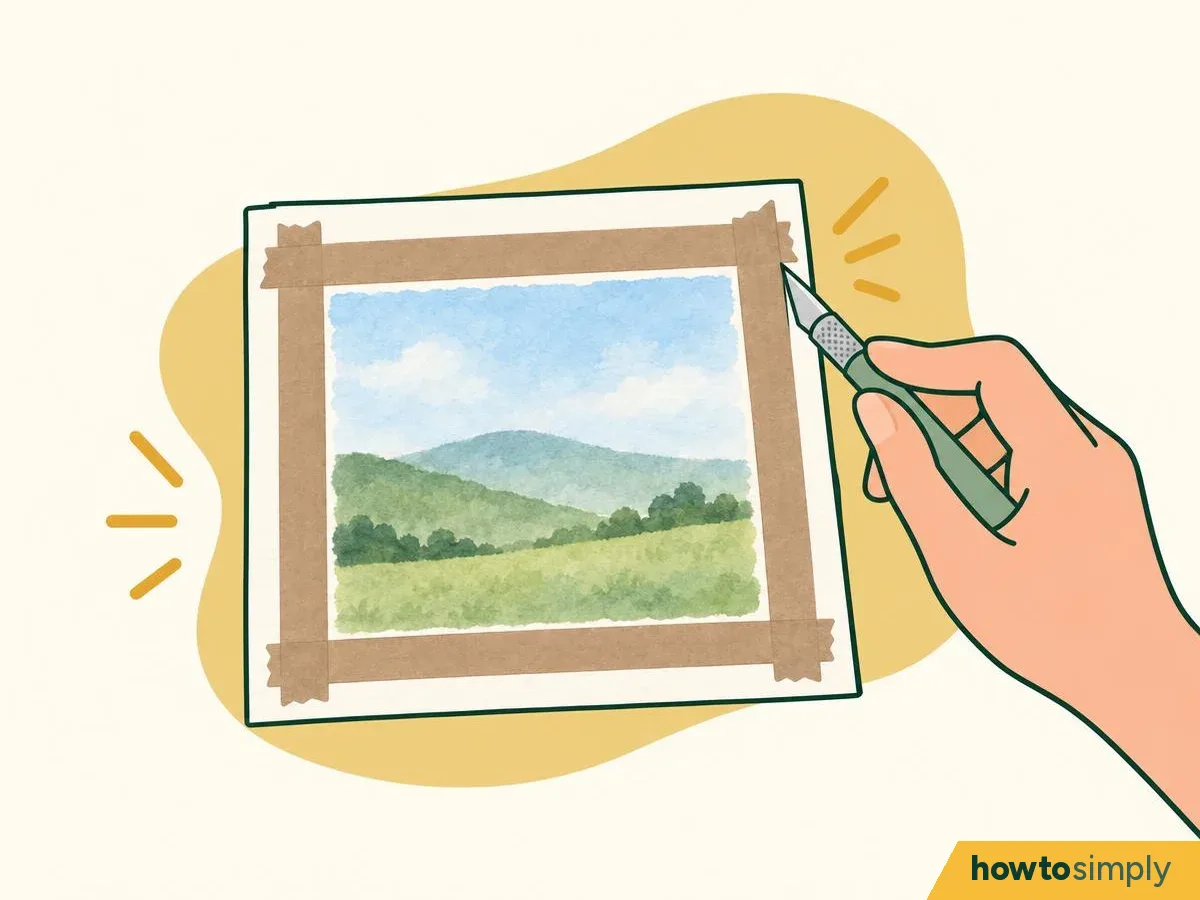
Illustration Paint while it is on the board. Once the painting has fully dried, run a sharp craft knife along the edge of the paper, cutting through the tape as you go (artsupplies.co.uk, TALAS).
You should see: a flat painting in your hand. Half the tape stays on the edge of the sheet; most artists leave it there and hide it under a mount (TALAS).
How to tell it worked
- The dry sheet is tight and flat, like a drum skin.
- The tape is stuck down all the way round, with no lifted edges.
- When you paint a wash, the paper stays flat instead of rippling (cockling).
- Paint sits on the surface; if it sinks in, the sheet may have lost its sizing from soaking too long (TALAS).
If it goes wrong
| What happens | What it means | What to do |
|---|---|---|
| The tape lifted and the paper rippled | Can be uneven drying, too much water on the tape, or a propped-up board (artsupplies.co.uk) | Keep the board flat, dampen the tape lightly, and don't use a hairdryer |
| Bubbles under the paper | Air was trapped as you laid it down | Next time, lay it from the middle outwards as in Step 3 |
| Paint sinks in | The sheet may have soaked too long and lost its sizing | Use a shorter time next time |
| No bath big enough | You can't soak the sheet in one go | Hold it under the tap or mist it with a spray bottle, soaking both sides again and again; it's slower (artsupplies.co.uk). Winsor & Newton says very big sheets can be soaked on the board for up to 25 minutes per side |
| You want to skip stretching | Some surfaces resist cockling | Heavier paper (over 200lb) resists cockling, and watercolour board stays flat even with heavy washes (TALAS) |
Questions readers ask
Do I need to stretch 300gsm (140lb) paper?
Yes. artsupplies.co.uk recommends stretching paper under 200lb/425gsm; TALAS says papers under 200lb cockle when wet. Heavyweight paper (over 200lb) or watercolour board can skip it (TALAS).
Can I use masking tape instead of gummed tape?
Not for wet stretching. Masking and household tape don't stick to wet paper. Use brown gummed paper tape (gumstrip), which you dampen to activate.
Can I dry it faster with a hairdryer?
artsupplies.co.uk says not to: uneven drying can cockle the surface. Leave it flat overnight.
How do I get the painting off the board?
Once the painting is done and fully dry, run a sharp craft knife along the edge of the paper, cutting through the tape as you go. Half the tape stays on the edge of the sheet and can be hidden under a mount.
Sources and method
- Researched by
- Abu Bakar Saadat
- Tested by our team
- No. We have no record of anyone on our team trying these steps, so treat them as researched instructions from the sources below.
- Pictures
- 7 illustrations drawn for this article, each marked Illustration (drawings, not photos).
- Sources
- 3 named sources, linked below.
- What this page adds
- A soaking-time table by paper weight from three suppliers, a close-up of tape laid half on the paper and half on the board, and a fix-it table for rippled paper or trapped bubbles.
What to do next
Learn to draw and paint from scratch Step 4 of 7
Did this solve the problem?
Where did you get stuck?
What did you think?
Reaction counts are loading.
Sources
We use primary, official and specialist sources appropriate to the topic.