How to clean paint brushes: acrylic and oil paint
Researched by Abu Bakar Saadat7 min read
Last updated: 15 November 2026References
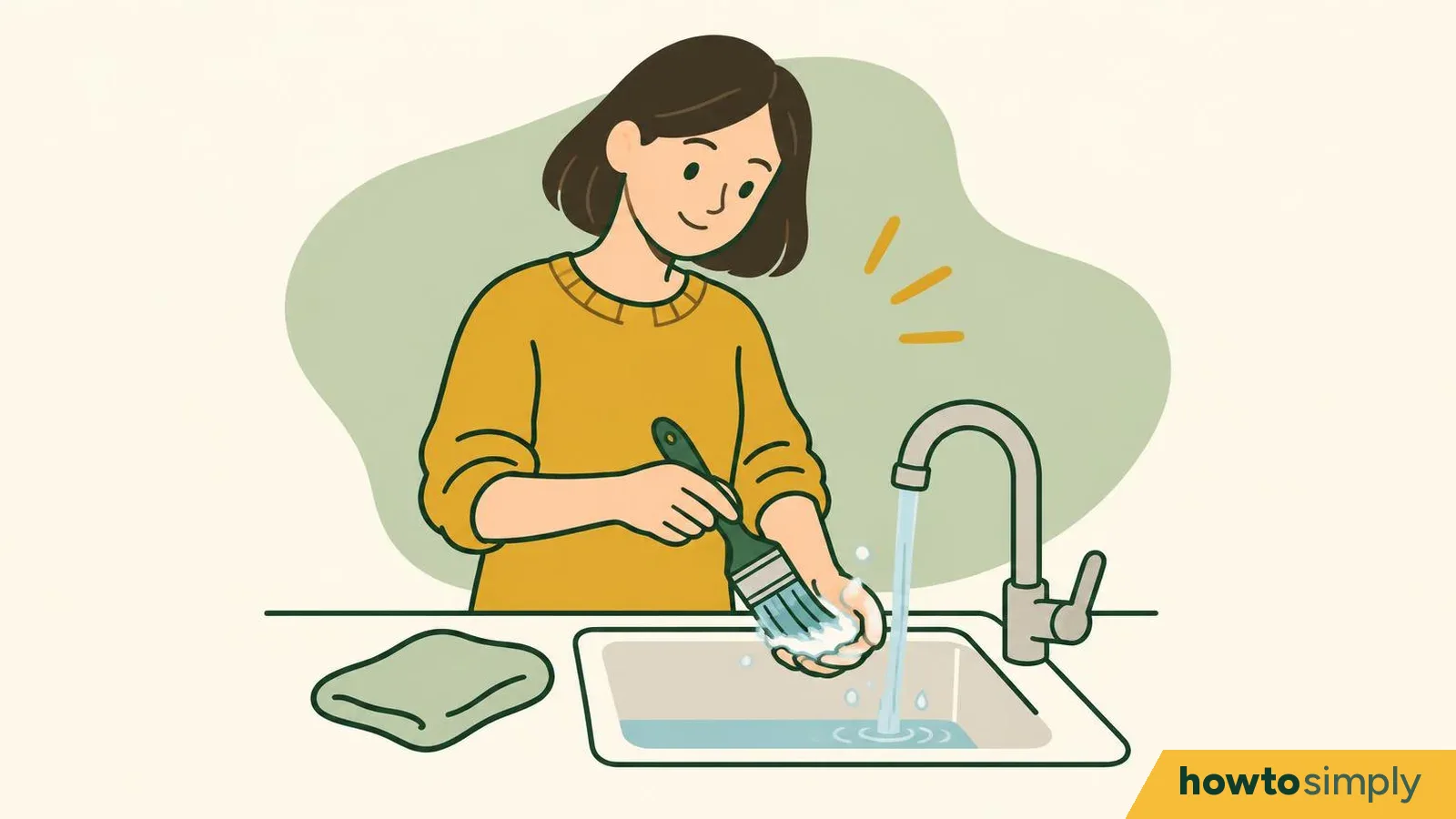 Illustration
On this page 11 sections
In short
Acrylic: never let it dry. Wipe, rinse, wash in cool water with mild soap and dry the brush head-up. Oil: wipe on a rag, loosen with a little cooking oil or brush cleaner, then use soap and water. Let rinse water settle, and keep solvent out of the drain.
At a glance
- Acrylic
- Wash straight away in cool water and mild soap
- Oil
- Rag, a little cooking oil or brush cleaner, then soap and water
- Dry
- Reshape, then stand head-up
- Oily rags
- Lidded metal bin: they can catch fire
- Waste
- Let it settle; solvent and solids never down the sink
- Advice from
- Winsor & Newton and Schmincke, read 28 October 2026
- Checked
- November 2026
If you finish a painting and find your favourite brush rock hard in the jar, the joy of it can leave you for a while. Whatever paint you used, acrylic or oil, a few simple steps straight after your last stroke will keep the brush flexible and ready for the next project.
Acrylic and oil paints need different approaches. Acrylic contains water while it's wet, but once it dries, it becomes a solid plastic film that water can't shift, so time is of the essence. According to Winsor & Newton, oil and water don't mix, and the rags and solvents used with oil paint need careful handling. In fact, what you do to rescue one brush does nothing for the other.
Acrylic or oil: which steps are for you?
Acrylic paint
Speed matters: wash in cool water with mild soap before it dries. Go to acrylic brushes.
Oil paint
Loosen it first: rag, a little cooking oil or brush cleaner, then soap and water. Go to oil paint brushes.
Acrylic or oil: the differences
| Acrylic | Oil | |
|---|---|---|
| During a session | Keep brushes in water if you can't wash them at once (W&N) | Wipe on a rag between colours |
| Cleans with | Cool water and mild soap (W&N) | Rag, a little cooking oil or a brush cleaner, then soap and water (W&N) |
| Paint that has dried | Doesn't dissolve in water; soak overnight in brush cleaner (W&N) | Brush cleaner (W&N) |
| Between sessions | Wash and dry fully | Wrap in a damp cloth in a plastic bag, or stand in a jar of water (W&N) |
| Rinse water and waste | Let it settle; clear water to the drain, solids in the bin (Schmincke) | Solvent and sediment to a waste site; oily rags in a closed metal container (Schmincke, W&N) |
Acrylic brushes
Don't let the paint dry in the brush.
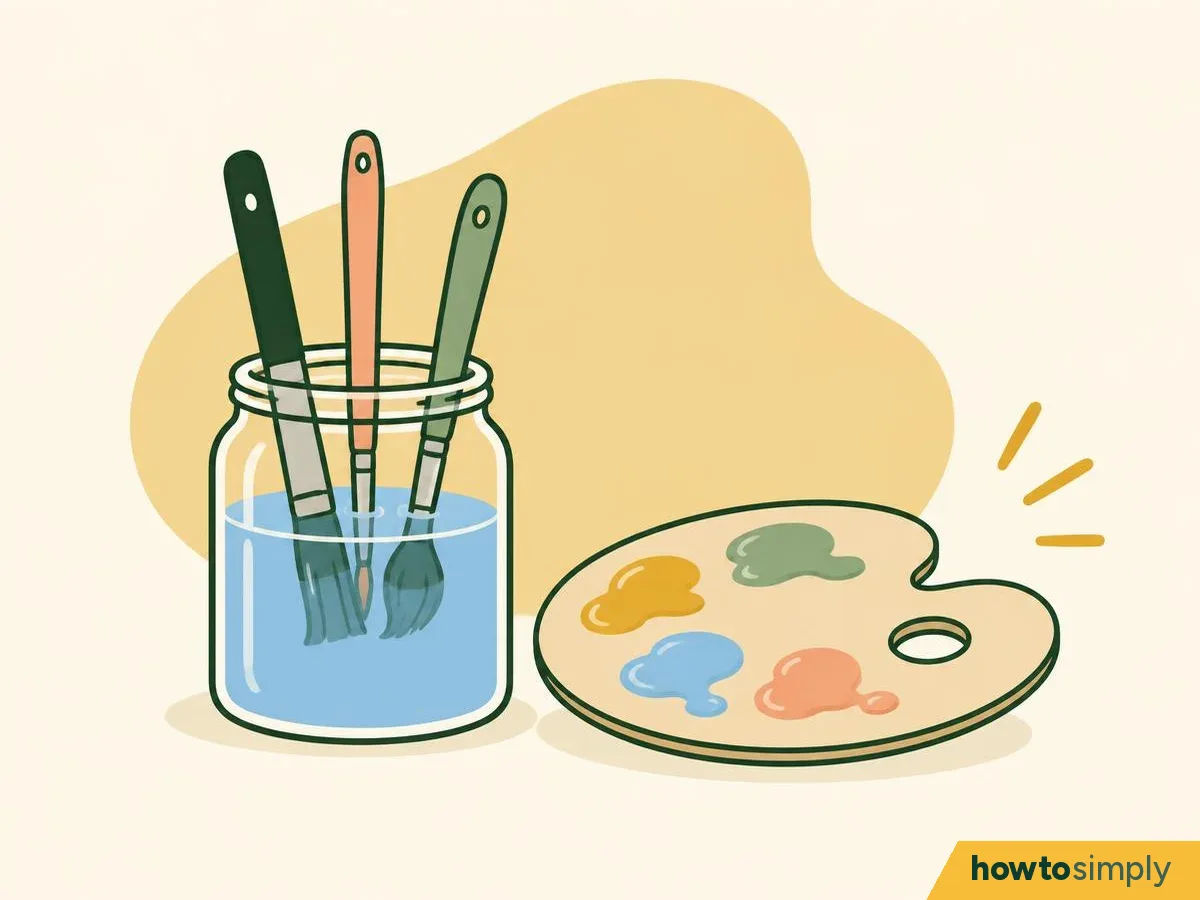
Illustration Make sure you wash brushes as soon as you finish, because once acrylic dries in the bristles, water won't shift it. If you can't wash them straight away, keep them in water while you paint (W&N). So if your habit is to leave the brushes lying on the palette while you put the kettle on, I am afraid the acrylic will not wait for you.
You should see: paint still wet and soft in the bristles when you start cleaning.
Wipe, rinse, then wash with mild soap in your palm.
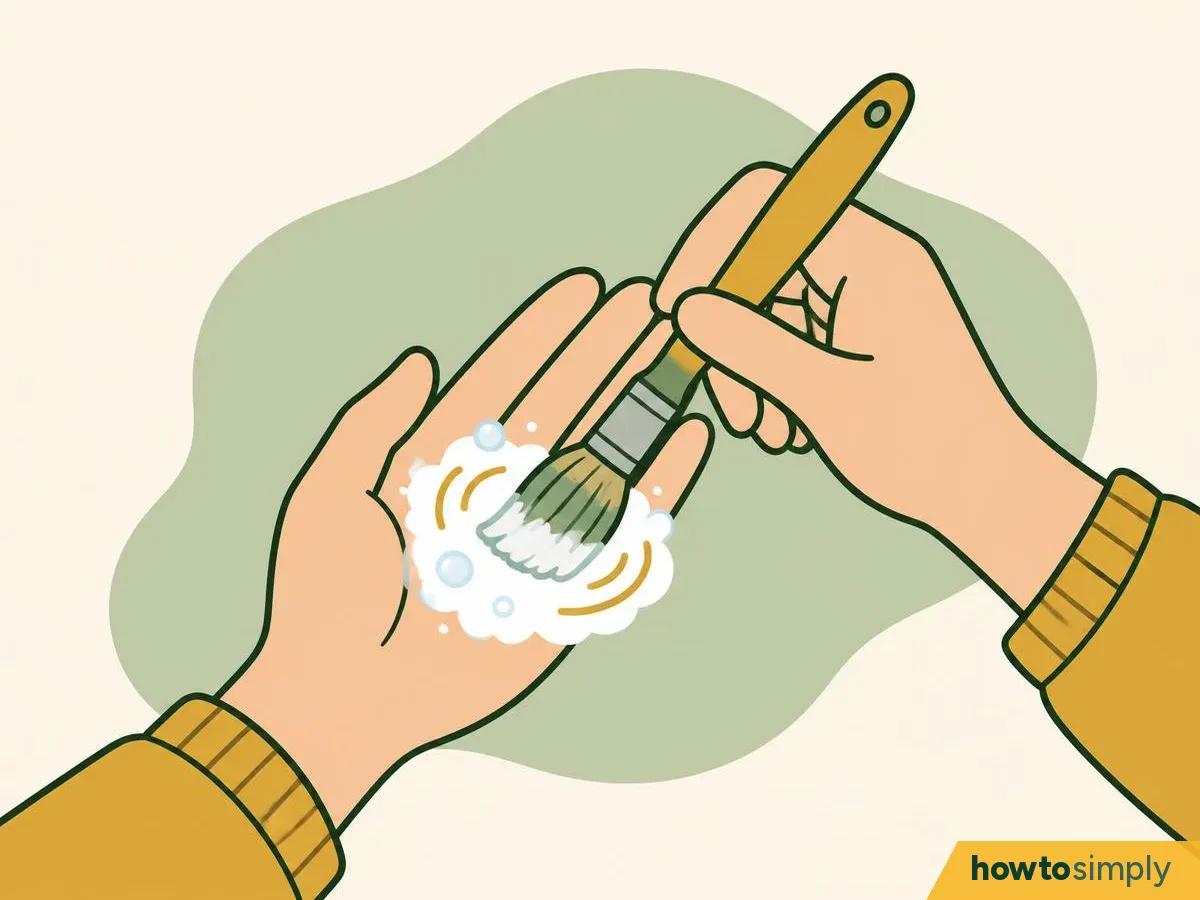
Illustration Wipe the paint off on a rag that won't shed fluff, then hold the brush under a running tap. Next, use cool water and a gentle soap, and swirl the brush softly around your palm (W&N).
Rinse well, paying special attention to where the bristles meet the handle (W&N). Then repeat until the water runs clear (W&N). It can take a few rounds, and that is perfectly fine.
You should see: rinse water running clear, with no colour coming from the base of the hairs.
Reshape the head and dry the brush head-up.

Illustration Remove excess water, gently reshape the head, dry the handle and the metal ferrule, and stand the brush head-up until it's fully dry (W&N). What it will do, it lets the hairs set in the right shape, so the brush is ready to paint with next time.
You should see: the brush reshaped and standing head-up to dry.
Oil paint brushes
Careful: put the used rag straight into a lidded metal bin: rags with oil on them can catch fire as they dry (W&N).
Wipe off as much paint as you can on a rag.
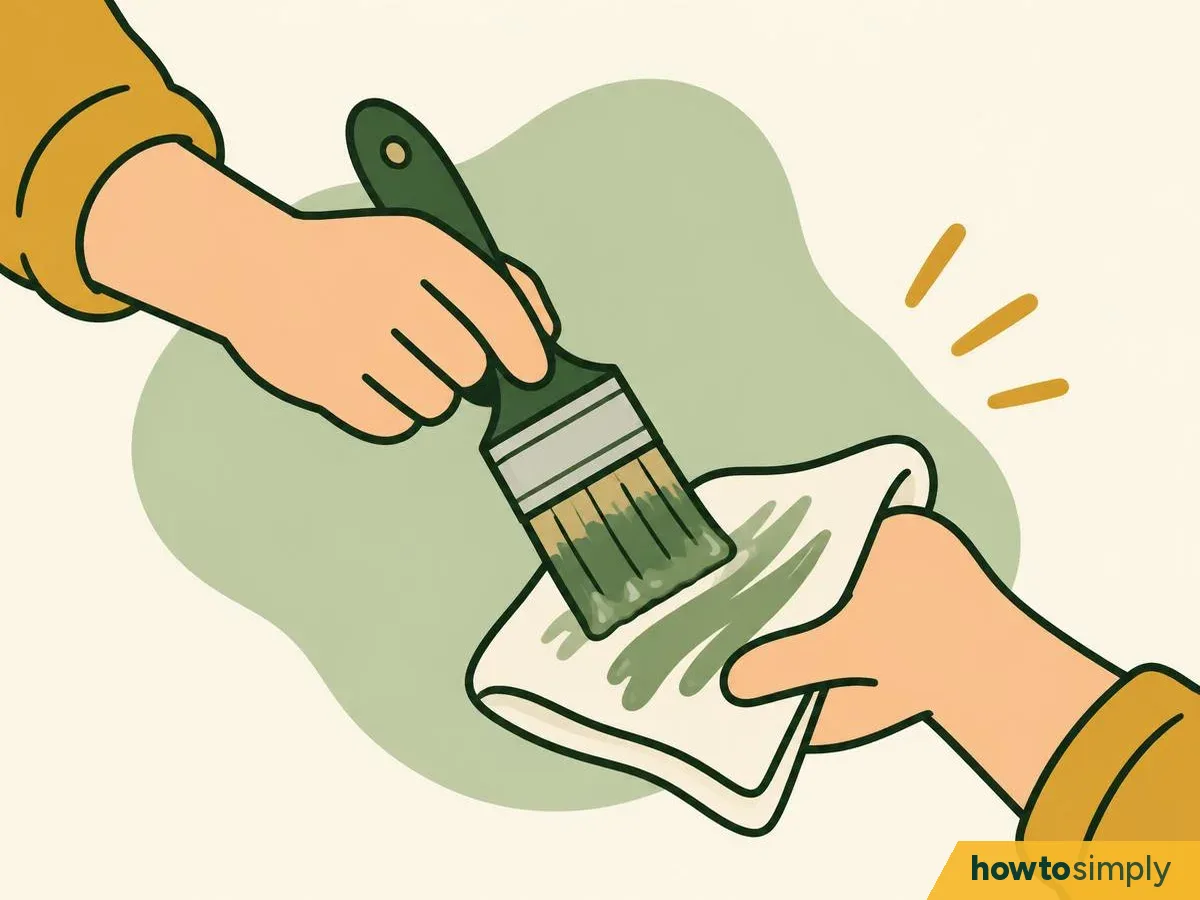
Illustration Then there is oil paint. Wipe the brush firmly on a rag (W&N). The reason for the cooking oil is that a little worked into the bristles helps release more paint into the rag (W&N).
You should see: most of the colour on the rag, and only a little left in the bristles.
Wash it on a bar of soap.
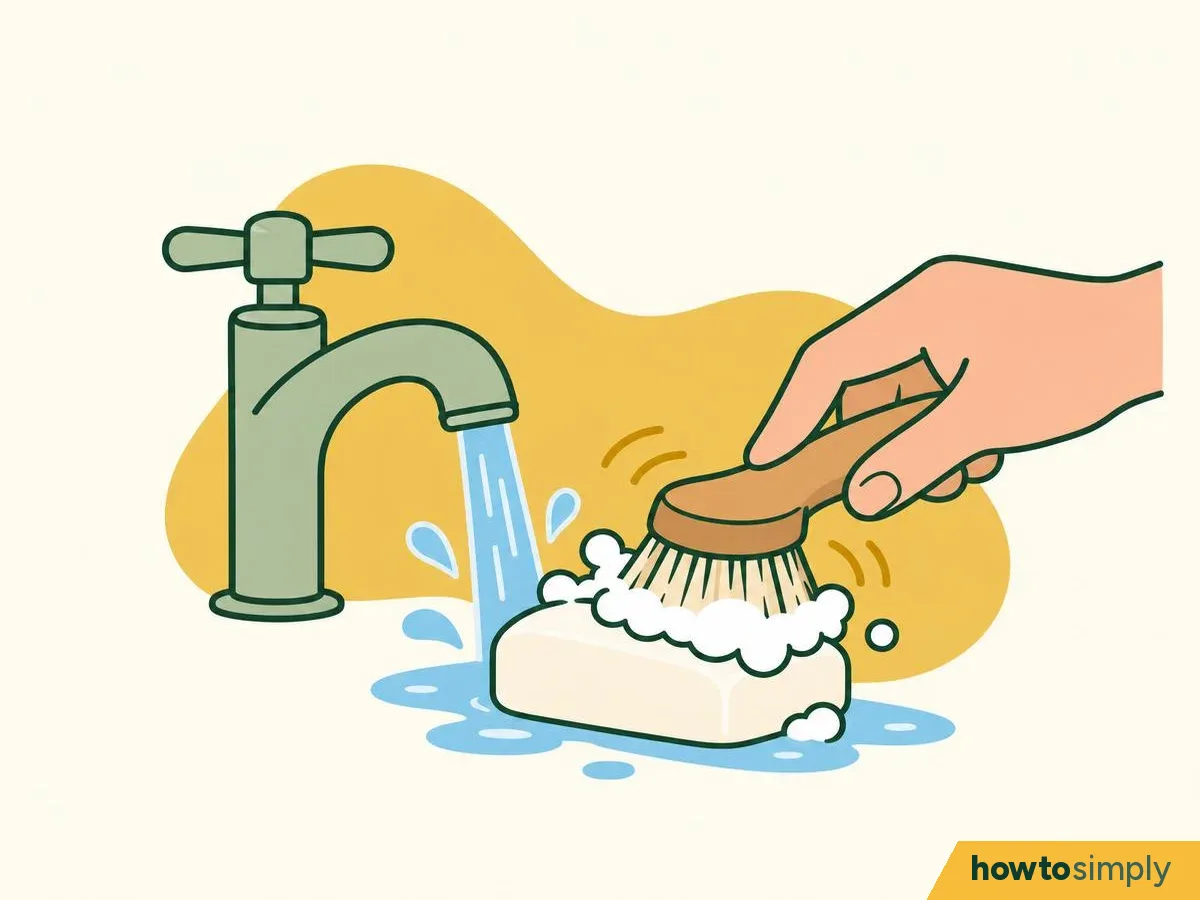
Illustration Push the brush into a bar of soap with a circular movement to help remove anything that is left (W&N). It is that easy.
Winsor & Newton also sells a brush cleaner that it says is far less toxic than solvents and biodegradable; that's the maker's own claim.
You should see: white lather with no colour in it.
Let it air-dry, or keep it wet if you can't face cleaning it.
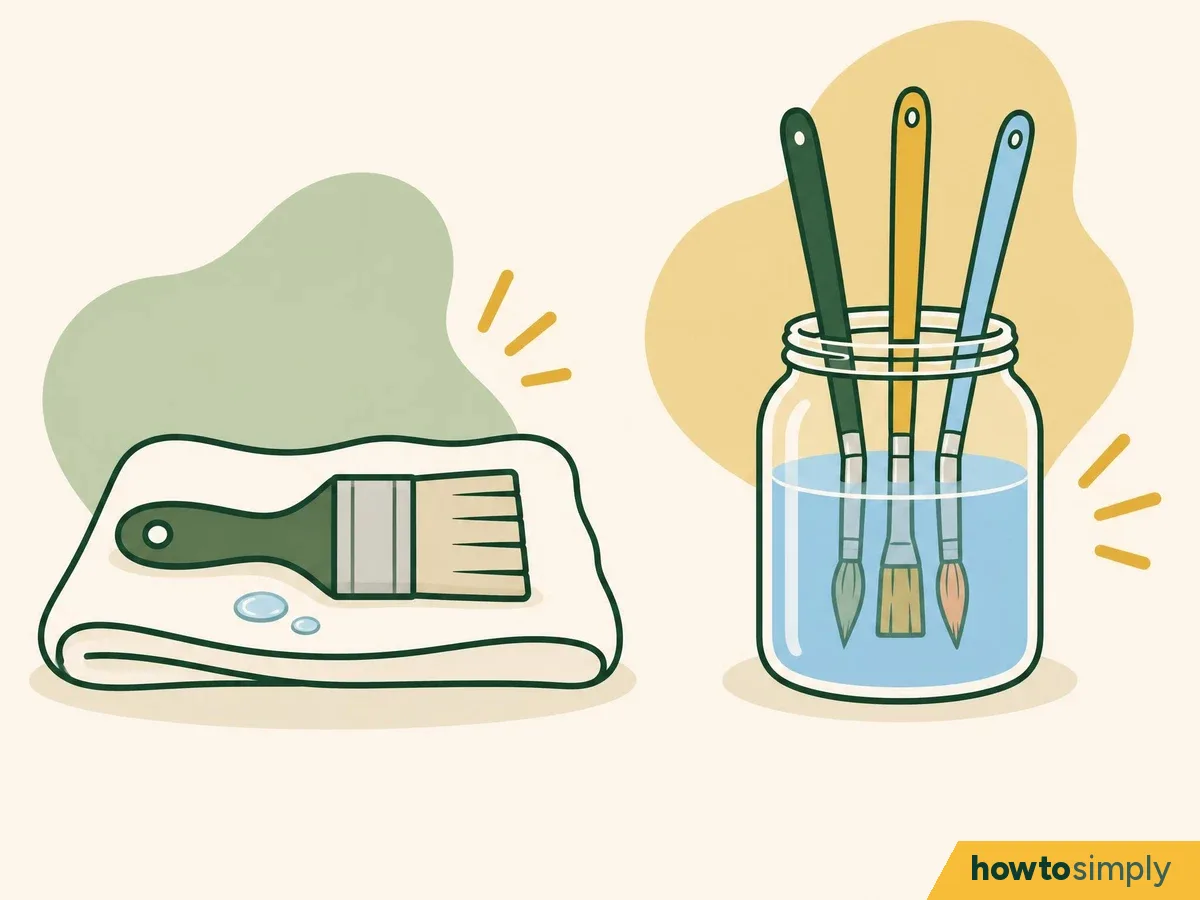
Illustration Let the brush air-dry before you use it again (W&N).
Too worn out after a long painting session to wash up? Wrap the brushes in a damp cloth and pop them in a plastic bag, or stand them in a jar of water, because oil and water won't mix (W&N).
You should see: a dry brush ready for next time, or brushes wrapped or standing in water overnight.
What to do with the dirty water and solvent
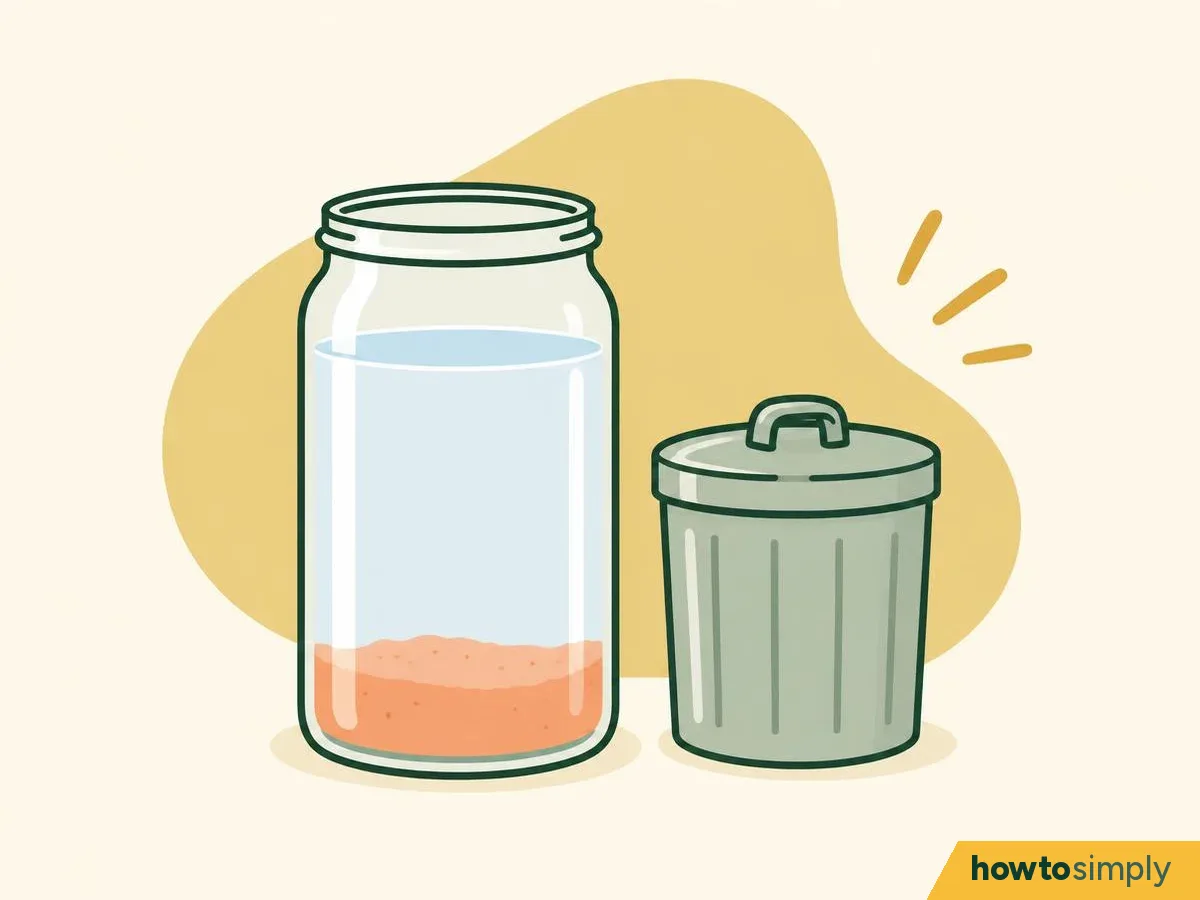
However tempting it is to tip the whole muddy jar down the sink and be done with it, the drain deserves better. Give it a little time and sort it like this:
- Acrylic rinse water: Schmincke says to collect it in an open container and let the solids sink, then pour the clear water down the drain and put the solids in household waste, or follow your council's rules.
- Solvent: keep it in a sealable jar. Schmincke and Winsor & Newton say that once the pigment has settled, you can pour the clear solvent into a second jar to reuse. Schmincke says to take the wet sludge to a local waste site, and Winsor & Newton says nothing goes down the sink.
- Oily rags: always into a closed metal container, as Winsor & Newton advises.
How to tell it worked
- The rinse water runs clear (W&N).
- The head has been reshaped, and the handle and ferrule are dry (W&N).
- The brush is drying with its head up (W&N).
- The oily rags are in a closed metal container, and no solvent went down the sink (W&N).
If it goes wrong
Don't worry if a brush has already gone stiff or splayed. Most of these problems have a way back, and the table below shows what to try.
| What happens | What it means | What to do |
|---|---|---|
| Acrylic dried hard in the brush | Dried acrylic doesn't dissolve in water (W&N) | Soak overnight in a brush cleaner, then wash and rinse until clear (W&N). Very old dried paint may not come out |
| Hairs splay out after drying | The head wasn't reshaped while damp | Reshape while damp and dry head-up next time |
| Varnish on the brush | It depends on the varnish | Solvent-based varnish needs white spirit; water-based varnish washes out with soap and water (W&N) |
Mixing next? See how to mix colours from the three primaries.
Questions readers ask
Can I save a brush with dried acrylic paint in it?
Sometimes. Dried acrylic doesn't dissolve in water. Winsor & Newton suggests soaking the brush overnight in a brush cleaner, then washing and rinsing until the water runs clear.
Can I pour paint water down the sink?
Not straight away. Schmincke says to let acrylic washing water stand so the solids sink, pour only the clear water away and put the solids in the bin as local rules say. Solvents never go down the sink (Winsor & Newton).
Do I need white spirit to clean oil brushes?
No. Winsor & Newton describes wiping the brush on a rag, loosening the paint with a little cooking oil, then washing with soap and water. A brush cleaner also works.
My brush is stained. Is it ruined?
No. Winsor & Newton says some pigments stain the hairs, and that doesn't affect how the brush works or how long it lasts.
Sources and method
- Researched by
- Abu Bakar Saadat
- Tested by our team
- No. We have no record of anyone on our team trying these steps, so treat them as researched instructions from the sources below.
- Pictures
- 8 illustrations drawn for this article, each marked Illustration (drawings, not photos).
- Sources
- 5 named sources, linked below.
- What this page adds
- An acrylic versus oil table covering cleaners, dried paint and waste, a drawing of letting rinse water settle before you pour it away, and a fix for splayed hairs.
What to do next
Learn to draw and paint from scratch Step 7 of 7
Did this solve the problem?
Where did you get stuck?
What did you think?
Reaction counts are loading.
Sources
We use primary, official and specialist sources appropriate to the topic.
- Winsor & Newton: How to clean acrylic paint brushes
- Winsor & Newton: Brush cleaning masterclass
- Winsor & Newton: Cleaning oil paint from brushes
- Winsor & Newton: Protecting myself and the environment using oil paints
- Schmincke: Environmentally responsible disposal of washing water, colour and medium remains