How to prime a canvas with gesso
Researched by Abu Bakar Saadat6 min read
Last updated: 15 November 2026References
On this page 8 sections
In short
Stir acrylic gesso, thin the first coat with a little water and brush it on in one direction. Let each coat dry for at least an hour, brush the next one across it, and wait 24 hours before painting. Use two or more coats; more for oils.
At a glance
- You need
- Acrylic gesso, wide flat brush, water, sandpaper (optional), a damp cloth
- Coats
- Acrylic painting 1 to 2, oils 2 to 4 (Winsor & Newton); at least 2 (Golden)
- Between coats
- At least 1 hour (Winsor & Newton); 1 to 3 hours (Golden)
- Before painting
- At least 24 hours (Winsor & Newton)
- Advice from
- Winsor & Newton, GOLDEN Artist Colors, Getty Museum, MFA Boston CAMEO, read 28 October 2026
- Checked
- November 2026
A stretch of raw canvas can feel a bit daunting when all you want is to get on and paint. Priming it yourself is calm, satisfying work, and a few thin coats leave you with a surface that's ready for your colours.
Gesso is the white primer that sits between the canvas and the paint. Golden says it gives the surface "tooth" for the paint to grip. The reason not to skip it is that Winsor & Newton warns raw canvas touching the paint is likely to rot over time. Winsor & Newton primes its own canvases with at least three coats; this guide is for raw canvas, or for adding coats to a ready-made canvas and sanding it smoother.
How many coats?
The two makers put it slightly differently, so here are both. Winsor & Newton says the right number also depends on how absorbent the canvas is.
| You'll paint with | Winsor & Newton | Golden |
|---|---|---|
| Acrylics | 1 to 2 coats | At least 2 coats, especially on canvas or linen |
| Oils | 2 to 4 coats | At least 3 coats on canvas, to limit linseed oil soaking in |
| Not sure | About 3 coats on average | - |
How to prime the canvas
Stir the gesso and protect your work surface.
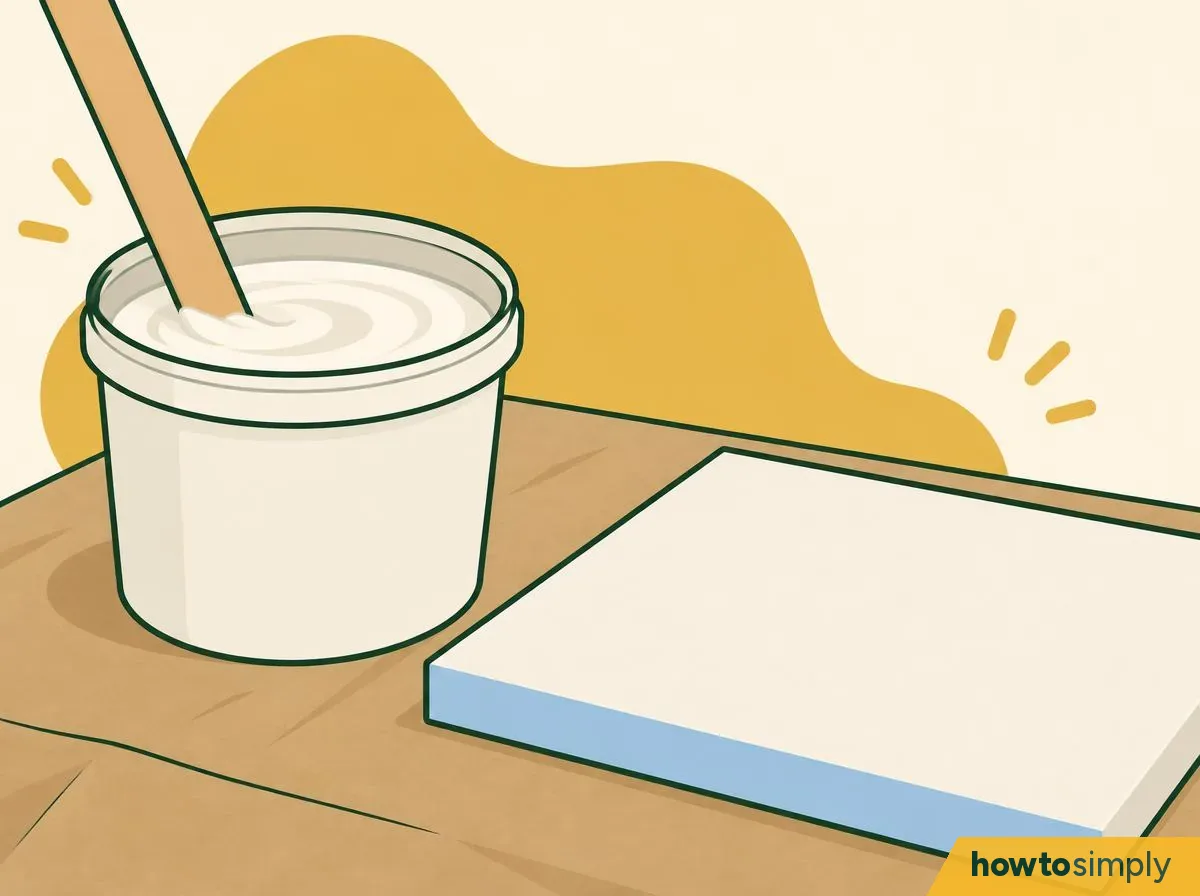
Illustration Don't worry if the gesso has settled in the tub; that is normal, so stir it well first (Golden). Lay the canvas flat on a covered table. Wear old clothes, because dried acrylic is hard to get out of fabric (our note). So if your habit is to start in your good jumper and promise yourself you will be careful, I am afraid gesso has other plans.
You should see: a smooth, even white with no thick sludge left at the bottom of the tub.
Careful: don't over-thin. Golden recommends adding no more than 25% water.
Thin a little gesso for the first coat.
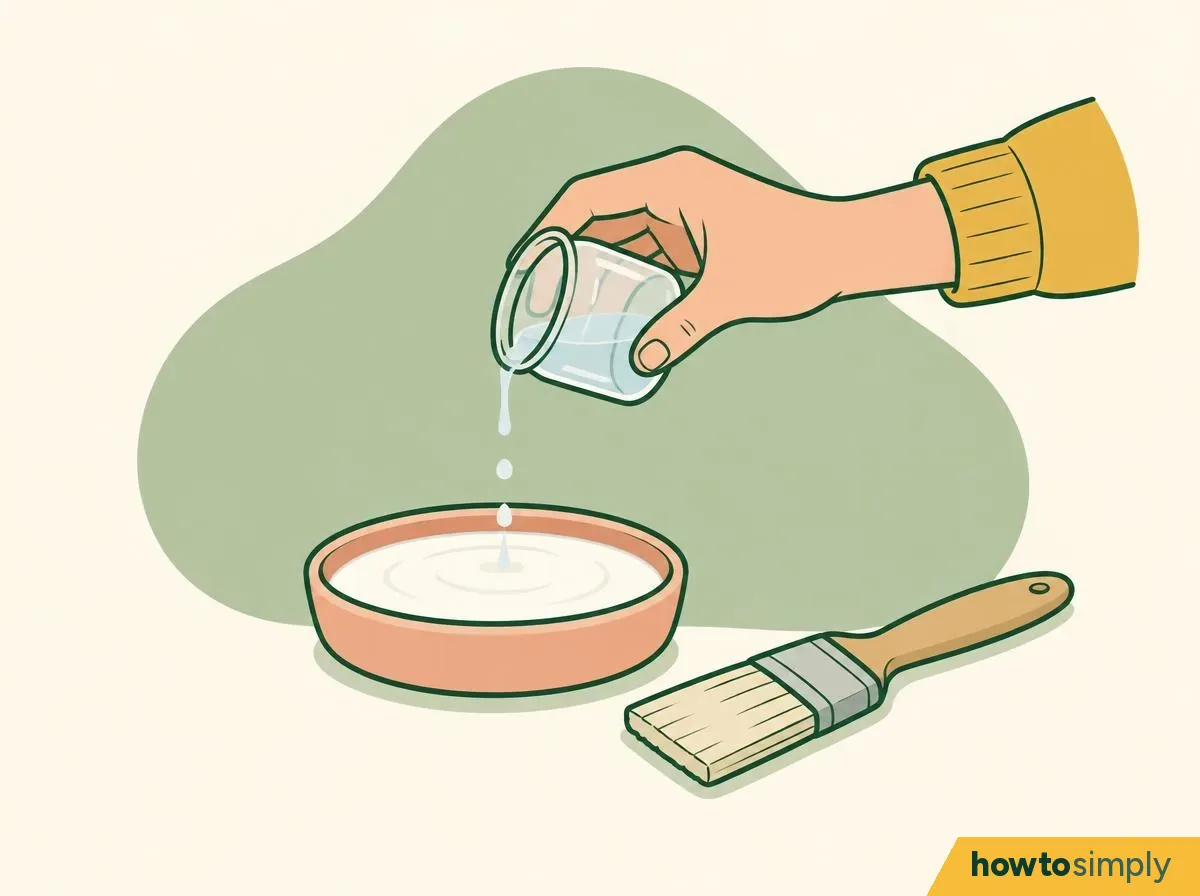
Illustration Winsor & Newton suggests adding a splash of water to the first coat so it spreads more easily and sinks into the canvas. Pour some into a separate dish rather than adding water to the whole tub, because only the first coat needs thinning.
You should see: gesso that flows a little more easily off the brush but is still white and opaque.
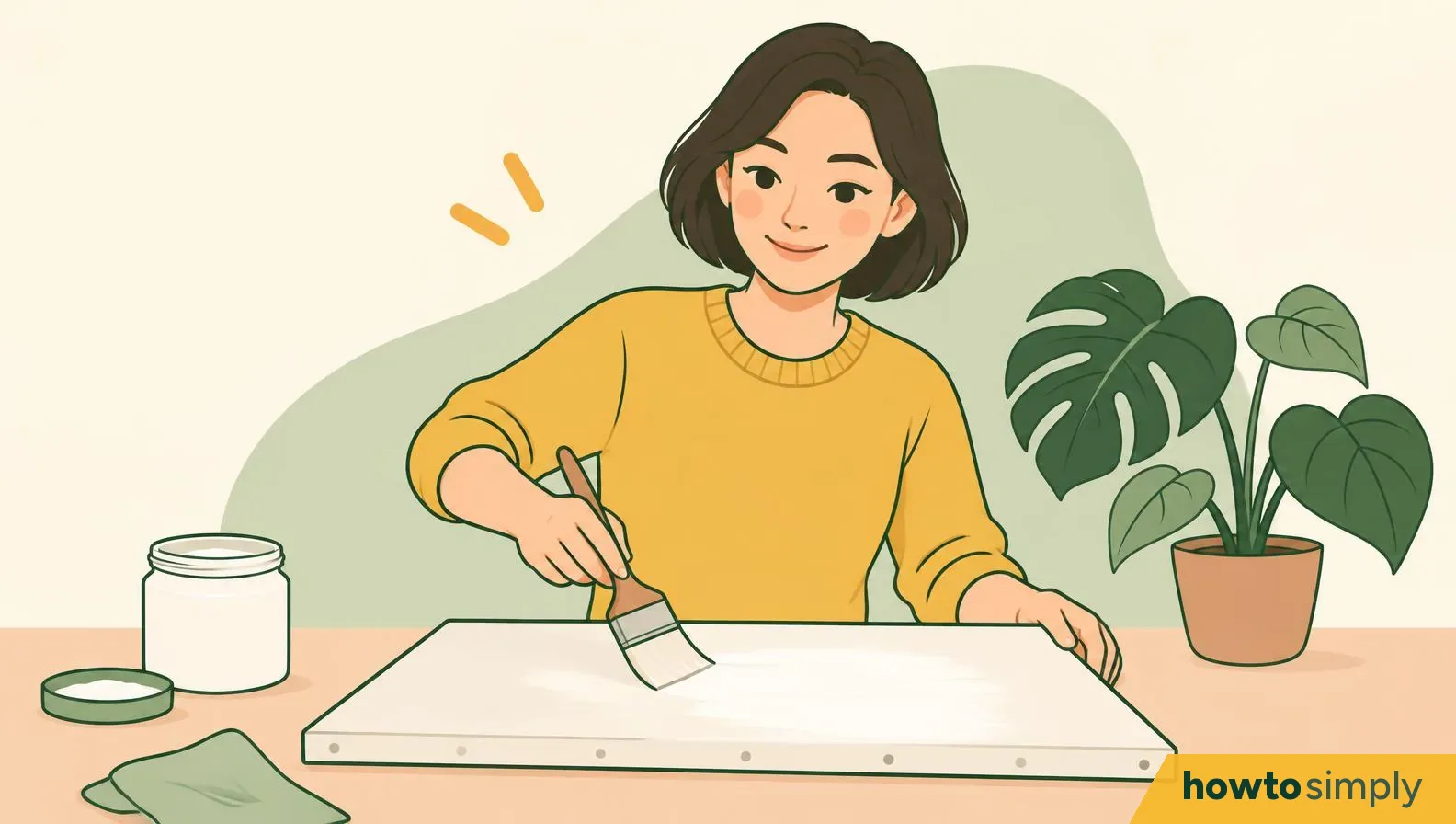
Brush the first coat on in one direction.
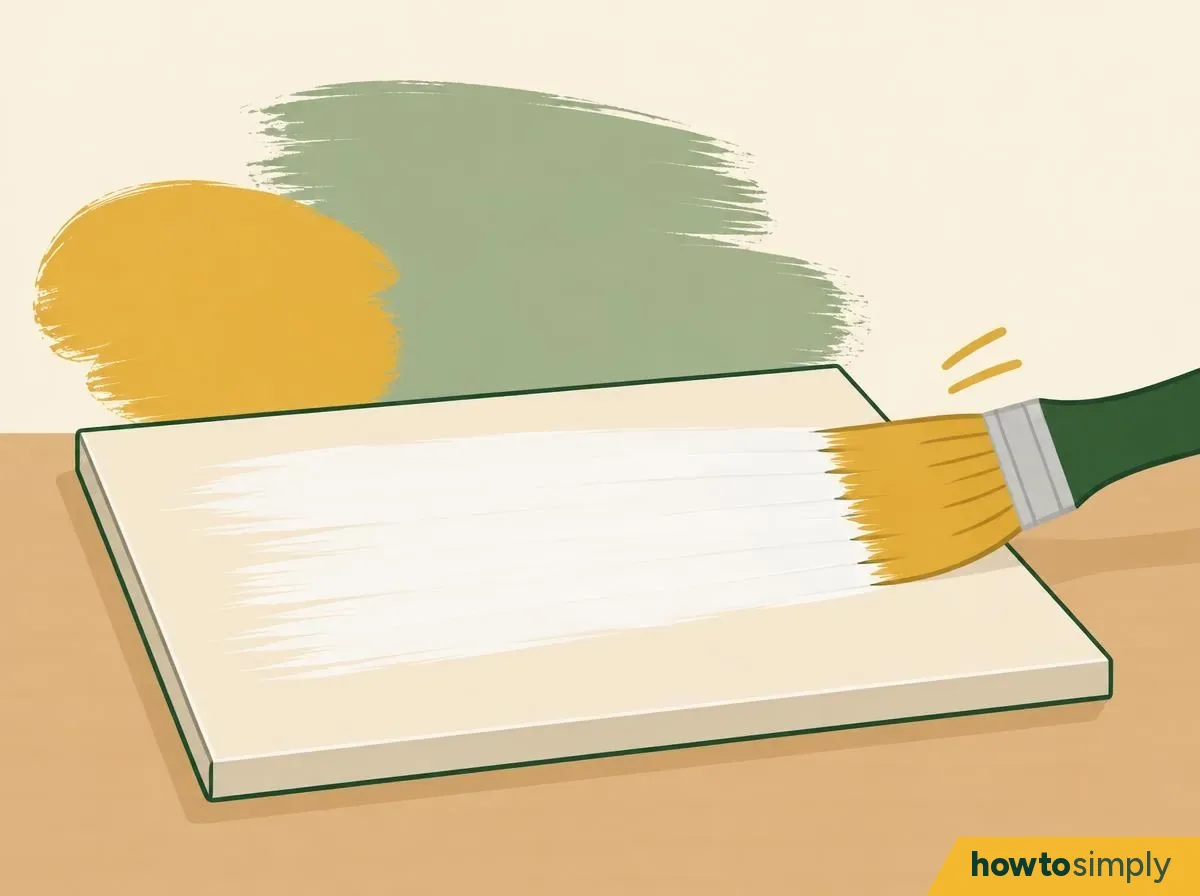
Illustration Work it in with firm strokes, always going the same way (Winsor & Newton). Keep the layer thin: Golden recommends thin applications and says thick single applications may crack. Carry it round the edges if the sides will show.
You should see: an even, thin white layer. After a single coat you might still see tiny holes or bare patches (Golden).
Let it dry for at least an hour, and wash the brush.
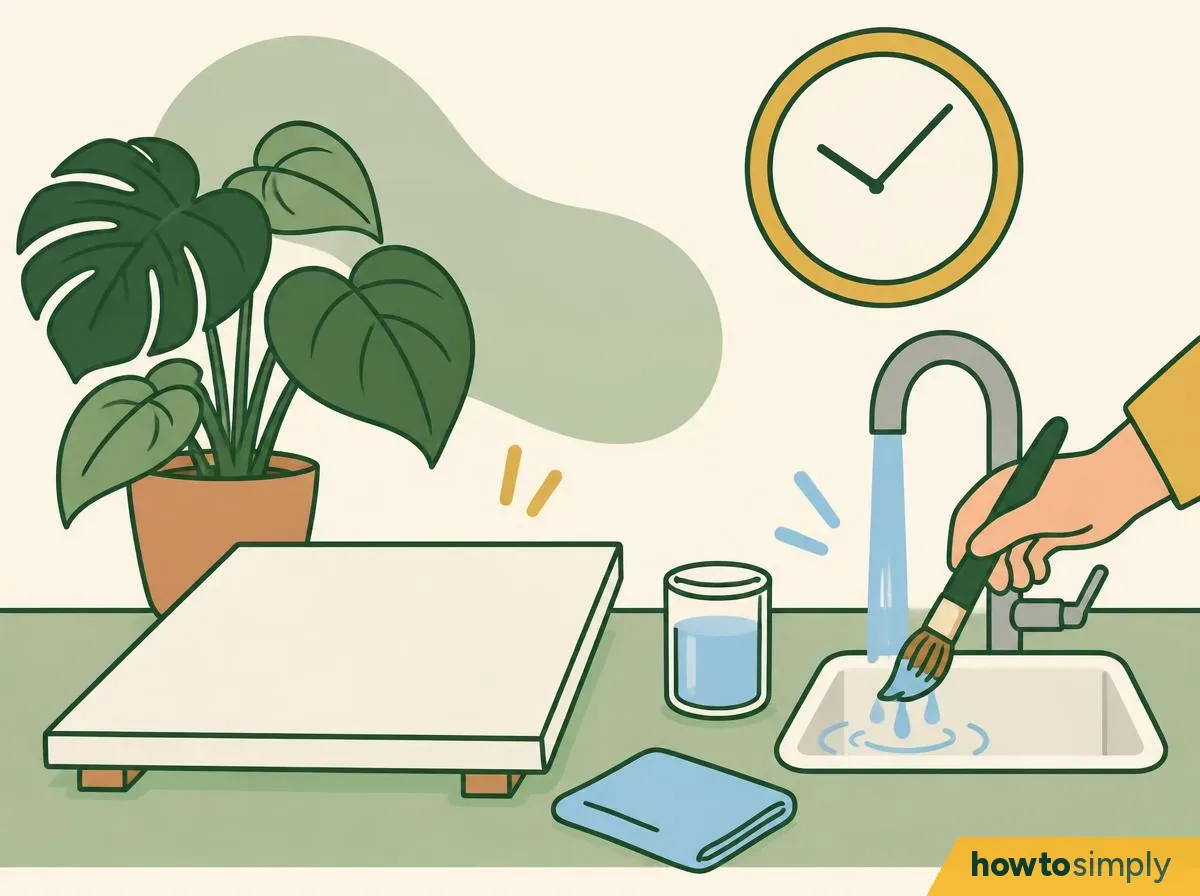
Illustration Gesso can be touch-dry in one to two hours, and Winsor & Newton says to wait at least an hour between coats. Golden says 1 to 3 hours, depending on conditions; a 10 mil wet film of its gesso dries to the touch within 2 hours above about 18 °C (65 °F) and below 70% humidity. Rinse the brush straight away (see how to clean acrylic brushes).
You should see: a surface that is dry to the touch.
Sand lightly, if you want it smoother.
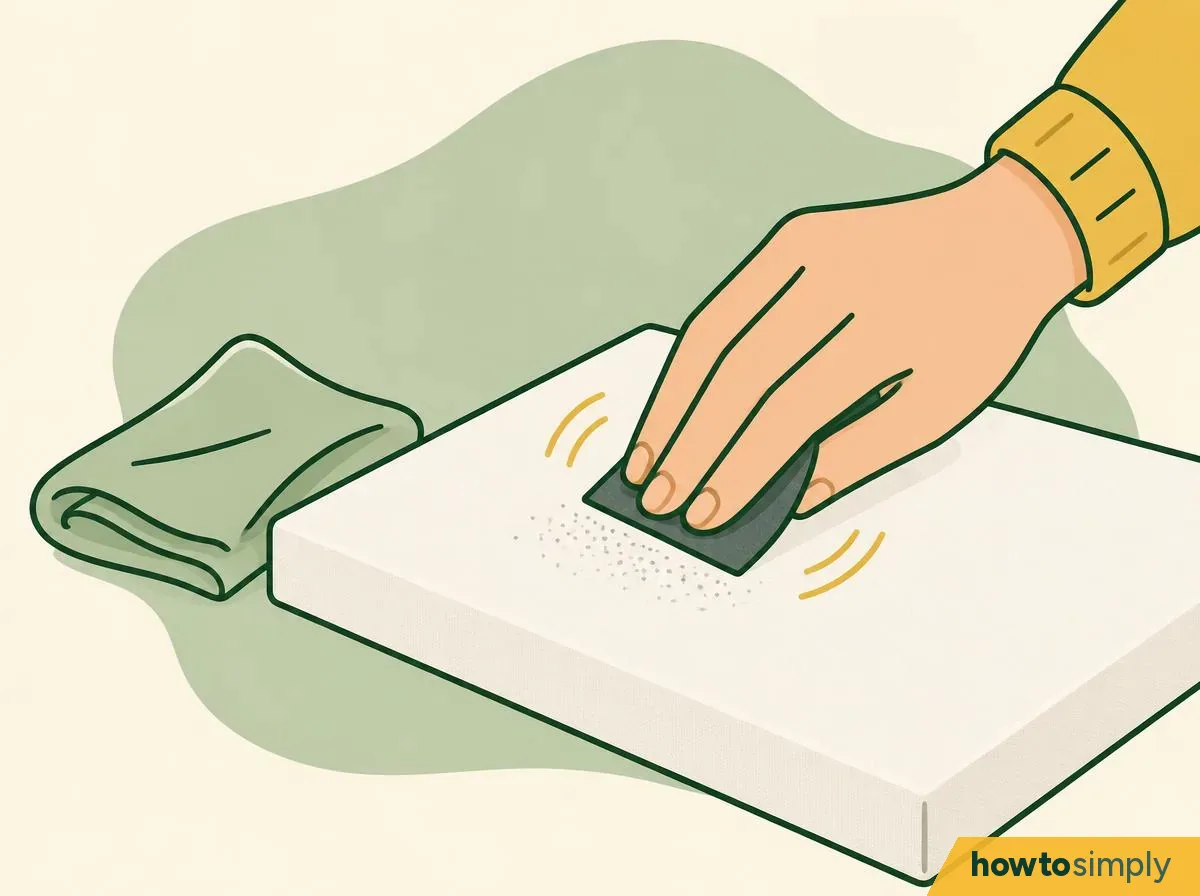
Illustration This step is optional. Golden says sanding its gesso generates heat that will "gum up" the sandpaper rather quickly, and wet sanding gives very good results while reducing dust. Use a fine paper and a light touch on canvas. On its sandable gesso, Golden advises wiping the surface with a damp, soft cloth afterwards so the next coat sticks.
You should see: ridges and brush marks softened, without patches worn through to bare canvas.
Brush the next coat across the first.
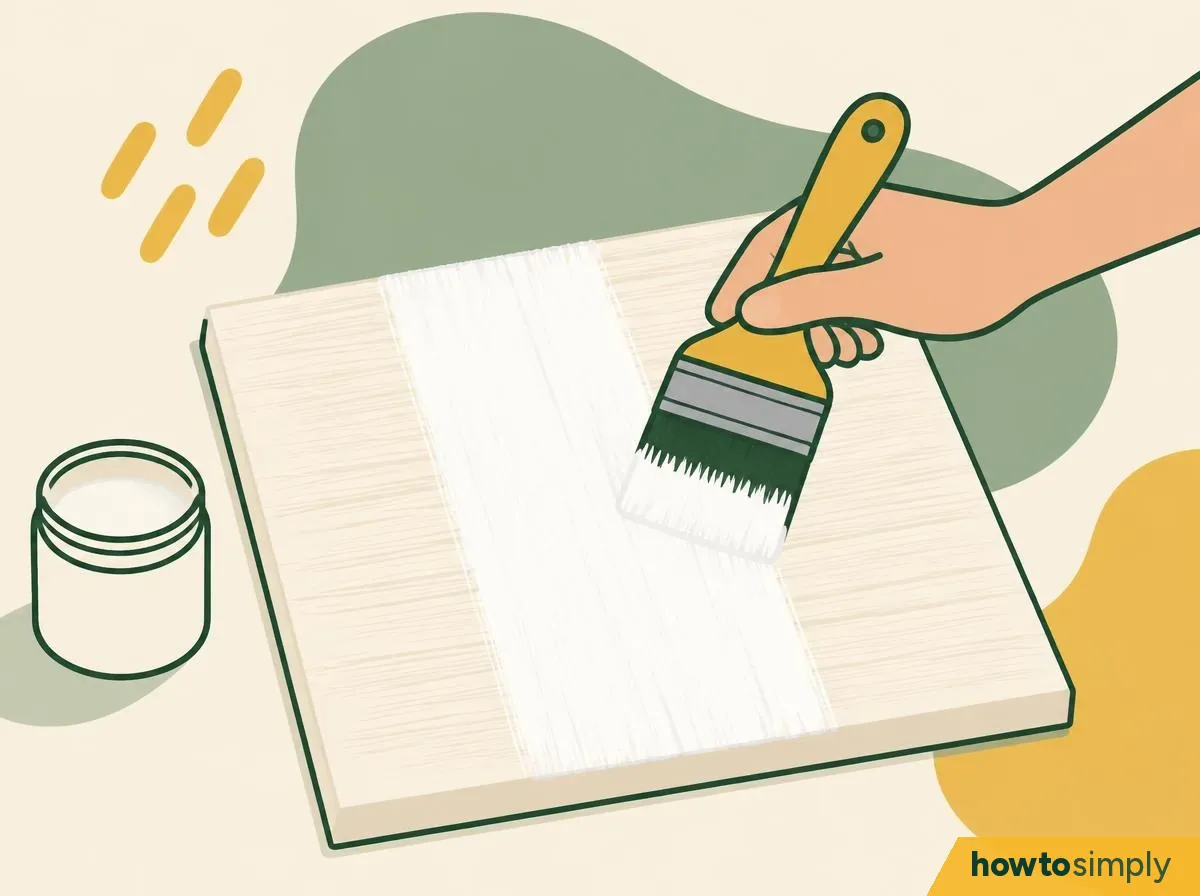
Illustration When the first coat is dry, apply the next one in the opposite direction (Winsor & Newton). This coat doesn't need thinning. Golden says the second coat grips the first and starts to smooth the surface.
You should see: a more solid white, with the weave less visible.
Brush the last coat the same way you brushed the first one.
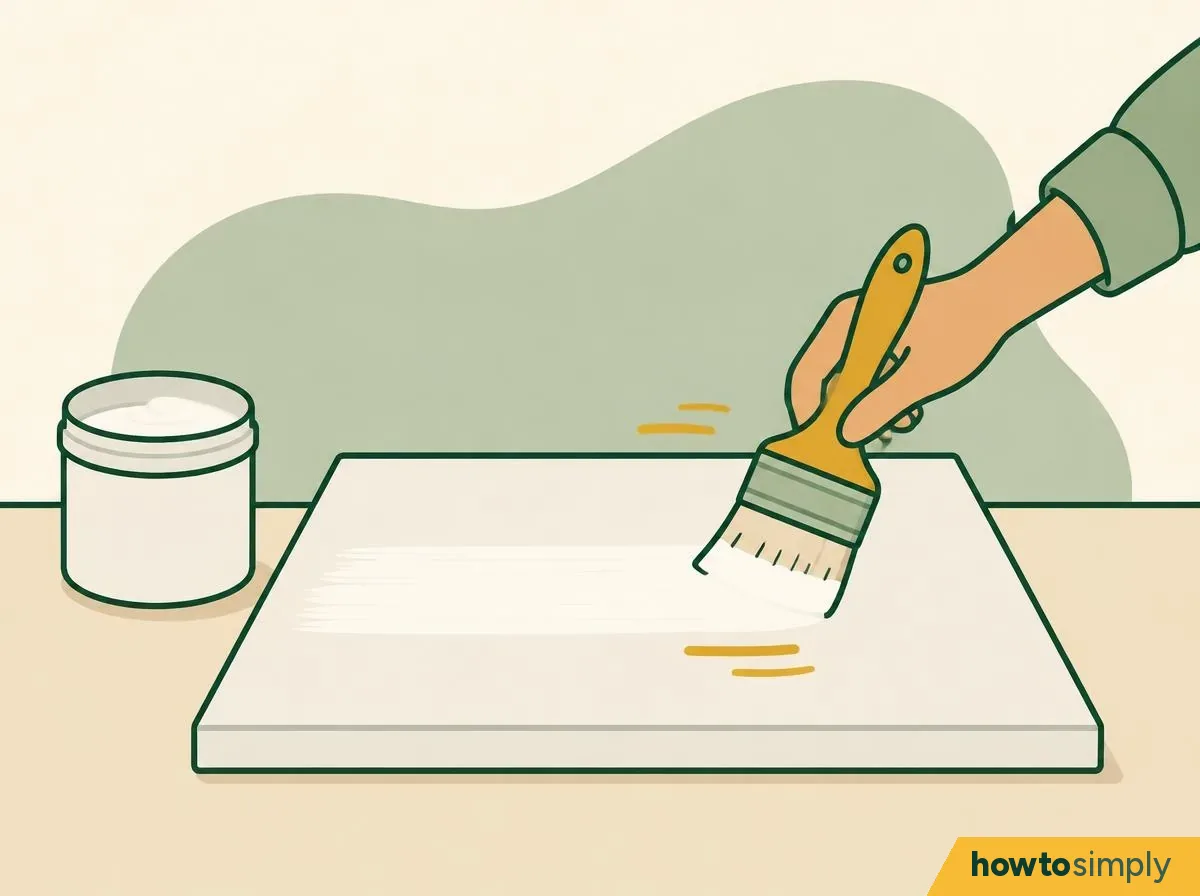
Illustration Apply as many coats as the table suggests, letting each one dry. Winsor & Newton says to apply the final coat in the same direction as the first.
You should see: an even, opaque white surface with fine brush lines all running one way.
Wait at least 24 hours before you paint.
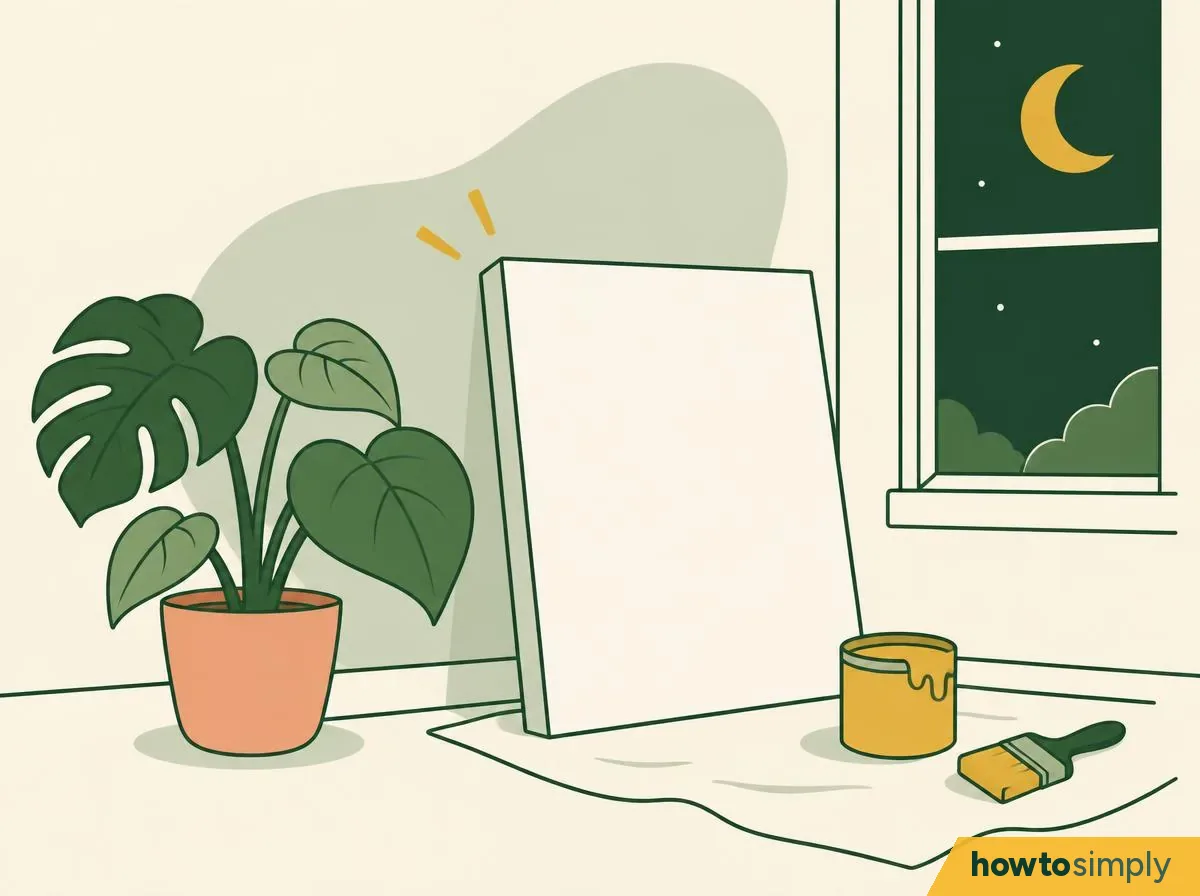
Illustration Winsor & Newton says to give a gessoed canvas 24 hours or longer before you paint on it. Golden notes that thicker films and cooler, more humid conditions slow drying considerably, so allow longer in a cold room. This wait is the hardest step of all, because the canvas feels ready long before it really is.
You should see: a dry surface with a slight tooth.
How to tell it worked
- The surface is evenly white all over, sides included, with no bare or thin patches.
- It has a slight tooth, the grip that helps paint stick (Golden), rather than a glassy, slippery feel.
- There are no cracks (Golden).
- You left it at least 24 hours after the last coat (Winsor & Newton).
If something goes wrong
Cracks and ridges can happen, but most can be sanded down and recoated, and the table shows you how.
| What happens | What it means | What to do |
|---|---|---|
| Cracks appear as it dries | Thick single coats may crack (Golden) | Use thin coats (Golden) |
| Thick ridges and brush marks | - | Wet sand if you want it smoother, and use thin coats (Golden) |
| Still tacky hours later | Cold or humid air (Golden) | Move it somewhere warmer and drier and wait |
| The sandpaper clogs straight away | Sanding heats and gums it up (Golden) | Wet sand instead |
| Next coat won't stick well after sanding | Sanding dust left on the surface | Wipe it with a damp, soft cloth first (Golden, sandable gesso) |
Questions readers ask
Do I need to prime a canvas that's sold as primed?
Not for Winsor & Newton's: it says no additional priming is needed. Winsor & Newton says its own canvases come with at least three coats of gesso. You can add more coats and sand them if you want to smooth out the weave, but that's optional.
Can I use acrylic gesso under oil paint?
Yes. Golden says oil paint can go directly over its acrylic gesso, and suggests at least three coats on canvas to limit linseed oil soaking in. Winsor & Newton suggests two to four coats for oils.
Is acrylic gesso the same as traditional gesso?
No. MFA Boston's CAMEO describes gesso as a ground made from gypsum and animal glue, or chalk in glue, used primarily for tempera painting and water gilding. MFA Boston's CAMEO notes that modern synthetic primers sold as gesso don't correspond to true gesso. This guide covers the acrylic kind.
Can I gesso over an old painting?
Over an old acrylic painting, yes: Winsor & Newton suggests sanding it lightly to even the surface, then applying gesso. Over an old oil painting, no: Winsor & Newton says you can't re-gesso or prime over oil paint.
Sources and method
- Researched by
- Abu Bakar Saadat
- Tested by our team
- No. We have no record of anyone on our team trying these steps, so treat them as researched instructions from the sources below.
- Pictures
- 10 illustrations drawn for this article: drawings, not photos.
- Sources
- 7 named sources, linked below.
- What this page adds
- A table of how many coats two paint makers advise for acrylics and oils, a drawing of crossing each coat's direction, and a fix table for cracks, ridges and tacky gesso.
What to do next
Learn to draw and paint from scratch Step 6 of 7
Did this solve the problem?
Where did you get stuck?
What did you think?
Reaction counts are loading.
Sources
We use primary, official and specialist sources appropriate to the topic.
- Winsor & Newton: Ultimate guide to gesso, applying, drying time and techniques
- GOLDEN Artist Colors: Gesso & Grounds
- GOLDEN Artist Colors: Black & White Gesso
- GOLDEN Artist Colors: Sandable Hard Gesso
- Getty Museum: Glossary, Gesso
- Museum of Fine Arts Boston, CAMEO: Gesso
- GOLDEN Artist Colors: Gesso & Grounds Safety Data Sheet (prepared 21 December 2023)