How to get rid of bed bugs
Researched by Abu Bakar Saadat10 min read
Last updated: 15 November 2026References
On this page 10 sections
In short
Confirm it is bed bugs, then bag your bedding, wash it at 60C and tumble dry it hot for at least 30 minutes. Vacuum, encase the mattress and check every week. NHS advice is that most homes also need a pest control service.
At a glance
- Wash and dry
- 60C wash, then a hot tumble dry for at least 30 minutes (NHS 111 Wales)
- Freeze
- Sealed bag, 3 to 4 days (NHS 111 Wales); EPA says 0F (-18C) for 3 days, checked with a thermometer
- Never use
- Rubbing alcohol, paraffin (kerosene) or petrol (EPA)
- Keep checking
- Every 7 days or more often, for a year or longer (EPA)
- Advice from
- US EPA, NHS 111 Wales, Harvard Health, Virginia Tech Extension, MSU Extension, read 28 October 2026
- Checked
- November 2026
Finding bed bugs can make your own bed feel like the last place you'd want to sleep, and I'm sorry you're facing this. Getting rid of them won't happen overnight, but if you follow these steps in order, you can get on top of it, and we'll work through it together.
Bed bugs tuck themselves into cracks and gaps, so you may need to repeat the steps to wipe out every bug and egg (EPA). EPA says treatment can take weeks to months, and NHS 111 Wales says they are very difficult to get rid of yourself. The steps below are what you can do at home, whether or not you also bring in a pest control service. Please do them in this order, because otherwise you can carry the bugs around the home while you work.
How to get rid of bed bugs
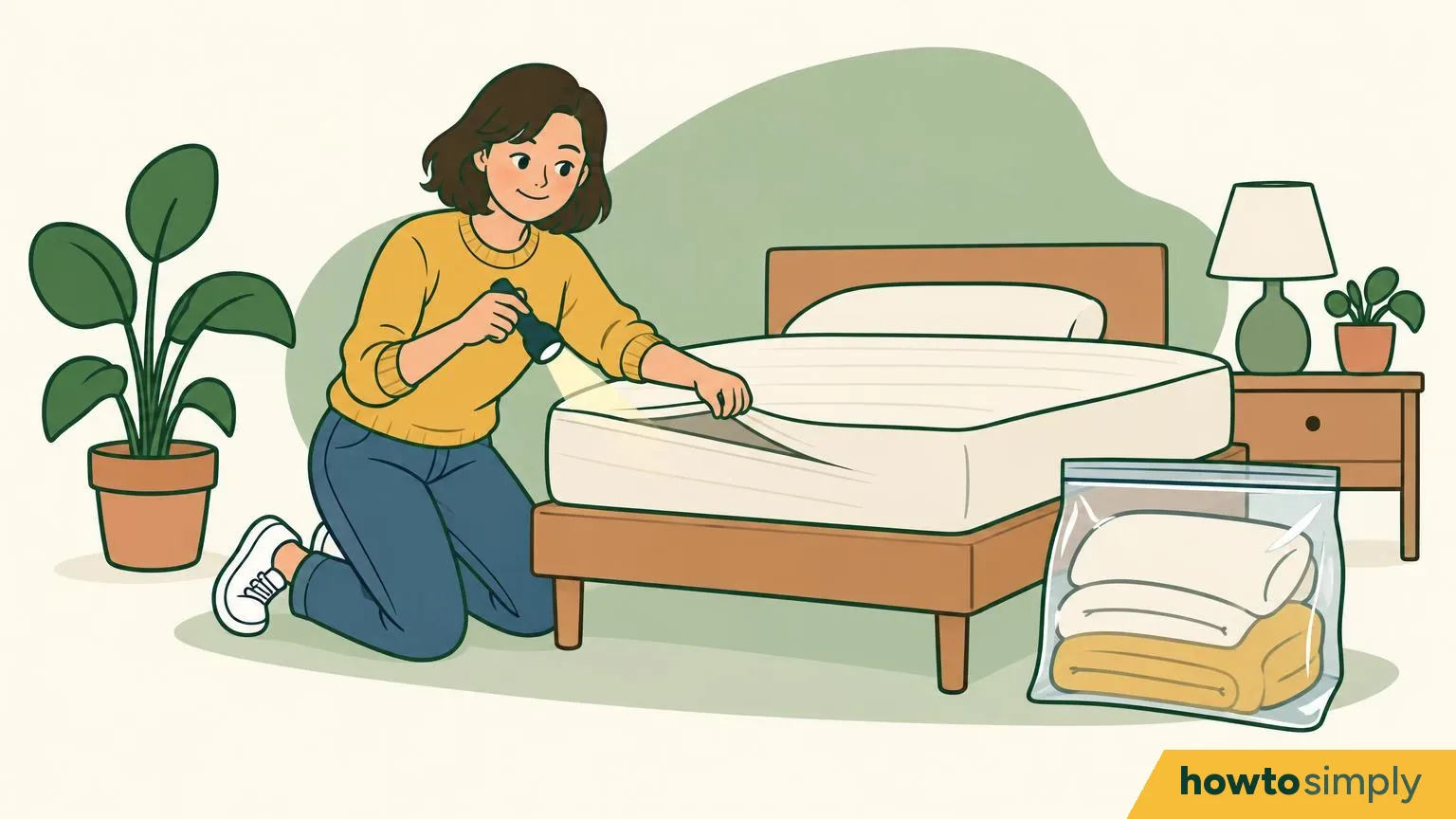
Check the bed and headboard with a torch.
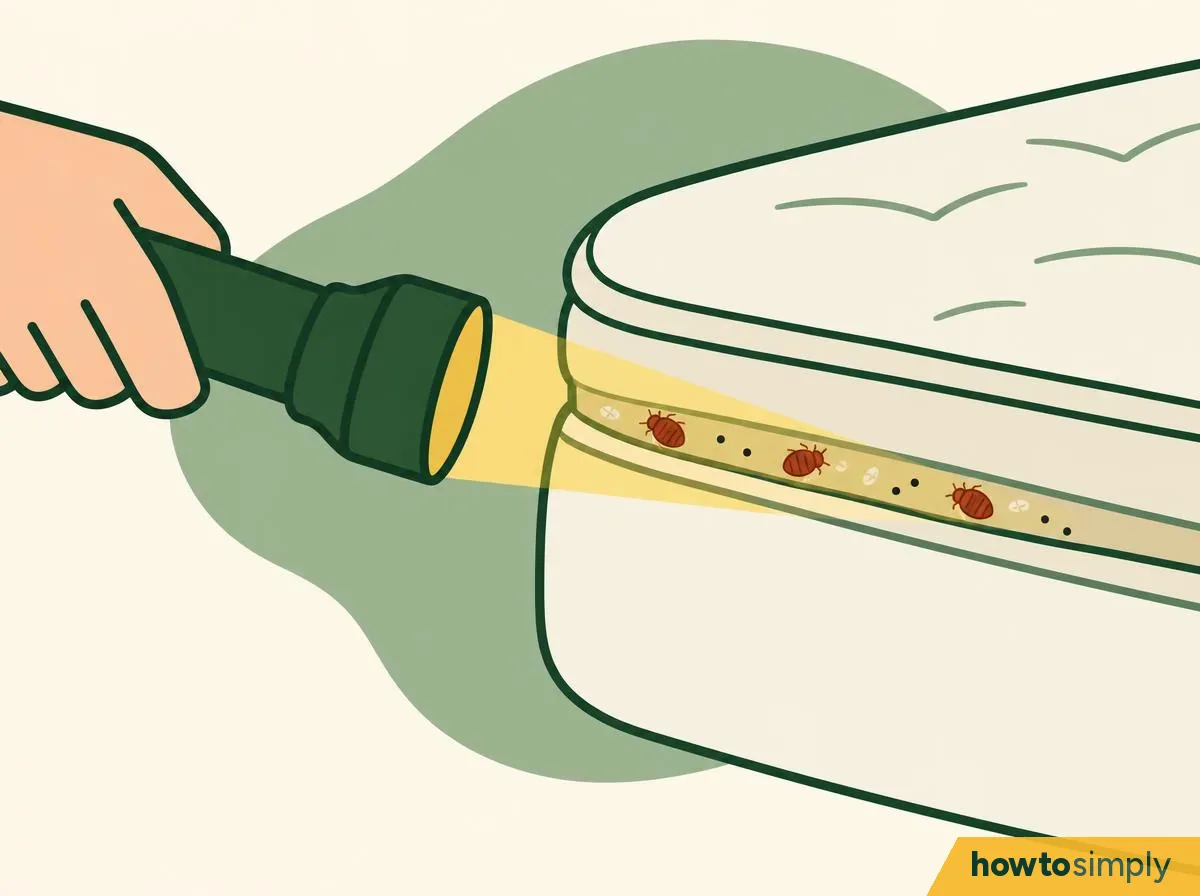
Illustration Adults are flat and reddish-brown, about the size of an apple seed (Harvard Health). Young ones are smaller and paler. Look for black dots of droppings, rusty spots of blood on the sheets, pale eggs about the size of a pinhead and shed skins (Harvard Health).
Begin with the mattress seams, the headboard and the underside of the mattress at the headboard end (MSU, UConn). Then check the bed frame's cracks and screw holes, bedside tables and drawers, and the seams of sofas and chairs (Harvard Health). Harvard Health says bed bugs mostly come out at night. I know a torch and a bare mattress at bedtime is nobody's idea of a nice evening, but it is when you are most likely to spot them.
You should see: either live bugs, eggs, skins or droppings, or nothing. Itchy bites on their own won't reliably tell you it's bed bugs (Virginia Tech), and some people get no marks at all (Harvard Health).
Catch one and get it identified.
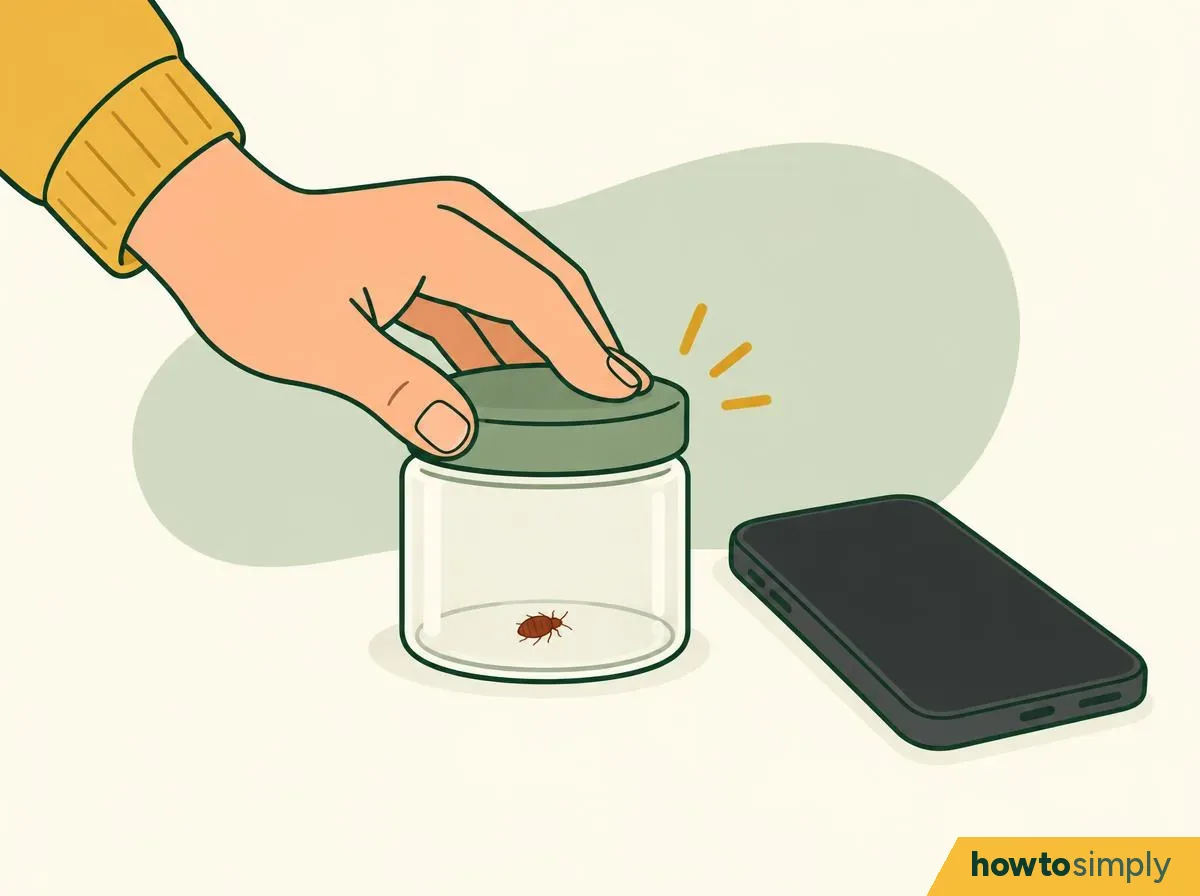
Illustration Put a bug in a sealable bag or small jar (MSU) and have it identified. Treatment is costly and other insects look similar, so it is worth knowing for sure before you spend anything. EPA suggests a local extension office or another insect expert; in the UK, NHS 111 Wales points you to your local council or a pest control service. If you rent, EPA says to tell your landlord.
You should see: a clear answer: bed bugs, or something else that needs a different fix.
Bag bedding, clothes and soft items before you move them.
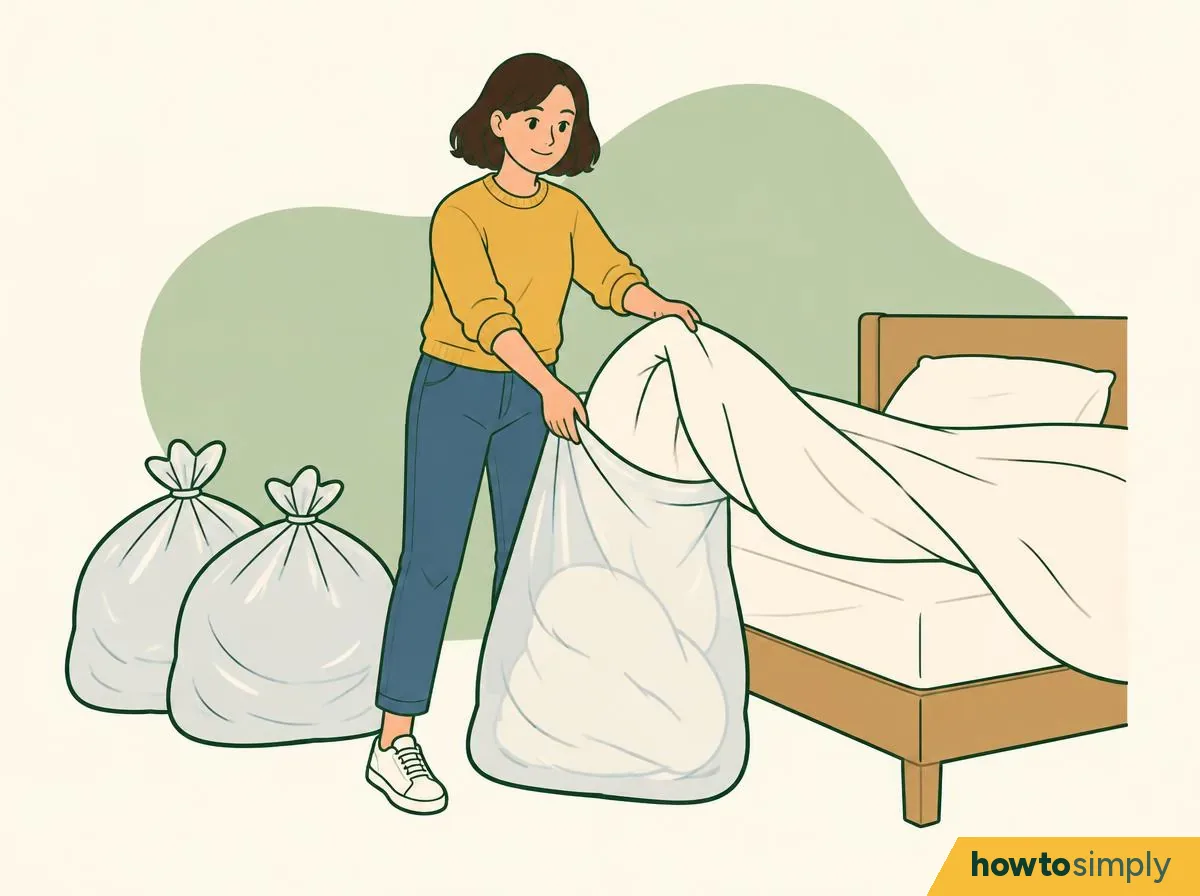
Illustration EPA says to put infested items in sealed plastic bags and treat them. Strip the bed straight into a bag in the bedroom, tie it and carry it to the washing machine. That way bugs don't drop off on the way and find a new room to hide in. Anything you can't treat should stay sealed: EPA says for up to a year.
Clear clutter from around the bed, since it gives bed bugs more places to hide (NHS 111 Wales, EPA).
You should see: sealed bags by the door and a bare bed with nothing stored under it.
Wash at 60C and tumble dry on hot for at least 30 minutes.
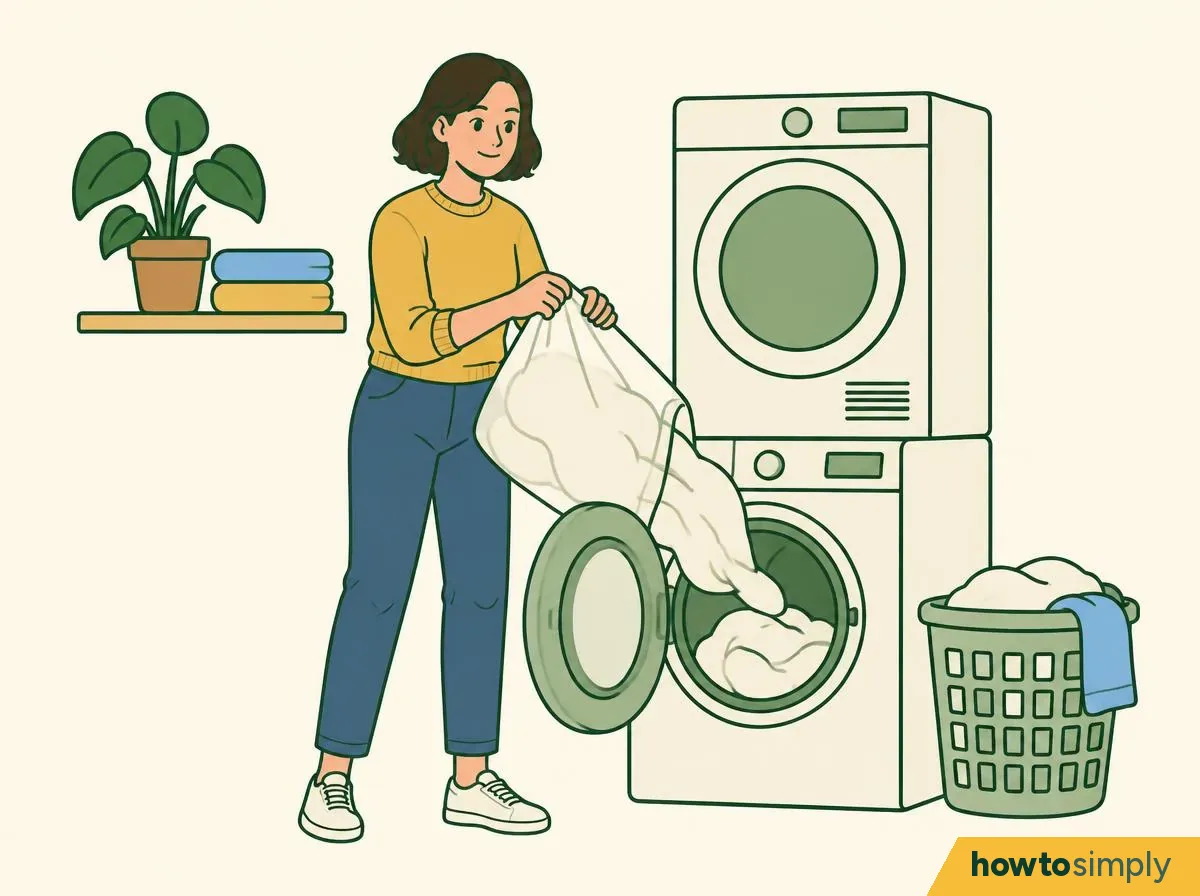
Illustration NHS 111 Wales says to wash affected bedding and clothing on a hot wash (60C) and tumble dry on a hot setting for at least 30 minutes. Make sure you check the care label first. Don't worry if an item can't take 60C: the dryer on hot or freezing (step 5) may still be possible.
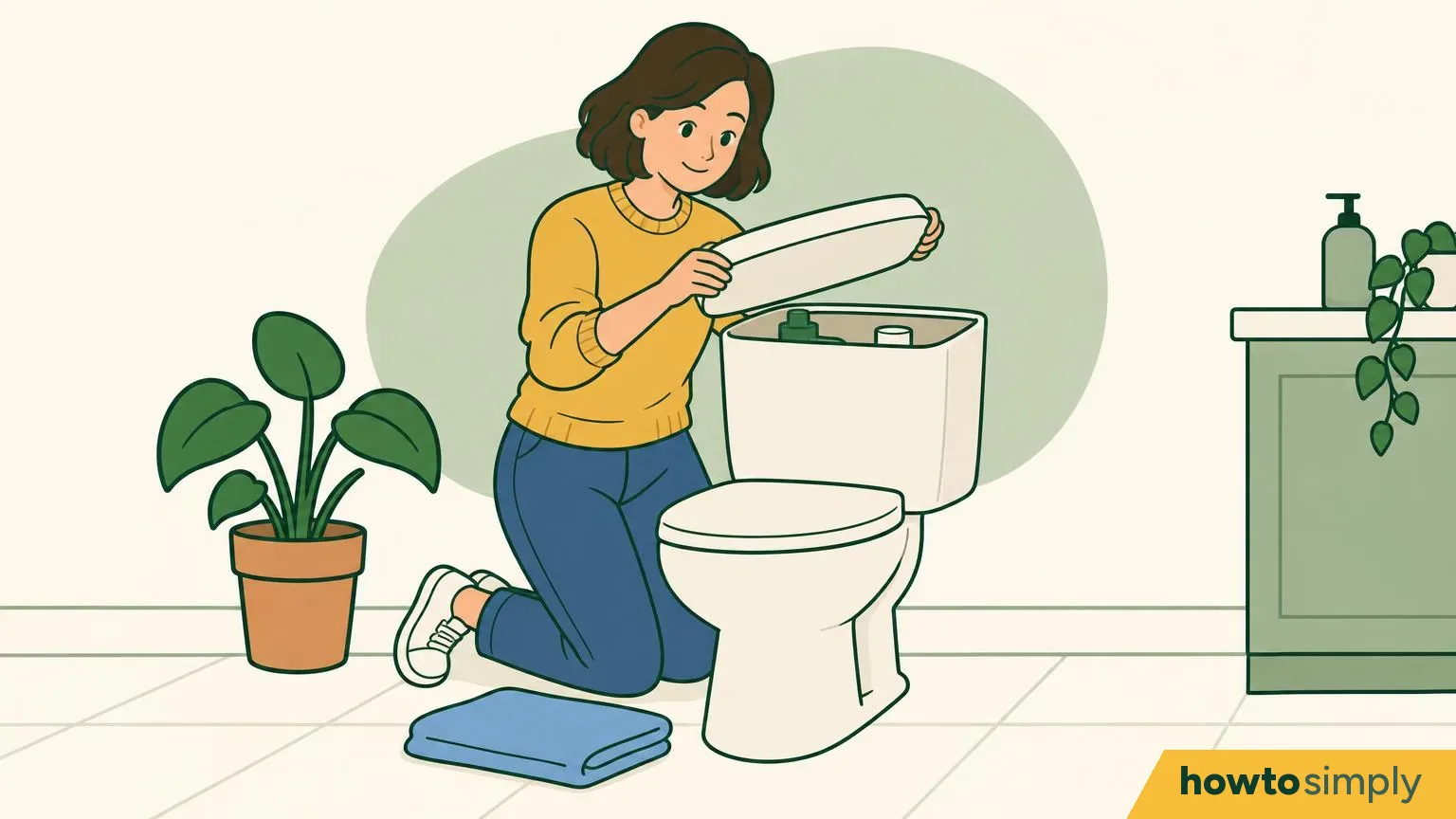
Throw the empty bag away in an outside bin, and put the clean things into new bags until the bedroom is treated.
You should see: clean, dry bedding in fresh sealed bags, ready to go back once the bed is covered.
Freeze small items that can't be washed.
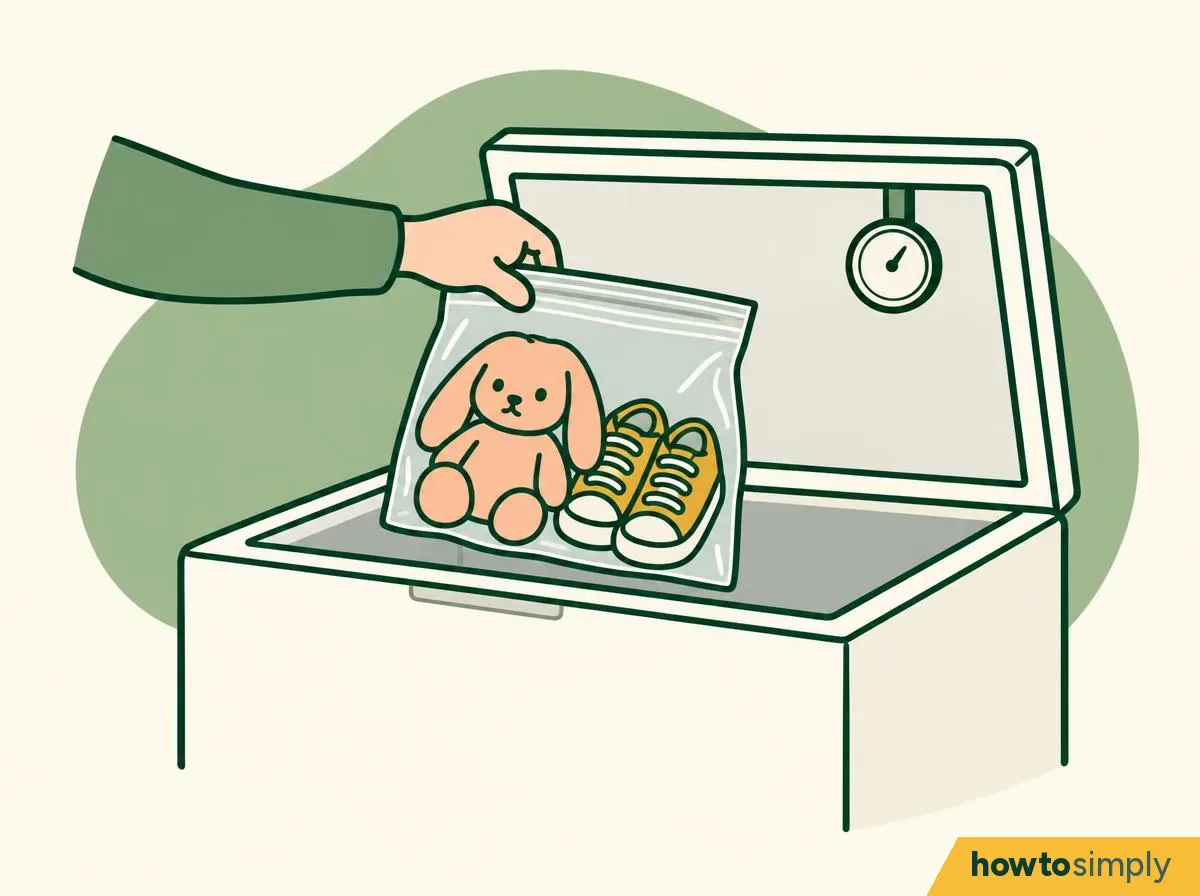
Illustration NHS 111 Wales says to put affected items in a sealed plastic bag in the freezer for 3 or 4 days. EPA sets the temperature at 0F (about -18C, our conversion) for three days and warns that many home freezers aren't that cold, so check with a thermometer.
You should see: the thermometer at or below -18C for the whole time.
Vacuum the bed, floor and cracks, then bin the contents outside.
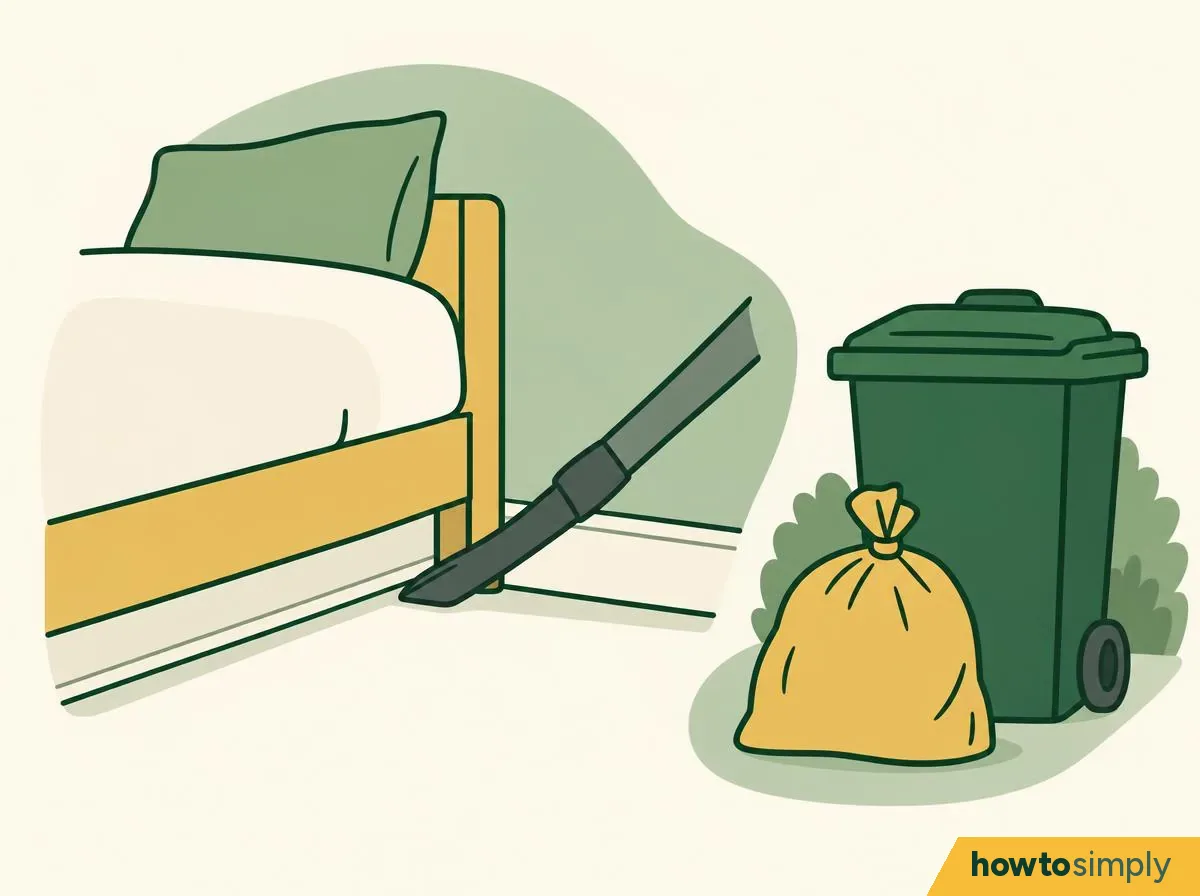
Illustration Hoover the mattress, bed frame, furniture and floor, paying most attention to cracks (Harvard Health). After each use, seal the vacuum bag or contents tightly and put them straight into an outdoor bin (EPA). EPA also suggests sealing small cracks where bugs hide with silicone caulk, so they have fewer places left to go.
You should see: no bag or dust left in the vacuum, and the sealed bag outside.
Encase the mattress and base, and put interceptors under the bed legs.
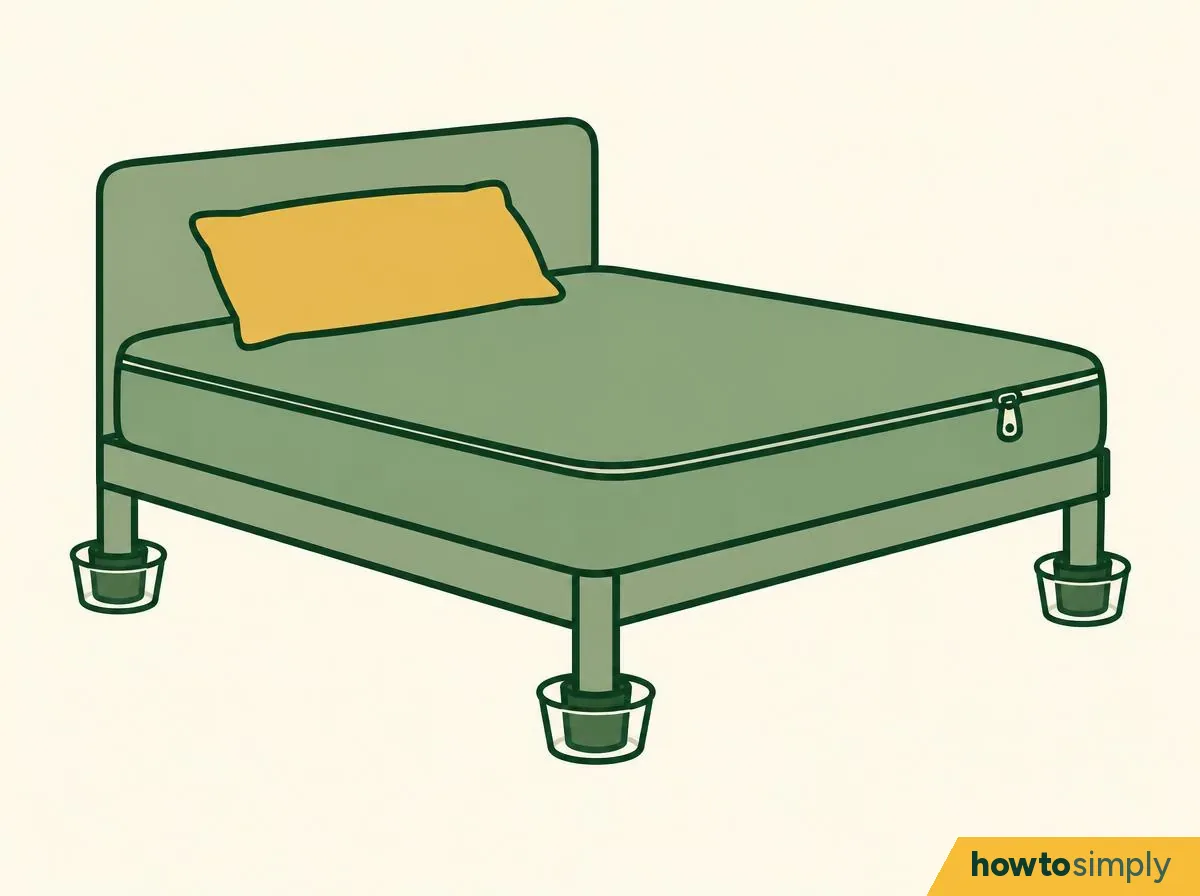
Illustration Bed bug-proof covers trap bugs already in the mattress and keep new ones out (Harvard Health, EPA). Interceptors under each bed leg catch bugs climbing up. EPA says you can make them from two plastic containers, tape and talcum powder. Now move the bed slightly away from the wall so it touches the floor only through the interceptors. What it will do: bugs trying to climb the bed legs are caught in the interceptors (EPA).
You should see: covers zipped fully shut and every bed leg standing in an interceptor.
Check every week, and get help if you still find bugs.
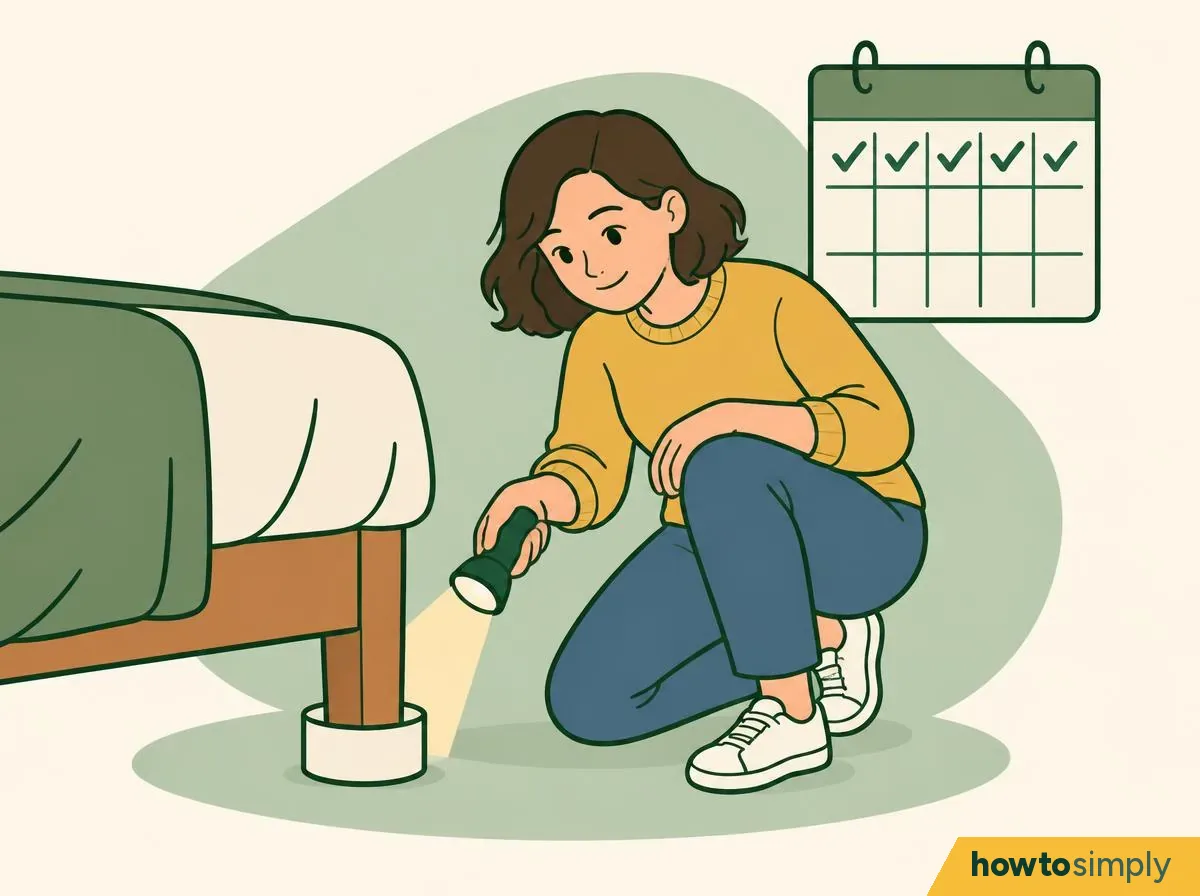
Illustration EPA says to check every few days after the first clean-up, then at least every 7 days, and to keep checking for at least a year. Empty and clean the interceptors weekly and add fresh talcum powder (EPA). Write down where and when you find bugs (EPA).
However, if you keep finding them, contact your local council or a pest control service (NHS 111 Wales). That is not a failure on your part, because bed bugs are very hard to clear on your own. EPA says professionals have stronger methods, including heating a whole home.
You should see: empty interceptors and no new spots on the sheets, week after week.
What kills bed bugs
| Method | What the sources say | Works for |
|---|---|---|
| Hot wash and hot tumble dry | 60C wash; hot dryer at least 30 minutes (NHS 111 Wales) | Bedding, clothes, curtains |
| Freezing | 3 to 4 days in a sealed bag (NHS 111 Wales); 0F (-18C) for 3 days, with a thermometer (EPA) | Items sealed in a bag (EPA) |
| Steam | At least 130F (about 54C), with a diffuser so you don't scatter the bugs (EPA) | Carpets, baseboards, bed frames, other furniture |
| Vacuuming | Seal and bin outside after every use (EPA) | Floors, cracks, frames |
| Labelled insecticides | Only products that list bed bugs; follow the label (EPA) | Cracks, frames, as the label says |
| Whole-home heat | Professional method (EPA) | Severe infestations (Harvard Health) |
How to tell it worked
- The interceptors are empty at every weekly check (EPA).
- No new blood spots or black dots on the sheets or the mattress cover.
- No new bites, bearing in mind that Harvard Health says some people never react.
- The EPA's advice is to go on checking for a year or more after the last bug, and you're doing that.
Rules in the UK, Germany, the US and Pakistan
| UK | Germany | US | Pakistan | |
|---|---|---|---|---|
| Who to call | Your local council or a pest control service (NHS 111 Wales) | A pest control company; one treatment is usually not enough, and the DSV lists recommended firms. Don't use insecticides yourself: poisonous pest control products don't belong in lay hands (Berliner Mieterverein, quoting Verbraucherzentrale Berlin) | A pest control professional: EPA says they have stronger methods, such as heating a whole home | A pest control company |
| If you rent | In England, your landlord must deal with pests caused by a repair they must fix, and should sort out pests that were there when you moved in; you could be responsible only if you encouraged them. You can complain to the council's environmental health team (Shelter) | Report it to your landlord. The Berliner Mieterverein says the landlord usually has to deal with it, unless the tenant caused it through their own fault. Ask a Mieterverein about your case | Your landlord may have to play a part in the treatment; look up the housing rules and laws where you live (EPA) | We found no official guidance on who pays; check your tenancy agreement |
| Heat and cold | See "What kills bed bugs" above | Freeze infested items for 3 days at -18 °C, or keep them in a sauna at 50 °C for 1 hour. Never take infested items out of the flat untreated (Umweltbundesamt) | See "What kills bed bugs" above (EPA) | Same methods; no local guidance found |
| Foggers ("bug bombs") | Check the label (row below) | Not for do-it-yourself use: poisonous products don't belong in lay hands; ask for baits, gels and traps rather than sprays and foggers (Verbraucherzentrale Berlin, via Berliner Mieterverein) | Never the only treatment. Use only as many as the room needs, since too many can cause an explosion, and turn off pilot lights first (EPA) | Registered products only (row below) |
| If you buy a spray or bait | The label must show the HSE authorisation number and the uses it is authorised for (HSE) | Biocide labels name the BAuA registration number (N-...) and the approved uses (DLG guide published by LAVES Niedersachsen) | Choose a product registered for bed bugs, and read its label before you buy (EPA) | Every pesticide brand must be registered; selling an unregistered one is an offence (Agricultural Pesticides Ordinance 1971, s. 4) |
If something goes wrong
| What happens | What it means | What to do |
|---|---|---|
| You still find bugs after a few weeks | Bugs were missed or eggs hatched; EPA says retreatment may be needed | Repeat the steps, or call your council or a pest control service (NHS 111 Wales) |
| Bugs appear in another room | They spread on items or through walls | Inspect that room the same way; EPA says to inspect neighbouring flats and tell your landlord if you rent |
| The freezer didn't work | Many home freezers aren't cold enough (EPA) | Use a thermometer; use the dryer instead if the item allows |
| You have bites but find nothing | Bites and skin marks won't reliably tell you it's bed bugs (Virginia Tech) | Get an expert to inspect before you treat |
Bites: what helps
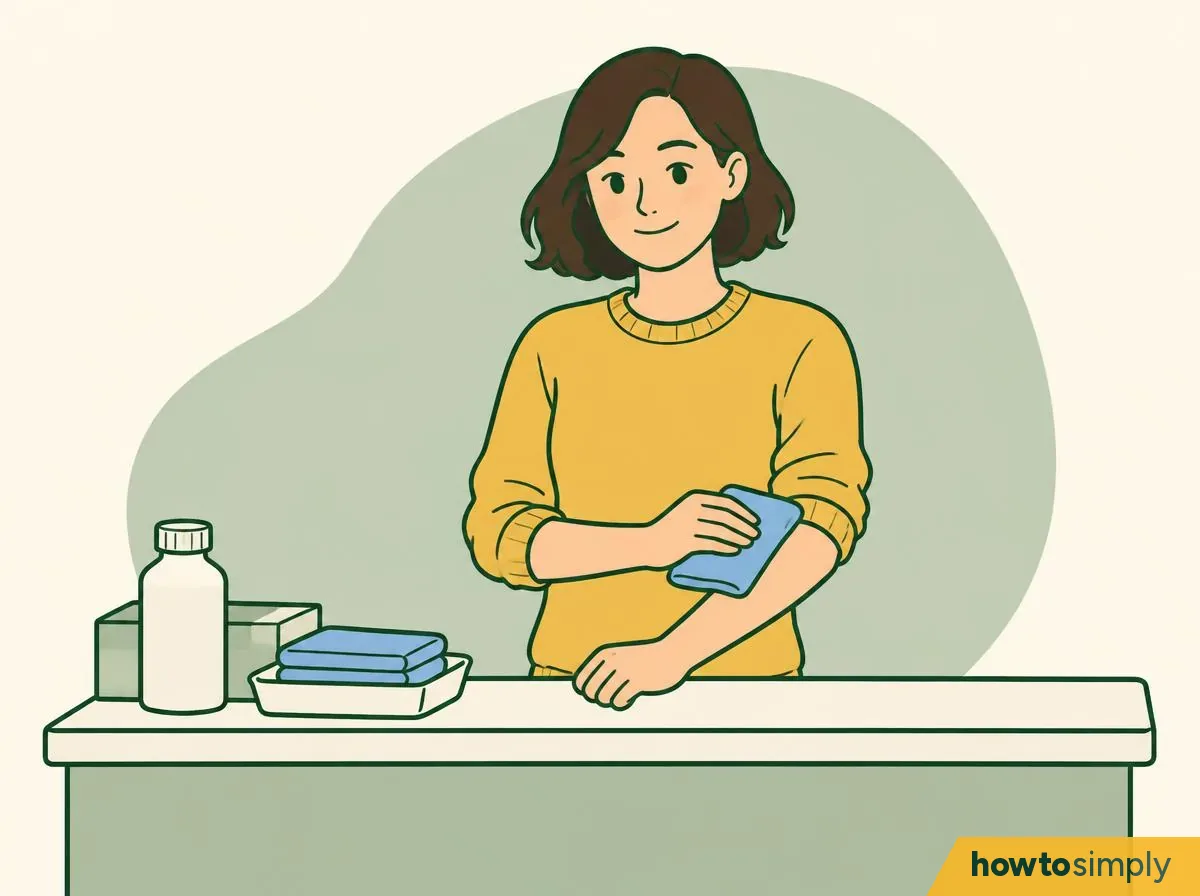
NHS 111 Wales says bites usually clear up on their own in about a week. A clean, cool, damp cloth eases itching and swelling; keep the skin clean and try not to scratch. A pharmacist can suggest a cream or an antihistamine. See a GP if the bites stay very painful, swollen or itchy after that, or if redness or swelling is spreading, which can mean an infection. A severe allergic reaction is rare but is an emergency: call 999.
Questions readers ask
Do bed bugs spread disease?
Harvard Health says they don't transmit diseases, but the bites can itch, cause discomfort and sometimes an allergic reaction. NHS 111 Wales says bites usually clear up on their own in about a week.
Should I throw my mattress away?
Not if you can safely get rid of the bed bugs in it, EPA says. If you do throw furniture out, EPA says to make it unusable and mark it 'bed bugs' so nobody takes it in.
Can I sleep in another room until they're gone?
EPA's advice is to keep the bugs from spreading. Bed bugs can hitchhike on your belongings (Virginia Tech), so treat and bag your things first, and ask your pest control service what they recommend.
How do I avoid bringing bed bugs home from a hotel?
The Berliner Mieterverein says that if you stayed in a room with bed bugs, unpack your suitcase outside, for example on a balcony, and wash all your clothes straight away or put them in the freezer for ten hours.
How long do bed bug eggs take to hatch? Is it slower in winter?
Virginia Tech Extension says that above 21C (70F) about 60% of eggs hatch by day 6 and more than 90% by day 9. In a cooler room, around 10C (50F), hatching takes several days longer, so a cold spell slows them down but doesn't stop them. EPA says you may need to treat again, and to look at the interceptors every 7 days or more often, in case eggs are left, for a year or longer.
I got rid of the carpet and still have bugs. Should I buy new carpet or furniture before treating again?
Wait. Finish the treatment course first, then keep checking interceptors and the mattress encasement for at least a year (EPA). Only bring new carpet or furniture in once those checks stay clear, otherwise the new items can become a new hiding place. Virginia Tech adds that bed bugs won't cross a heap of dust and simply go round it, and EPA says not to use pool or food grade diatomaceous earth.
Sources and method
- Researched by
- Abu Bakar Saadat
- Pictures
- 11 illustrations drawn for this article: drawings, not photos.
- Sources
- Steps checked against the 14 named sources linked below.
- What this page adds
- A close-up of what bugs, eggs and droppings look like in a mattress seam, a 'what kills bed bugs' table, and who to call or tell if you rent in four countries.
Did this solve the problem?
Where did you get stuck?
Get new guides by email
Our newest guides, sent to your inbox. Free, and you can unsubscribe in one click.
We'll email you to confirm. How we use your email
Follow howtosimply on Facebook
We share every new article on our Facebook page, so the next fix turns up in your feed.
Follow on FacebookWhat did you think?
Reaction counts are loading.
Sources
We use primary, official and specialist sources appropriate to the topic.
- Shelter England: Pests and vermin infestations in rented homes (updated 1 May 2026)
- Berliner Mieterverein: Ungeziefer in der Wohnung, Kammerjagd (German, MieterMagazin 4/2012)
- Umweltbundesamt: Bettwanzenbefall, was tun? (German flyer, PDF)
- US EPA: Should I use a fogger? (updated 8 September 2026)
- HSE: Packaging and labelling requirements for biocidal products (updated 2 June 2026)
- LAVES Niedersachsen / DLG: Informationen, die einem Biozid-Produkt beigefügt sein müssen (German, PDF)
- Agricultural Pesticides Ordinance 1971, Pakistan (text, sections 1 and 4)
- US EPA: Do-it-yourself bed bug control (updated 10 August 2026)
- NHS 111 Wales: Bedbugs (updated 14 May 2025)
- Harvard Health Publishing: How to check for bed bugs, and what to do if you find them (22 October 2024)
- UConn Integrated Pest Management: Bed Bugs fact sheet
- Michigan State University Extension: How to inspect for bed bugs (29 November 2012)
- Virginia Tech Extension ENTO-8: Bed Bugs Biology and Behavior (Miller et al., reviewed Aug 2024)
- Virginia Tech Extension ENTO-31: Bed Bugs: How to Protect Yourself and Your Home (Stedfast and Miller, reviewed Feb 2024)