How to get rid of mice
Researched by Abu Bakar Saadat10 min read
Last updated: 14 November 2026References
 Illustration
On this page 10 sections
In short
Seal gaps a pencil could fit through with steel wool and filler, set snap traps with a little peanut butter against the walls and check them daily. Clean droppings with gloves and disinfectant: never sweep or vacuum them.
At a glance
- Gap to seal
- Pencil width, 6 mm (CDC); cracks as small as 5 mm (Newcastle council)
- Traps
- Snap traps, not glue or live traps (CDC); glue traps banned for the public in England
- Check traps
- Every day; keep baited traps out at least 15 days (CDC)
- Droppings
- Black, rod-shaped, 3 to 6 mm (Newcastle council)
- Advice from
- CDC, Newcastle City Council, Washington State Dept of Health, BVA, read 28 October 2026
- Checked
- November 2026
Hearing scratching in the walls at night, or finding droppings at the back of a cupboard, can make your home feel different from the place you know. You're right to want it dealt with, and we'll guide you through sealing the gaps, trapping the mice and cleaning up afterwards, safely and calmly.
Traps alone won't solve it: the mice only go quiet once you find and block the hole they're using to get in (Berliner Mieterverein). The CDC says to seal holes both inside and outside your home so new rodent problems don't start. Its guidance is built around sealing up, trapping up and cleaning up, and all three need doing in that order. The clean-up matters for your health too: the CDC explains the proper steps for urine, droppings and nests, and its main rule is never to sweep or hoover them.
Do it yourself or get help?
A few droppings, one or two rooms
Begin with the steps below. The CDC recommends snap traps and suggests poison or bait stations only when an infestation keeps going.
Still catching mice after 15 days of trapping
Think about professional help or a poison bait station, the CDC says. Use registered products, keep them out of reach of children and pets, and follow the label.
You rent, or the mice are coming from a shared building
Let your landlord or managing agent know too, as gaps in shared walls and floors may be theirs to repair.
How to get rid of mice
Find where the mice are active.
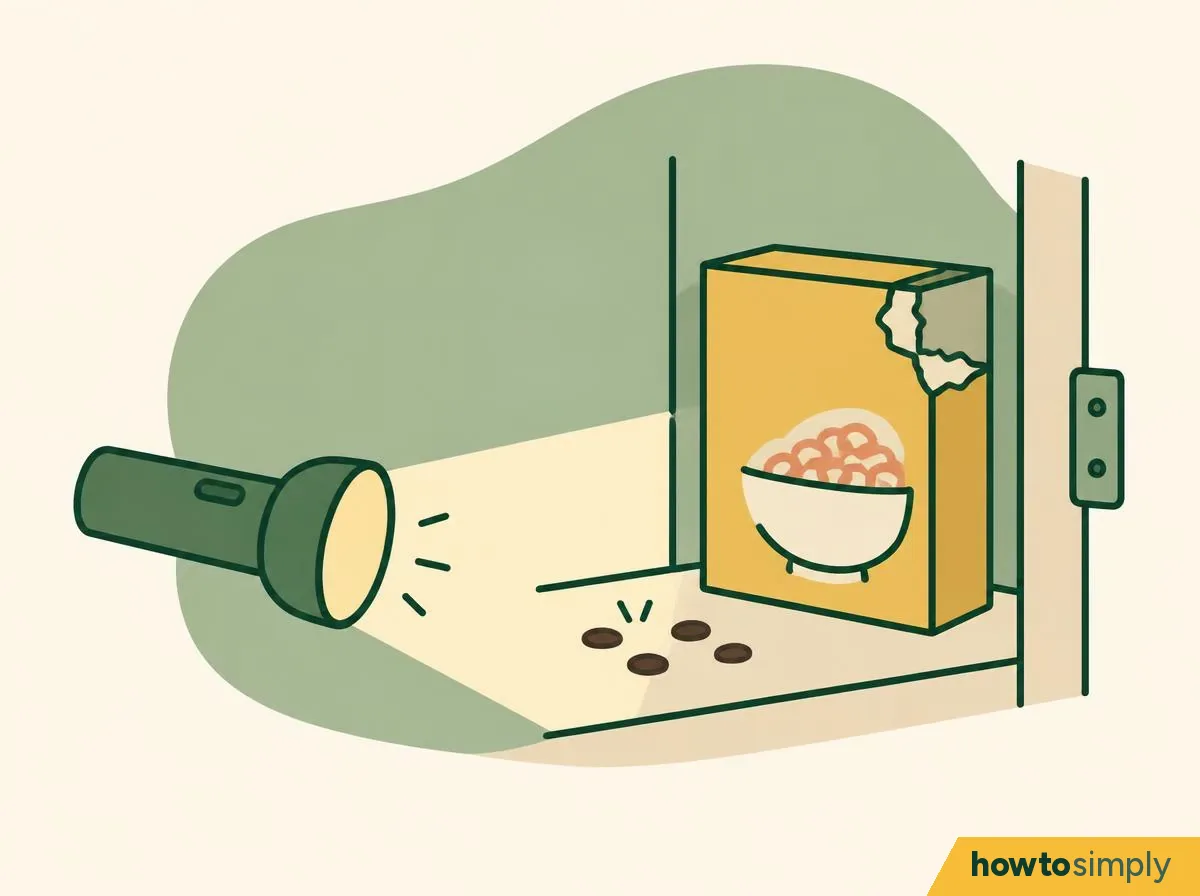
Illustration Newcastle City Council lists the signs: black, rod-shaped droppings 3 to 6 mm long, gnawing, footprints in dust, and scurrying noises, mainly at night. Nests are made of cloth, wool and paper, often under floors and in lofts.
Then take your torch and look in the places CDC names: kitchen cupboards, behind the cooker and fridge, under the sink and washing machine, and where the floor meets the wall.
You should see: a short list of spots with fresh signs. These are where the traps go in step 4.
Put every bit of food out of reach.
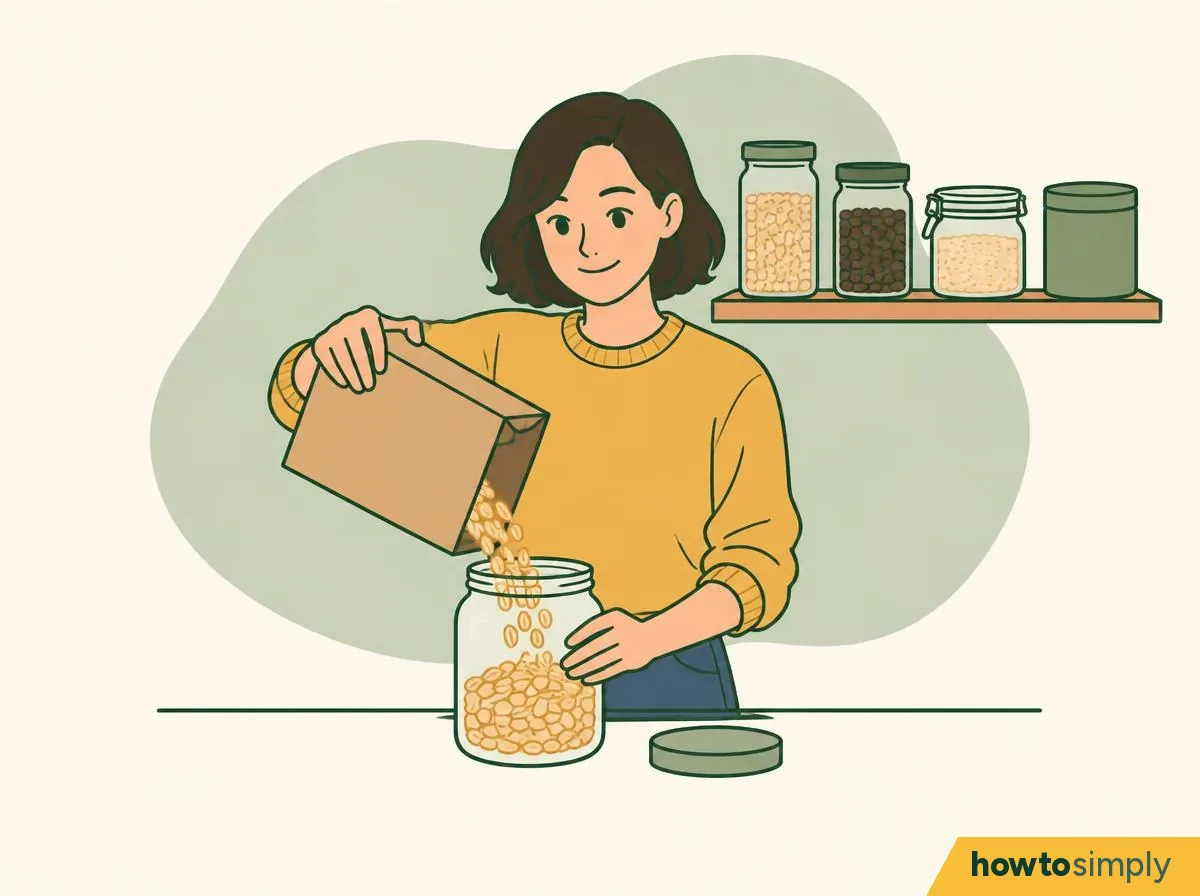
Illustration CDC says to store food in thick plastic, metal or glass tubs with lids that seal tight, wipe up spills at once and wash up soon after eating. Put pet food away and don't leave food or water bowls out overnight. Keep indoor rubbish in a bin with a lid and empty it often.
You should see: no open packets, crumbs or pet food anywhere a mouse can reach. This also makes your traps more tempting.
Careful: don't block air vents, boiler flues or the ventilation for gas appliances. Cover a vent with metal mesh rather than filling it, and ask a Gas Safe registered engineer about any gap around a flue or gas pipe.
Seal every gap a pencil could fit through.
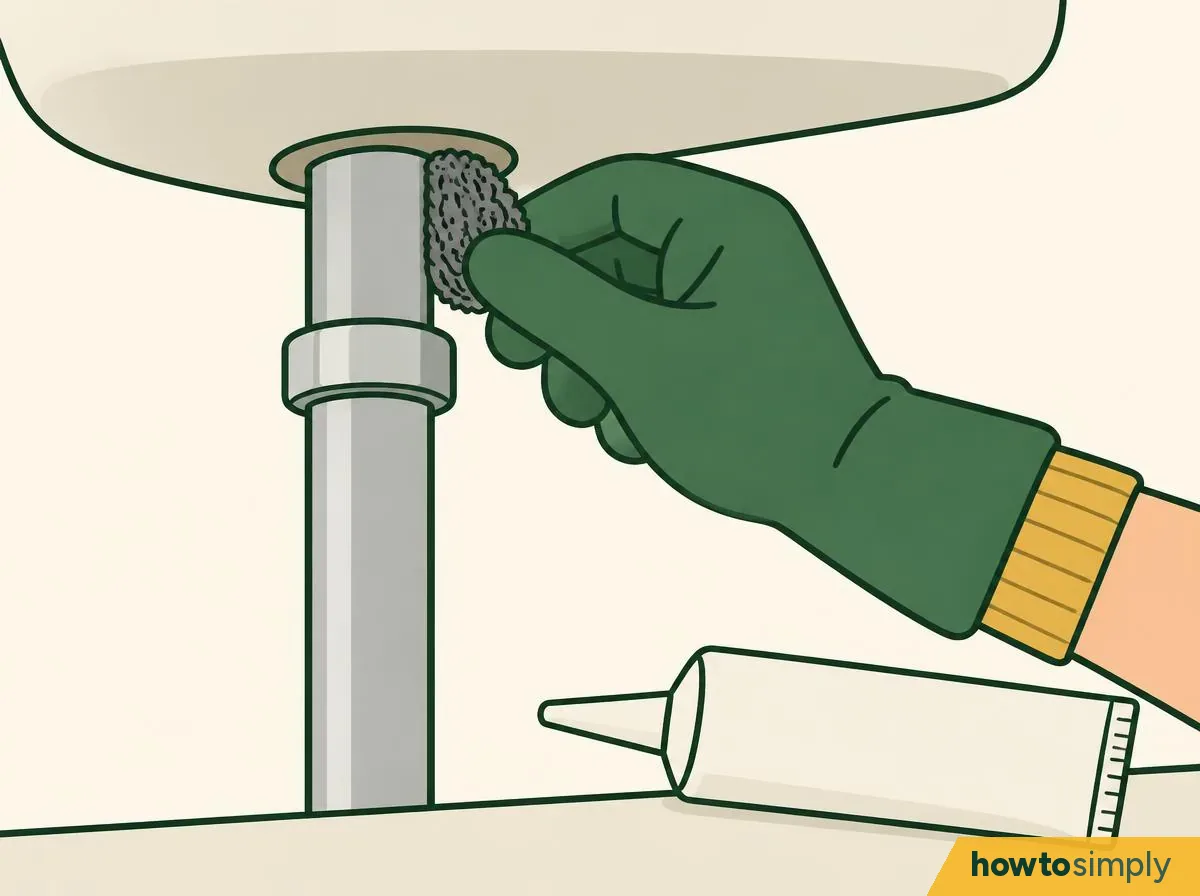
Illustration Next, the gaps. CDC says a gap as wide as a pencil, about 6 mm, is enough for a mouse. Newcastle City Council puts it at cracks as small as 5 mm. Pack small holes with steel wool and hold it in place with caulk or expanding foam. Use metal mesh, sheet metal or cement for bigger holes, cut to fit around pipes (CDC). It is fiddly work, so take your time with it.
Check around pipes and cables where they come through walls, under the sink, behind appliances, around doors and windows without draught strips, and where the outside wall meets the ground (CDC).
You should see: no daylight or gaps around pipes, skirting boards and door bottoms.
Set snap traps against the wall, baited end touching it.
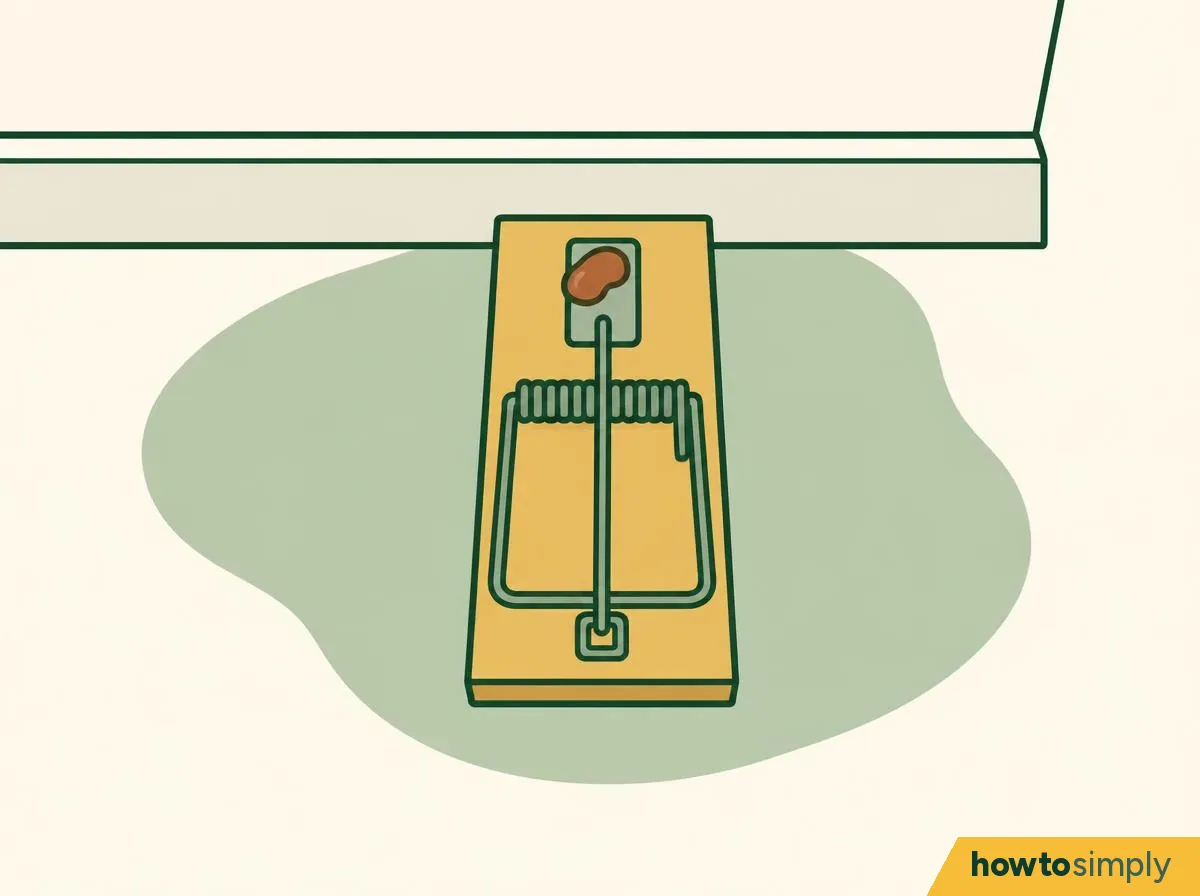
Illustration: the trap makes a T with the wall Mice run along walls, and that is why CDC says to put traps on the floor against the wall, with the baited end next to it so the trap makes a "T" shape. Use just a dab of chunky peanut butter on the bait pan (CDC). Set several traps in the spots from step 1, behind the cooker and fridge, and in cupboards.
Don't use glue traps or live traps: CDC says they scare mice into urinating, which increases the risk of illness. In England, using glue traps on rodents is an offence for the public since 31 July 2024; only licensed pest controllers may use them (BVA, Glue Traps (Offences) Act 2022).
You should see: each trap set, square to the wall, somewhere children and pets can't reach.
Check the traps every day and keep going.
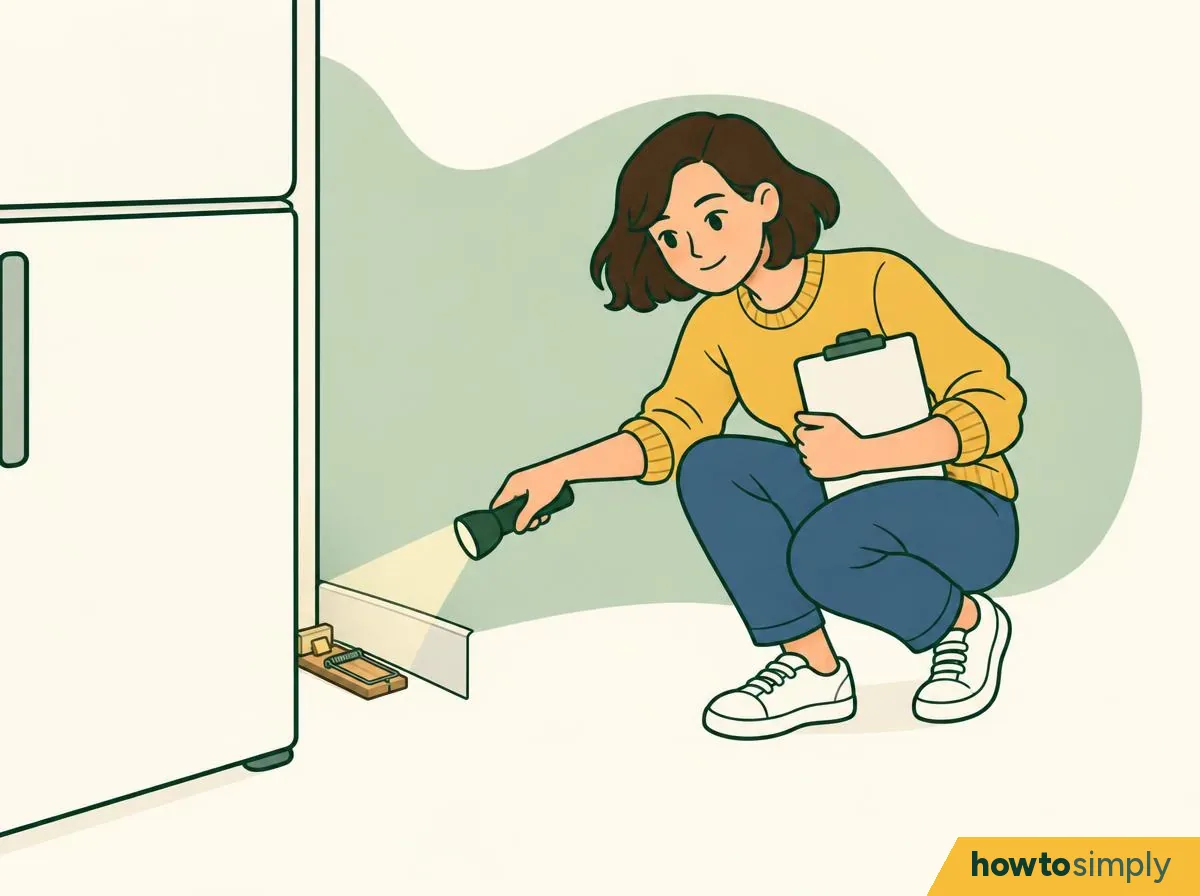
Illustration CDC says to check traps daily, remove caught mice straight away and reset the traps. Check the bait weekly and leave baited traps out for at least 15 days, until you stop catching mice. I know checking every day feels like a chore, but please keep going until the traps stay empty.
You should see: catches falling off, then a week with no catches and no new signs of rodents (CDC).
Bag caught mice twice, wearing gloves.
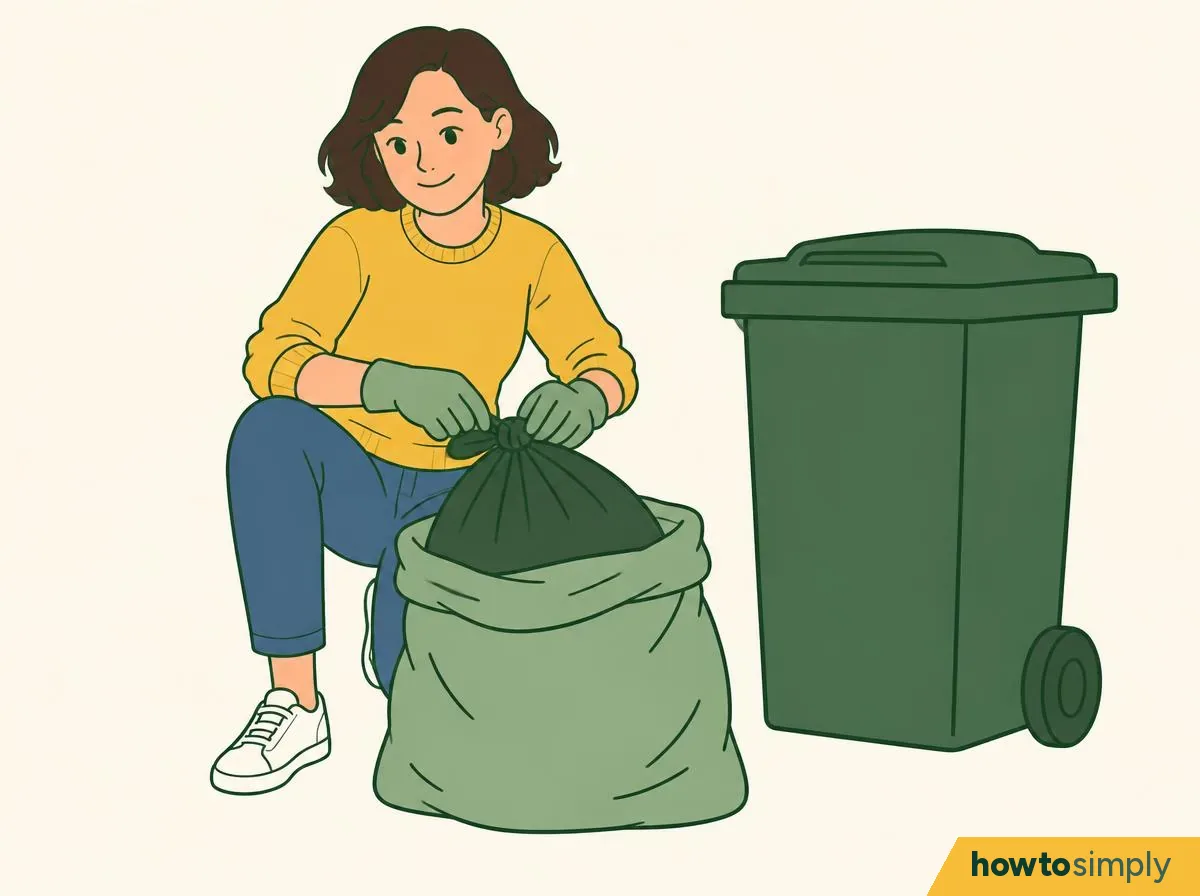
Illustration Wear rubber or plastic gloves. CDC says to put the mouse, and the trap if you are throwing it away, in a plastic bag, put that bag in a second bag, tie both and put them in a bin with a lid. Wash your gloved hands with soap and water before taking the gloves off, then wash your hands again with soap and warm water.
You should see: a double-tied bag in a lidded bin, and clean hands.
Careful: don't sweep or vacuum droppings, urine or nests (CDC). And never mix bleach with other cleaners: Washington State Department of Health warns that bleach with ammonia gives off toxic chloramines, and bleach with acids such as vinegar gives off chlorine gas. Use one product only.
Air the room, soak the droppings with disinfectant, then wipe them up.
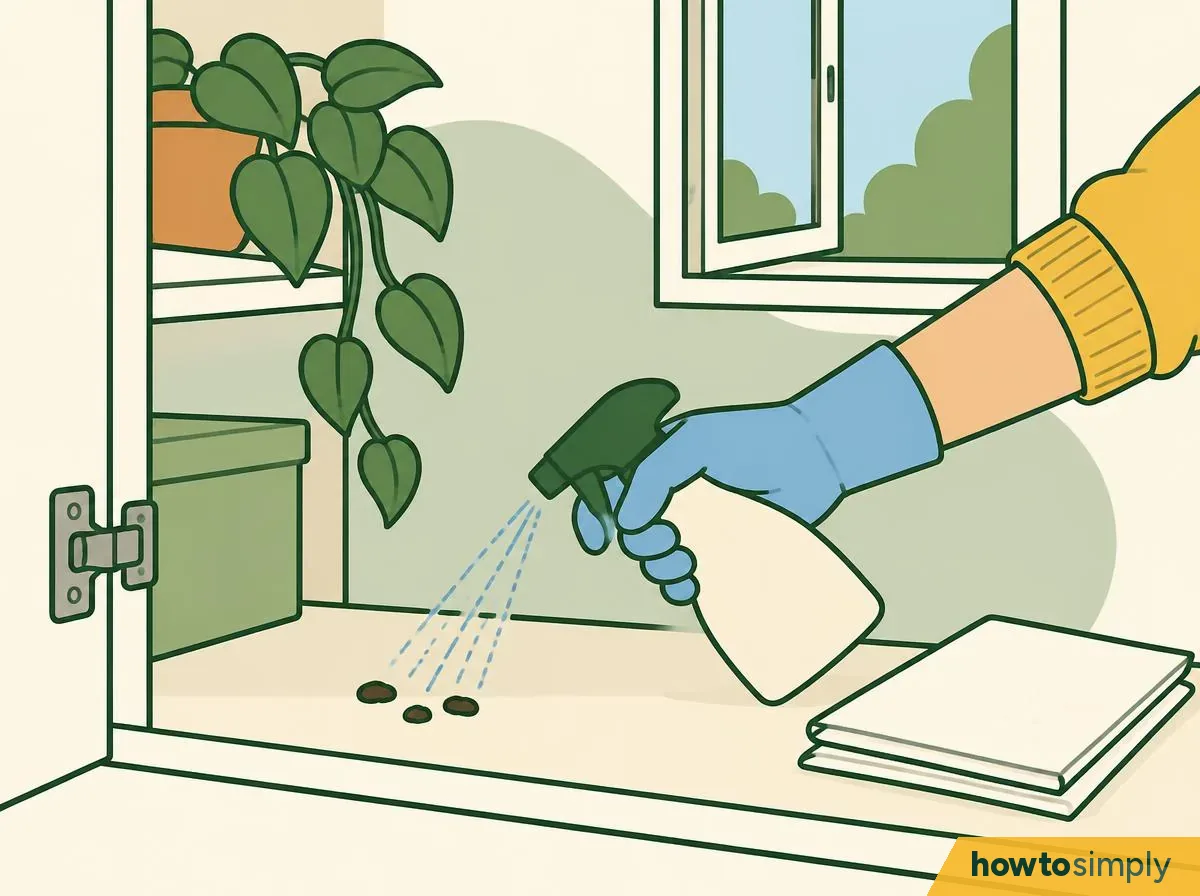
Illustration Open doors and windows for 30 minutes and leave the room while it airs (CDC). Go and make yourself a cup of tea while you wait. Put on gloves. Spray droppings, urine and nest material with a disinfectant, or a fresh mix of 1 part household bleach to 9 parts water, and leave it to soak for 5 minutes or as long as the label says (CDC).
Wipe it up with paper towels and put them in a lidded bin. Then mop or sponge the whole area, and clean worktops, cupboards and drawers. Wash any bedding or clothing the mice reached in hot water with detergent (CDC).
You should see: clean, disinfected surfaces and no dust raised. Wash your hands as in step 6.
How to tell they've gone
- No new droppings turn up after you've cleaned.
- After at least 15 days of trapping, the traps stay empty for a week with no new signs (CDC).
- No more scratching or scurrying at night.
- No fresh gnaw marks on food packets, cables or skirting boards.
Where to look for gaps
| Inside | Outside | Use |
|---|---|---|
| Pipes under sinks and the washing machine | Holes for water, gas, electric and cable lines | Steel wool plus caulk or foam (CDC) |
| Behind appliances; around the fireplace | Gap between the walls and the ground | Metal sheet, mesh or cement for bigger holes (CDC) |
| Where floor meets wall; cupboard corners | Eaves, soffits and roof edges | Steel wool plus caulk; metal for larger gaps (CDC) |
| Doors and windows without draught strips | Loft and underfloor vents | Steel wool plus caulk; metal for larger gaps (CDC) |
Rules in the UK, Germany, the US and Pakistan
| UK | Germany | US | Pakistan | |
|---|---|---|---|---|
| Who to call | Your council's pest control team or a pest control company (Shelter); many councils charge | A professional pest controller (Schädlingsbekämpfer) | A pest control professional, for persistent infestations (CDC) | A pest control company |
| If you rent | In England, your landlord must deal with pests caused by a repair they must fix, and should sort out pests that were there when you moved in; you could be responsible only if you encouraged them. You can complain to the council's environmental health team (Shelter) | Tell your landlord, or you may be liable for damage. In most cases the landlord must have the pests removed, unless you caused them, and you may be able to reduce the rent (Berliner Mieterverein) | If you're worried about a rodent problem, get in touch with your local or state health department (CDC) | We found no official guidance on who pays; check your tenancy agreement |
| Glue traps | Illegal for the public to use on rodents in England since 31 July 2024 (BVA) and in Wales since 17 October 2023 (FUW). In Scotland, using, supplying or owning one is an offence since 1 July 2026 (Commencement Regulations, legislation.gov.uk) | Umweltbundesamt says glue traps should not be used, on animal-welfare grounds | CDC advises against them | No rule found |
| Poison | Check the label (row below) | Snap traps come first. Baits with anticoagulants only in bait stations, never loose, and only after an infestation is confirmed. Second-generation anticoagulants are for trained professionals only (Umweltbundesamt) | Products sold to consumers come as ready-to-use bait stations with block or paste bait; loose pellets and second-generation anticoagulants are not allowed in consumer products (EPA) | Registered products only (row below) |
| If you buy a spray or bait | The label must show the HSE authorisation number and the uses it is authorised for (HSE) | Approved rodenticides are listed in the BAuA biocidal product database, product type 14 (Umweltbundesamt) | Consumer baits come only as ready-to-use bait stations; follow the label (EPA) | Every pesticide brand must be registered; selling an unregistered one is an offence (Agricultural Pesticides Ordinance 1971, s. 4) |
The Umweltbundesamt also advises checking traps at least once a day, ideally every 12 hours.
If something goes wrong
| What happens | What it means | What to do |
|---|---|---|
| Traps stay empty but droppings keep appearing | CDC says new droppings that persist after a week may mean rats | Move them to fresh droppings, against the wall in a "T" (CDC) |
| The bait is gone but the trap hasn't sprung | Check how the trap is baited and set | Use only a small amount of bait on the bait pan and follow the instructions on the box (CDC) |
| You keep catching mice after 15 days | Trapping has not resolved the infestation | Leave the baited traps out longer and recheck the gaps; consider a poison bait station or professional help (CDC), or your council's pest service |
| You already vacuumed droppings | Dust may have been raised | Follow CDC's clean-up method from now on and disinfect the area |
| Mice in the loft or under the floor | Nests are often there (Newcastle City Council) | Trap near those entry points (CDC) and seal the gaps leading to them |
Questions readers ask
Can I use glue traps?
Not in England: since 31 July 2024 members of the public may not use glue traps on rodents; only licensed pest controllers can (BVA, Glue Traps (Offences) Act 2022). CDC also advises against glue and live traps, because they frighten mice into urinating, which raises the risk of illness.
What bait works if my mice ignore peanut butter?
CDC names chunky peanut butter or mutton fat, in a small amount on the trap's bait pan. Place traps where you have seen droppings, against the wall, and check the bait every week, re-filling or moving it as needed (CDC).
Will the council get rid of mice for me?
Some councils have a pest control team (Shelter). Newcastle City Council, for example, treats mice inside homes for a fee with up to four treatments, but says it won't fill holes in walls or do other building work. Check your own council's website.
Is poison faster than traps?
Not necessarily. Newcastle City Council says poison can take 4 to 7 days to work. CDC suggests poison or bait stations only for persistent infestations, using registered products kept out of reach of children and pets, and following the label.
Sources and method
- Researched by
- Abu Bakar Saadat
- Pictures
- 9 illustrations drawn for this article: drawings, not photos.
- Sources
- Steps checked against the 16 named sources linked below.
- What this page adds
- A top-down drawing of a snap trap set in a T against the skirting, a table of where to look for gaps and what to fill them with, and renting rules in four countries.
Did this solve the problem?
Where did you get stuck?
Get new guides by email
Our newest guides, sent to your inbox. Free, and you can unsubscribe in one click.
We'll email you to confirm. How we use your email
Follow howtosimply on Facebook
We share every new article on our Facebook page, so the next fix turns up in your feed.
Follow on FacebookWhat did you think?
Reaction counts are loading.
Sources
We use primary, official and specialist sources appropriate to the topic.
- Shelter England: Pests and vermin infestations in rented homes (updated 1 May 2026)
- Berliner Mieterverein: Ungeziefer in der Wohnung, Kammerjagd (German, MieterMagazin 4/2012)
- Umweltbundesamt: Rodentizide (German, updated 6 Oct 2021)
- US EPA: Restrictions on rodenticide products (updated 8 September 2026)
- Farmers' Union of Wales: Snare and glue traps banned in Wales (26 October 2023)
- legislation.gov.uk: Wildlife Management and Muirburn (Scotland) Act 2024 (Commencement No. 3) Regulations 2026
- HSE: Packaging and labelling requirements for biocidal products (updated 2 June 2026)
- LAVES Niedersachsen / DLG: Informationen, die einem Biozid-Produkt beigefügt sein müssen (German, PDF)
- Agricultural Pesticides Ordinance 1971, Pakistan (text, sections 1 and 4)
- CDC: How to Seal Up to Prevent Rodents (reviewed 8 April 2024)
- CDC: How to Trap Up to Remove Rodents (reviewed 8 April 2024)
- CDC: How to Clean Up After Rodents (reviewed 8 April 2024)
- Newcastle City Council: Mice
- Washington State Department of Health: Dangers of mixing bleach with cleaners
- BVA: Glue trap ban comes into force in England (31 July 2024)
- legislation.gov.uk: Glue Traps (Offences) Act 2022, explanatory notes