How to make salt dough
Researched by Abu Bakar Saadat6 min read
Last updated: 15 November 2026References
On this page 8 sections
In short
Mix 2 cups plain flour with 1 cup salt, add 1 cup water a little at a time and knead into a firm dough. Shape your pieces, bake on very low heat, let them cool in the switched-off oven, then paint. Keep it away from pets.
At a glance
- Recipe
- 2 parts plain flour, 1 part salt, about 1 part water (Oxford Owl, NOMA, Starlight)
- Thickness
- No more than 2.5 cm (Oxford Owl)
- Bake
- About 100 C for 1 to 3 hours, or air-dry for a couple of days (Oxford Owl, Starlight)
- Pets
- Toxic to dogs and cats; call a vet if eaten (ASPCA, Pet Poison Helpline)
- Advice from
- Oxford Owl (OUP), NOMA, Fitzwilliam Museum, British Ceramics Biennial, Starlight, ASPCA, Pet Poison Helpline, read 28 October 2026
- Checked
- November 2026
If you'd like a cheap, cosy afternoon of making things by hand, salt dough may be as good as it gets. It's made from just three basic ingredients: flour, salt and water. If the first batch turns out sticky, British Ceramics Biennial suggests sprinkling a little more flour onto your hands and the work surface.
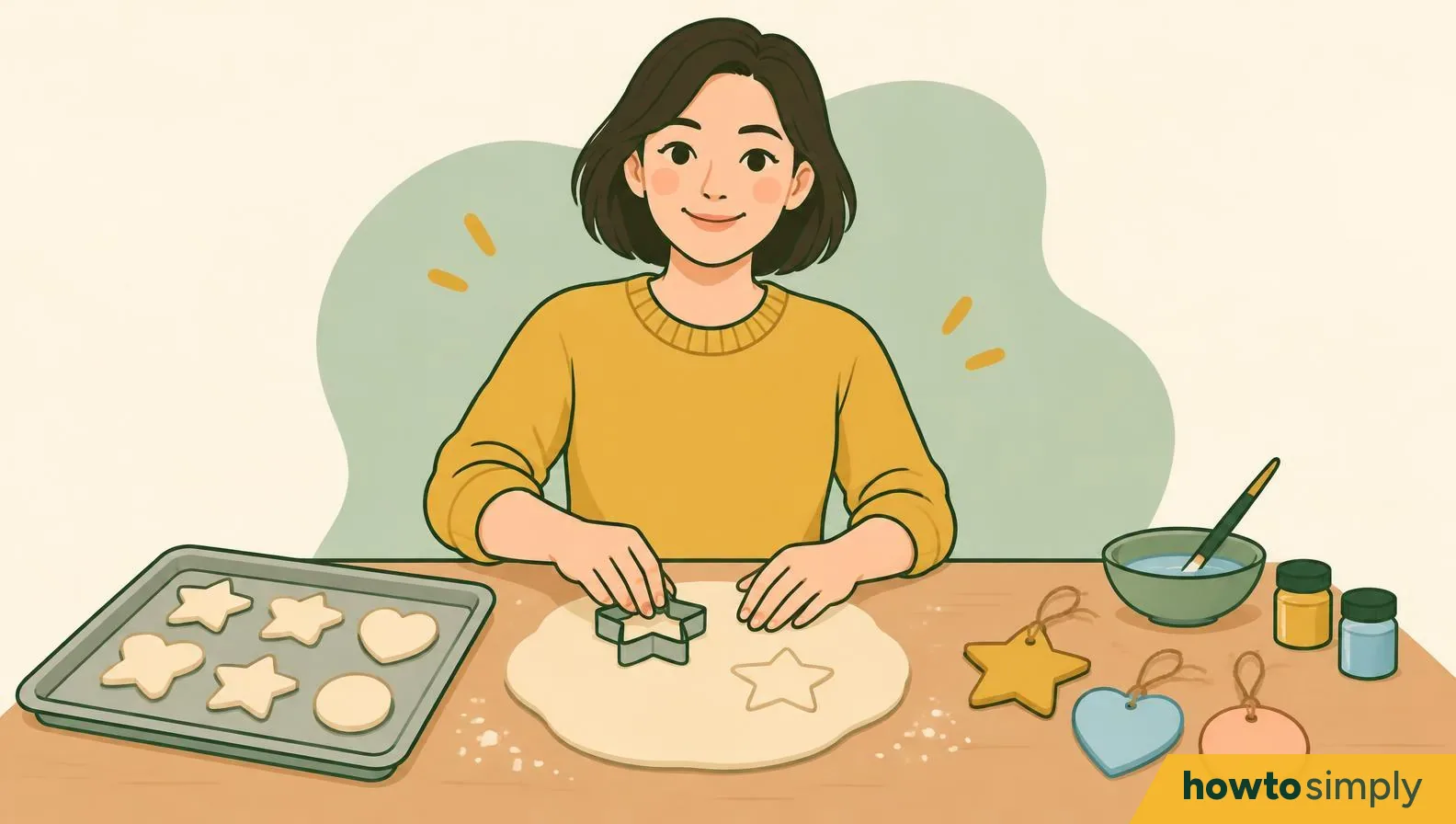
Salt dough is a modelling dough that turns hard when it's baked, so you can paint it once it's dry and keep it. The Fitzwilliam Museum has published a recipe, and the New Orleans Museum of Art has a version too. NOMA describes it as an inexpensive, simple thing to make, and it's very enjoyable.
Recipes and baking: what the sources say
Don't worry about small differences between the recipes below. NOMA and British Ceramics Biennial use the same ratio: two parts flour to one part salt and one part water. Both bake on a low heat, NOMA for one hour and British Ceramics Biennial for three hours.
| Source | Flour : salt : water | Bake |
|---|---|---|
| Oxford Owl (OUP) | 2 : 1 : 1 cups | 100 °C for 2 hours, then leave in the switched-off oven, ideally overnight |
| Starlight | 2 cups : 1 cup : up to 1 cup | Low heat, about 100 °C (210 °F); thin pieces need nearer 1 hour, thick ones up to 3 |
| NOMA | 2 cups : 1 cup : 1 cup lukewarm | 200 °F for 1 hour, then cool in the oven |
| British Ceramics Biennial | 250 g : 125 g : 125 ml | Lowest oven setting for 3 hours |
| Fitzwilliam Museum | 1 cup : ½ cup : ½ cup | Not given |
How to make salt dough
Mix the flour and salt in a bowl.
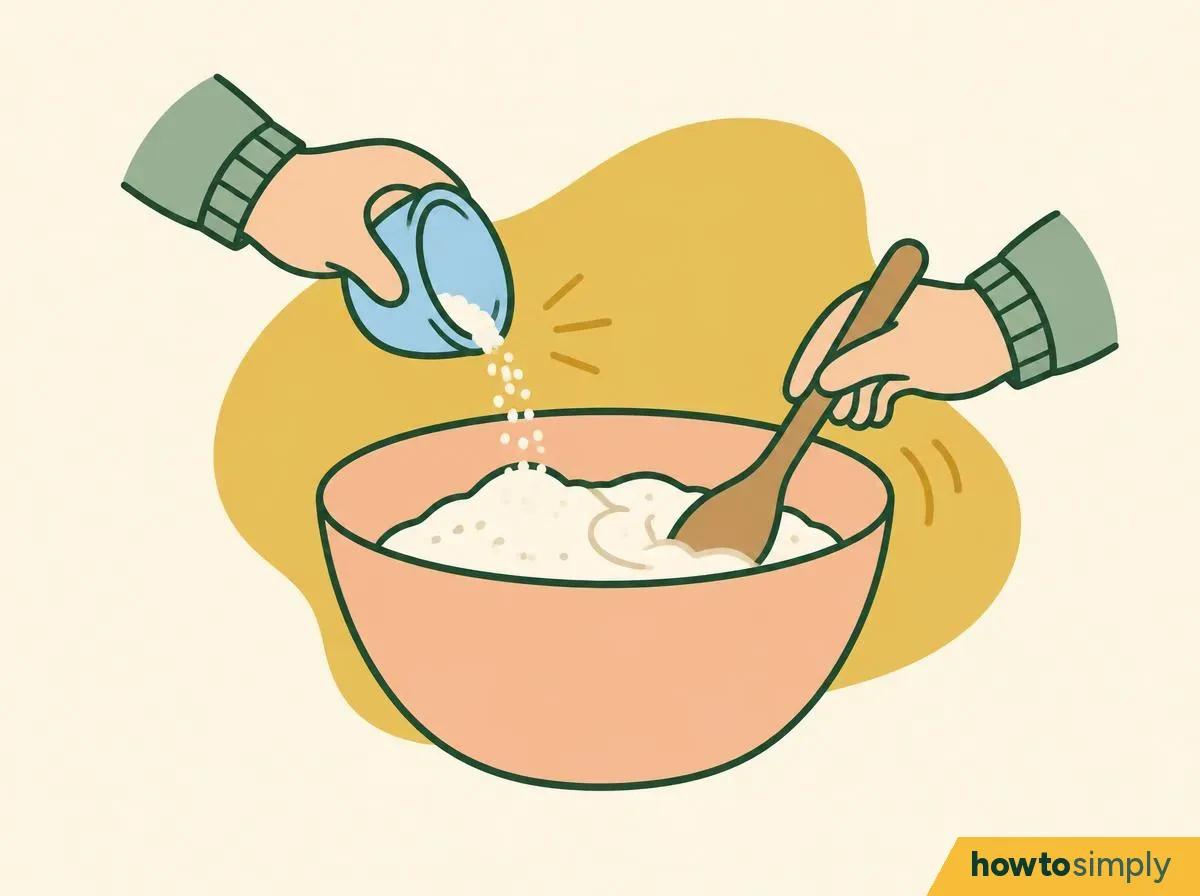
Illustration Measure 2 cups of plain flour and 1 cup of salt into the bowl and stir them together before any water goes in (NOMA).
You should see: an even, dry mixture with the salt spread through the flour.
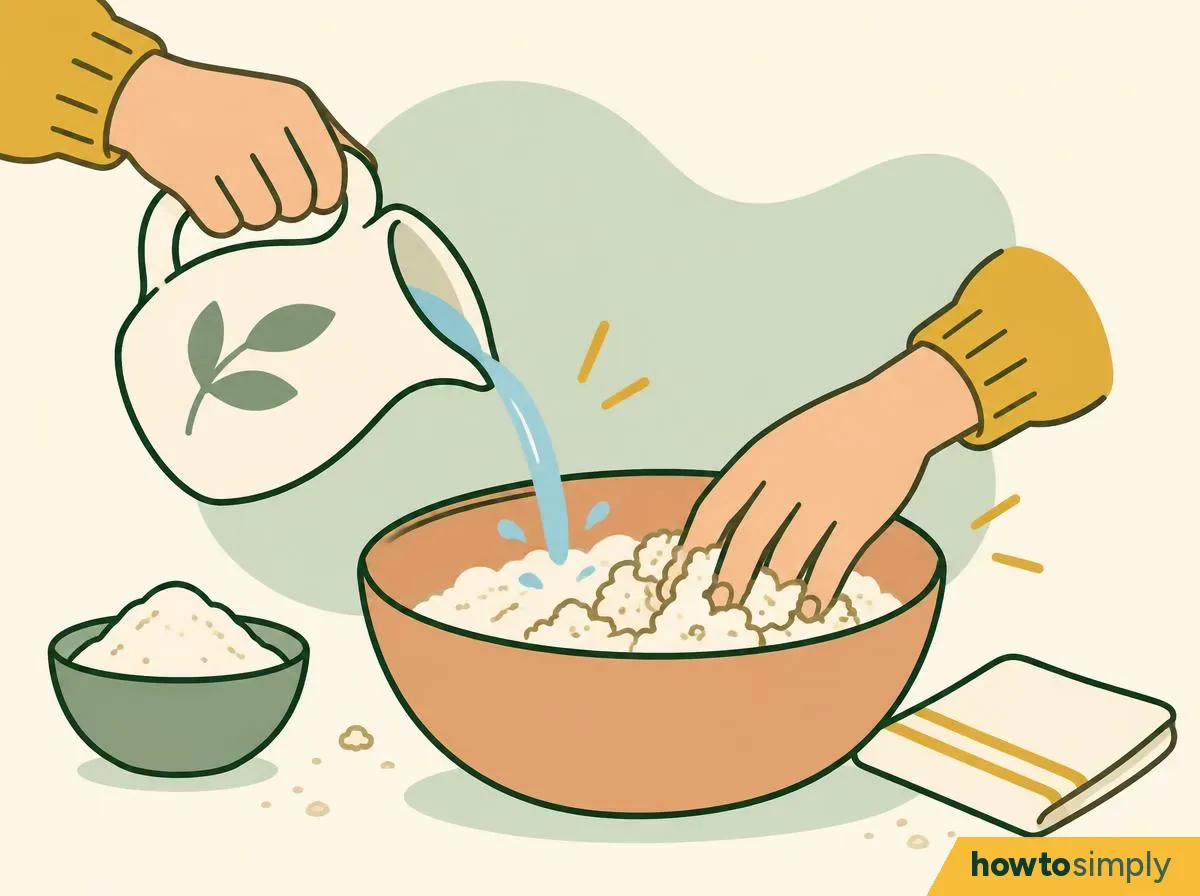
Add the water a little at a time.
Illustration 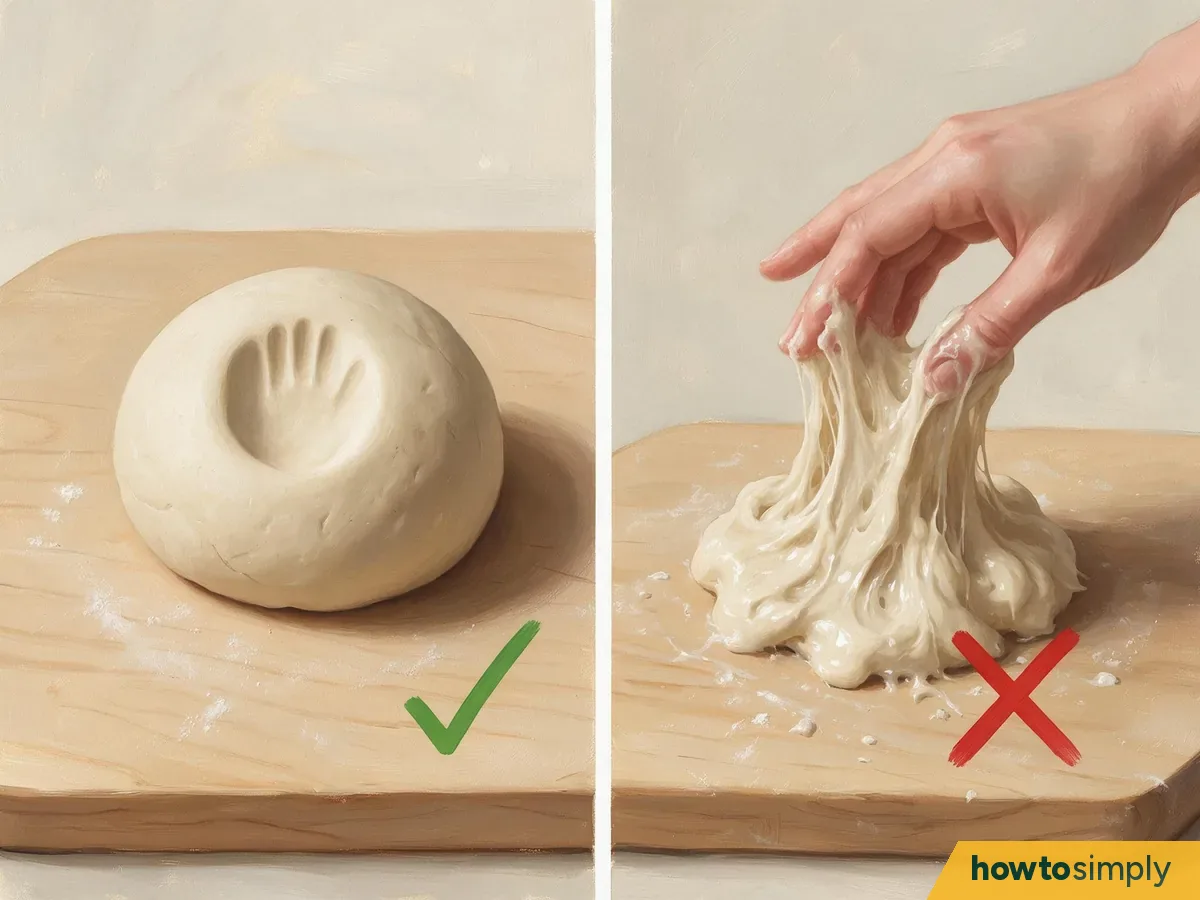
Illustration: add water a little at a time; stop when the dough holds a clean print and doesn't stick Mix in a splash of the water, then keep adding a little at a time until it all pulls together into a ball (British Ceramics Biennial). You may not need all of it (Starlight). It is much easier to add a splash more water than to rescue a dough that has gone sticky.
You should see: a ball that holds together.
Knead into a firm dough.
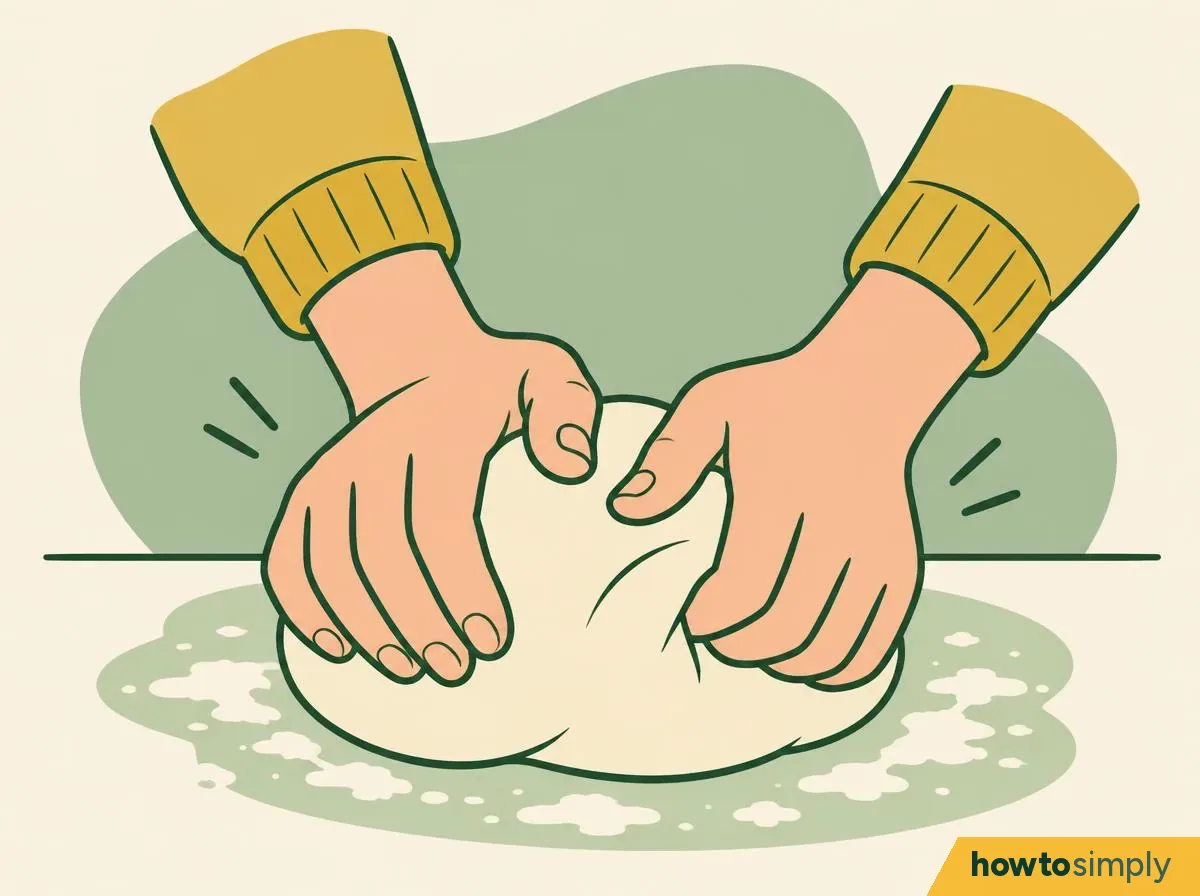
Illustration Knead on the table until the dough is smooth (Fitzwilliam Museum). If it sticks to your hands, work in a little more flour. If it cracks or crumbles, add a little water (Oxford Owl, Starlight). It is that easy.
You should see: a firm dough.
Careful: keep every piece 2.5 cm thick or less (Oxford Owl). Thicker pieces take much longer to dry through.
Shape your pieces.
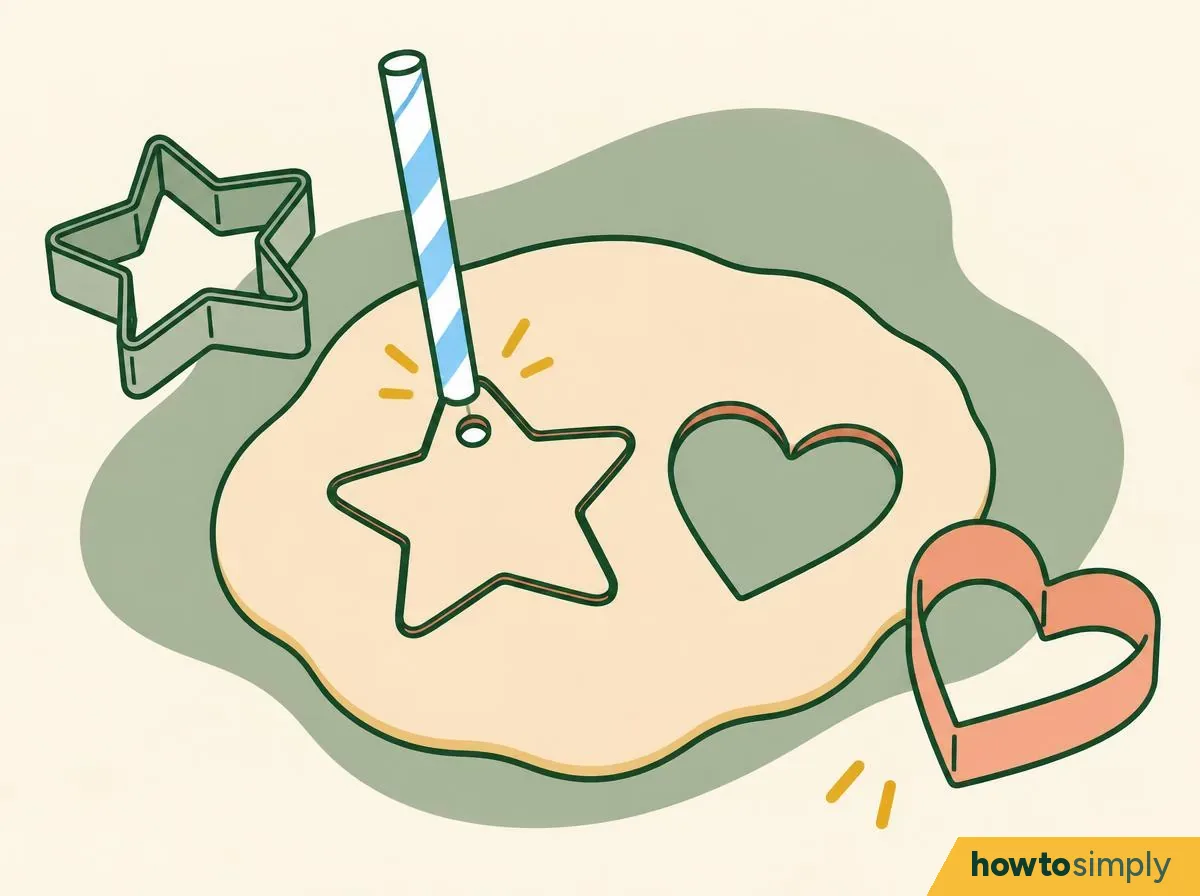
Illustration Roll the dough out and cut shapes, or model it by hand. For ornaments, push a drinking straw through near the top to make a hanging hole now. Make sure you don't leave it for later, because it's very hard to make one after baking (our tip). Lay the pieces on the lined tray.
You should see: your pieces laid on the lined tray.
Careful: too hot an oven makes salt dough crack (NOMA).
Bake on very low heat.
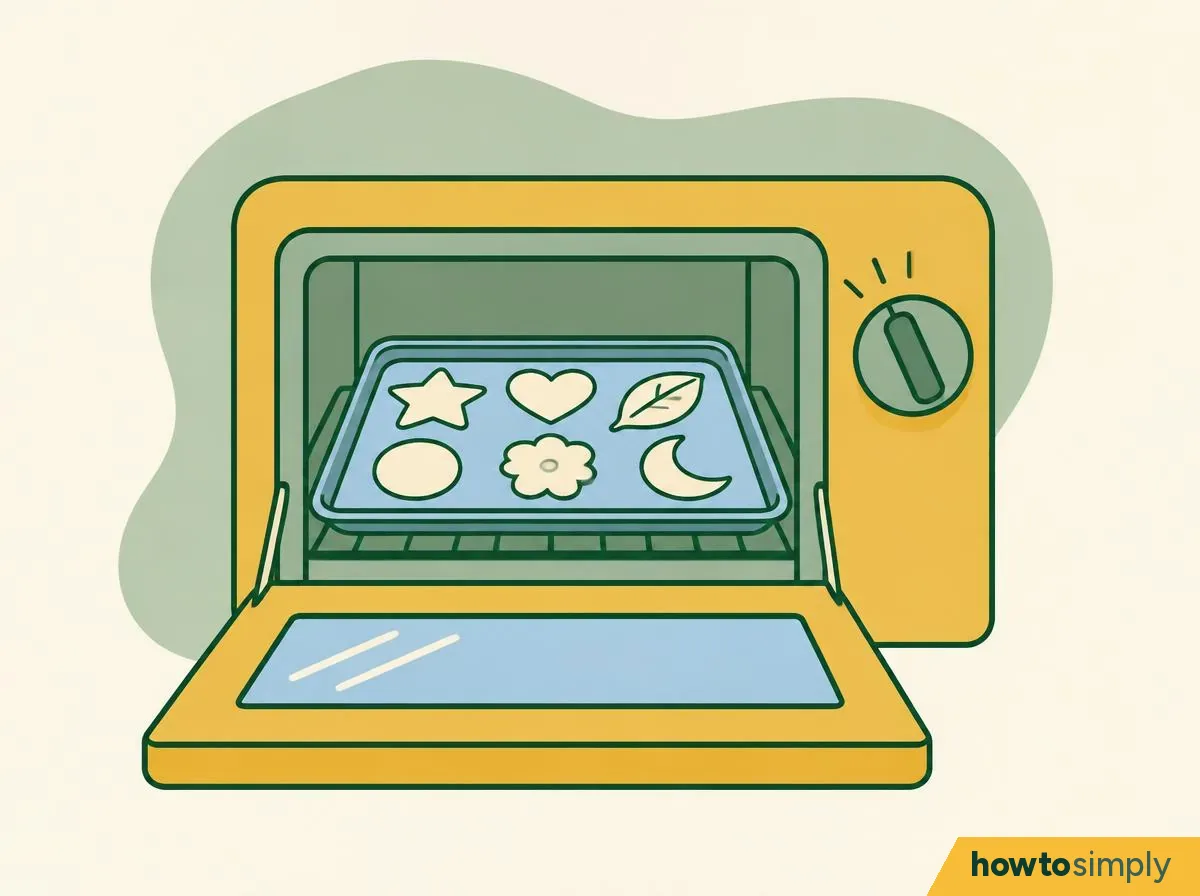
Illustration Bake on very low heat: NOMA uses 200 °F for one hour. Oxford Owl suggests 2 hours. British Ceramics Biennial bakes at the oven's lowest temperature for 3 hours. No oven? That's fine too: pieces can simply dry out in the open over a couple of days (Oxford Owl, Starlight).
You should see: pieces that have become hard.
Let them cool slowly in the switched-off oven.
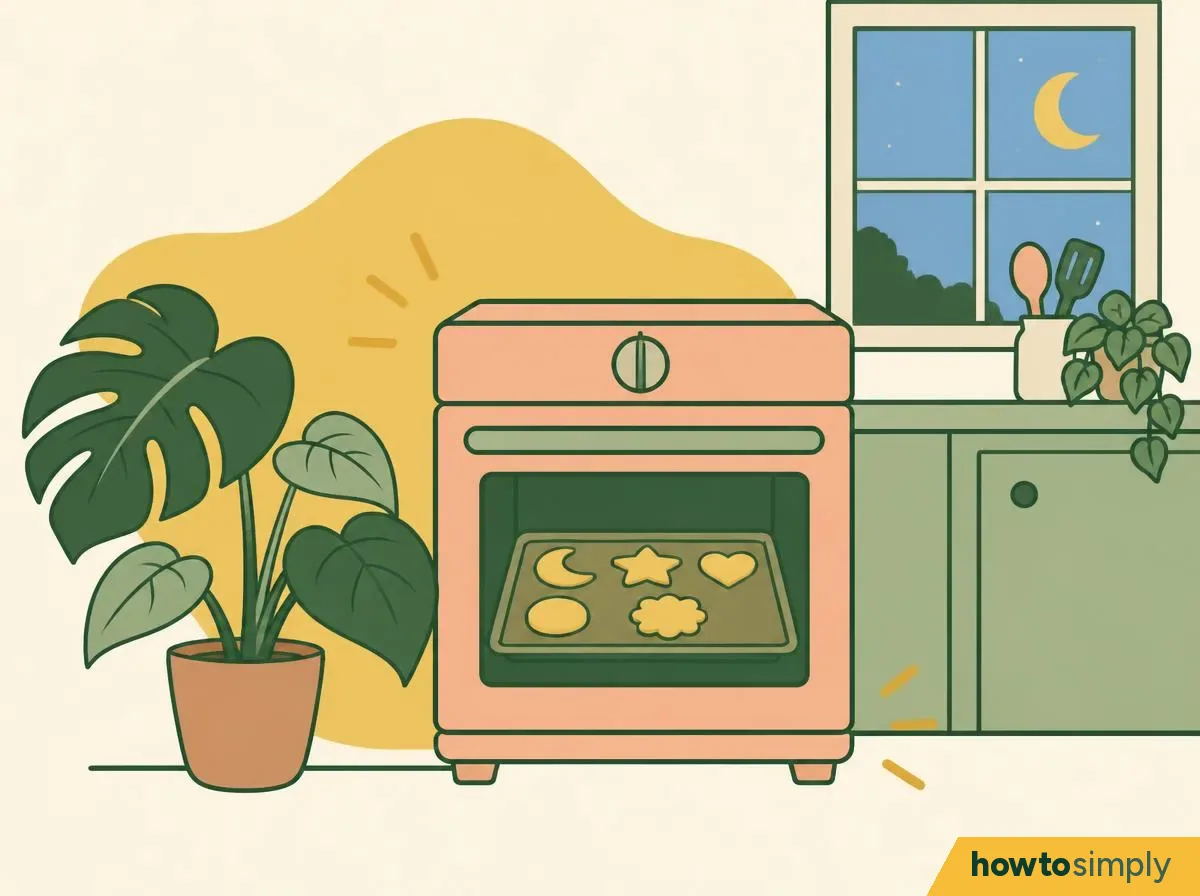
Illustration The hardest part is waiting. Turn the oven off and leave the pieces inside as it cools: NOMA says this helps prevent cracking. Check one: it should feel hard on the underside, not soft or cool and damp (our check). If it isn't, give it more time. So if your habit is to whisk things out of the oven the moment the timer goes, I am afraid salt dough needs a much gentler goodbye.
You should see: hard, cooled pieces.
Paint with water-based paints.
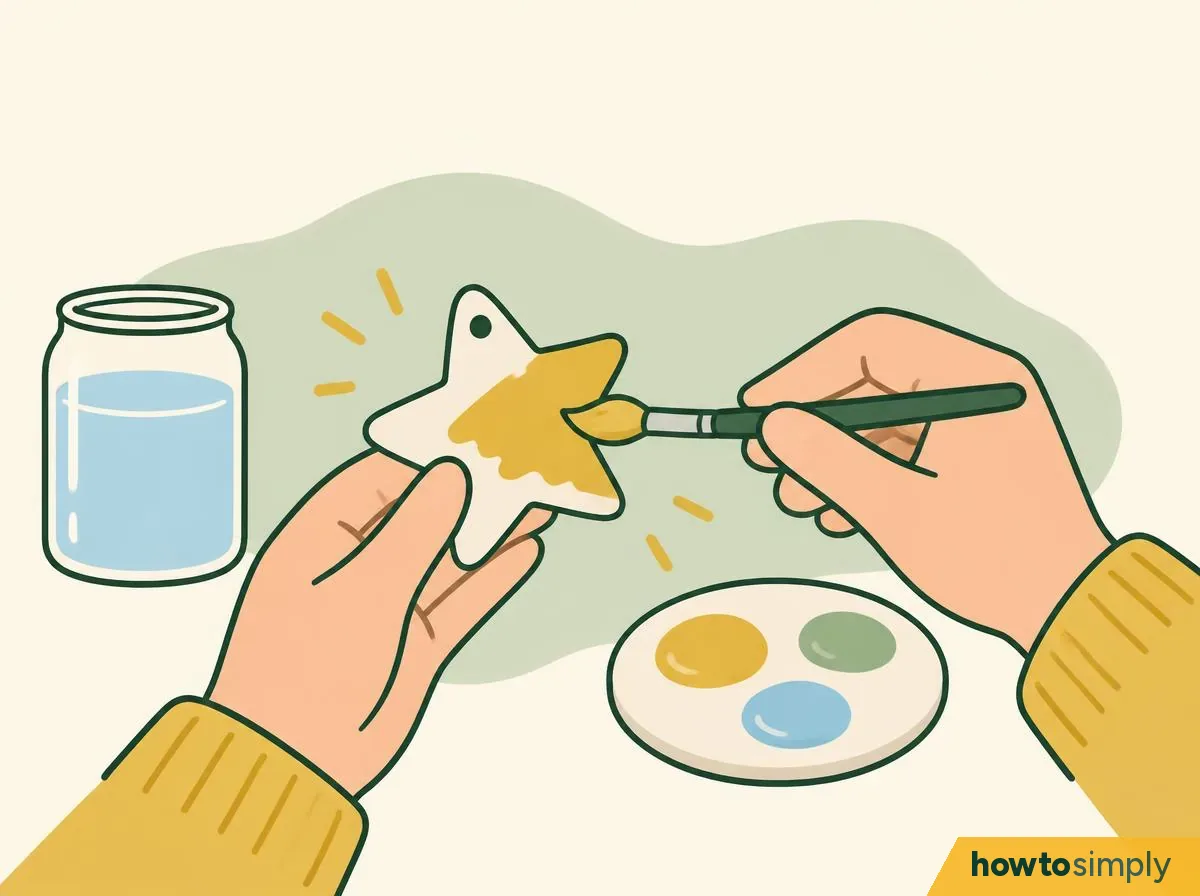
Illustration Once the pieces have cooled, paint them (British Ceramics Biennial) with water-based paints (NOMA). Let the paint dry fully before you handle or display them (Starlight). What it will do, it saves you smudged fingerprints on a piece you worked hard on.
You should see: even, dry colour with no damp patches.
Keep finished pieces away from pets.
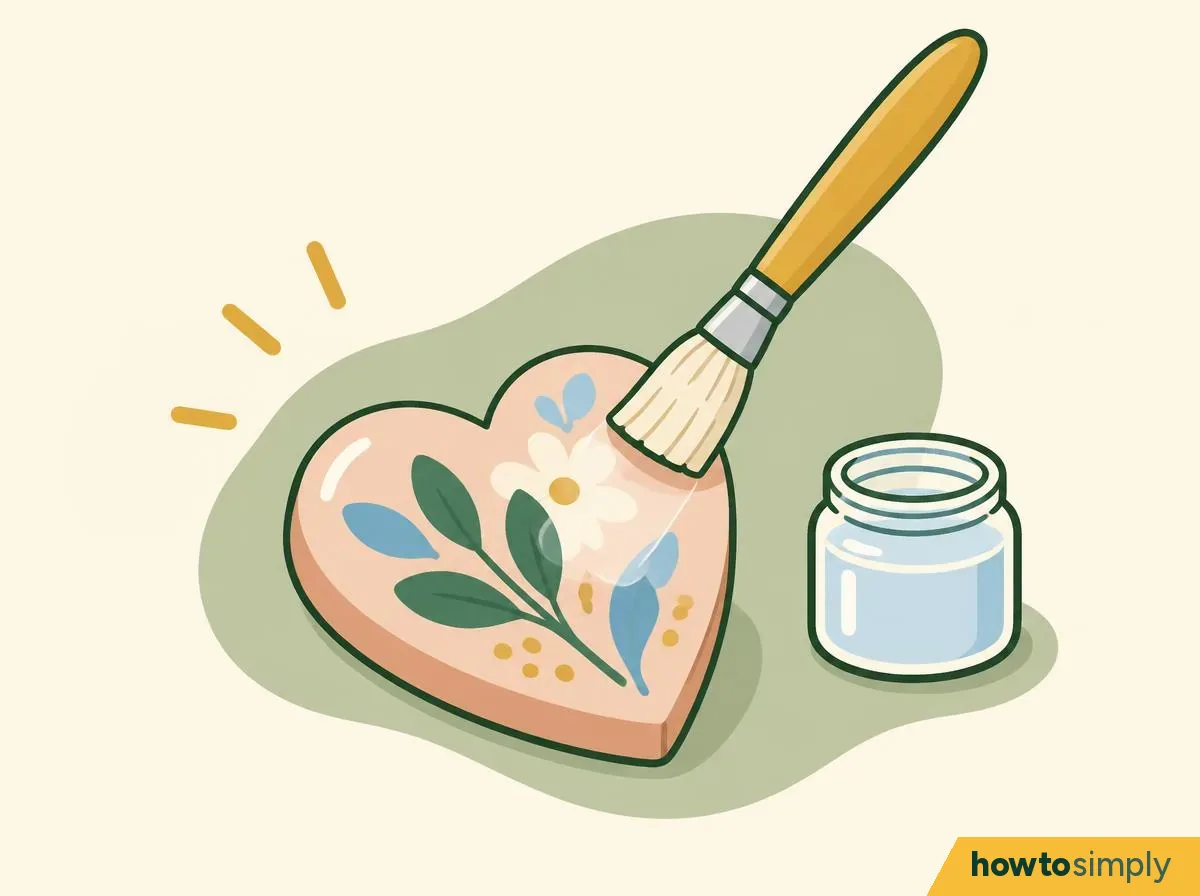
Illustration Also remember sealing. Starlight suggests a coat of PVA glue or clear varnish so your pieces keep for longer. Brush a thin coat over the front, back and edges and let it dry. Store finished pieces somewhere dry (our tip), and up high, out of reach of pets (ASPCA).
You should see: a clear, slightly shiny finish once it's dry.
How to tell it worked
- The pieces are hard (NOMA).
- No cracks (NOMA).
- Paint and sealer are dry to the touch (Starlight).
- Finished pieces are kept out of reach of pets, as the ASPCA advises.
If something goes wrong
Lots of people find their dough sticks or crumbles, so please don't be hard on yourself. Below are the likely causes and what to do next:
| What happens | What it means | What to do |
|---|---|---|
| Dough sticks to your hands | Dough is a little sticky | Dust more flour on your hands and the table (British Ceramics Biennial) |
| Dough cracks or crumbles while shaping | Too dry | Add a little water (Oxford Owl, Starlight) |
| Pieces crack in the oven | The oven was too hot (NOMA) | Bake at a lower temperature and cool in the oven (NOMA) |
| Still soft in the middle | Too thick, or not baked long enough | Bake longer at low heat; keep pieces under 2.5 cm (Oxford Owl) |
| A pet ate some | Salt poisoning risk (Pet Poison Helpline) | Call your vet immediately (ASPCA, Pet Poison Helpline) |
Questions readers ask
Can I make salt dough without an oven?
Yes. Oxford Owl and Starlight both say pieces can simply dry out in the open over a couple of days instead. Thin pieces dry faster; thick ones can stay soft in the middle for longer.
Why did my salt dough puff up or crack in the oven?
The oven was too hot. NOMA warns that salt dough cracks if the temperature is too high. Bake at a low temperature, around 100 C, and let pieces cool slowly in the switched-off oven (Oxford Owl, NOMA).
Is salt dough dangerous for dogs?
Yes. The ASPCA warns that pets can mistake salt dough ornaments for treats and that even a small amount could be dangerous, and Pet Poison Helpline says it can be fatal. Keep it out of reach, even years-old ornaments, and call a vet straight away if one is eaten.
Can I colour the dough before baking?
Neither of the recipes we could read (NOMA, British Ceramics Biennial) covers colouring the raw dough, so we can't give reliable amounts. The sources paint after baking, NOMA with water-based paints.
Sources and method
- Researched by
- Abu Bakar Saadat
- Tested by our team
- No. We have no record of anyone on our team trying these steps, so treat them as researched instructions from the sources below.
- Pictures
- 11 illustrations drawn for this article: drawings, not photos.
- Sources
- 7 named sources, linked below.
- What this page adds
- A table comparing salt dough recipes and baking times from five sources, a drawing of each step from mixing to sealing, and a fix table for sticky, crumbly or cracked dough.
Did this solve the problem?
Where did you get stuck?
What did you think?
Reaction counts are loading.
Sources
We use primary, official and specialist sources appropriate to the topic.
- Oxford Owl (Oxford University Press): Salt dough craft (PDF, 2013)
- New Orleans Museum of Art: Art-making activity, salt dough sculpture (14 May 2020)
- The Fitzwilliam Museum, Cambridge: Recipe for salt dough eye idol
- British Ceramics Biennial: #ClayAtHome salt dough recipe
- Starlight Children's Foundation: Salt dough (PDF)
- ASPCA: Crafting with care, pet safety tips for holiday arts and crafts (6 December 2016)
- Pet Poison Helpline: Play dough (homemade)