Is my cat dehydrated? Signs to check and when to call the vet
Researched by Abu Bakar Saadat6 min read
Last updated: 14 November 2026References
 Illustration
On this page 10 sections
In short
Check the gums (dry or sticky is a warning sign) and gently lift the skin over the shoulders: it should drop back almost at once. Sunken eyes, weakness or a cat that won't eat needs a vet promptly. Don't force water or give human medicines.
At a glance
- Check
- Gums, skin over the shoulders, eyes, energy, appetite
- Normal skin
- Drops back almost at once (Cornell)
- Call the vet
- Promptly if you suspect dehydration (Cornell)
- Go now
- No urine in the litter tray, open-mouth breathing, collapse (VCA)
- Advice from
- Cornell Feline Health Center, Merck Veterinary Manual, VCA, Blue Cross, PDSA, Cats Protection, read 28 October 2026
- Checked
- November 2026
It is a worrying feeling when your cat seems flat or isn't drinking, and of course you want answers fast. These one-minute checks tell you whether to call the vet; if you see any urgent sign below, go straight there.
The reason these checks matter is that dehydration is not a small problem for a cat. Cornell Feline Health Center says it can reduce circulation, affect several organs, upset body temperature and heart rhythm, and affect the nervous system. The three checks below take a minute. They tell you whether to call the vet, not how dehydrated your cat is: only a vet can judge that.
Check your cat in four steps
Lift the lip and feel the gums.
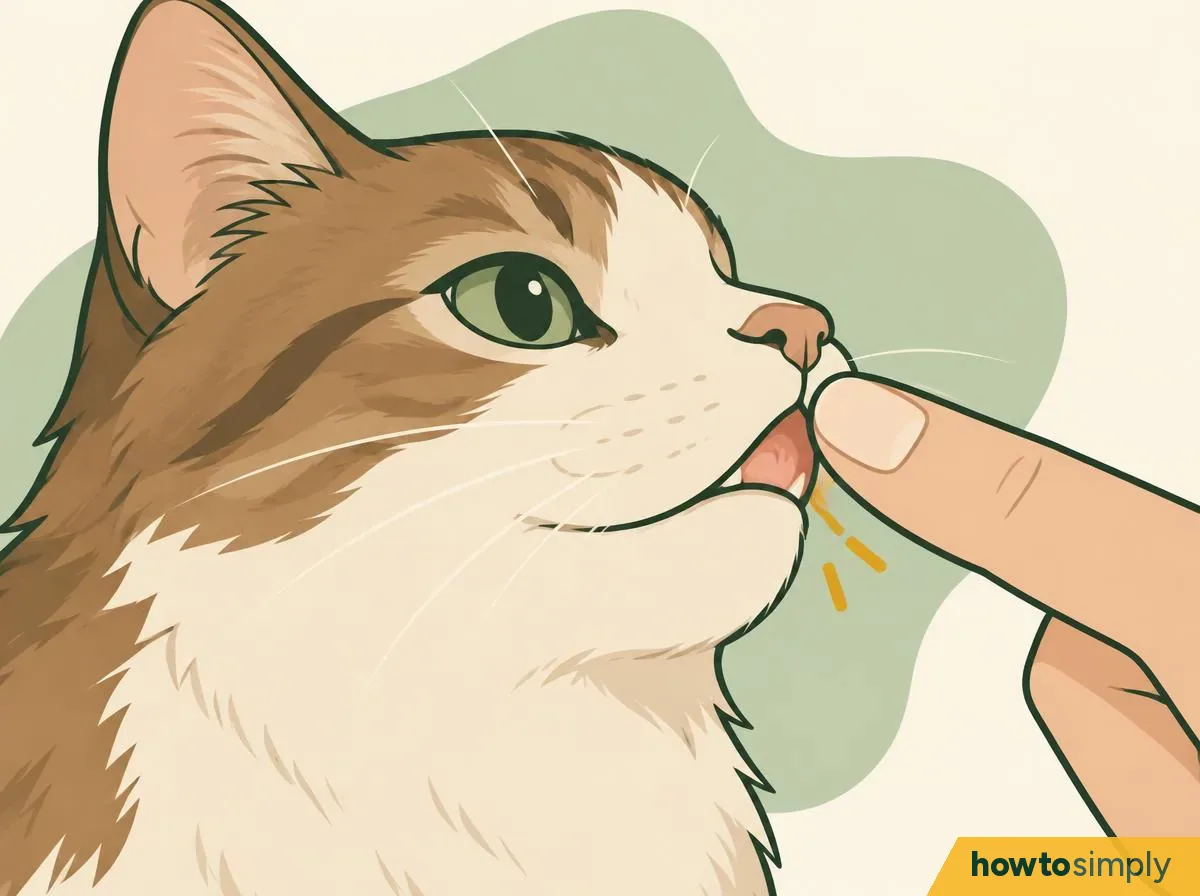
Illustration Check whether your cat's gums feel moist or dry (Cornell). Take your time; a calm, slow hand makes this easier for both of you.
You should see: gums that feel moist. Dry or tacky (sticky) gums are a sign of dehydration (Cornell).
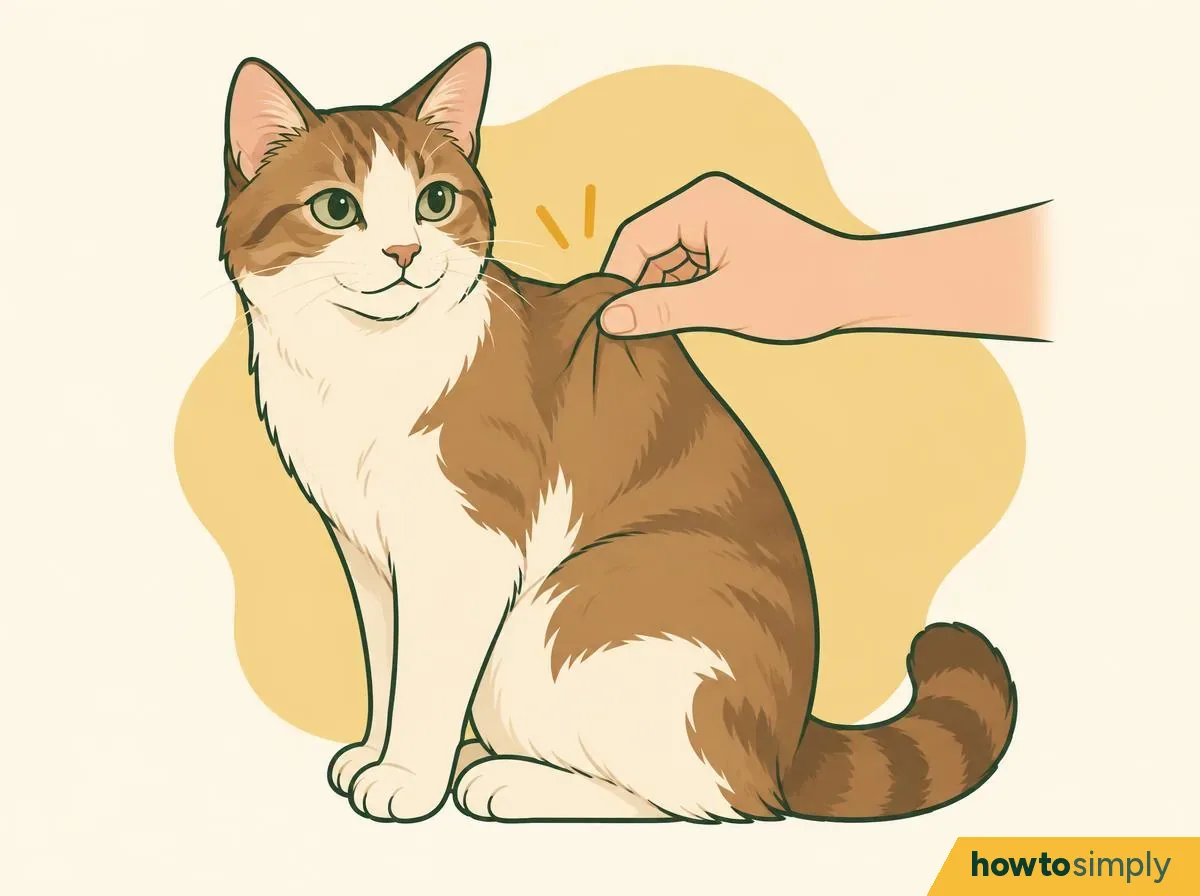
Lift the skin over the shoulders and let go.
Illustration 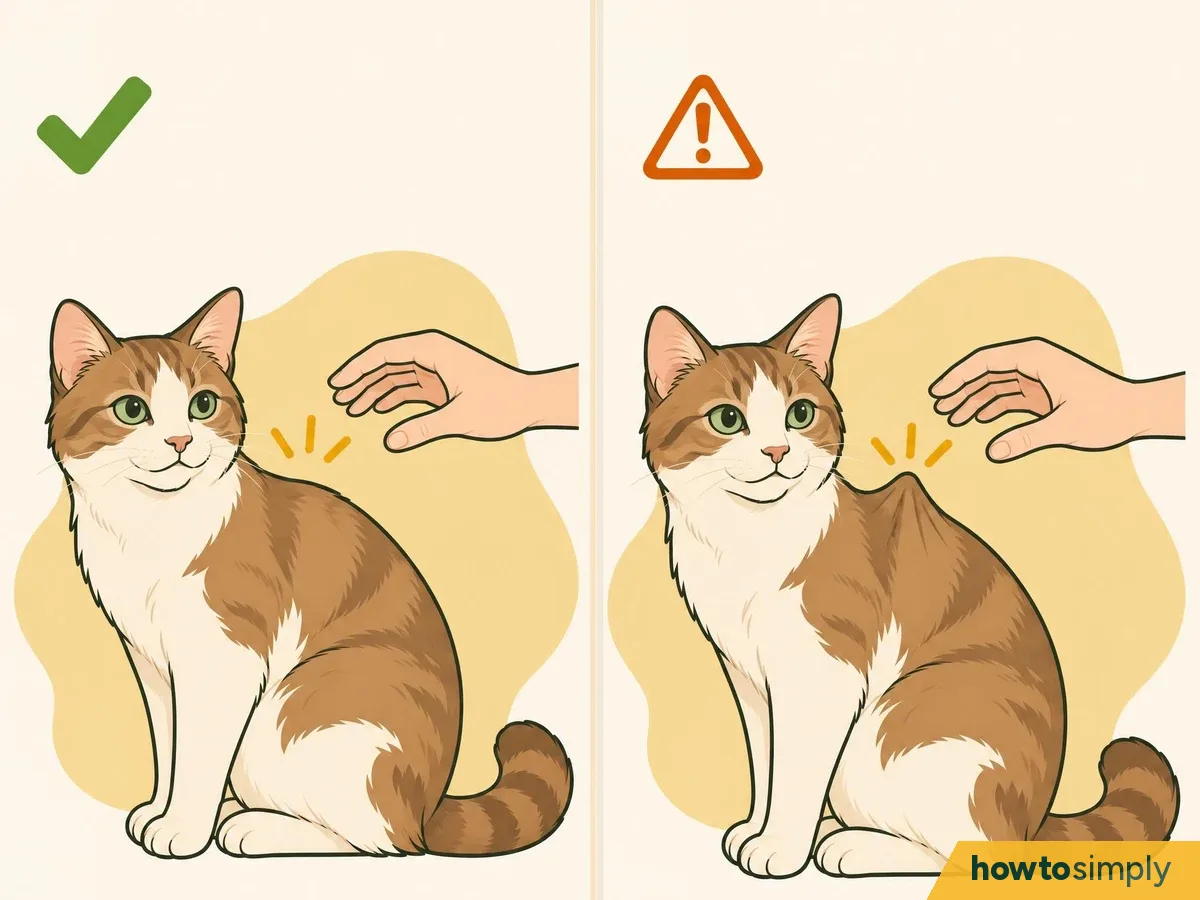
Illustration: skin that drops back at once is normal; skin that stays up in a ridge (tenting) is a warning sign Gently lift a fold of skin over the shoulders and let go. In a dehydrated cat it can take much longer to drop back, or stay up in a ridge, called "tenting" (Cornell).
Older cats can have slower skin even when they are well hydrated (Cornell), so don't rely on this check alone.
You should see: in a well-hydrated cat, the skin drops back almost at once (Cornell).
Look at the eyes, energy and appetite.
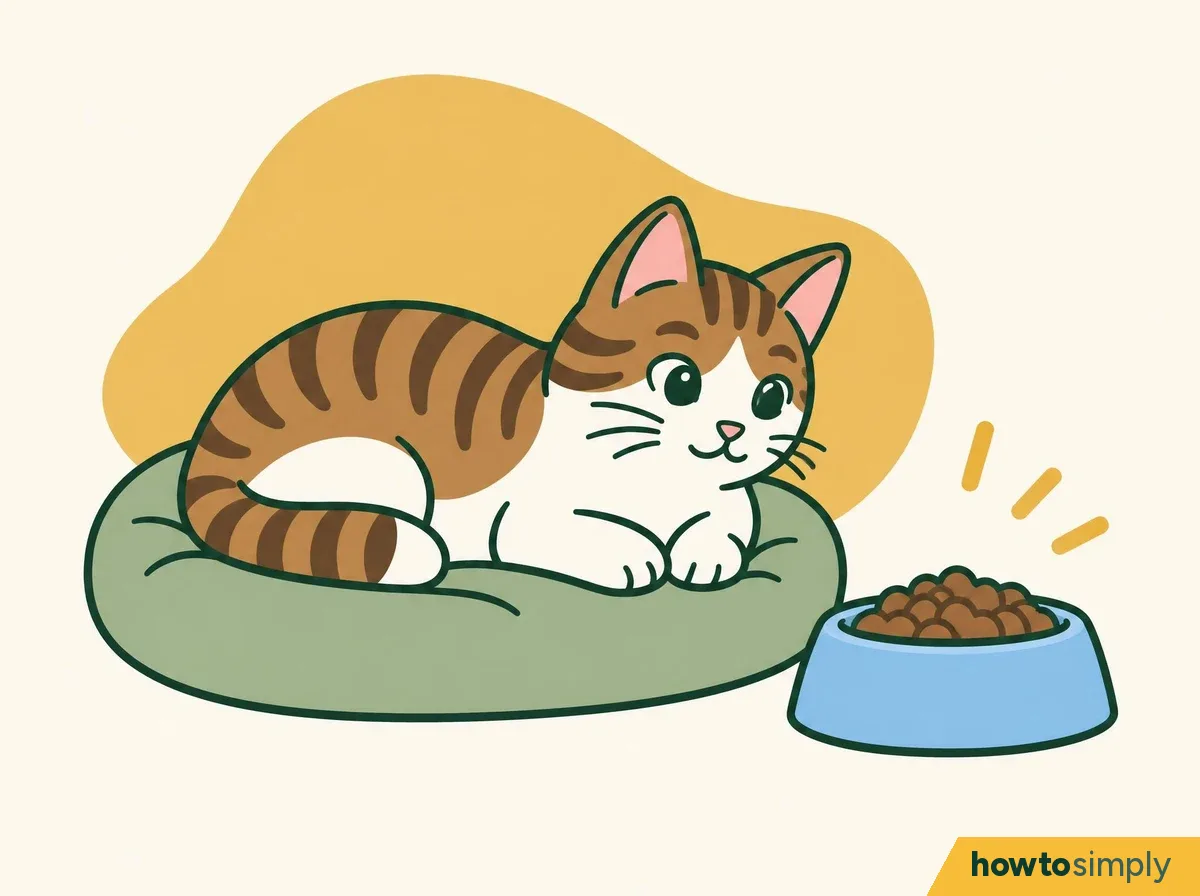
Illustration Cornell lists lethargy, weakness, poor appetite and dry gums as signs, and eyes that look sunken into their sockets in severe cases.
A dry nose can mean mild dehydration, but a cat that is really unwell usually has other signs as well (Cats Protection).
You should see: bright eyes that don't look sunken, and a cat that is as lively and interested in food as usual.
If anything looks wrong, call your vet promptly.
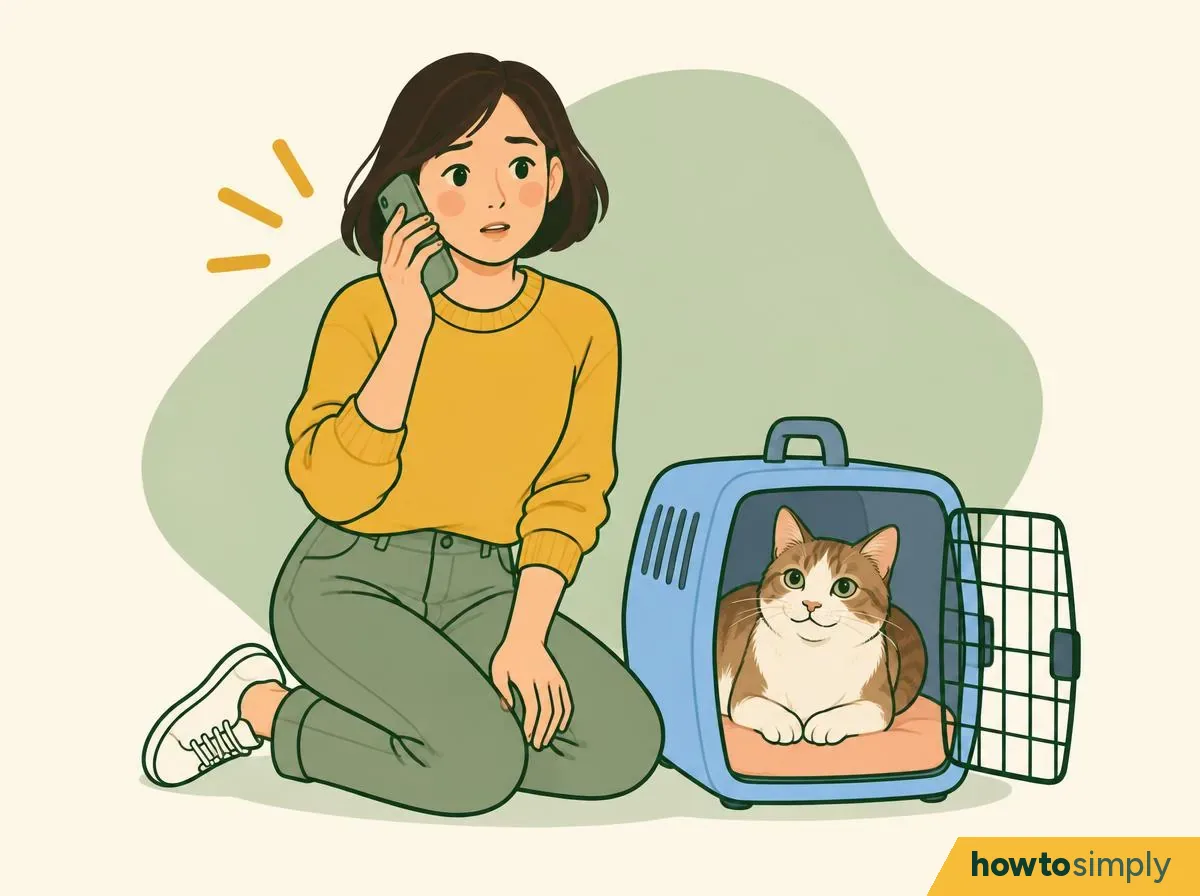
Illustration Cornell's advice is simple: if you suspect dehydration, contact a vet promptly. Use the table below to decide how fast.
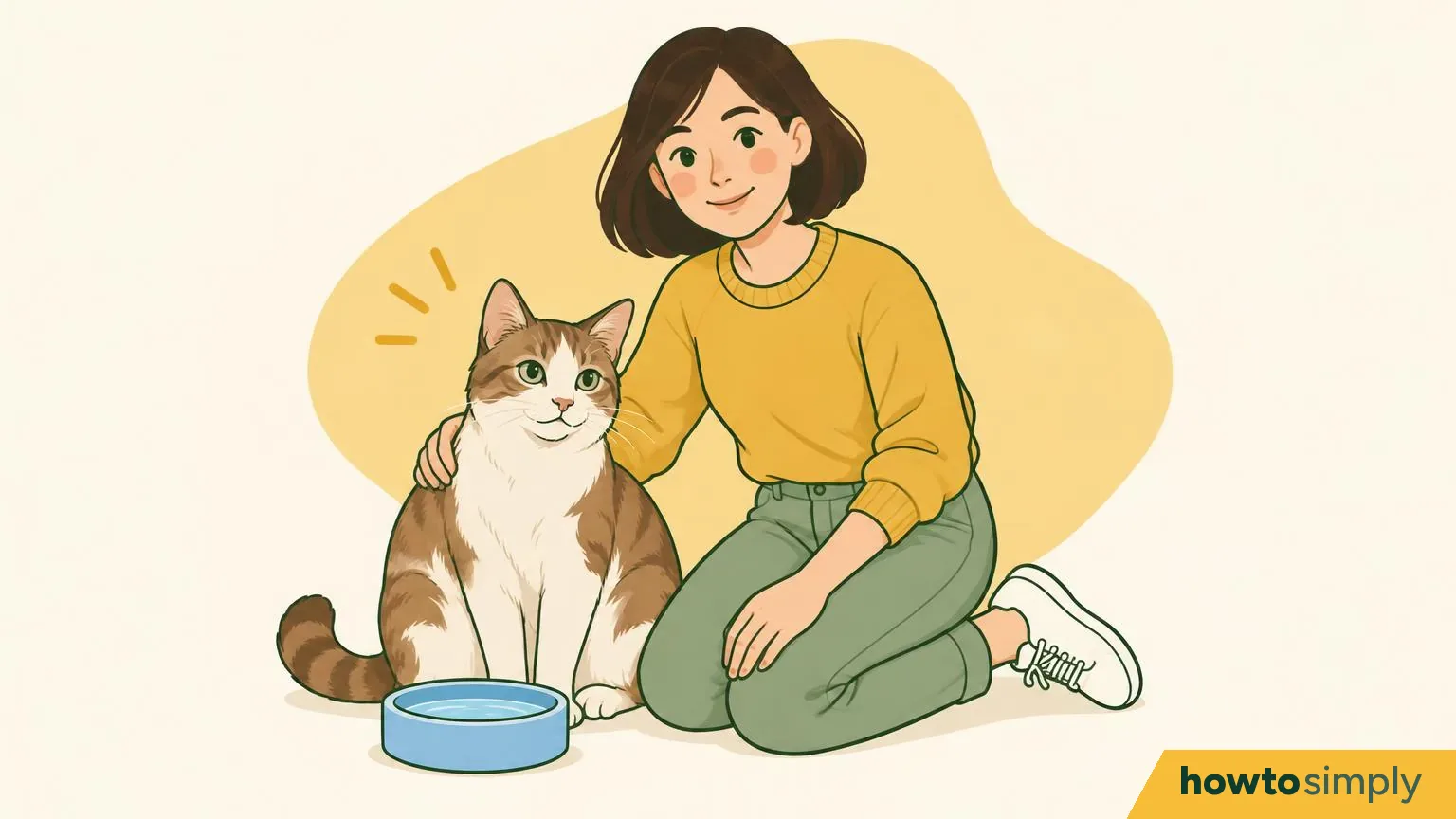
While you wait, leave fresh water within easy reach, but don't force your cat to eat or drink (VCA).
You should see: a time agreed with the vet, or advice on what to watch for at home.
When to call the vet
| What you see | What to do |
|---|---|
| Your cat keeps going to the litter tray but no urine comes out | Go to a vet now. VCA says this needs immediate attention and can be fatal |
| Open-mouth breathing or panting, collapse, pale gums with fast breathing | Go to a vet now (VCA) |
| Sunken eyes, weakness, dry gums, skin that stays tented | Contact your vet promptly (Cornell) |
| Vomiting or diarrhoea that keeps going | VCA says contact your vet after 6 to 12 hours; Blue Cross says after 24 hours (PDSA says the same for diarrhoea), or sooner if your cat seems unwell or lethargic. Call sooner rather than later |
| A kitten or an elderly cat with diarrhoea | Speak to your vet: they dehydrate more easily (Blue Cross, PDSA) |
How to tell your cat is well hydrated
- The gums feel moist, not dry or sticky (Cornell).
- The skin over the shoulders drops back almost at once (Cornell). In an older cat, judge this together with the other checks.
- The eyes don't look sunken, and your cat isn't lethargic, weak or off its food (Cornell).
- Going to the litter tray often with no urine coming out is an emergency (VCA).
If you're not sure
It is easy to second-guess yourself here, and checking again is never silly. Here is what to do in the in-between situations.
| What happens | What it means | What to do |
|---|---|---|
| An older cat's skin is slow to drop back, but the gums are moist | Older cats can have less elastic skin even when well hydrated (Cornell) | Check the gums and the other signs too, and ask your vet |
| The nose is dry, but your cat is eating and lively | A dry nose can mean mild dehydration, especially in older cats (Cats Protection) | Check the gums and skin, and help it drink more (see below) |
| Your cat won't drink | Forcing food or water can make things worse (VCA) | Don't force it; call your vet. A vet gives fluids under the skin or into a vein if needed (Cornell) |
| Your cat ignores the water fountain | Some cats like fountains, others don't (Cornell) | Put bowls of fresh water in several places instead (Cornell) |
| Another pet keeps your cat away from the bowl | Not being able to reach water is one cause of dehydration (Cornell) | Put fresh water in several places, where other pets can't block them (Cornell) |
How vets grade dehydration
This is the scale in the Merck Veterinary Manual, to show why the checks above matter. It is for vets: the manual says the estimate is always partly subjective, and very young, old or chronically emaciated animals can be misleading.
| Estimated dehydration | What the vet finds (Merck) |
|---|---|
| 4 to 5% | Slightly dry gums; skin and eyes still normal |
| 6 to 7% | Dry gums, skin a little slow to drop back, eyes still moist |
| 8 to 10% | Dry gums, skin much slower, eyes sunken, weak fast pulse |
| 12% or more | Very dry gums, skin stays up, eyes badly sunken and dull, very weak pulse |
So even skin that is a little slow to drop back already means about 6 to 7% dehydration on the Merck scale. Treatment is fluids under the skin or into a vein, plus finding the cause (Cornell).
Why cats get dehydrated
Cornell names two groups. Losing more water: kidney disease, diabetes, vomiting, diarrhoea, an overactive thyroid, and some heart medicines. Taking in less: weakness, poor appetite, dental problems, or no access to water, for example an outdoor cat with no access to water, or a cat that another cat keeps away from the bowl.
How much a cat needs, and how to help it drink
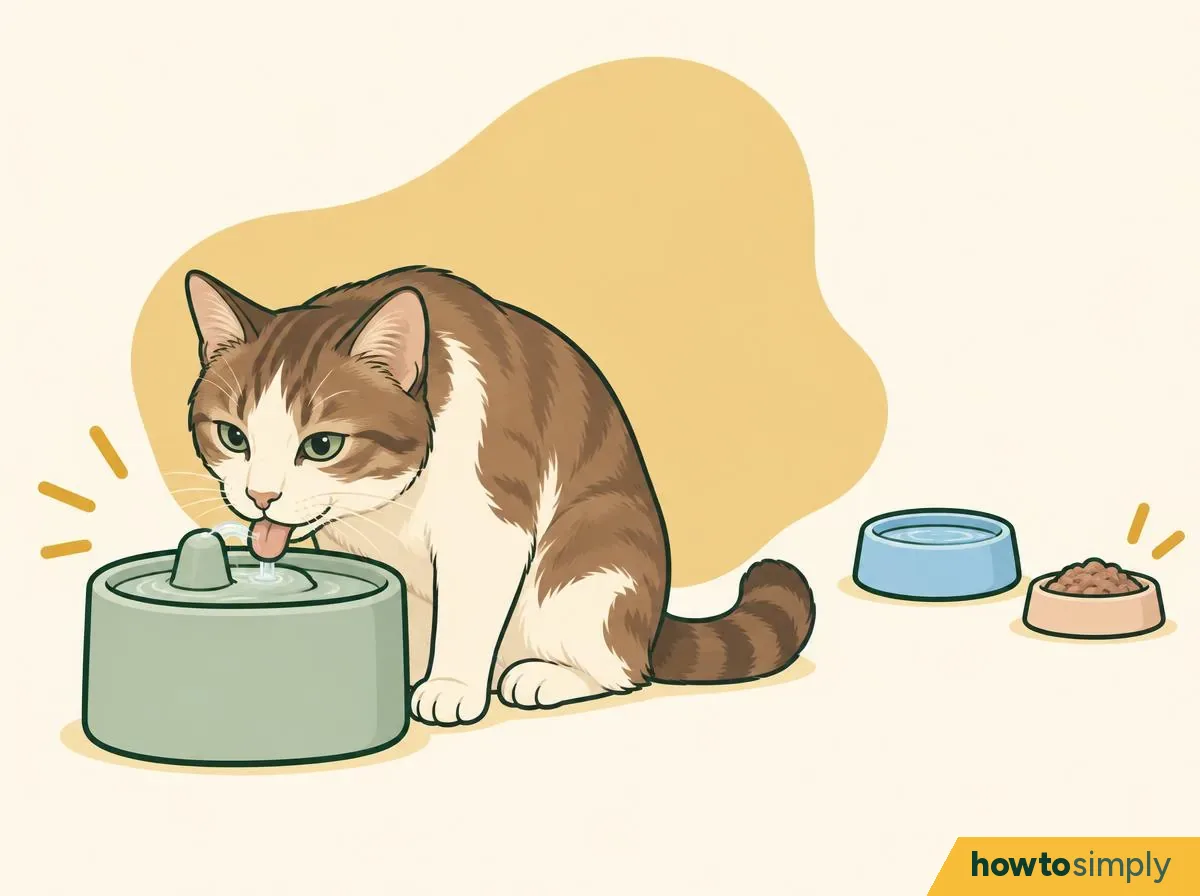
Cornell gives about 4 ounces of water per 5 pounds of lean body weight a day, so about one cup for an average 10 lb cat. Food counts: wet food can be up to 80% water (Cornell).
- Put fresh water in several easy-to-reach places, and make sure other pets can't block the bowl (Cornell).
- Try a water fountain; some cats like them, others don't (Cornell).
- Feed wet food, or add water to food (Cornell).
- Flavour the water with a little water from a tin of tuna or low-salt chicken broth (Cornell).
Questions readers ask
Can I give my cat water with a syringe?
Don't force your cat to drink: VCA says forcing food or water can make things worse. If your cat is dehydrated, a vet gives fluids under the skin or into a vein (Cornell).
My older cat's skin is slow to drop back. Is it dehydrated?
Not always. Cornell says older cats can have less elastic skin even when they are well hydrated, so check the gums and the other signs too, and ask your vet.
Does a dry nose mean my cat is dehydrated?
It can mean mild dehydration, especially in older cats (Cats Protection). A cat that is really unwell usually has other signs too, such as not eating, lethargy or sunken eyes.
Does wet food count towards water?
Yes. Cornell says wet food can be up to 80% water, so cats on wet food may drink less from the bowl. Cats on dry food usually take in more of their daily water by drinking.
Sources and method
- Researched by
- Abu Bakar Saadat
- Tested by our team
- No. We have no record of anyone on our team trying these steps, so treat them as researched instructions from the sources below.
- Pictures
- 7 illustrations drawn for this article: drawings, not photos.
- Sources
- 6 named sources, linked below.
- What this page adds
- A when-to-call-the-vet table, a table of how vets grade dehydration from 4 to 12%, and drawings of checking the gums and the shoulder skin.
What to do next
Settle in and care for your cat Step 4 of 4
Did this solve the problem?
Where did you get stuck?
What did you think?
Reaction counts are loading.
Sources
We use primary, official and specialist sources appropriate to the topic.
- Cornell Feline Health Center: Hydration (last updated 2021)
- Merck Veterinary Manual: The fluid resuscitation plan in animals (full review November 2025)
- VCA Animal Hospitals: Emergencies in cats (updated 21 February 2024)
- Blue Cross: Vomiting and diarrhoea in cats (24 November 2022)
- PDSA Pet Health Hub: Diarrhoea in cats (November 2020)
- Cats Protection: What it means when your cat's nose is dry (5 March 2026)