How to wash silk
Check the care label and do a colour test, then hand wash in lukewarm water with a few drops of gentle detergent for no more than five minutes, rinse with a little white vinegar, press the water out in a towel and dry away from heat and sun.
Researched by Abu Bakar SaadatPublished 21 November 2026Last changed 21 November 2026Verified 17 November 2026Version 1See all changes

On this page 9 sections
Step by step
Hi, and welcome to howtosimply. Silk is known to be quite picky, and we can't say that's wrong. Most of what people call "picky" about silk comes down to three points: water temperature, gentleness when touching, and no heat. If you get these right, your favourite silk shirt will live for years in good condition.
Before you start
- First of all, read the care label. If it says "dry clean only" or there is a symbol showing a washtub with a cross over it, take it to a professional cleaner.
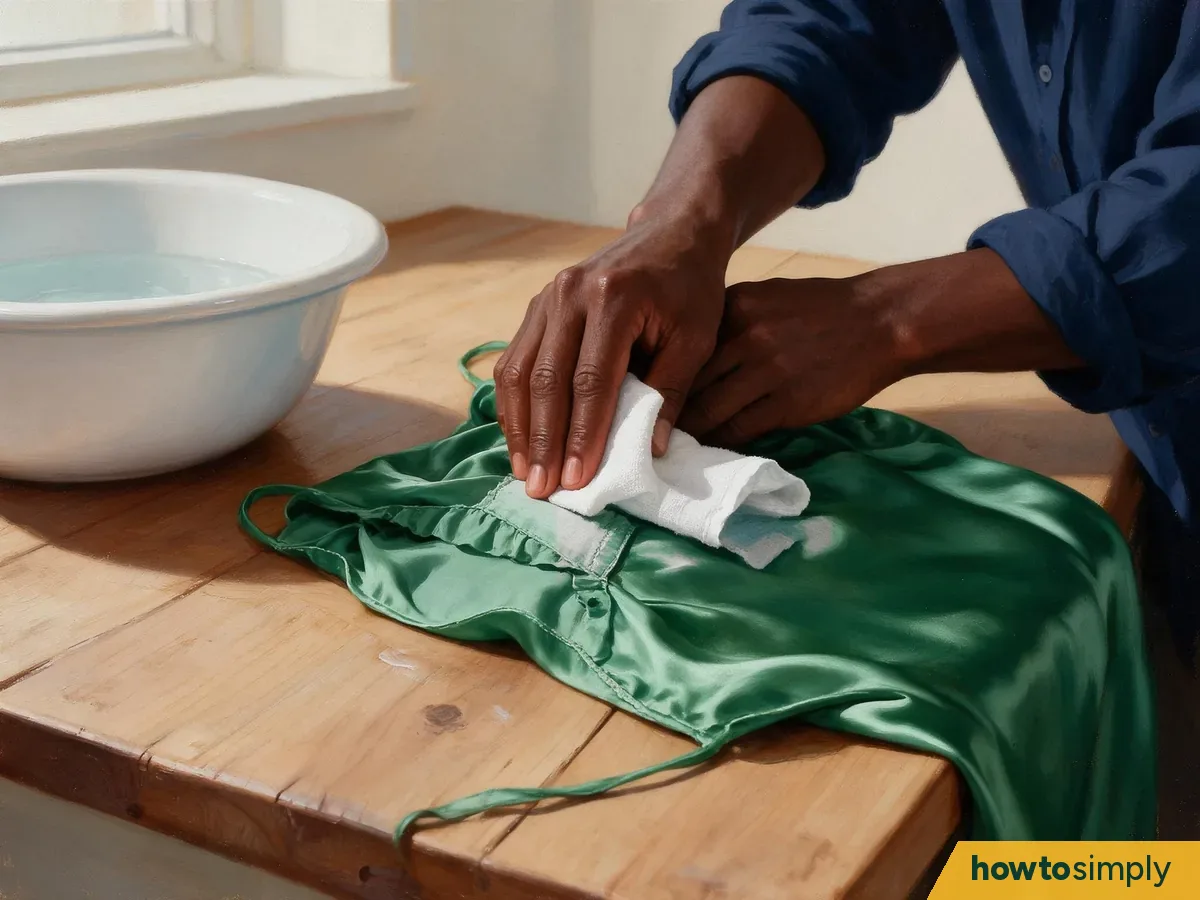
- Do a colour test. Dampen a white cloth with water and press it against a hidden area of the silk (like an inside seam). Check the cloth. If colour appears on the cloth, don't try washing it yourself.
- Always choose a gentle detergent made specifically for washing silk or delicates. Stay away from biological detergents with enzymes. Never use bleach!
- You'll need: a clean sink or basin, a mild detergent for silk or delicates, white vinegar and two clean towels.
- Time: the wash itself is short: Persil and Cleanipedia say soak for no more than five minutes, and Tide says three. Drying time isn't given by our sources and depends on the garment.
- This guide is for: silk clothes whose label doesn't say dry clean only.
- Not for: dry-clean-only silk, or silk whose colour comes off in the test above. Take those to a professional cleaner.
What the care label tells you
| On the label | What to do |
|---|---|
| Dry clean only, or a washtub with a cross through it | Take it to a professional cleaner |
| Hand wash only | Hand wash it (steps 1 to 9) |
| Neither of those | You can hand wash it, or machine wash it on a cool delicate cycle no hotter than 30°C (alternative method) |
| Colour comes off in your test | Don't wash it at home; take it to a professional cleaner |
For what each symbol looks like, see our guide to reading clothing care labels.
Fill a clean sink or basin with lukewarm water

Illustration The water shouldn't be hot. Lukewarm or cool is fine.
Check: the water feels lukewarm or cool, not hot.
Add just a few drops of gentle detergent

Illustration Add a few drops of mild detergent designed for washing silk or delicates to the lukewarm water. Mix it well so that the detergent dissolves before you put the silk into the water.
Let the silk sit for no longer than 5 minutes

Illustration Gently place the item in the sink or basin and push it under the water. Allow the silk to stay in the water for no more than 5 minutes. Silk does not need a long soak.
Check: set a timer, so the soak stays under five minutes.
Gently swish it around
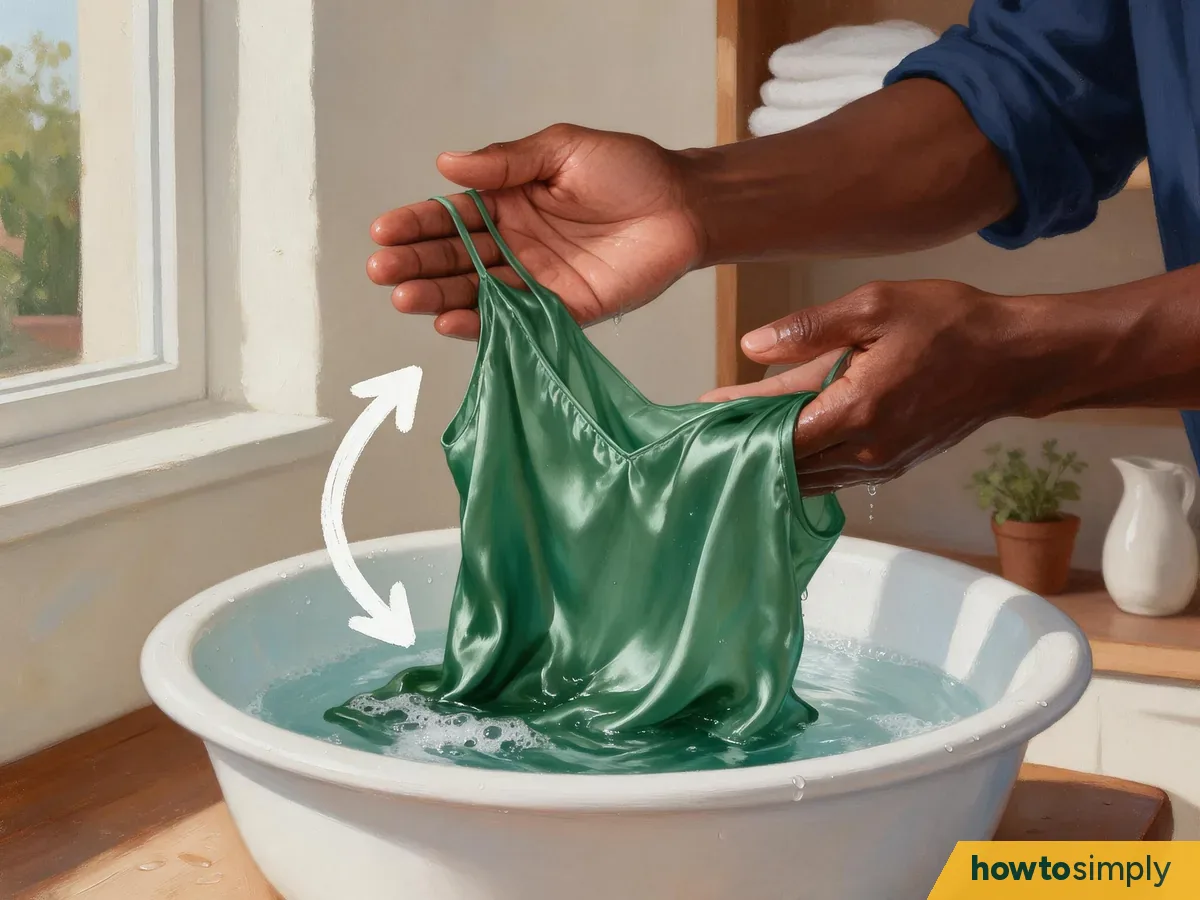
Illustration Dip the garment gently up and down with your hands so the dirt lifts out. Don't scrub, rub or twist.
Rinse it in cool water with a little vinegar

Illustration Empty the sink or basin and fill it again with cool water. Also add about one-quarter of a cup (about 60 ml) of white vinegar to the water. Carefully pass the garment through the new solution. This will remove any soap residue still left on the silk.
Rinse it once again in fresh, cool water

Illustration Drain the sink or basin. Refill it with fresh, cool water. Thoroughly rinse the silk until no soap residue remains.
Check: the rinse water stays clear, with no suds.
Roll it in a towel to remove as much water as possible
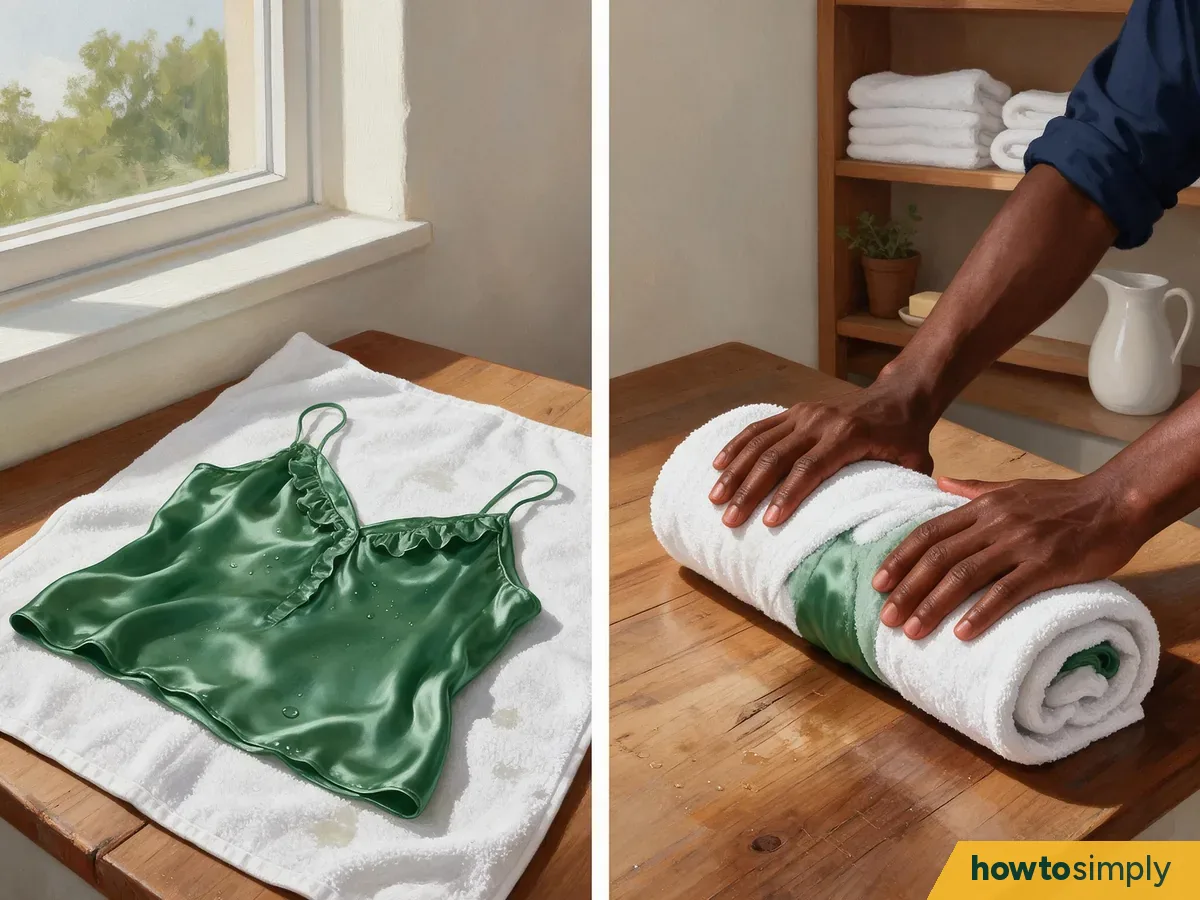
Illustration Lay the garment flat on a clean towel. Roll the towel up around the garment and press gently to remove the water. Do not twist or wring it!
Check: the silk is damp, not dripping, and has no twisted creases.
Lay it flat or hang it up to dry away from heat and sunlight

Illustration Either lay it flat on another clean towel, or hang it on a clothes hanger or drying rack, out of direct sunlight. Never tumble dry silk.
Only iron once it is fully dry
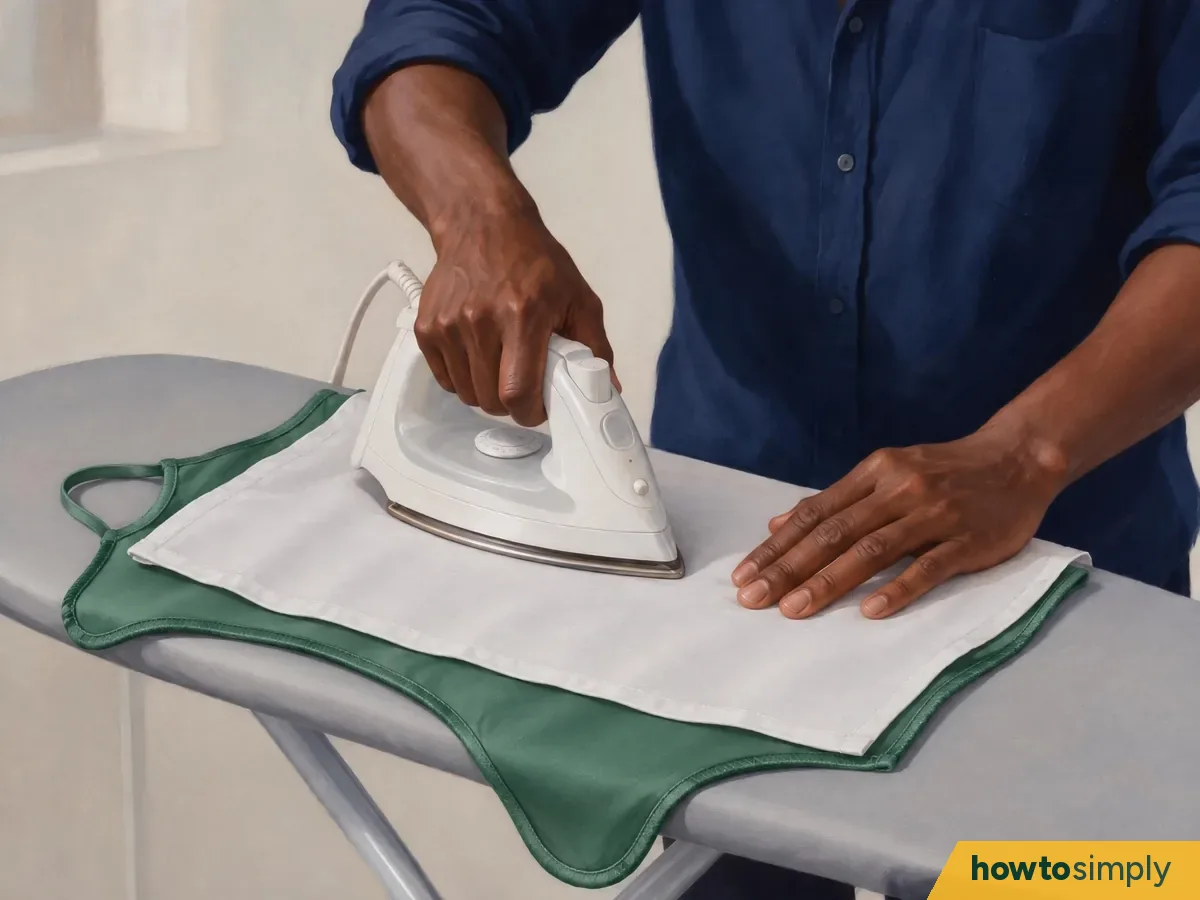
Illustration When it is completely dry, turn it inside out. Turn the iron down to its silk or lowest heat setting. Place a cloth between your iron and the silk. Do not dampen or spray your silk when ironing.
How to tell it worked
Once dry, compare the garment with how it looked before: same size, same colour, no water marks, and the surface still smooth and soft. If it feels stiff, see below. If the colour has changed, stop washing it at home.
Quick checklist
- Label: no dry clean only. Colour test: nothing on the white cloth
- Lukewarm water, a few drops of gentle detergent
- Soak no more than five minutes; dip, don't scrub
- Rinse in cool water with about 60 ml of white vinegar
- Rinse again in fresh cool water
- Roll in a towel and press; never wring
- Dry flat or hanging, out of the sun; never tumble dry
- Iron only when dry: inside out, low heat, cloth between
Hand wash or machine: what each source says
| Item | What it says |
|---|---|
| Soak time | No more than 5 min [1][2]; 3 min [3] |
| Machine temperature | Max 30°C, delicate cycle [1][2]; label temperature [3] |
| Machine protection | Mesh bag or pillowcase [1][2][3] |
| Spin | Shortest spin [2][3] |
| Drying | Never tumble dry; flat or hung, out of the sun [1][2][3] |
If something goes wrong
Common mistakes

- Using hot water. Heat can damage silk. Keep your water lukewarm or cool, and no warmer than 30°C in your washing machine.
- Leaving it in the water for too long. A few minutes is enough.
- Wringing it out. Instead, roll the towel around the garment and press to remove the moisture.
- Using bleach or a biological detergent. Use a mild detergent suitable for washing silk or delicate fabrics.
- Using a tumble dryer or drying it in the sun. Heat can shrink or damage silk, and sunlight can fade it.
- Not doing a colour test before washing. Some silk may lose colour in water.
- Stains are present. Before you wash it, carefully blot them with cool water, or a little white vinegar mixed with cool water, on a clean cloth. Test on a hidden part of the silk first, and dab rather than rub.
- Colour bled during your colour test. Stop immediately and take it to a professional cleaner.
- It's stiff after drying. Try adding a few drops of gentle fabric conditioner to the final rinse next time.
- It was damaged in your washing machine. Some types of silk aren't meant to be washed in machines. From now on, hand wash it or do exactly as the label says.
Other ways and adjustments
In the washing machine.
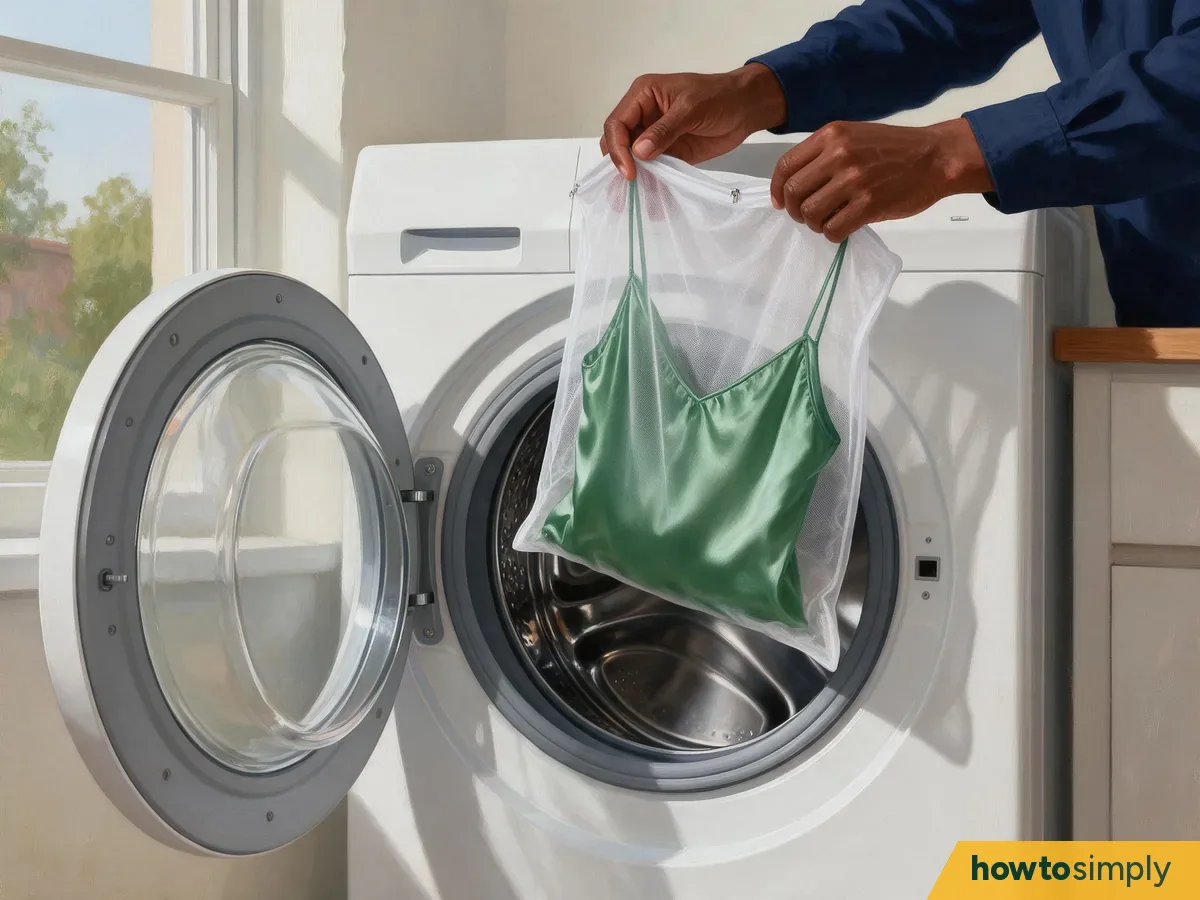
Only attempt this option if the care label allows it. Place the silk in a mesh laundry bag (or a pillowcase so that it won't snag) and keep it apart from heavy items like jeans. Don't overload the machine. Select a cool delicate cycle (do not exceed 30°C), the shortest spin and a mild detergent designed for silk or delicate fabrics. Afterwards, dry it as in step 8 above.
- A delicate or treasured piece: Tide prefers hand washing for delicate silk, even when a machine would be allowed.
- A stain before washing: blot it with cool water or diluted white vinegar on a clean cloth, after testing a hidden spot. Dab; rubbing can lighten the fabric (Tide).
- Storing it afterwards: keep silk somewhere cool and dry, out of the sun (Tide), and away from perfume and hairspray (Cleanipedia).
Questions
Can I put silk in the washing machine?
Only if the label allows it: use a mesh bag or pillowcase, a cool delicate cycle no higher than 30°C and the shortest spin.[1][2][3]
Why add vinegar to the rinse?
Cleanipedia and Persil use about a quarter cup of white vinegar in cool water to rinse out soap.[1][2]
How do I iron silk?
Only when it is completely dry: inside out, on the silk or lowest setting, with a cloth between the iron and the silk. Don't spray it with water.[3]
Related guides
- How to read clothing care labels
- How to wash a wool jumper without shrinking it
- How to get chocolate stains out of clothes
We hope your silk comes out as soft and shiny as it was when you started! If this helped, please give us a like or follow us on our social media sites. Your support gives our authors real encouragement.
The pictures on this page are illustrations, not photos.
How we know this: sources, checks and every change
Current advice
Follow the label, colour test first, soak five minutes at most in lukewarm water, never wring, never tumble dry, keep out of the sun.
Latest update
17 November 2026. We re-opened the sources; the advice on this page matches them.
What changed in this version
- First version of this article: numbered sources, key facts, what the sources agree on and where they differ, and this record history.
Key facts
- Dry clean only, or a crossed-out washtub symbol, means a professional cleaner.[1][2][3]
- Colour test: press a damp white cloth on a hidden area. If colour transfers, don't wash it at home.[1][2]
- Soak no more than five minutes (Cleanipedia, Persil); Tide says three.[1][2][3]
- Rinse in cool water with about a quarter cup (about 60 ml) of white vinegar to remove soap.[1][2]
- Machine washing, where the label allows: a mesh bag or pillowcase, a cool delicate cycle no higher than 30°C.[1][2]
- Never tumble dry silk, never use bleach, and keep it out of direct sun.[1][2][3]
- Iron only when completely dry: inside out, low or silk setting, a cloth between iron and silk.[3]
What the sources agree on
Where the sources differ, or nothing is confirmed
Record history
- Version 1. First published.
No source has changed its advice since we first read it, so there is no "advice that changed" list yet.
Sources
- Cleanipedia (Unilever): How to wash silk (updated 19 November 2021). Read 14 November 2026 and again on 17 November 2026.
- Persil UK: How to wash silk in the washing machine or by hand. Read 14 November 2026 and again on 17 November 2026.
- Tide: How to wash and care for silk clothes. Read 14 November 2026 and again on 17 November 2026.
Sources and method
- Researched by
- Abu Bakar Saadat
- What we checked
- We compared three laundry-brand guides (Cleanipedia and Persil, both from Unilever, and Tide from P&G), read on 14 November 2026 and opened again on 17 November 2026. Where they differ on the soak (Tide says three minutes, the other two no more than five), we give the five-minute limit and say so. 60 ml is our conversion of their quarter cup of vinegar.
- Pictures
- 13 illustrations drawn for this article, each marked Illustration (drawings, not photos). The table under "Hand wash or machine: what each source says" is ours, drawn from the sources.
Did this solve the problem?
Where did you get stuck?
Get new guides by email
Our newest guides, sent to your inbox. Free, and you can unsubscribe in one click.
We'll email you to confirm. How we use your email
Follow howtosimply on Facebook
We share every new article on our Facebook page, so the next fix turns up in your feed.
Follow on FacebookWhat did you think?
Reaction counts are loading.