How to read clothing care labels
Read the five symbols in order: wash (tub), bleach (triangle), dry (square), iron, professional care (circle). A number is the highest temperature in °C, dots stand for heat, bars underneath ask for a gentler process, and a cross means don't.
Researched by Abu Bakar SaadatPublished 28 October 2026Last changed 17 November 2026Verified 17 November 2026Version 5See all changes

On this page 11 sections
These symbols can seem like a secret language, particularly when a much-loved jumper is at stake. But once you're familiar with the five shapes, reading them becomes second nature, and your clothes will last longer.
GINETEX explains that care symbols follow the international standard ISO 3758, whose current edition was published in December 2023. It gets easier because once you know the five shapes, the rest is just small marks that change their meaning.
Which kind of label do you have?
Bought in Europe or the UK
The FTC says ISO 3758 symbols are used in many European countries, and GINETEX describes them. Use the EU column in the ironing table.
Bought in the US
The FTC says labels here may use the ASTM D5489 symbols instead, which are close but differ in a few details. Use the US column in the ironing table.
Words as well as symbols
If the label has words as well as symbols, follow the words.
How to read the label
Find the label and read the symbols left to right.
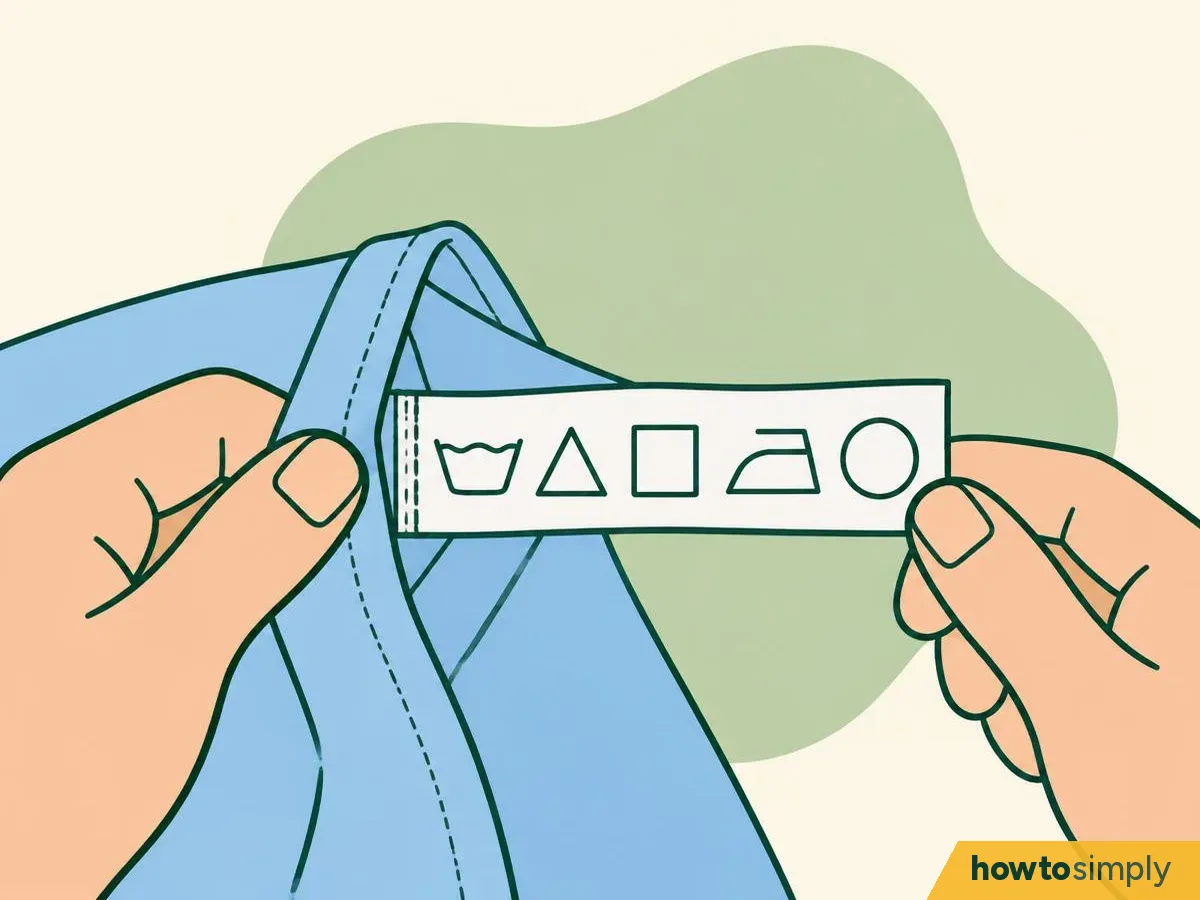
Illustration: the shapes are simplified, not the official symbols In the US, the FTC says labels have to be fixed where shoppers can spot them easily in the shop. The symbols cover washing, bleaching, drying, ironing and professional care (GINETEX).
Two marks are worth remembering: a cross means don't (GINETEX), and bars under the tub or the circle mean a gentler process (GINETEX).
You should see: up to five shapes in a row: a tub, a triangle, a square, an iron and a circle.
Read the tub and set the washing machine.
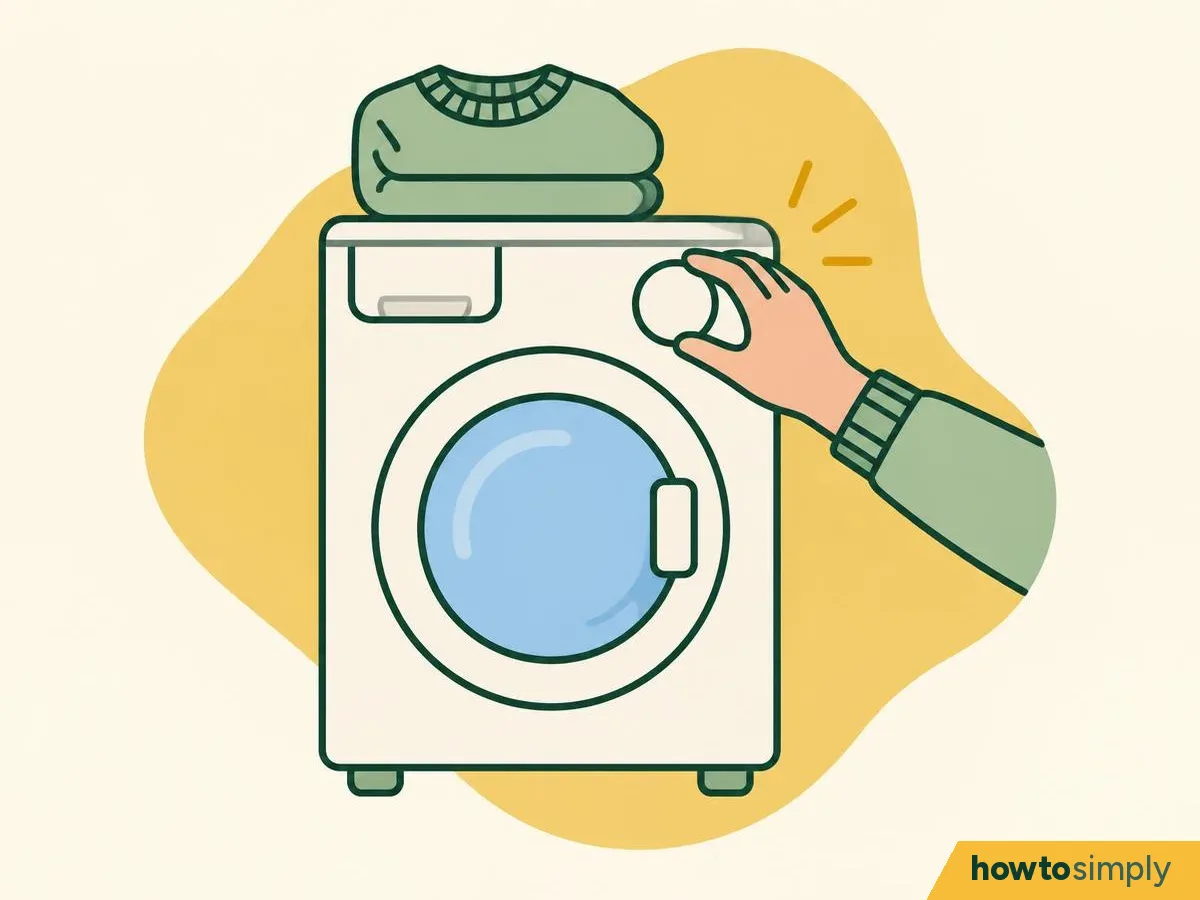
Illustration The number in the tub is the highest temperature in °C (GINETEX). Set your machine to that number or lower, never higher. So if your habit is to throw everything in on the hottest wash to be safe, I am afraid the tub symbol disagrees with you. Then read the bars:
No bar: a normal cycle. One bar: a milder cycle with reduced mechanical action (GINETEX). Two bars: a very mild cycle, for example for woollens (GINETEX).
A hand in the tub: hand wash at room temperature (about 20 to 30 °C) or at most 40 °C, without rubbing, pulling or wringing (GINETEX). Crossed tub: don't wash.
US labels may use the ASTM symbols, whose wash chart runs from 30 °C up to 95 °C (University of Tennessee Extension).
You should see: the machine's temperature at or below the number in the tub, on the programme the bars ask for.
Read the triangle before you use any bleach.
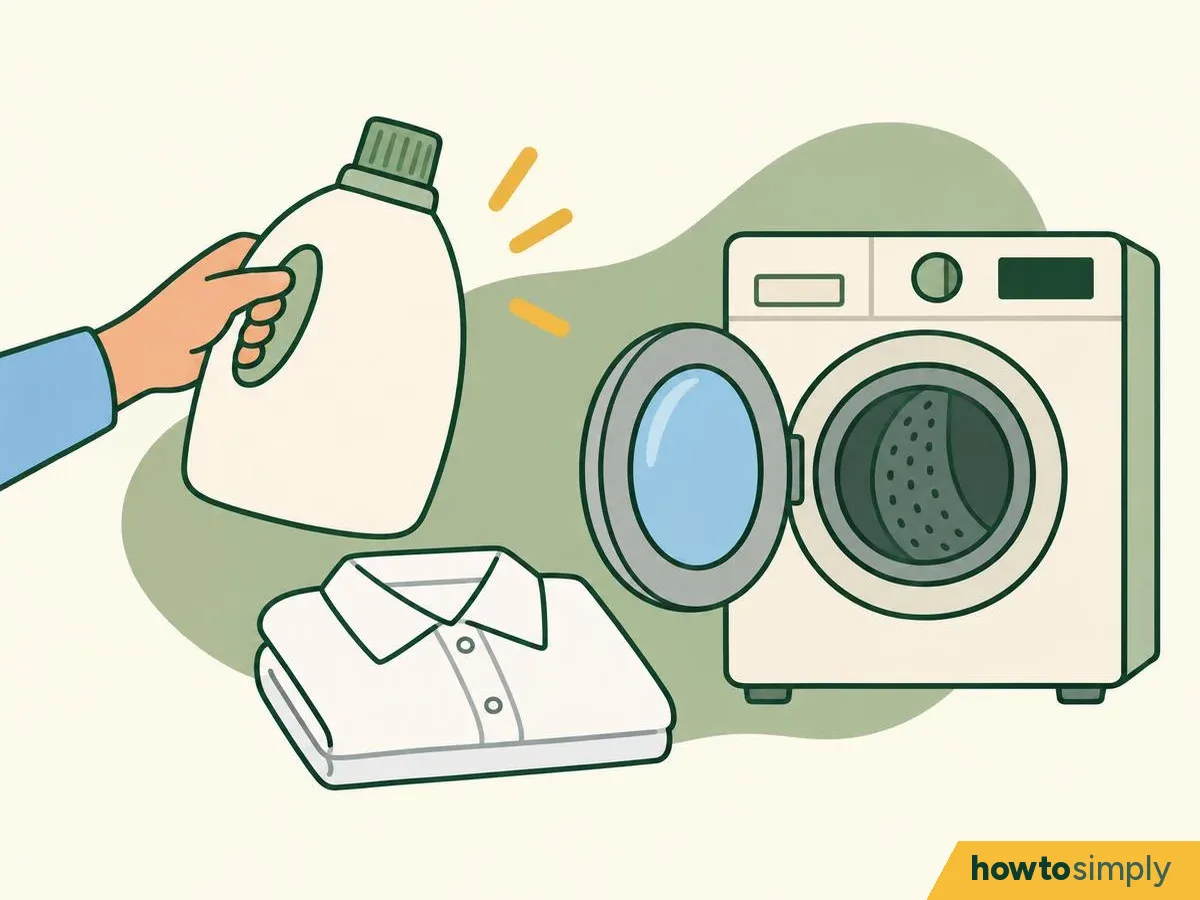
Illustration Next, the triangle, which is short and sweet. Empty triangle: any bleach, chlorine or oxygen (GINETEX).
Triangle with two diagonal lines: oxygen bleach only, no chlorine.
Crossed triangle: no bleach; use a detergent without bleach.
You should see: a detergent that matches the triangle: no bleach at all if it is crossed out.
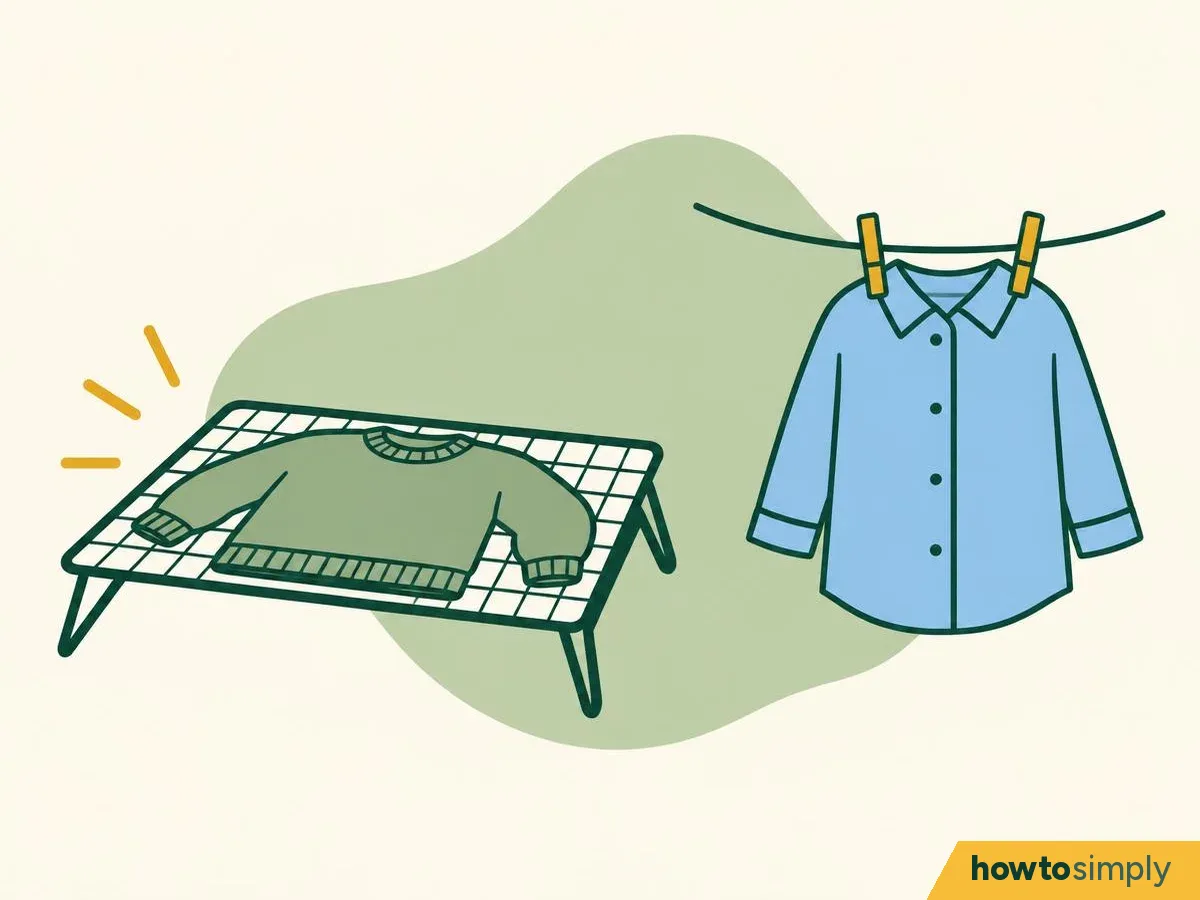
Read the square to choose how to dry it.
Illustration 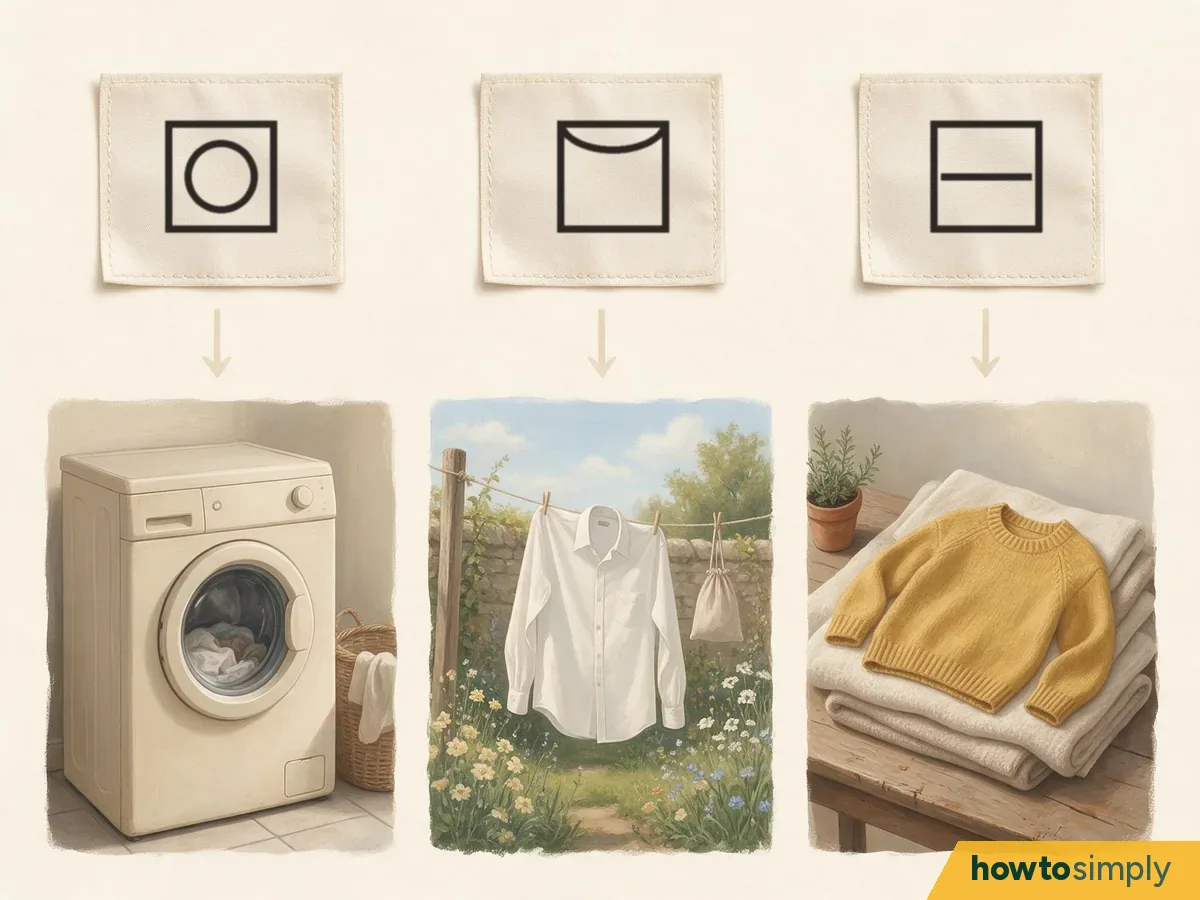
Illustration: the square is the drying symbol; what's inside it tells you how A circle in the square means tumble drying. The dots show how hot the tumble drying may be (GINETEX). GINETEX's reference points are 80 °C for a normal process and 60 °C for a mild one with reduced heat. A crossed one means don't tumble dry.
However, lines in the square mean natural drying (GINETEX): line drying, drip line drying, flat drying or drip flat drying. An oblique line means dry it in the shade, for example silk (GINETEX).
You should see: the garment in the dryer on the right heat, or on a line, flat or dripping, as the lines say.
Read the dots in the iron and set the iron's temperature.
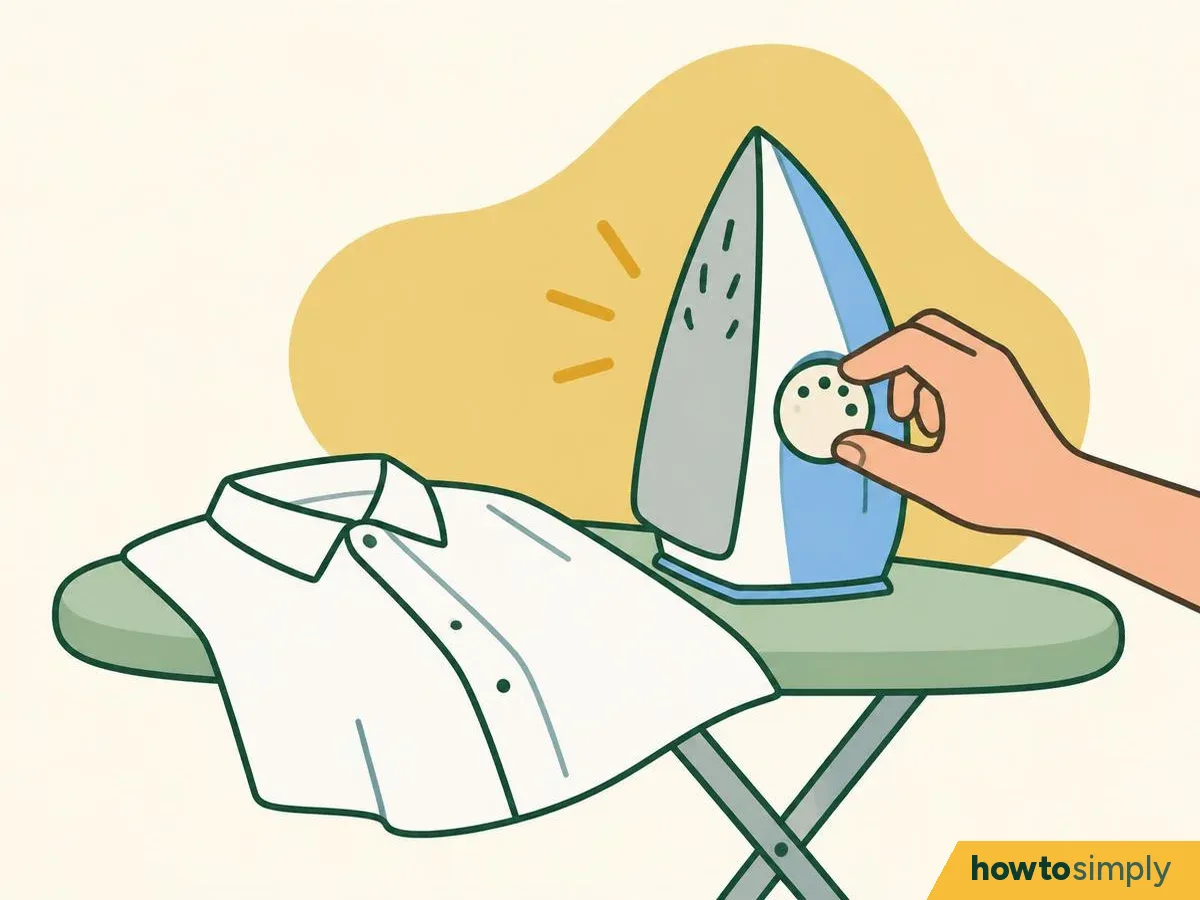
Illustration Dots in the iron give the highest soleplate temperature: see the ironing table for the EU and US values. A crossed iron means don't iron.
GINETEX also says to follow the label rather than the fibre content, and to take care around printed or applied decorations.
You should see: the iron's dial set no higher than the number of dots allows.
Leave the circle to the dry cleaner, but check for a cross.
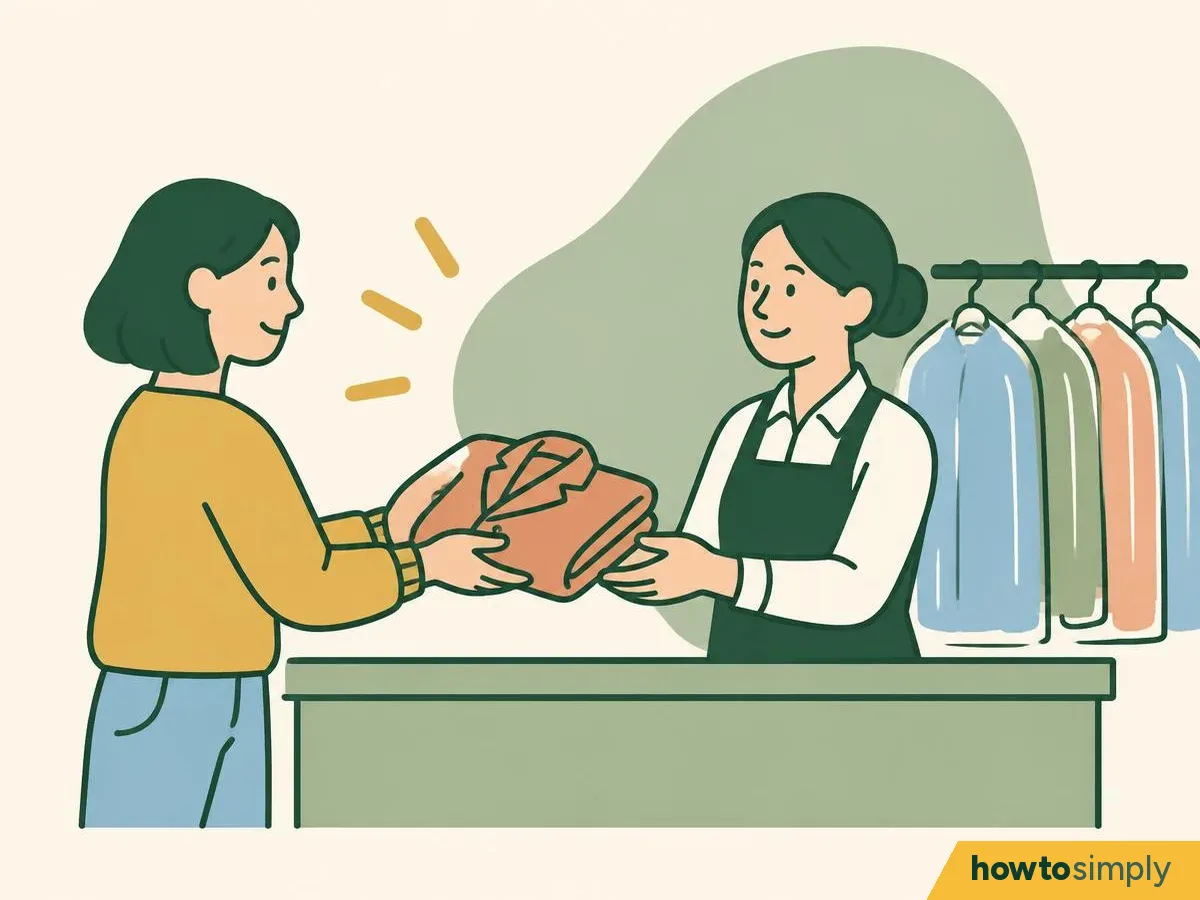
Illustration The circle is for the dry cleaner: the letters inside tell them which solvents and processes to use (GINETEX), and a bar underneath asks for a gentler process.
For you, the key mark is a crossed circle: the cleaner must not use that process. If you're unsure, don't worry: show the label to the cleaner, because reading those letters is their job.
You should see: the label shown to the cleaner when you hand the garment over.
Care label decoder
Pick the shape on your label, then what you see on it. It describes each symbol in words and shows the European and the US meaning side by side.
Iron temperatures: EU and US
| Dots | EU (GINETEX, ISO 3758) | US (ASTM chart) |
|---|---|---|
| One | Up to 120 °C; steam may cause damage | Low, up to 110 °C (230 °F) |
| Two | Up to 160 °C, steam allowed | Medium, up to 150 °C (300 °F) |
| Three | Up to 210 °C, for cotton and linen | High, up to 200 °C (390 °F) |
| Crossed iron | Don't iron | Don't iron |
How to tell you read it right
- You found all the symbols and read them in GINETEX's order: wash, bleach, dry, iron, professional care.
- The wash temperature is at or below the number in the tub, and the cycle matches the bars, as GINETEX explains.
- Nothing with a cross over it was used: no bleach on a crossed-out triangle, and no dryer on a crossed-out tumble-dry symbol.
- The iron is no hotter than the dots allow (see the ironing table).
- Where the label had words as well, you followed the words.
If something goes wrong
Labels can be wrong. The FTC says that in the US, failing to give reliable care instructions breaks the FTC Act. Find what happened in the table below.
| What happens | What it means | What to do |
|---|---|---|
| There is no label, or it is unreadable | You have no maker's instructions | Before buying, check that clothes have care symbols (GINETEX) |
| Two labels disagree, for example words and symbols | One of them is more cautious | Follow the more cautious one |
| A US label looks slightly different from the EU symbols | It may use ASTM D5489, which differs in a few details (FTC) | Use the US column in the ironing table |
| The garment was damaged although you followed the label | The label may be wrong | In the US the FTC enforces the Care Labeling Rule (FTC) |
Each symbol in the European and US systems
| Symbol | Europe (GINETEX, ISO 3758) | US (ASTM D5489 chart) |
|---|---|---|
| Washing tub | Machine wash at 30, 40, 60, 70 or 95 °C; hand wash at about 20 to 30 °C or up to 40 °C[1] | Water temperatures from 30 °C to 95 °C; hand wash at 65 to 85 °F[5] |
| Triangle | Empty: any bleach. Two oblique lines: oxygen bleach only. Crossed: no bleach[1] | Any bleach when needed, only non-chlorine bleach when needed, or do not bleach[5] |
| Square, tumble drying | Dots for heat: 80 °C normal, 60 °C mild[1] | Settings named any heat, high, medium, low and no heat, with no °C given[5] |
| Square, natural drying | Line, drip line, flat or drip flat drying; an oblique line adds in the shade[1] | Line dry, drip dry or dry flat; in the shade can be added[5] |
| Iron | One dot 120 °C, two dots 160 °C, three dots 210 °C[1] | Low 110 °C, medium 150 °C, high 200 °C[5] |
| Circle | Letters name the solvents for the professional cleaner; one bar means a mild process, two bars a very mild one[1][3] | A: any solvent. P: any solvent except trichloroethylene. F: petroleum solvent only[5] |
Graphic by howtosimply, from the sources below.
Questions
What if there is no tumble-drying symbol on the label?
GINETEX says the washing and ironing symbols then give you a hint: the gentler they are, the more careful you need to be when drying.[1]
Does a "washable" label mean it can also be dry-cleaned?
Not always. The maker only has to list one safe method, and the label does not have to warn you about other methods that could harm it[4][5].
Can a US label use the European symbols?
The FTC's 2014 guide says only the ASTM symbols are approved in the US, and the European system is not allowed under the Rule as written then. It mentions a 2012 proposal to allow the ISO symbols but does not say whether it was adopted.[4]
I followed the label and the garment was ruined. What can I do in the US?
The University of Tennessee Extension says to take it back to the shop and ask for an exchange or refund, and to write to the maker if the shop won't help. You can also write to the FTC, which can't settle single disputes but uses reports to spot law breaking.[5]
What do the letters inside the circle mean?
They tell the professional cleaner which solvents can be used[1]. On the US chart, A means any solvent, P any solvent except trichloroethylene, and F petroleum solvent only[5].
What does the number in the washing tub mean?
On European labels it is the highest water temperature in °C, which must not be exceeded (GINETEX). A garment labelled 40 can be washed at 30 but not at 60.
What do the lines under the washing tub mean?
One bar means a gentler cycle with less movement, two bars a very gentle cycle, for example for wool (GINETEX). Select an appropriate washing programme (GINETEX).
If a label says "Dry clean", can I wash it?
Possibly. US rules only require one safe method on the label, so "Dry clean" alone doesn't mean washing will harm it. "Dry clean only" is a warning that it can't be washed (FTC).
What does a cross over a symbol mean?
Don't do that treatment. GINETEX lists a "do not" version of each symbol: do not wash, bleach, tumble dry, iron, dry-clean or wet-clean.
The pictures on this page are illustrations, not photos.
How we know this: sources, checks and every change
Current advice
Read the symbols left to right, never go hotter than the number or the dots allow, treat bars as a request for a gentler process and a cross as a no[1][3].
Latest update
17 November 2026. We re-read the sources. All five were opened again today, and every temperature and rule on this page still matches them.
What changed in this version
- The page now follows our record layout: key facts with numbered citations, a symbol by symbol table of the European and US systems, what the sources agree and differ on, a record history and more questions.
- The care label decoder, added earlier today, stays on the page: pick a shape and a mark to see its European and US meaning in words.
Key facts
- The symbols are set out in a fixed order: washing, bleaching, drying, ironing, then professional care.[3]
- The number in the washing tub is the top water temperature in °C, and you should never go above it.[1][3]
- One bar under the tub asks for a milder cycle with less movement; two bars ask for a very mild cycle, for example for wool.[1]
- A cross drawn over any symbol means that treatment must not be used.[3]
- Iron dots on European labels mean a soleplate of at most 120 °C, 160 °C or 210 °C[1]; the US chart gives 110 °C, 150 °C and 200 °C[5].
- For tumble drying, GINETEX gives 80 °C as the normal process and 60 °C as the mild one with less heat.[1]
- In the US a label only has to give one cleaning method, and "Dryclean Only" may be used only when there is evidence that washing would damage the garment.[4]
- ISO 3758:2023, the current edition of the care symbol standard, came out on 6 December 2023 and replaced the 2012 edition.[1]
What the sources agree on
- The number in the washing tub is a maximum water temperature.[1][3][5]
- More dots in the iron mean a hotter iron is allowed.[1][3][5]
- The letters in the circle are for the professional cleaner and name the solvents that can be used.[1][3][5]
- In the US, one cleaning method on the label is enough, so a label is not a full list of safe methods.[4][5]
Where the sources differ, or nothing is confirmed
- The European and US iron temperatures are close but not the same: 120, 160 and 210 °C in Europe[1], against 110, 150 and 200 °C on the US chart[5].
- The FTC's guide (May 2014) says only the ASTM symbols are approved in the US and mentions a 2012 proposal to also allow the ISO symbols; it does not say whether that change went through[4].
- The University of Tennessee chart dates from 1998 and says there was no internationally recognised system then[5]; GINETEX now describes ISO 3758:2023 as the worldwide standard[1].
- Not from a source: following the words when a label has both words and symbols, and following the more cautious of two labels that disagree, are our own suggestions. None of the five sources says this.
Record history
- Version 5. Moved to the record layout; all five sources re-read.
- Version 4. Added the care label decoder.
- Version 3. Explanations reworded; the sources stayed the same.
- Version 2. Published after a reviewer approved this version.
- Version 1. First written, with illustrations, and held for review.
Sources
- GINETEX: Care symbols (ISO 3758:2023). Read 17 November 2026.
- GINETEX: Care symbols (older detailed version with drying and ironing temperatures). Read 17 November 2026.
- GINETEX: Care labelling brochure (PDF). Read 17 November 2026.
- FTC: Clothes Captioning, Complying with the Care Labeling Rule (May 2014). Read 17 November 2026.
- University of Tennessee Extension: Care symbols, SP519 (ASTM D5489 chart, PDF). Read 17 November 2026.
Sources and method
- Researched by
- Abu Bakar Saadat
- Tested by our team
- No. We have no record of anyone on our team trying these steps, so treat them as researched instructions from the sources below.
- Pictures
- 8 illustrations drawn for this article: drawings, not photos.
- Sources
- 5 named sources, linked below.
- What this page adds
- A step for each of the five symbols in label order, an EU and US table of iron temperatures by number of dots, and a fix table for missing or conflicting labels.
- What we checked
- On 17 November 2026 we re-read both GINETEX care symbol pages, the GINETEX care labelling brochure, the FTC's Care Labeling Rule guide and the University of Tennessee Extension SP519 chart, and checked every temperature, symbol meaning and US labelling rule on this page against them.
What to do next
Make your clothes last longer Step 1 of 7
Did this solve the problem?
Where did you get stuck?
What did you think?
Reaction counts are loading.