How to measure yourself for clothes: bust, waist, hips and inside leg
Researched by Abu Bakar Saadat5 min read
Last updated: 15 November 2026References
 Illustration
On this page 9 sections
In short
Wear well-fitting underwear, keep the tape level and snug, and measure the fullest part of the bust, your natural waist, the fullest part of the hips and the inside leg. Then use each brand's own chart: Levi's jeans chart goes by waist, hips and inseam.
At a glance
- You need
- A tape measure that does not stretch, a piece of string, a helper, paper
- Wear
- Well-fitting underwear (NMSU Extension)
- Tape
- Snug, not tight, and level with the floor
- Tops
- Go by bust or chest
- Trousers and skirts
- Go by hips, then waist and inside leg
- Advice from
- NMSU Extension, Simplicity, Uniqlo, Levi's and ISO, read 28 October 2026
- Checked
- November 2026
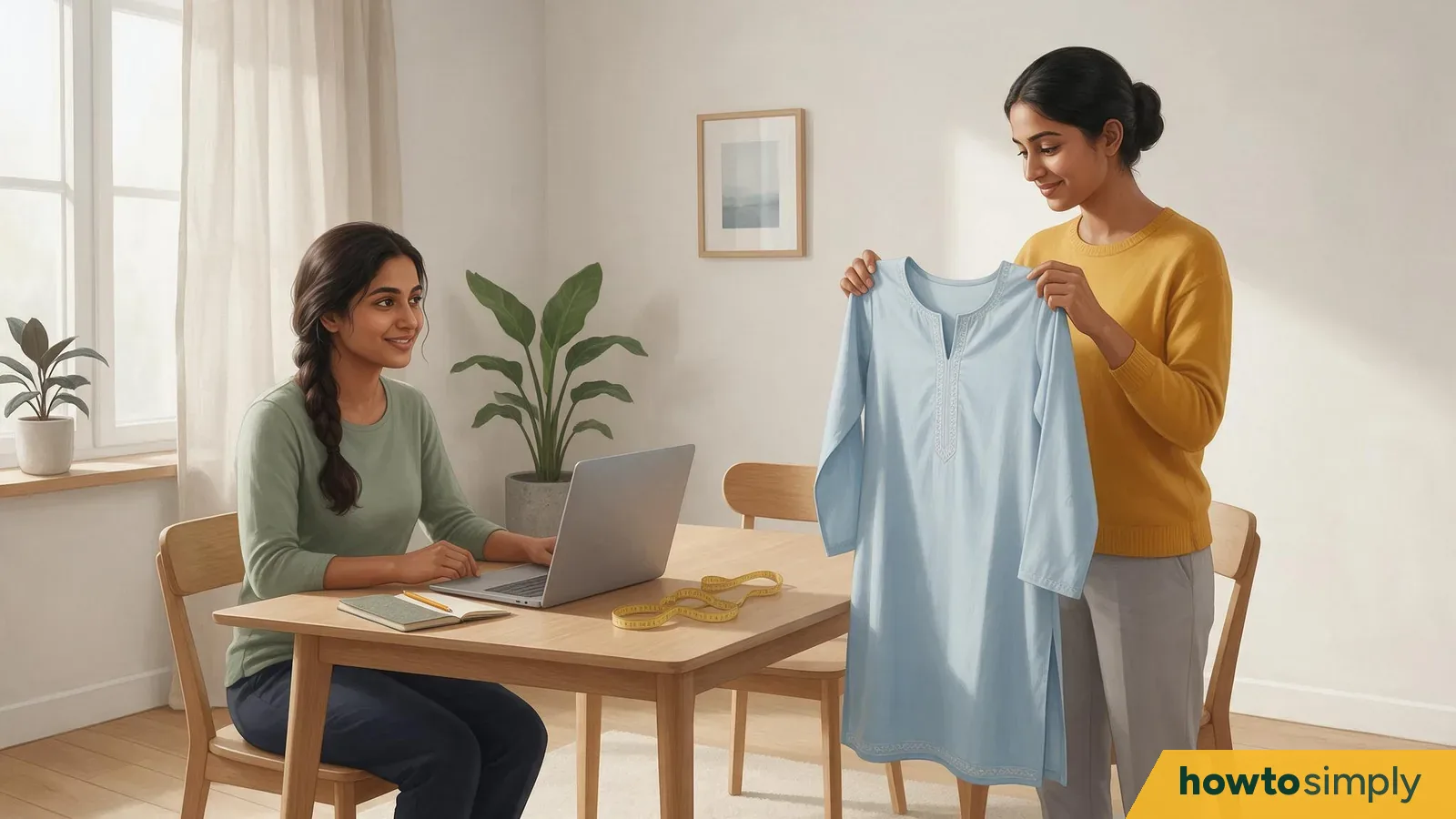
Clicking 'add to basket' and hoping the size is right can leave you with a sinking feeling when the parcel finally turns up. A soft tape, a piece of string and a few quiet minutes are all it takes to get numbers you can rely on.
According to NMSU Extension, the amount of ease included in a pattern varies by fashion and by pattern brand, which means your usual size 12 pattern won't always fit. That's why the aim of these steps is an accurate set of numbers you can compare against any chart.
How to take your measurements
Measure round the fullest part of the bust.
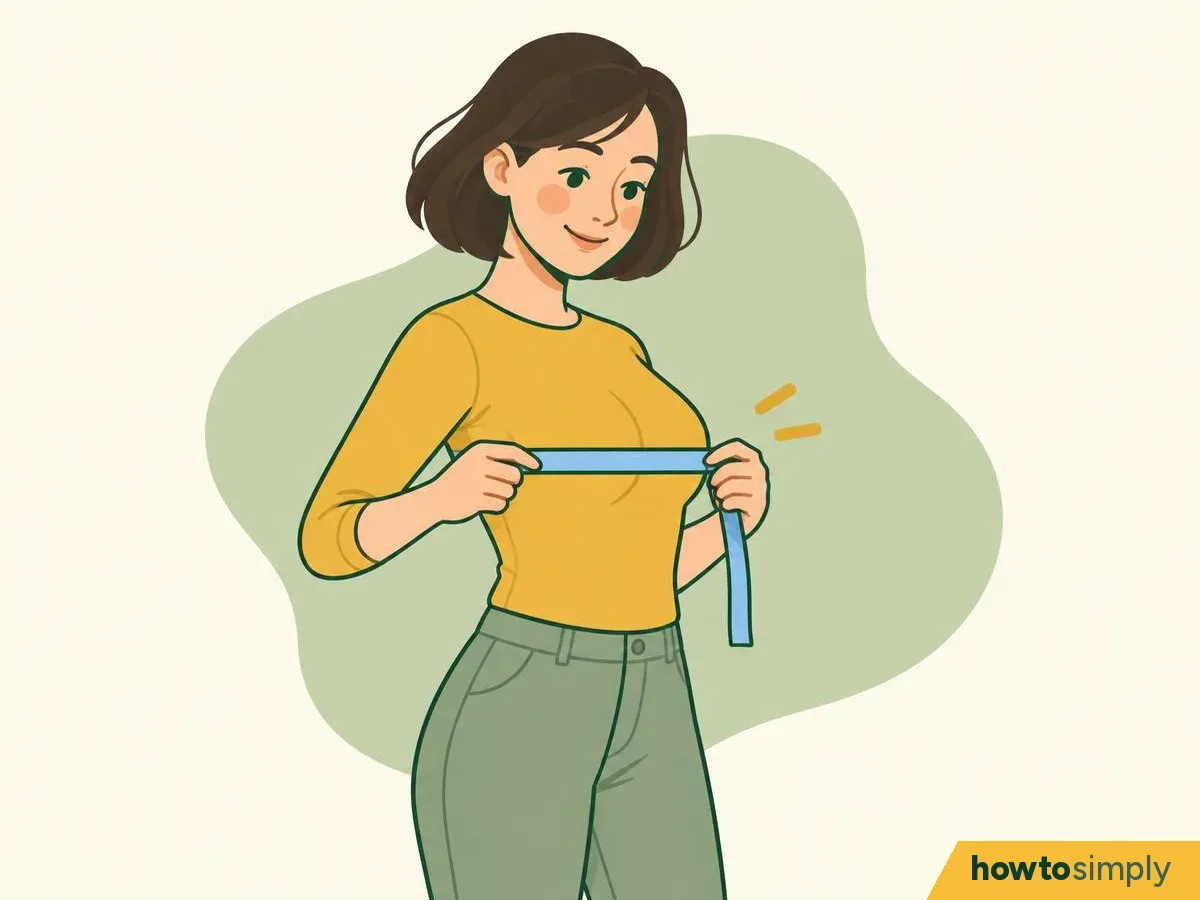
Illustration Measure at the full bust, keeping the tape parallel to the floor across the back (NMSU Extension).
For sewing patterns, also measure the high bust: right under the arms, above the bust. Simplicity says that if your bust is 2½ inches (about 6 cm) or more bigger than your high bust, choose the pattern by your high bust instead.
You should see: in the mirror, the tape level across your back, not riding up between the shoulder blades.
Measure your waist along the string.
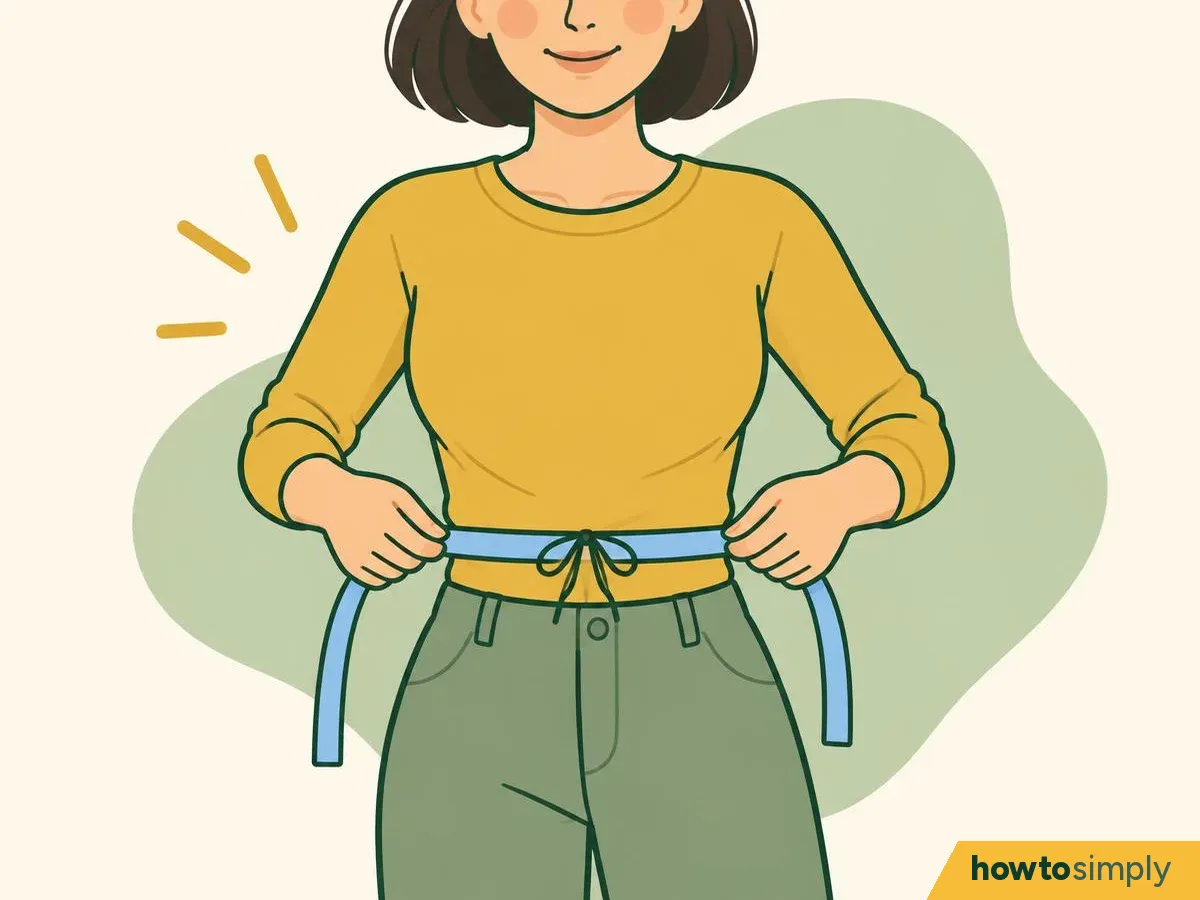
Illustration Measure along your string, snugly. It is that easy. The catch, I am afraid, is that brands don't all mean the same place: see where brands put the waist.
Don't worry, these usually land close together. If the brand's chart says how it measures, follow that. If you want jeans to sit lower, also measure where you wear them.
You should see: the tape lying on the string all the way round, without pulling it in.
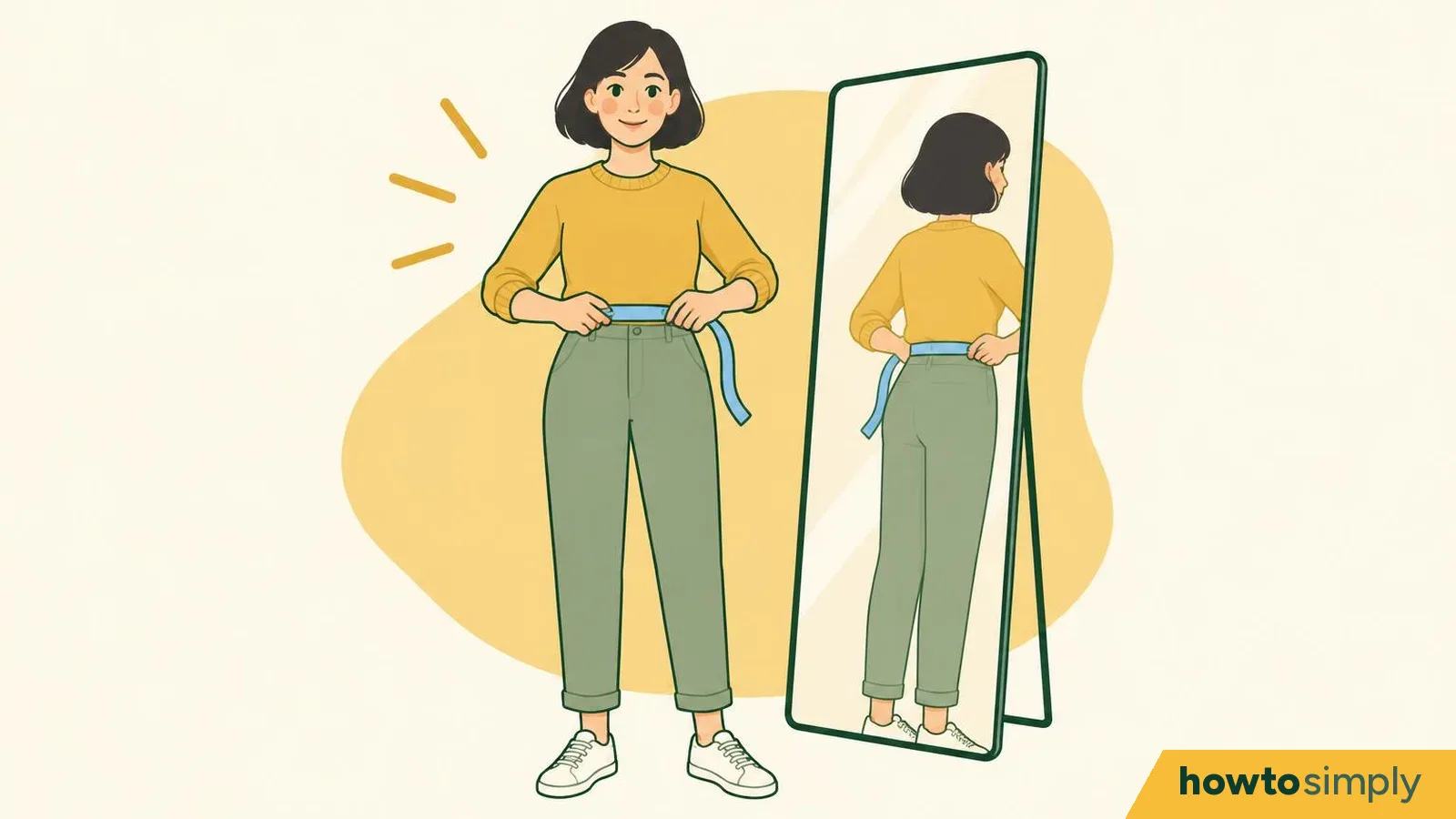
Measure round the fullest part of your hips.
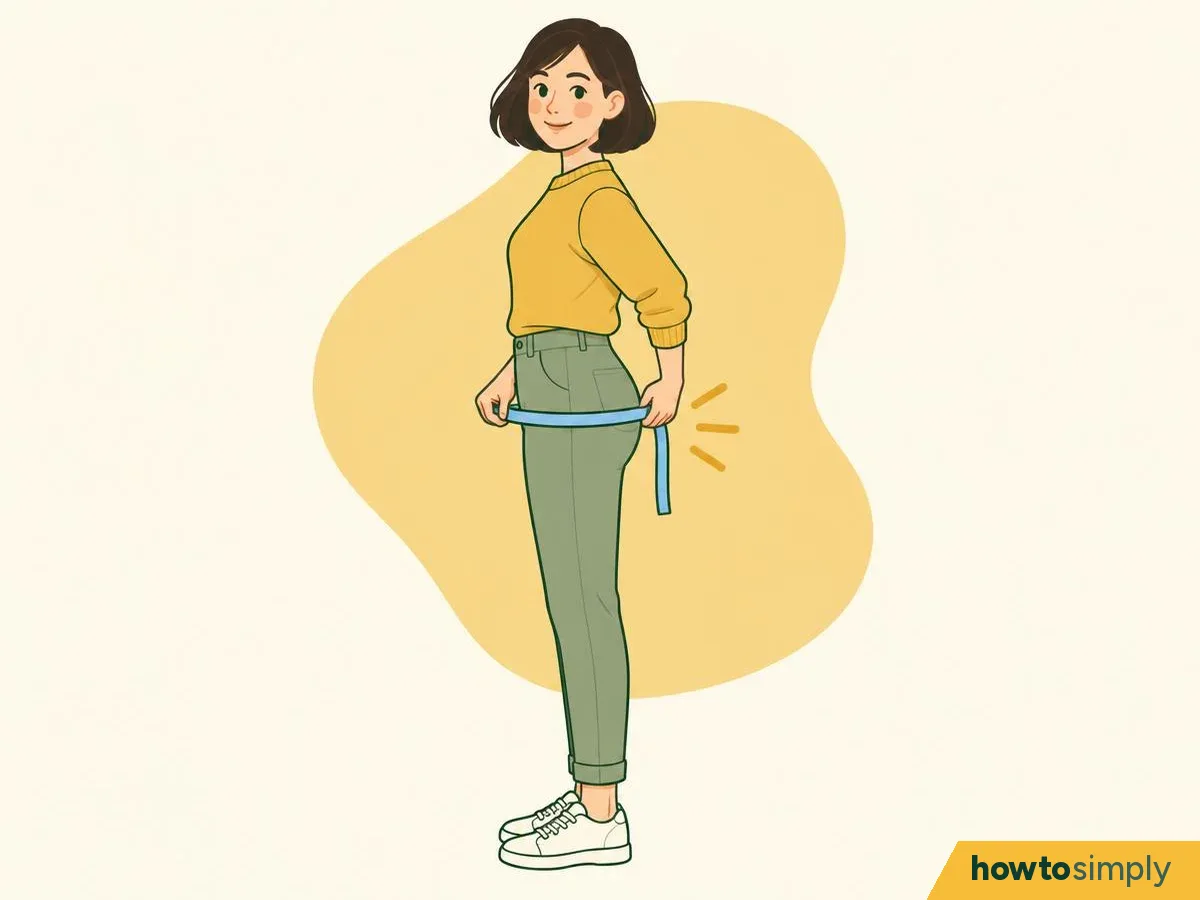
Illustration Wrap the tape round the widest part of your hips and keep it straight all the way round (NMSU Extension, Levi's). This is usually 15 to 25 cm (6 to 10 inches) below the waist (NMSU Extension).
Also, if you're not sure whether you're widest at the hips or the upper thigh, measure both and use the larger number (NMSU Extension).
You should see: viewed from the front and sides, the tape parallel to the floor at the fullest part of the hips (NMSU Extension).
Measure the inside leg (inseam).
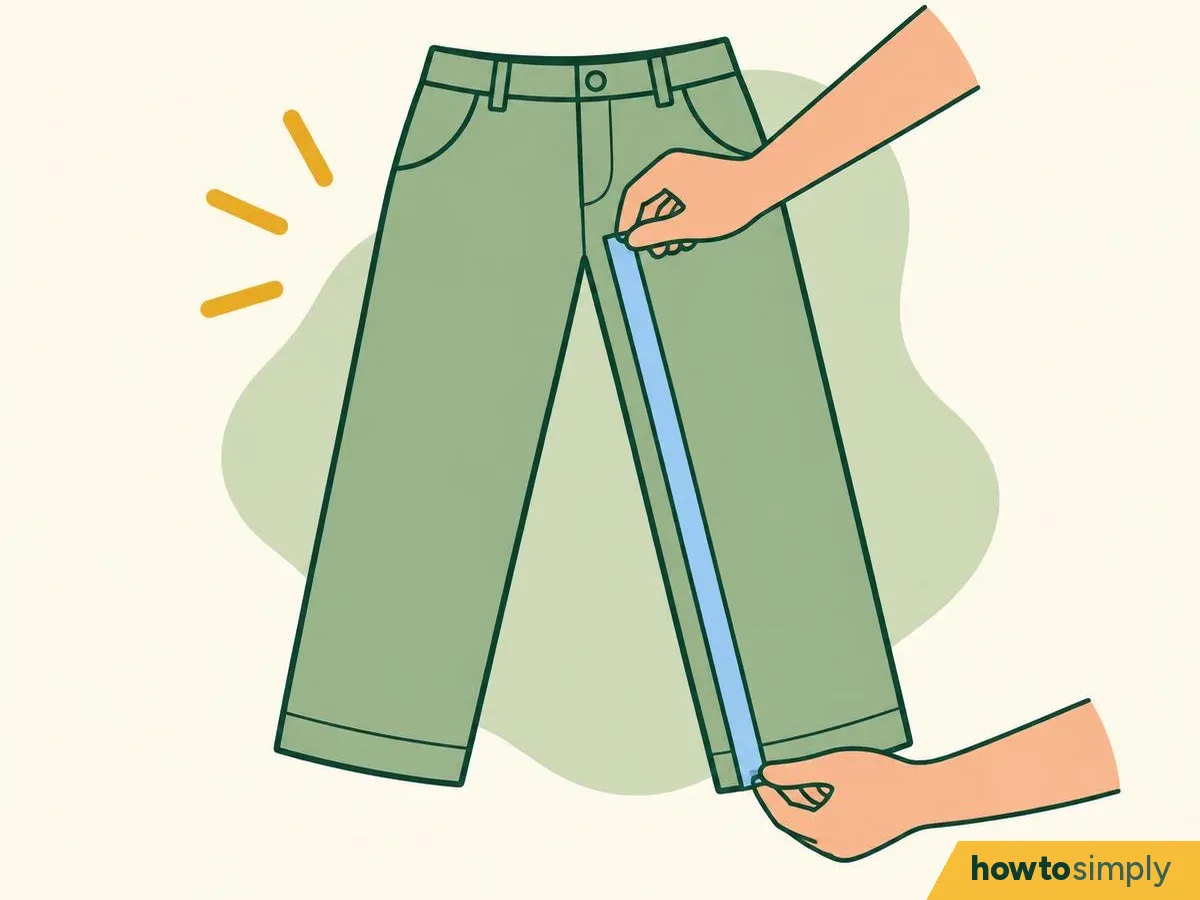
Illustration Next, the inside leg. There are two ways. The easier one: lay a pair of trousers that fit you well flat on a table and measure along the inside seam, from the crotch seam to the hem (Uniqlo describes this for men's trousers).
Measuring on you, a helper runs the tape from high up on the inside of your thigh to the bottom of your ankle (Levi's), or to wherever you'd like the trousers to stop (Uniqlo). Stand in normal posture (NMSU Extension).
You should see: four numbers on your paper: bust or chest, waist, hips and inside leg, with the date.
Check what the brand's chart measures, then pick the size.
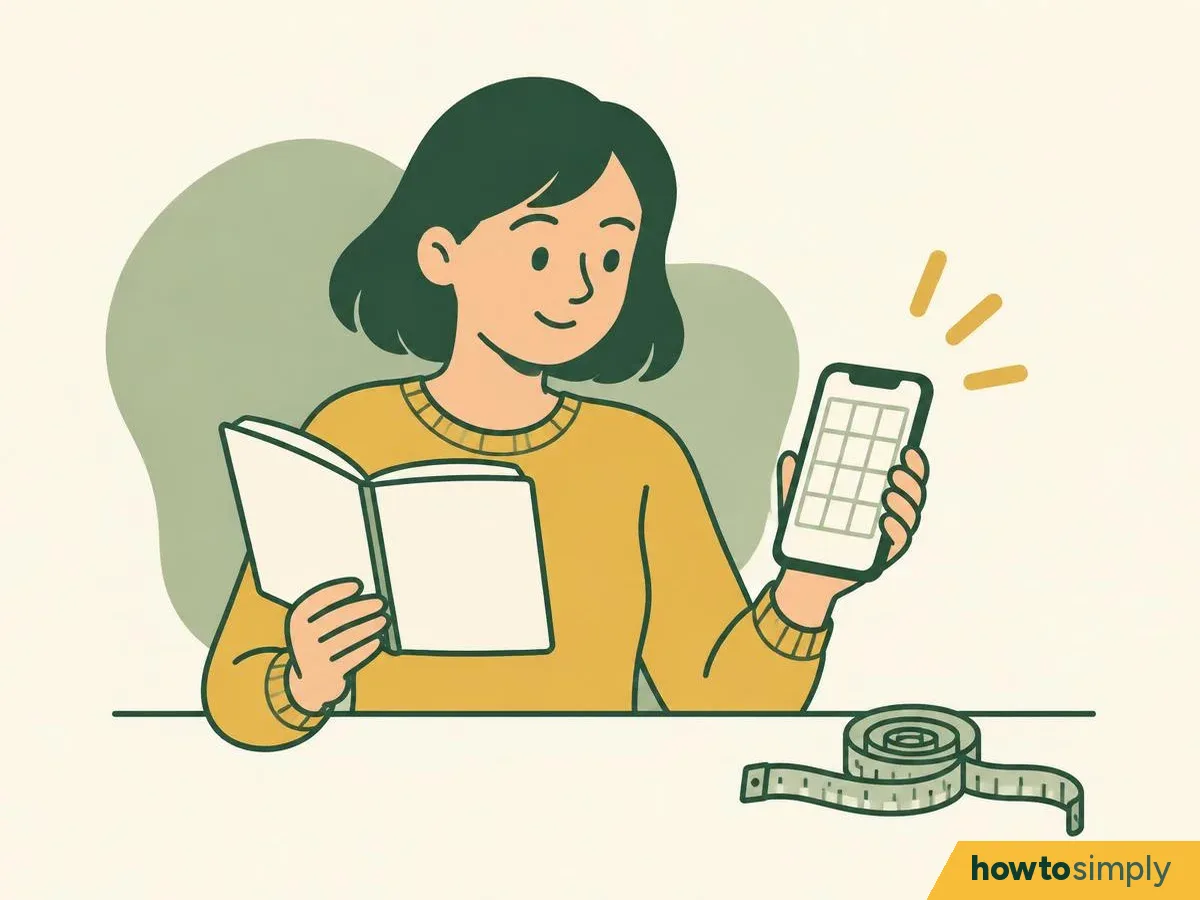
Illustration First, check what the chart measures. Some are body measurements; others are garment measurements, taken on the clothes themselves, for example across the chest from armpit to armpit on a top laid flat (Uniqlo). A garment chart is usually bigger than your body by the ease the design needs, so a bigger number there is no reason to worry.
Then use the measurement that decides the fit for that garment: see which measurement decides the size.
You should see: one size on the chart that matches the measurement that matters most for the garment.
Where brands put the waist
| Source | Where it puts the waist |
|---|---|
| NMSU Extension (sewing) | "Where the belt should be" |
| Uniqlo (women) | Midway from your lowest rib down to the top of your hips |
| Levi's | Your natural waistline, just above the belly button |
Which measurement decides the size
| Garment | Measurement that decides the size |
|---|---|
| Tops, dresses, jackets, coats | Bust (women) or chest (men) (Simplicity) |
| Trousers and most skirts | Hips (Simplicity), then waist; inside leg for the length |
| Jeans | Waist, hips and inside leg (Levi's chart lists all three) |
| Babies and small children | Height: EN 13402 sizes infants by body height alone |
How to tell your numbers are right
- You stood normally and measured over underwear that fits well (NMSU Extension).
- The tape sat snug but not tight, and level all the way round (NMSU Extension).
- You took the hip measurement round the widest part, which is usually 15 to 25 cm below the waist (NMSU Extension).
- Each number is written down with the date (NMSU Extension).
- You know whether the brand's chart shows body measurements or garment measurements (Uniqlo).
If the size still doesn't fit
If something doesn't fit, please don't assume there's anything wrong with your body. It's most likely just a difference between brands' charts, as the table shows.
| What happens | What it means | What to do |
|---|---|---|
| Your numbers fall in two sizes | Your shape differs from the brand's chart | Go by the measurement that decides the size (see the table above), and have the rest altered if needed (Simplicity) |
| The numbers look wrong | The tape was probably twisted, tilted at the back, or pulled tight | Measure again with a helper |
| The sewing pattern size is bigger than your shop size | Pattern companies use their own body charts | Ignore your shop size; Simplicity says your pattern size may be one or two sizes bigger |
Before washing new clothes, check the care label so they don't shrink: see how to read clothing care labels.
Questions readers ask
Should I measure over clothes?
No. NMSU Extension says to measure over well-fitting underwear. Thick clothes can add a size.
I'm between two sizes. Which do I pick?
For jeans, Levi's says that if you fall between two sizes, pick based on whether you like them close-fitting or a bit roomier.
Why is my sewing pattern size bigger than my shop size?
NMSU Extension says each pattern brand adds a different amount of ease, so the size 12 you normally buy won't always fit. Compare the pattern's measurements with your own and make sure they're close.
How do I convert inches and centimetres?
One inch is 2.54 cm. European size labels under EN 13402 use body measurements in centimetres.
Sources and method
- Researched by
- Abu Bakar Saadat
- Tested by our team
- No. We have no record of anyone on our team trying these steps, so treat them as researched instructions from the sources below.
- Pictures
- 7 illustrations drawn for this article: drawings, not photos.
- Sources
- 7 named sources, linked below.
- What this page adds
- A string trick for finding your natural waist, a table of where different brands put the waist, and a table of which measurement decides the size for each garment.
Did this solve the problem?
Where did you get stuck?
What did you think?
Reaction counts are loading.
Sources
We use primary, official and specialist sources appropriate to the topic.
- New Mexico State University Extension: Check your pattern for proper fit, Guide C-220 (revised March 2015)
- New Mexico State University Extension: Selecting a pattern size for perfect fit, Guide C-205 (PDF, revised January 2015)
- Simplicity: Sizing (PDF)
- Uniqlo: About how to measure
- Levi's: Product size guide
- ISO 8559-1:2017 Size designation of clothes, Part 1: Anthropometric definitions for body measurement
- EN 13402-2:2002 Size designation of clothes, Part 2: Primary and secondary dimensions (SIST preview, PDF)