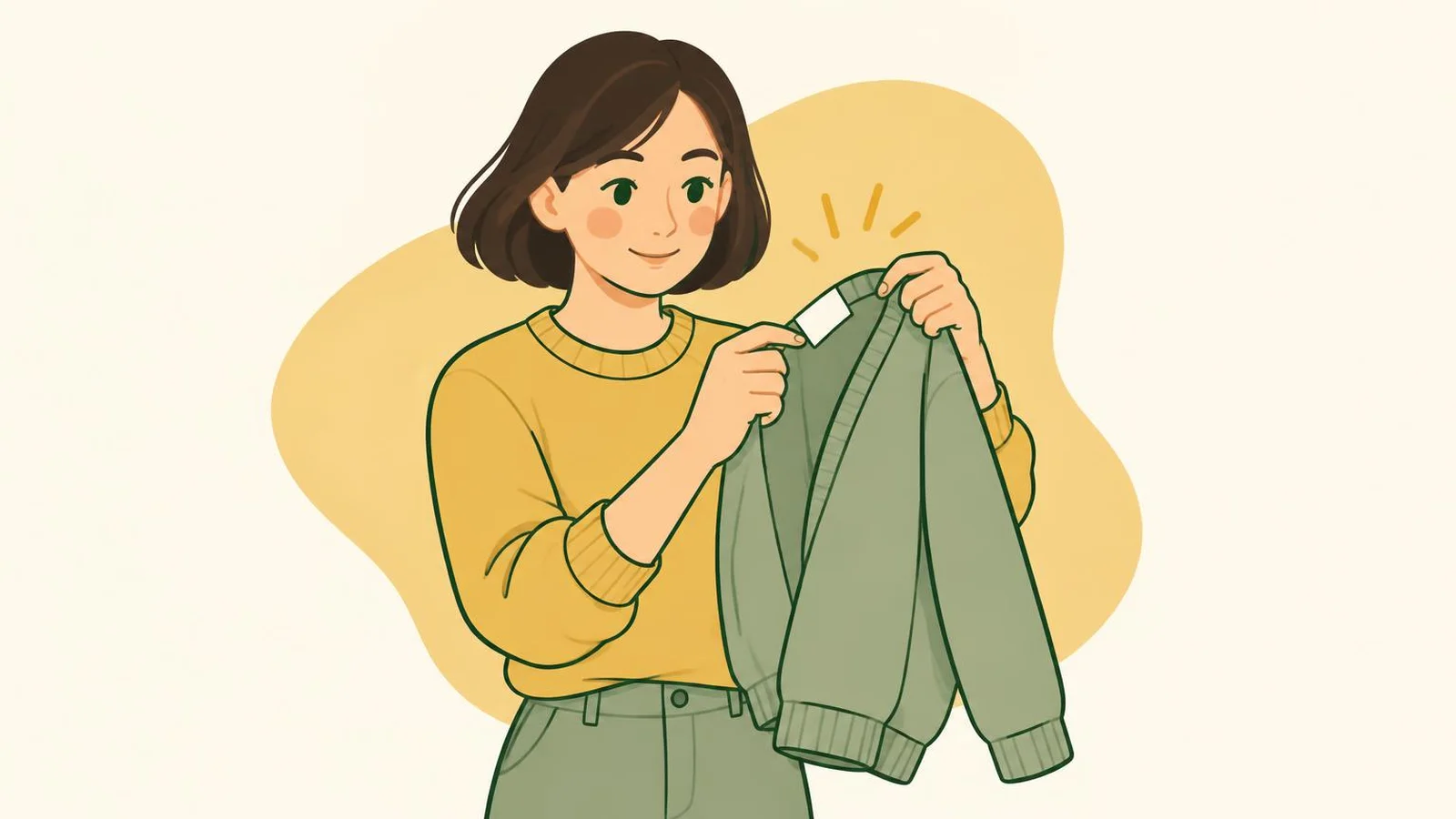
How to convert clothes sizes between EU, UK, US and Pakistan
In short: Measure your bust, waist, hips and foot once, then match the numbers to each shop's own chart: UK 10 is usually EU 38 and US 6, while Pakistani brands list the garment's chest flat across, in inches.
Co-authored by Muqadas Fatima✓, BFA
By Abu Bakar Saadat7 min readPublisher: Saadat Rafiq
Last updated: 31 October 2026References
 Illustration
At a glance
- Rule of thumb
- UK 10 = EU 38 = US 6; US is UK minus 4, EU is UK plus 28 (Primark chart)
- Pakistan
- Brands list garment measurements in inches, chest flat across (Khaadi size guides)
- Shoes
- Measure foot length in cm and use the shop's cm column (Bata)
- You need
- Soft tape measure, pencil, paper, a mirror, a helper if you can
- Time
- About 15 minutes
- Checked
- Shop charts read 30 October 2026
- Checked
- October 2026
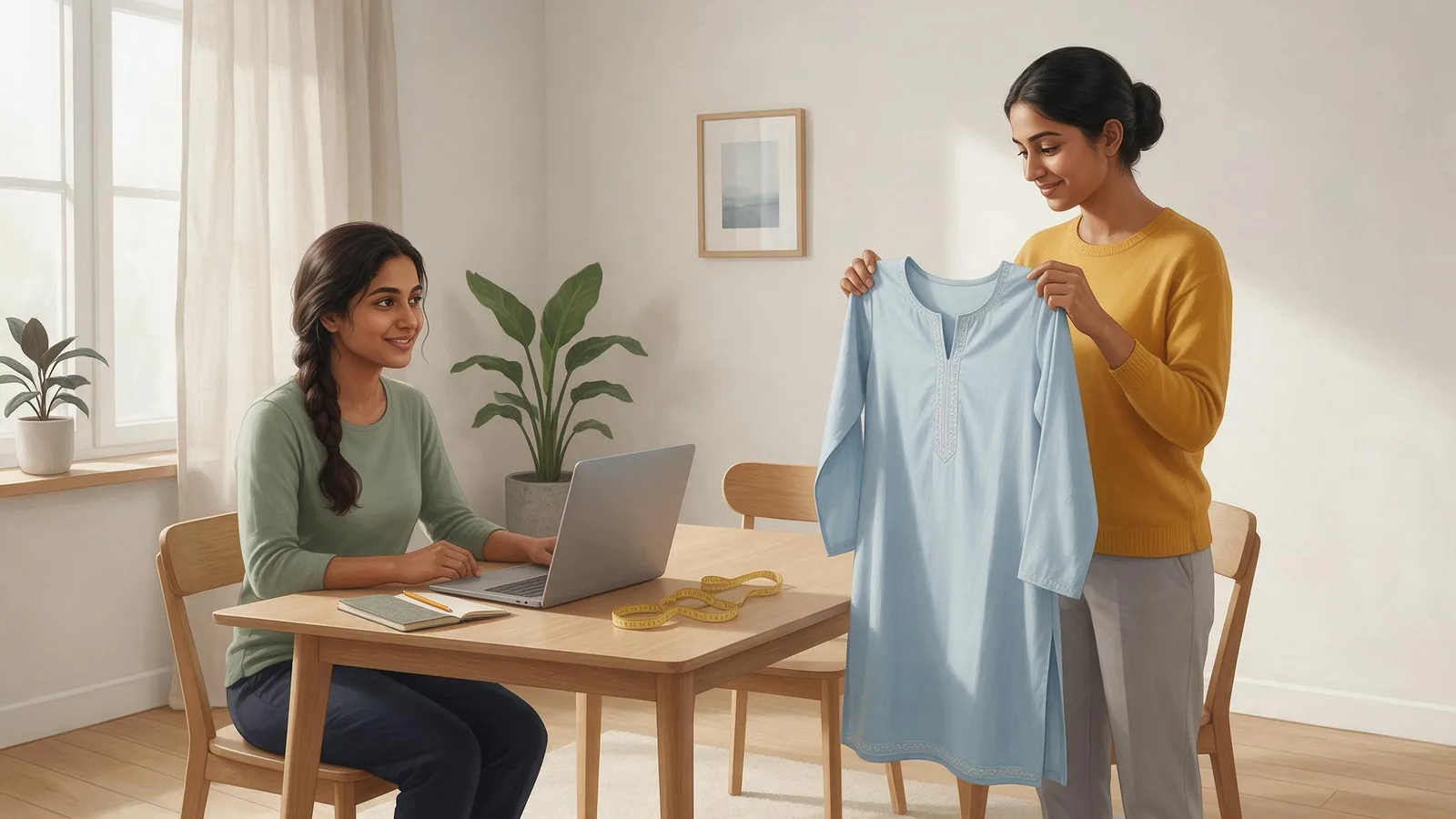
Ayesha lives in Germany, where she wears an EU 38. This week she wants a dress from a UK shop, an Eid kurta from a Pakistani brand and a pair of shoes online. Each shop uses a different number. Follow her and her sister Hina as they measure once and use the same notebook of numbers for all three orders.
What are you buying?
A dress, top or trousers from a UK, EU or US shop
Measure, then read the shop's chart. Start at Measure yourself, then Convert UK, EU and US.
A kurta or suit from a Pakistani brand
Measure a kurta that fits. Go to Pakistani sizes.
Shoes
Measure your foot in centimetres. Go to Shoe sizes.
Measure yourself
Measure your bust, waist and hips.
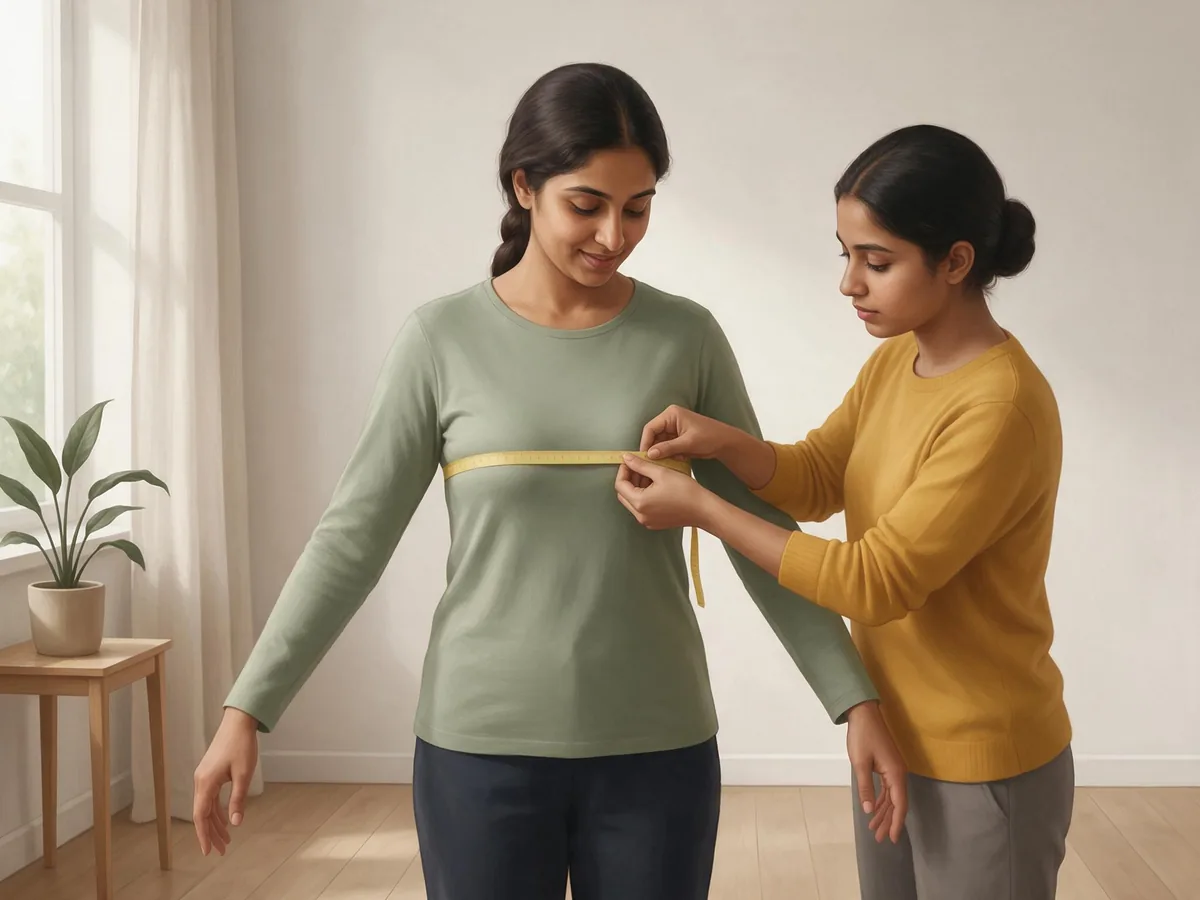
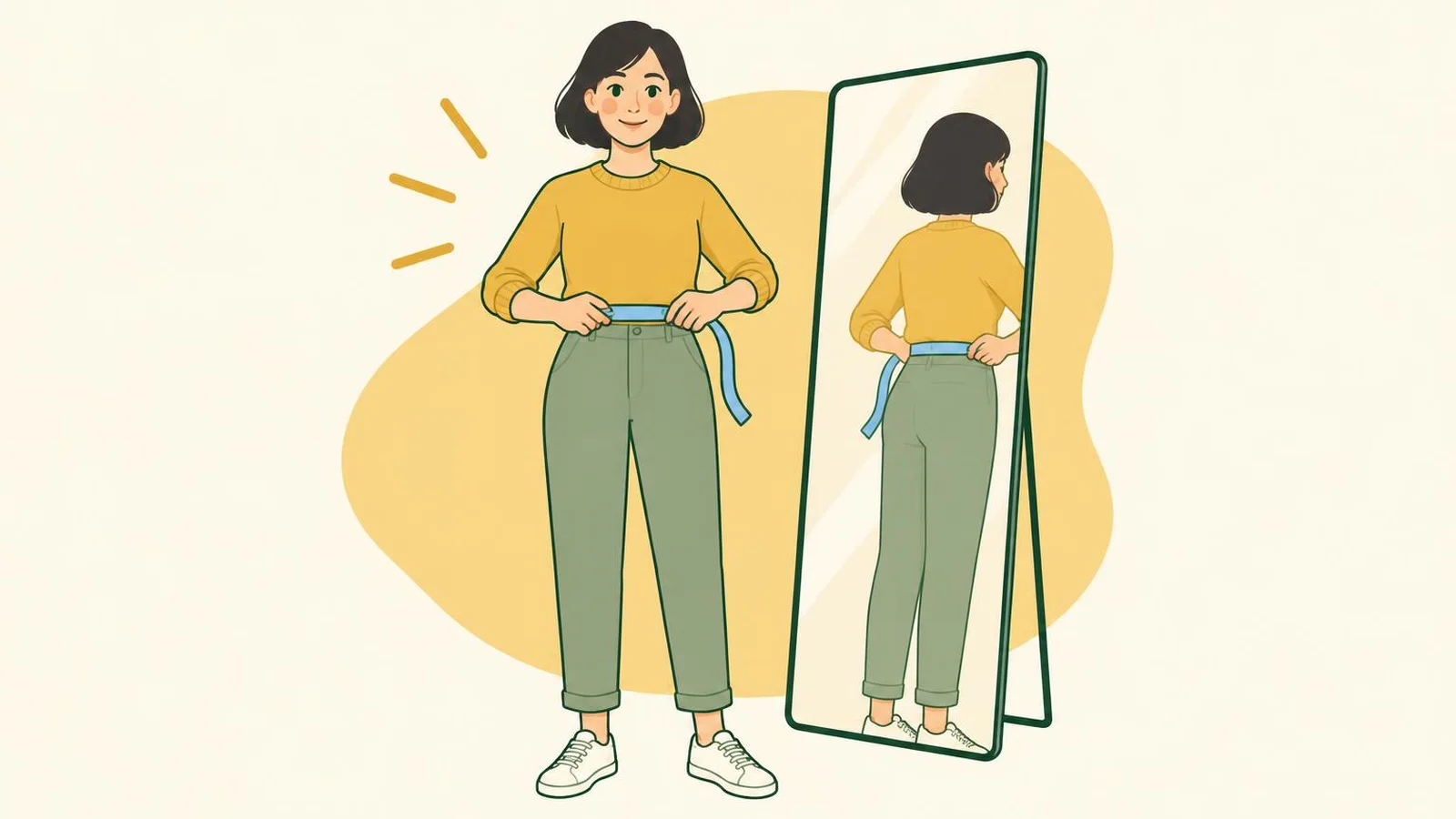
Illustration Ayesha stands in a thin top with her arms relaxed. Hina wraps the tape round the fullest part of her bust, checks that it's level at the back, then does the same at her waist and the widest part of her hips.
Bust: round the fullest part. Waist: the narrowest part, usually just above the belly button, without pulling your stomach in. Hips: round the widest part. Keep the tape level and snug, not tight (Primark). Our guide How to measure yourself for clothes shows each one step by step.
You should see: the tape in one level line all the way round. On your own, check it side-on in a mirror (Primark).
Write all three numbers in one place.
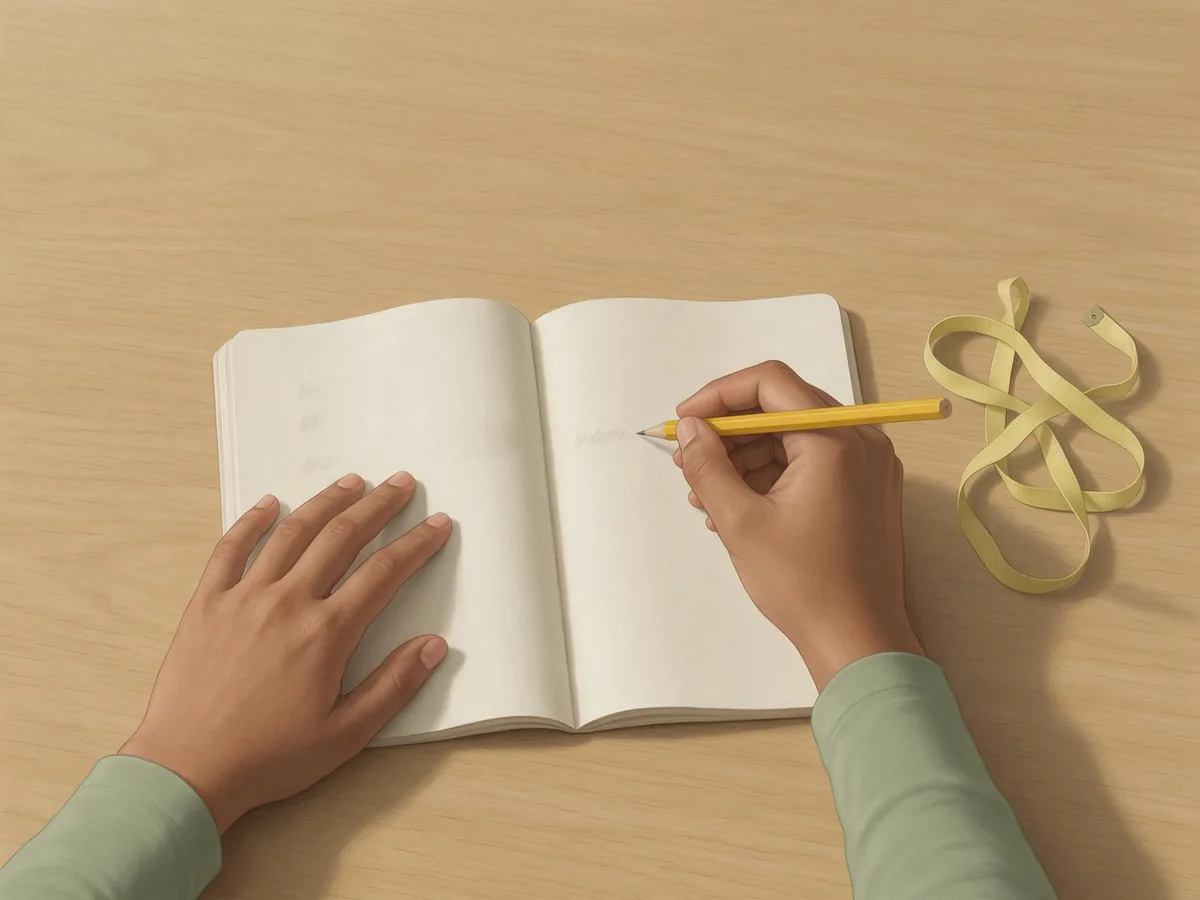
Illustration Ayesha has written her three numbers in centimetres on the left page. Now she copies them in inches on the right page. These two pages are all she needs for every shop.
European charts use centimetres; Pakistani and many US charts use inches. One inch is 2.54 cm. Keep both, so you never have to convert in a hurry.
Convert UK, EU and US
Open the shop's own size chart and find your numbers.
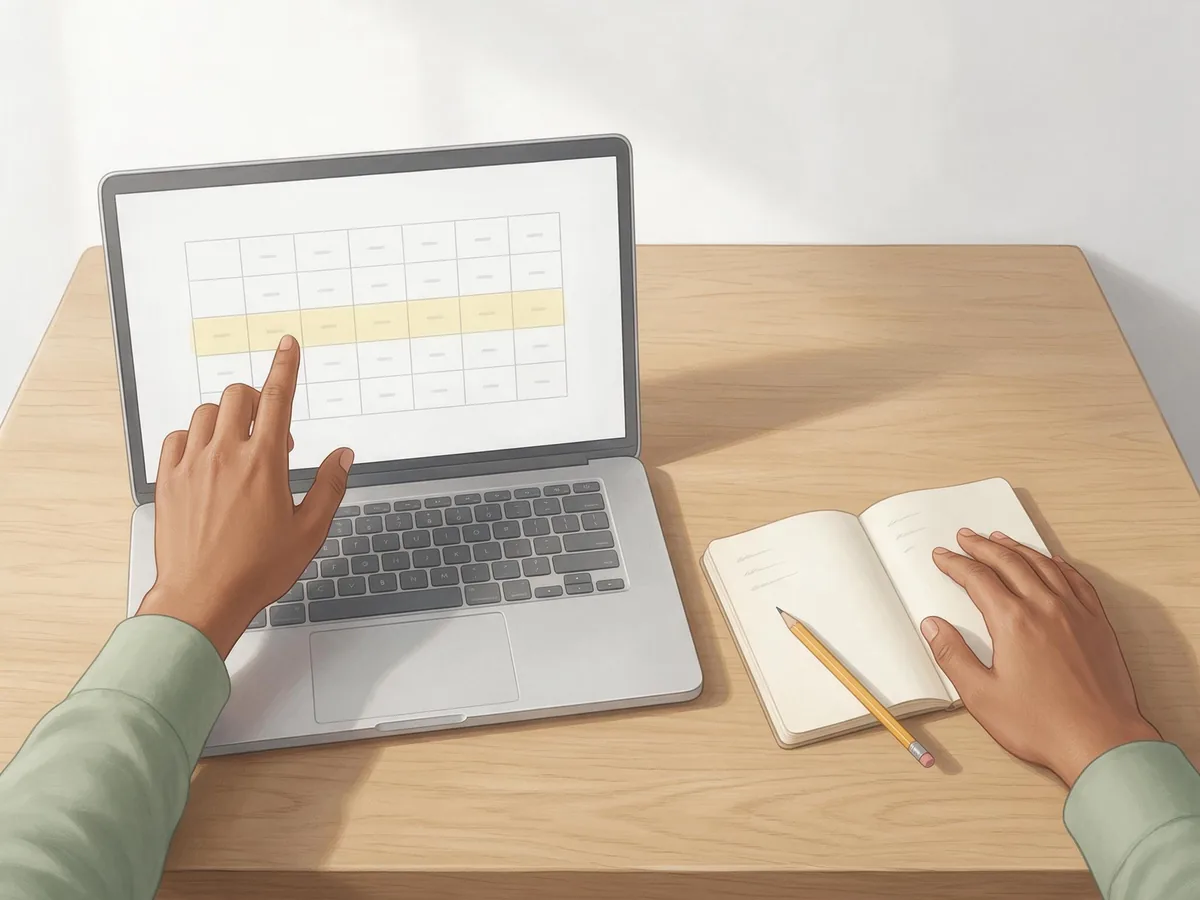
Illustration For the UK dress, Ayesha opens the shop's size chart next to her notebook and finds the row her bust, waist and hip numbers fit, and points at it.
The shop's chart beats any general table, because it tells you how that shop cuts. If your three numbers point to different sizes, choose the biggest for a dress, because a dress can be taken in but not let out much; that's our general advice. For trousers choose by the waist, because length can be shortened (Primark).
Use the conversion to check the number makes sense.
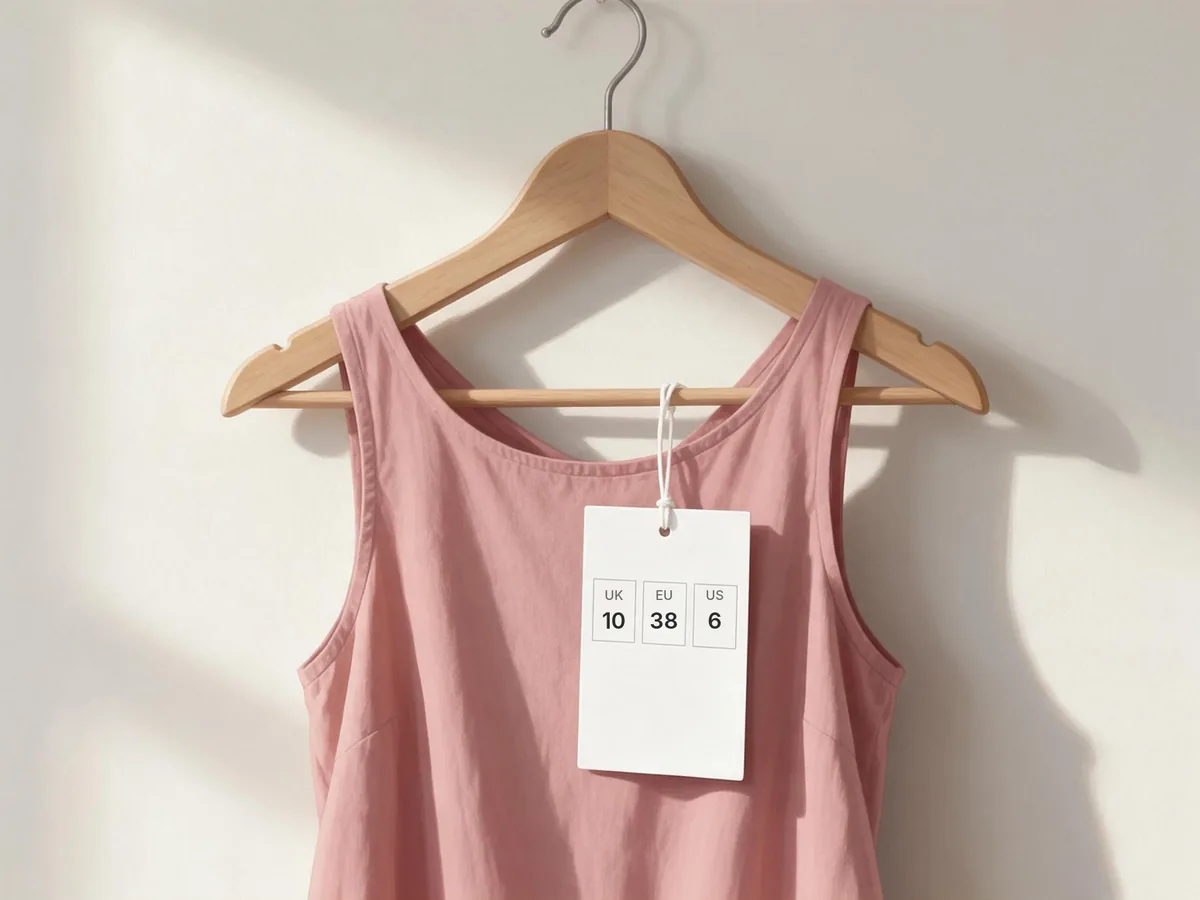
Illustration Her measurements land on UK 10. Ayesha checks: that's her usual EU 38, and a US 6. All three are the same dress.
In Primark's chart, UK 4 to 22 run alongside EU 32 to 50 and US 0 to 18. So US is the UK number minus 4, and EU is the UK number plus 28. Some shop help pages get this backwards, so trust the chart over a one-line tip.
UK EU US 6 34 2 8 36 4 10 38 6 12 40 8 14 42 10 16 44 12 18 46 14 Women's dresses and trousers, from Primark's chart, read 30 October 2026.
Between two sizes? Let the fabric decide.
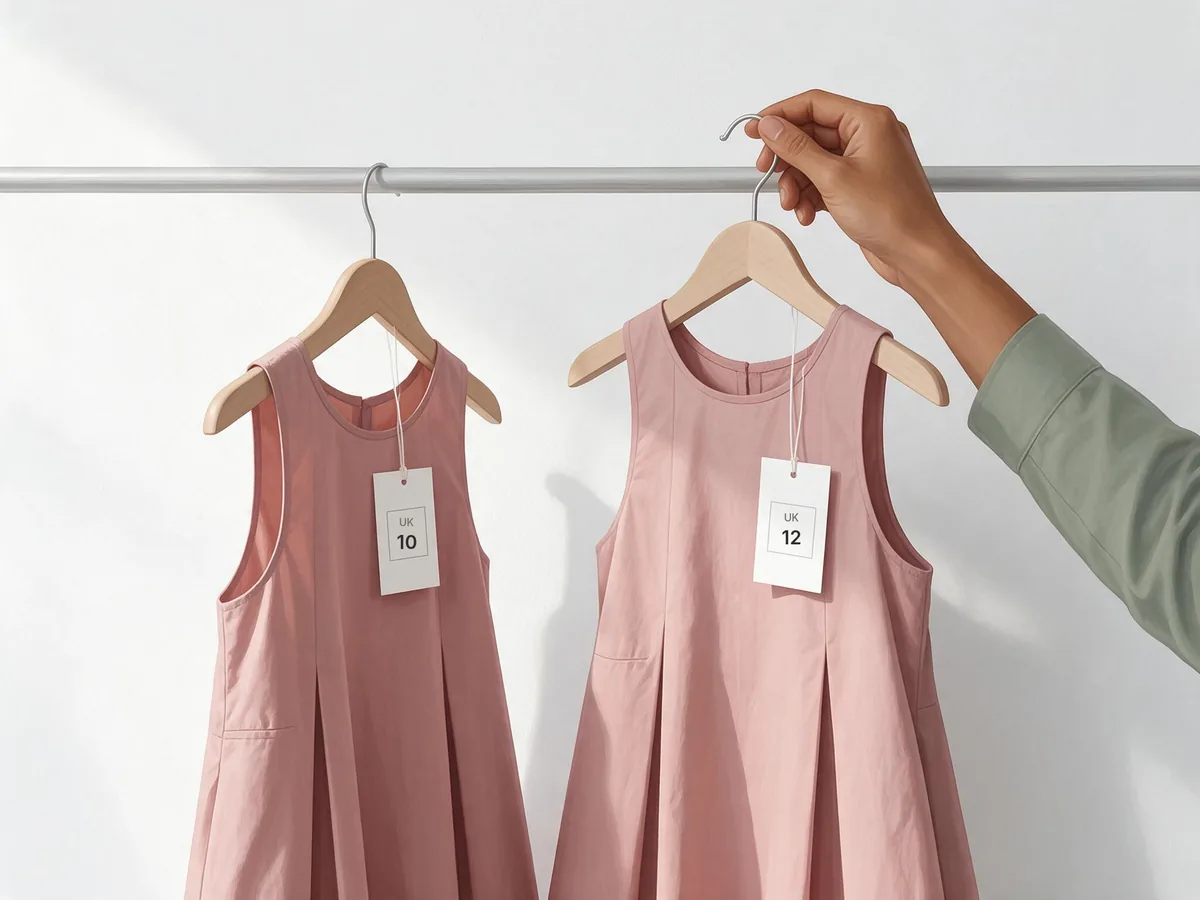
Illustration The dress she likes is stiff cotton with no stretch, and her hips sit between UK 10 and 12. Ayesha takes the 12.
Stretchy fabric (with elastane) gives, so the smaller size usually works. Stiff fabric like cotton or denim doesn't, so take the larger one (Primark). Check the fabric line on the product page.
Pakistani sizes
Lay a kurta that fits you flat and measure across the chest.
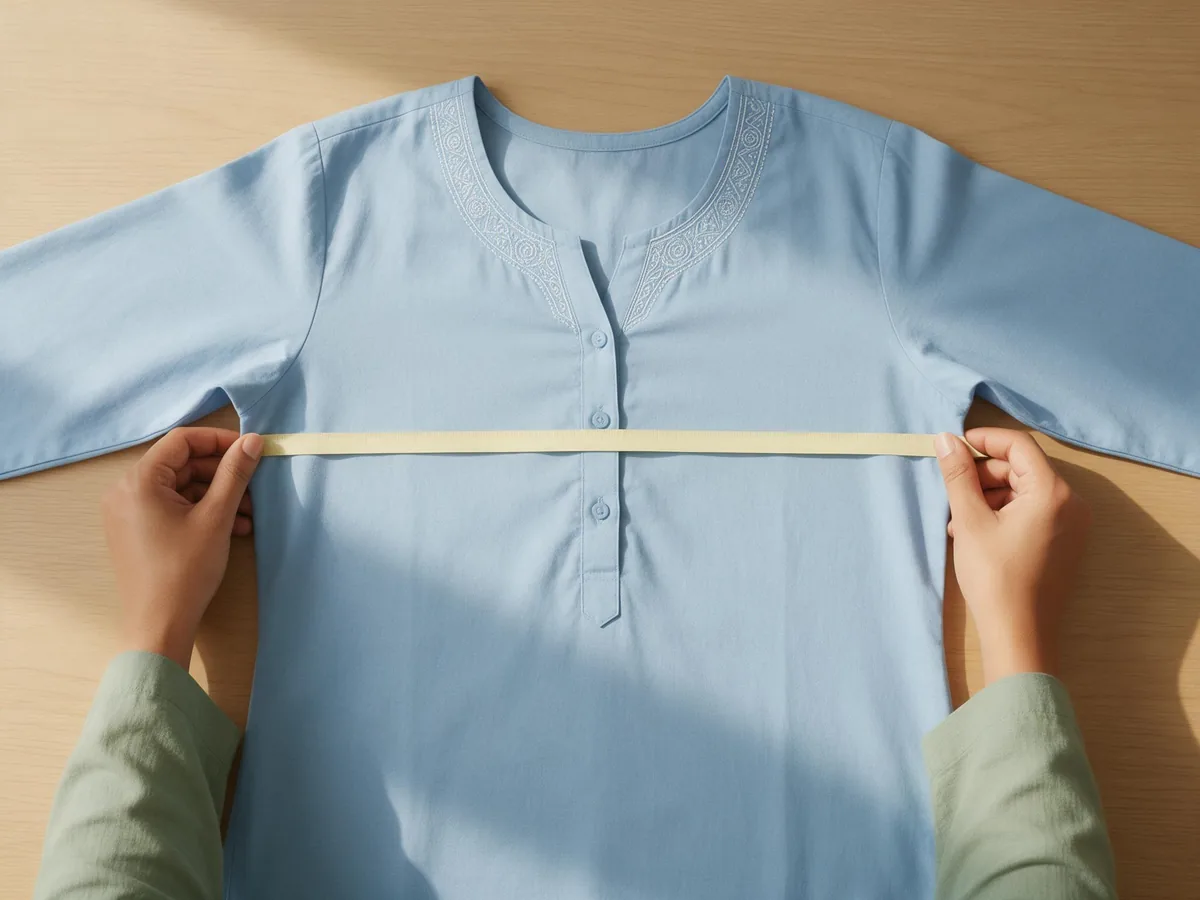
Illustration For the Eid kurta, Ayesha lays her favourite kurta flat and buttoned, and measures straight across from one underarm seam to the other.
Smooth it out first. Write this number down in inches as "kurta chest, flat". Measure its length from the shoulder down too.
Match it to the "Chest" column in the brand's chart.
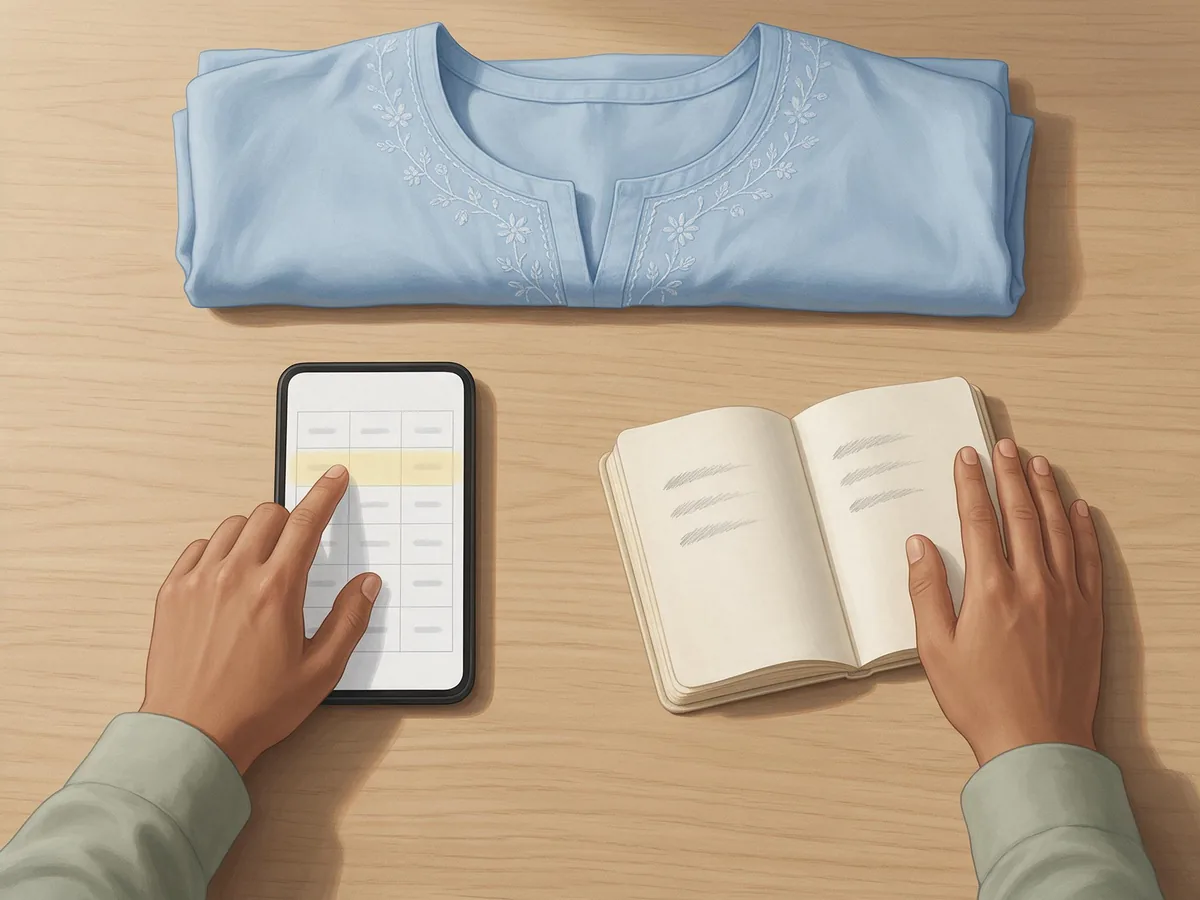
Illustration Her kurta measures 21 inches across. On the brand's chart, 21 inches is the 10 / S, so that's the one she orders.
Khaadi's charts list sizes as 8 / XS, 10 / S, 12 / M, 14 / L and 16 / XL, with the length, shoulder, chest and sleeve of the garment in inches (Khaadi). Chest figures of 20 to 25 inches for an adult top only make sense measured flat across, so compare them with your flat kurta, not with your bust. That reading is ours, from the numbers. A 10 / S kurta is not a UK 10 dress.
You should see: one size whose chest is within about half an inch of your kurta's.
Shoe sizes
Stand on paper with your heel against a wall and mark your longest toe.
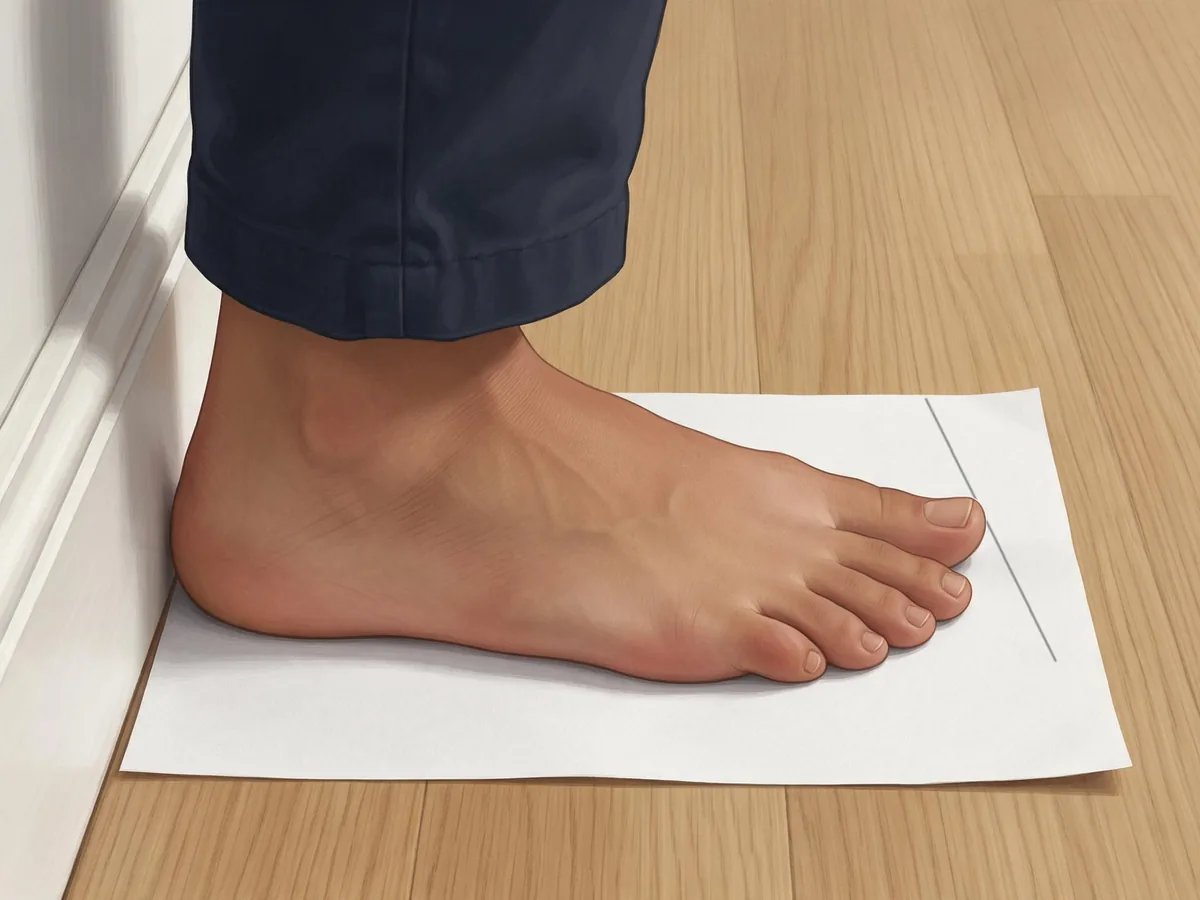
Illustration Ayesha stands on the sheet of paper, heel against the wall. Hina has drawn a pencil line across the paper, right at the tip of her longest toe.
Stand with your weight on that foot, in the socks you'll wear with the shoes (Primark). The pencil should be upright, not slanting under the toe.
Measure from the wall edge to the mark in centimetres.
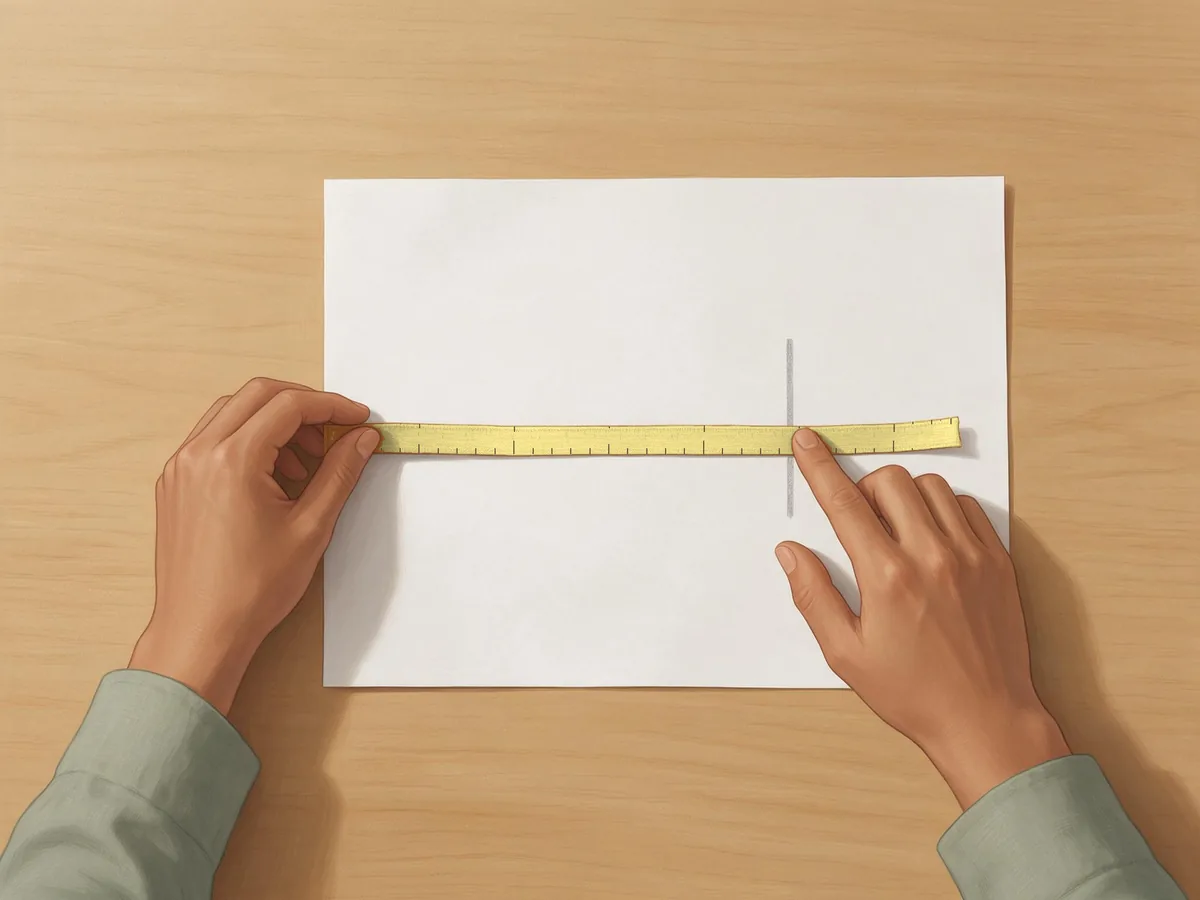
Illustration Ayesha measures from the edge of the paper to Hina's mark: 24.5 cm. She writes it under her other numbers.
Measure both feet and use the longer one.
Find your centimetres in each shop's chart.
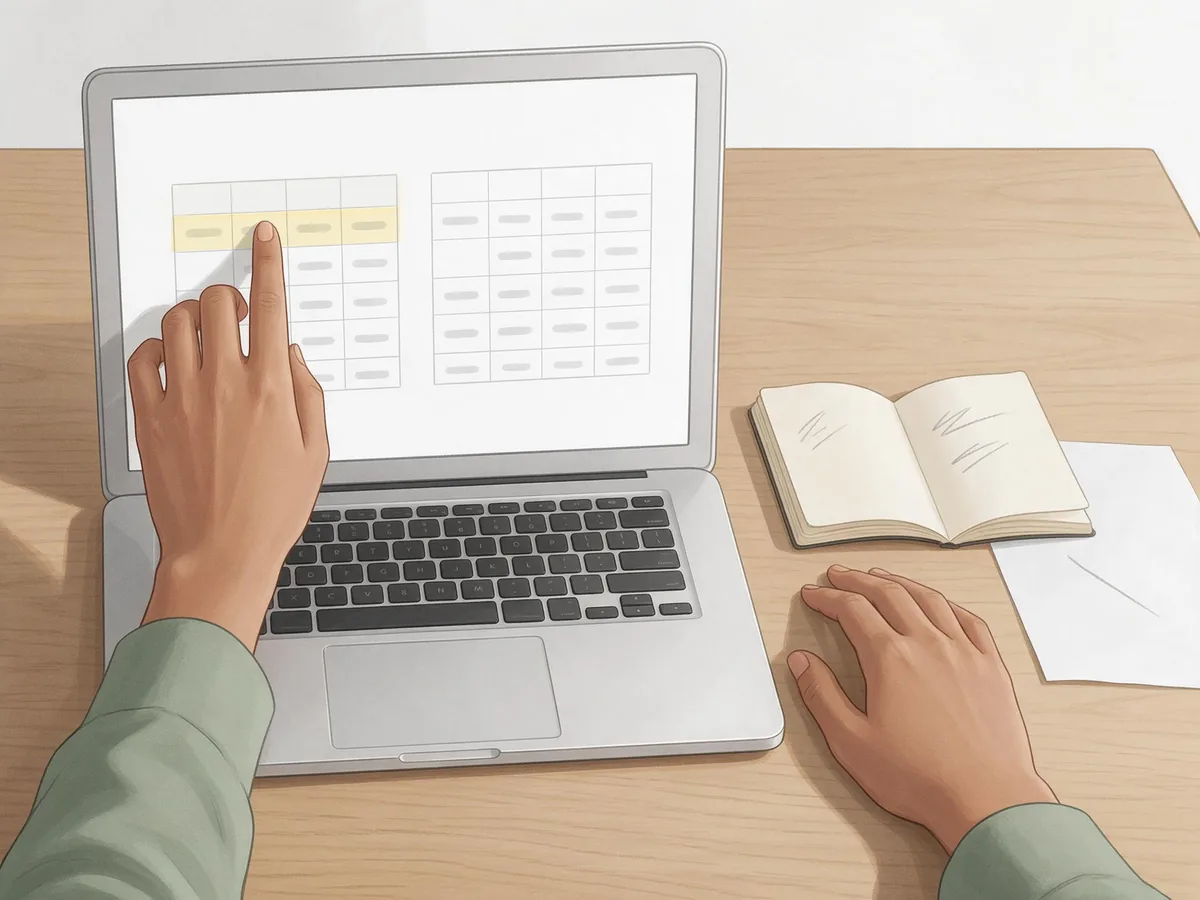
Illustration On Bata's chart, 24.5 cm is an EU 38. Ayesha orders the 38, then checks the UK and US numbers for that shop rather than guessing.
Bata lists women's EU 38 for a 24.5 cm foot (Bata). The UK and US numbers vary by brand: Primark lists UK 5 = EU 38 = US 7, and other brands list UK 5 as US 7.5. Your centimetres are what stays the same.
How to tell it worked
A week later, the parcels arrive. The dress fits at the hips, the kurta sits like her old one, and the shoes have a thumb's width at the toe.
- You ordered from your measurements, not from your usual number.
- The shop's chart and the general conversion point to the same size.
- You kept the tags on until you'd tried everything on.
Size systems at a glance
| Where | How sizes are written | Good to know |
|---|---|---|
| Germany and the EU | Even numbers, 32 to 50 for women (EU 38 = UK 10) | The European standard EN 13402 bases sizes on body measurements in centimetres |
| UK | Even numbers, 4 to 22 | UK = EU minus 28 (Primark chart) |
| US | Even numbers, 0 to 18 | US = UK minus 4 (Primark chart) |
| Pakistan | XS to XL, often also 8 to 16 (Khaadi) | Charts give garment measurements in inches; chest is flat across. Tailors measure in inches |
If it doesn't work
| What happens | What it means | What to do |
|---|---|---|
| The dress is tight at the hips but loose at the waist | You went by bust or waist | Choose by the measurement that gives the biggest size |
| The kurta is far too big | You matched the brand's flat chest to your body bust | Compare with a kurta that fits, laid flat |
| The US size you ordered is two sizes off | The tip you followed was backwards | Use the chart: US is UK minus 4 |
| Shoes are tight in one brand, fine in another | Brands label the same length differently | Use your foot length in cm in each shop's chart |
Questions readers ask
Is a UK 10 the same as an EU 38 and a US 6?
In most shops' charts, yes: Primark's chart puts UK 10, EU 38 and US 6 in the same column. Brands still cut differently, so check the shop's own chart against your measurements before you order.
Why is my Pakistani size so different from my UK size?
Pakistani brands such as Khaadi list the garment's own measurements in inches, not your body size, and the cut is looser. A kurta labelled 10 / S is not a UK 10 dress. Compare its chest figure with a kurta you already own (see Part 3).
Should I go by bust, waist or hips?
For a dress, go by the measurement that points to the biggest size: a dress that fits the hips can be taken in at the waist, but not the other way round. For trousers the waist matters most, because length can be shortened (Primark).
What if I'm between two sizes?
Stretchy fabric can take the smaller size; stiff fabric such as denim or cotton poplin is safer in the larger one (Primark).
Are shoe sizes the same in every shop?
No. Primark lists UK 5 as US 7, and other brands list it as US 7.5. Your foot length in centimetres is the number that carries across brands, so measure it once and use each shop's centimetre column.
Do I need someone to help me measure?
It helps for the bust and hips, because they keep the tape level at the back. On your own, stand side-on to a mirror to check the tape isn't dipping (Primark).
Sources
We base our articles on the makers' official documentation.