How to get paint out of clothes
By howtosimply staff5 min read
Last updated: 16 November 2026References
 Illustration
On this page 8 sections
In short
The entire process depends on whether you’re dealing with oil-based paint or water-based paint.
At a glance
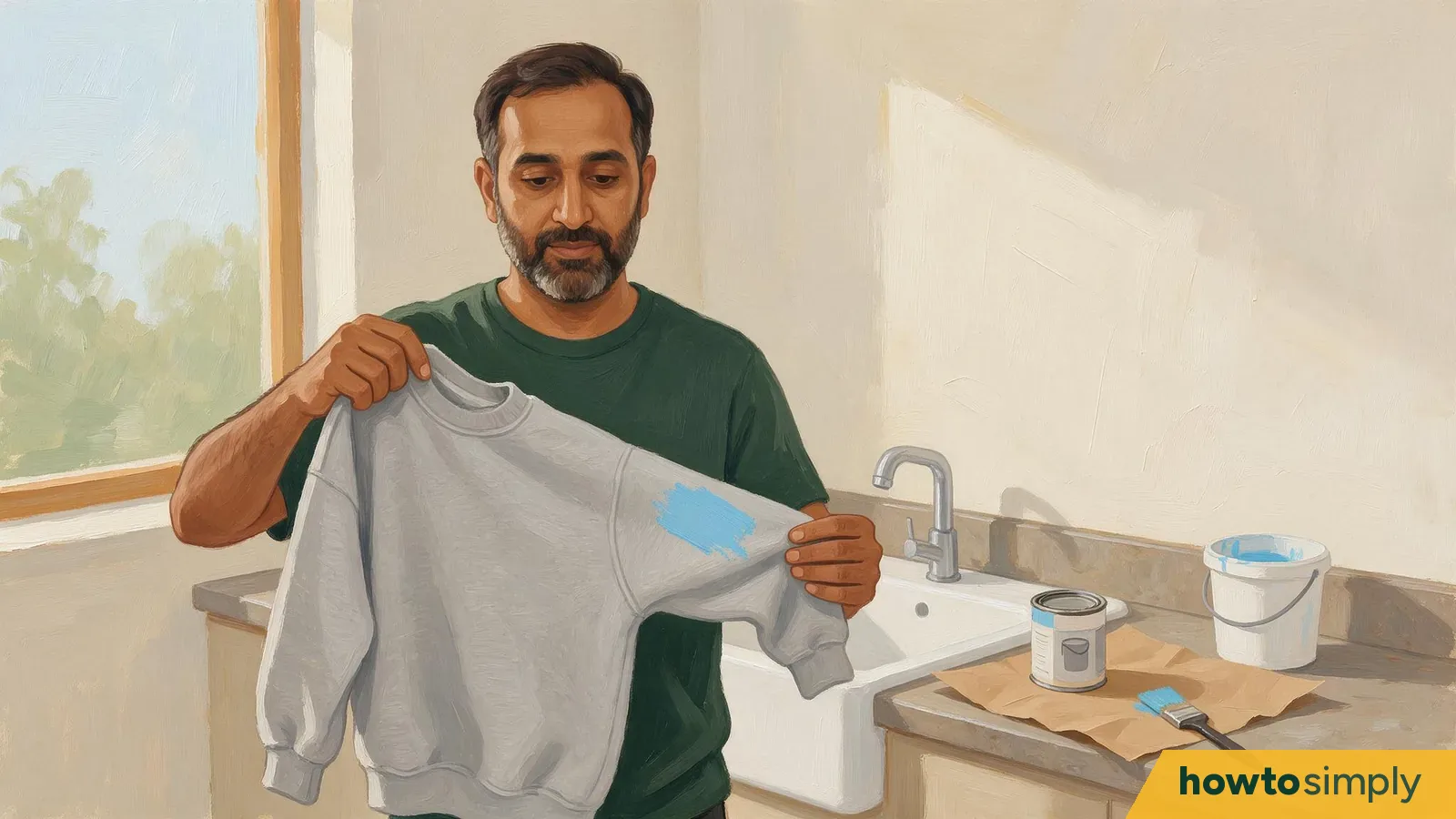
Paint, by nature, always seems to find the best shirt you say, “it’s okay to paint on,” and the one you love. Fortunately, wet paint usually works. Unfortunately, time is of the essence. Put the brush down and hurry through reading. The entire process depends on whether you’re dealing with oil-based paint or water-based paint.
Preparation Before You Begin
One thing matters most when removing paint: speed. Wet paint can usually be removed. Dry paint can remain forever.
Check your care tag. Do not use any products or methods listed as unacceptable on the label.
Always try new products on a small section of the garment that won’t show (e.g., an inside seam) before trying it on the actual stain.
When using a solvent, ensure the windows are open, wear rubber gloves, and maintain a safe distance from any flames or sparks.
Do not put your garments in the dryer until all the paint is completely gone.
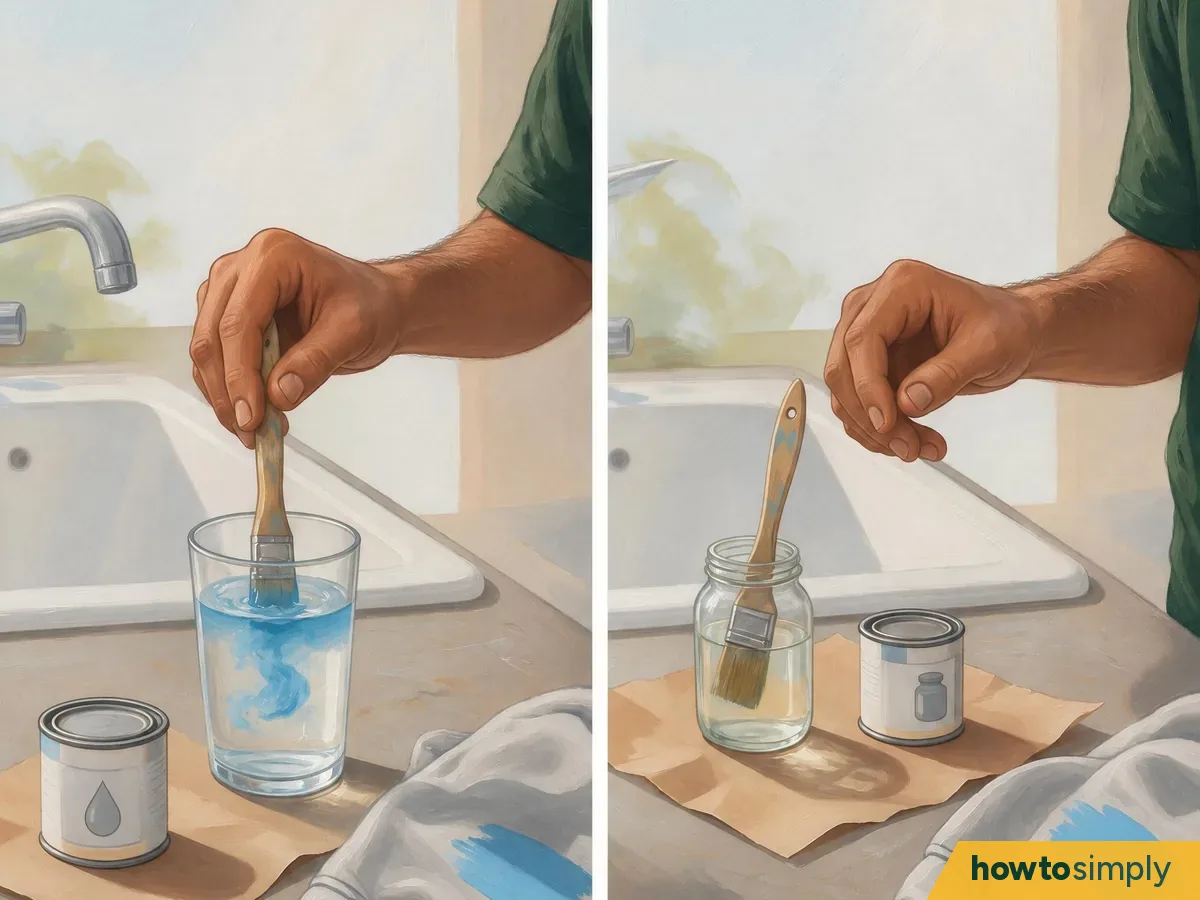
Is it oil-based or water-based paint?
| Oil-Based Paint | Water-Based Paint | |
|---|---|---|
| Types | Thinner-based gloss & oil-based paints | poster paint, wall emulsion (latex), acrylic & craft paint |
| Identifying | Thinners/solvent mentioned on the tin/label | Brushes clean up with water |
| Initial Treatment | Wet with thinner. Wash with liquid detergent. | Dampen with water. Wash with liquid detergent. |
| Drying | Typically stays permanently. | |
| Can't treat it yet? | Wrap it in plastic/a sealed bag so it does not dry. | Keep it damp. |
Step-by-Step Instructions
Remove wet paint immediately.
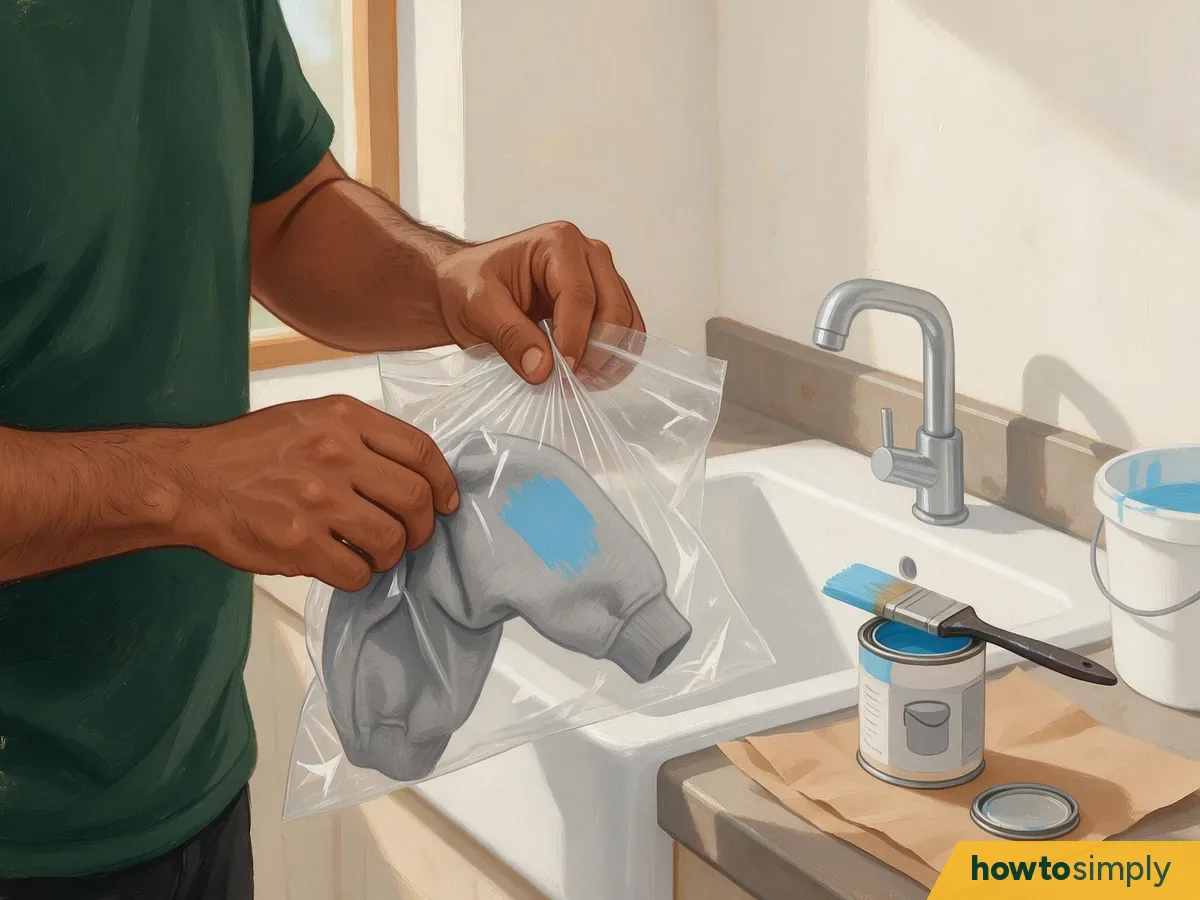
Illustration Stop painting and treat the garment before continuing. Wet paint typically removes easily; however, once it dries, it may be irreversible. If you cannot treat oil-based paint immediately, place a plastic bag around the painted portion of the garment so that it does not dry out.
Remove excess paint from the back side of the garment.
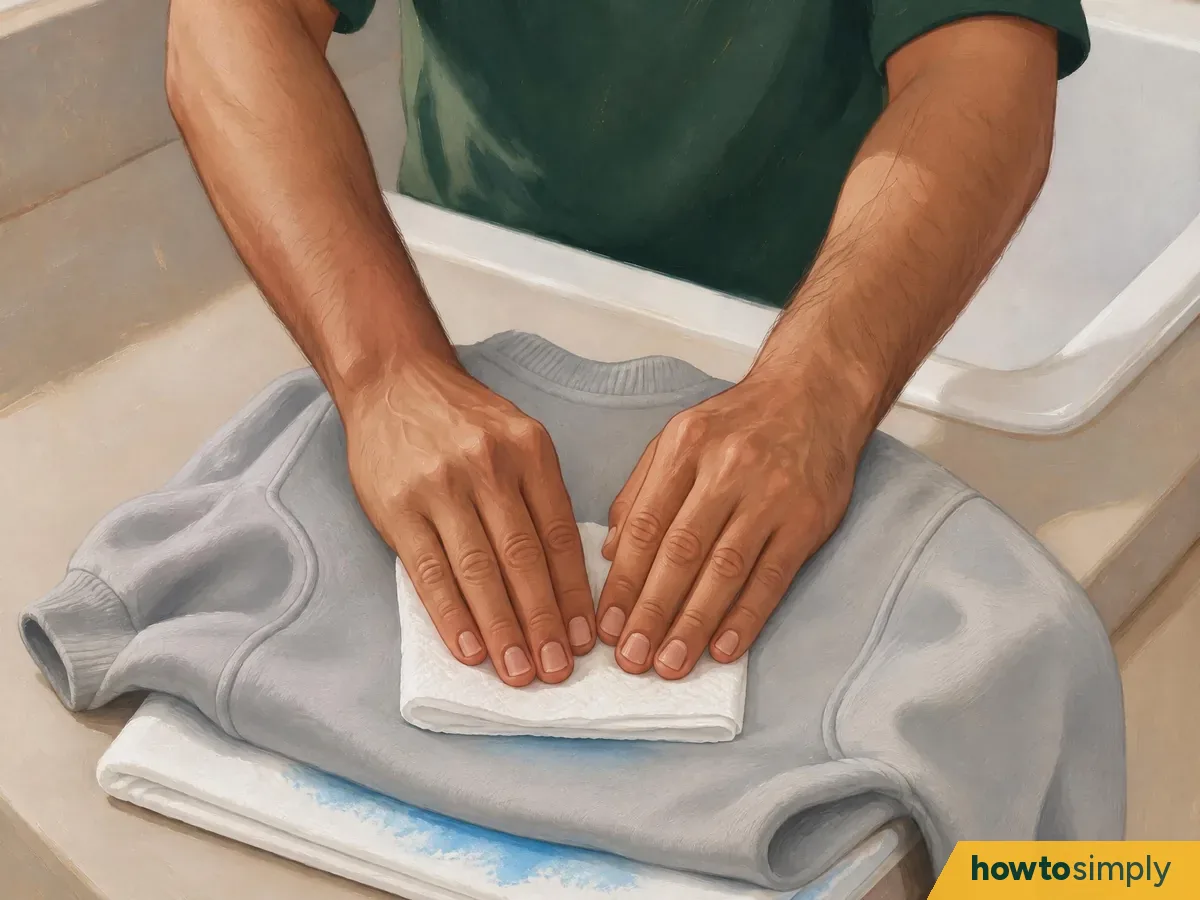
Illustration Place a white sheet of cloth or paper towel underneath the stained area of the garment and blot from the inside out. This forces the paint outward, rather than deepening it in the garment. Gently blot – do not rub – as rubbing causes the paint to spread further into the garment.
Identify Type of Paint.
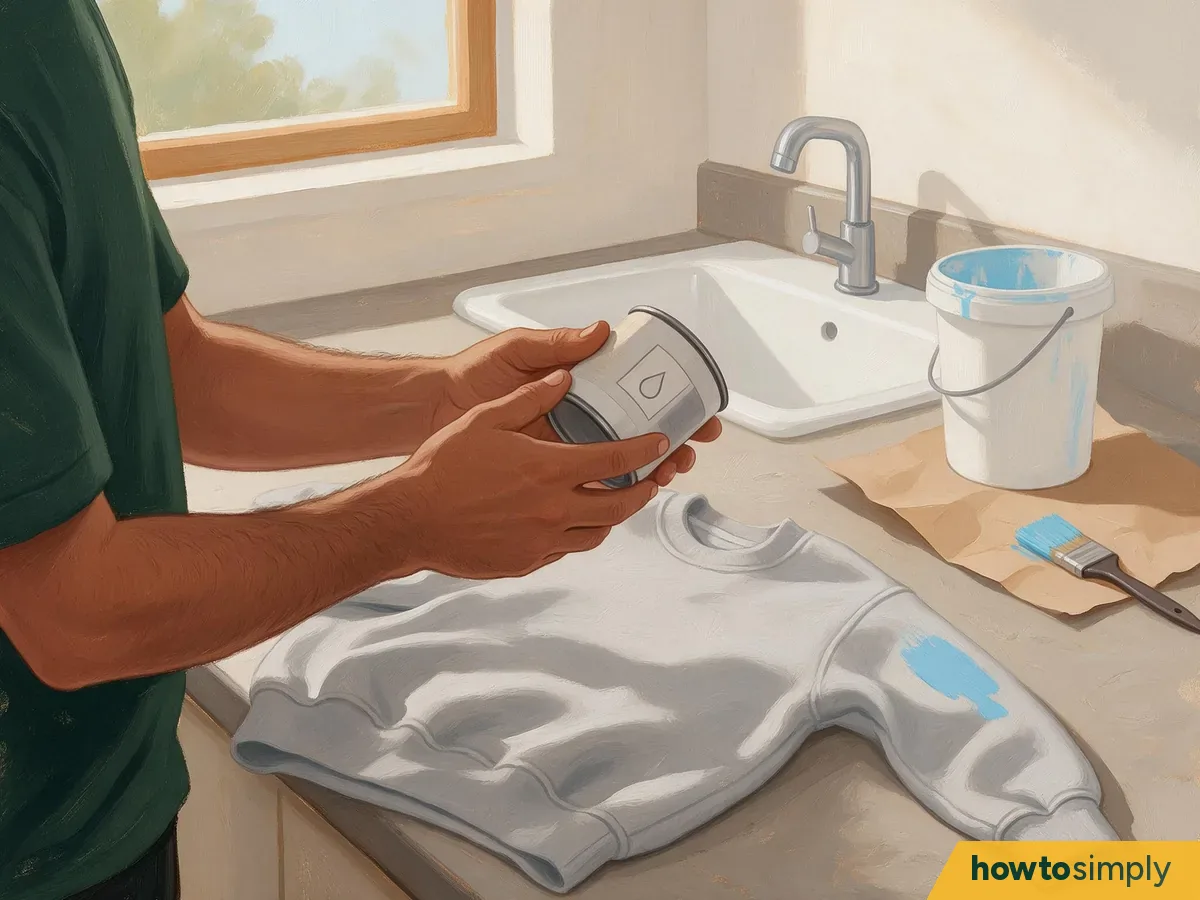
Illustration Examine the tin/tube/container for information regarding thinners/solvents used to clean brushes. If it mentions a thinner/solvent, treat it as an oil-based paint (see #7 below). Wall Emulsion/Latex/Acrylic/Kids’ Craft Paint are water-based; proceed to #4.
Water-based Paint: Rinsing.
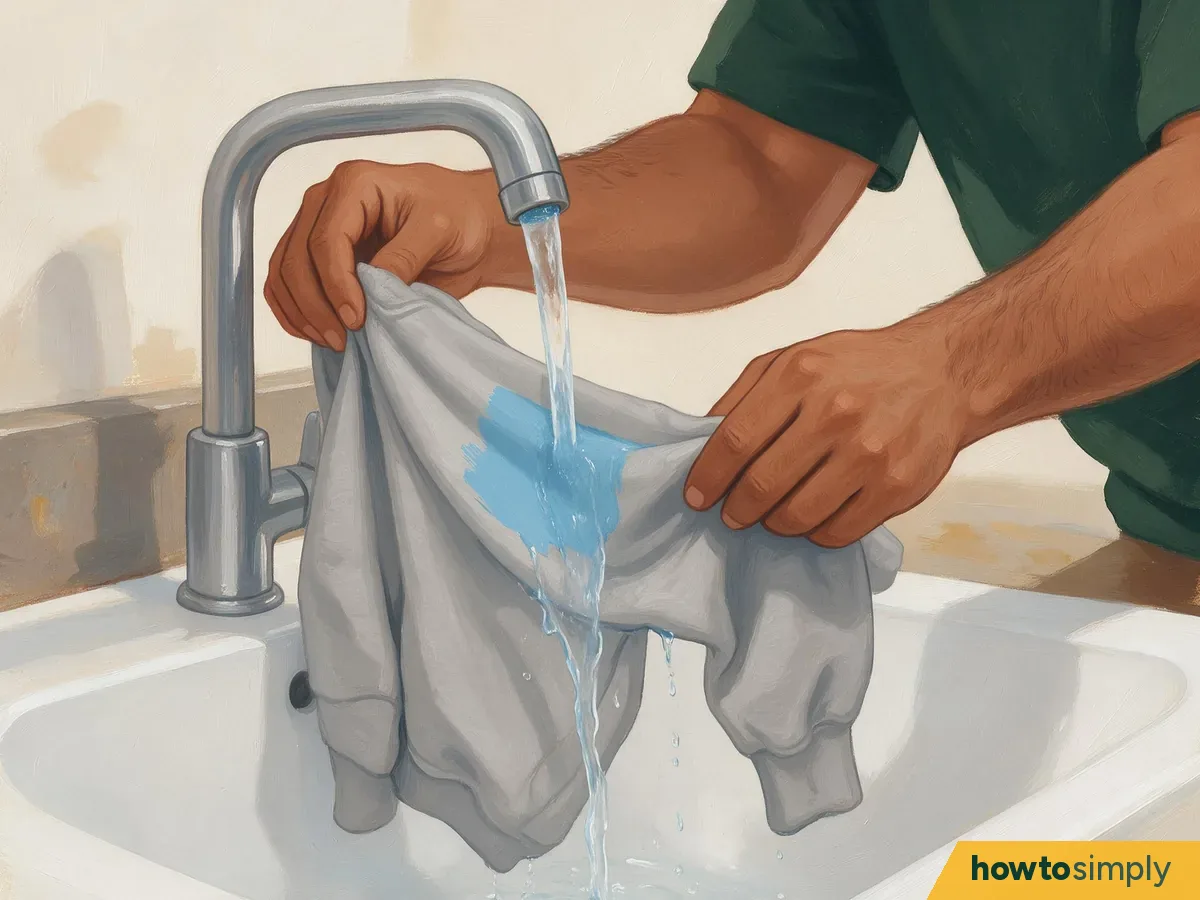
Illustration Continue to run cold water over the affected area/stain until no more paint comes off. Alternatively, submerge the garment in cool water for longer to allow the paint to soften.
Water-based Paint: Rub-in Detergent and Rinse.
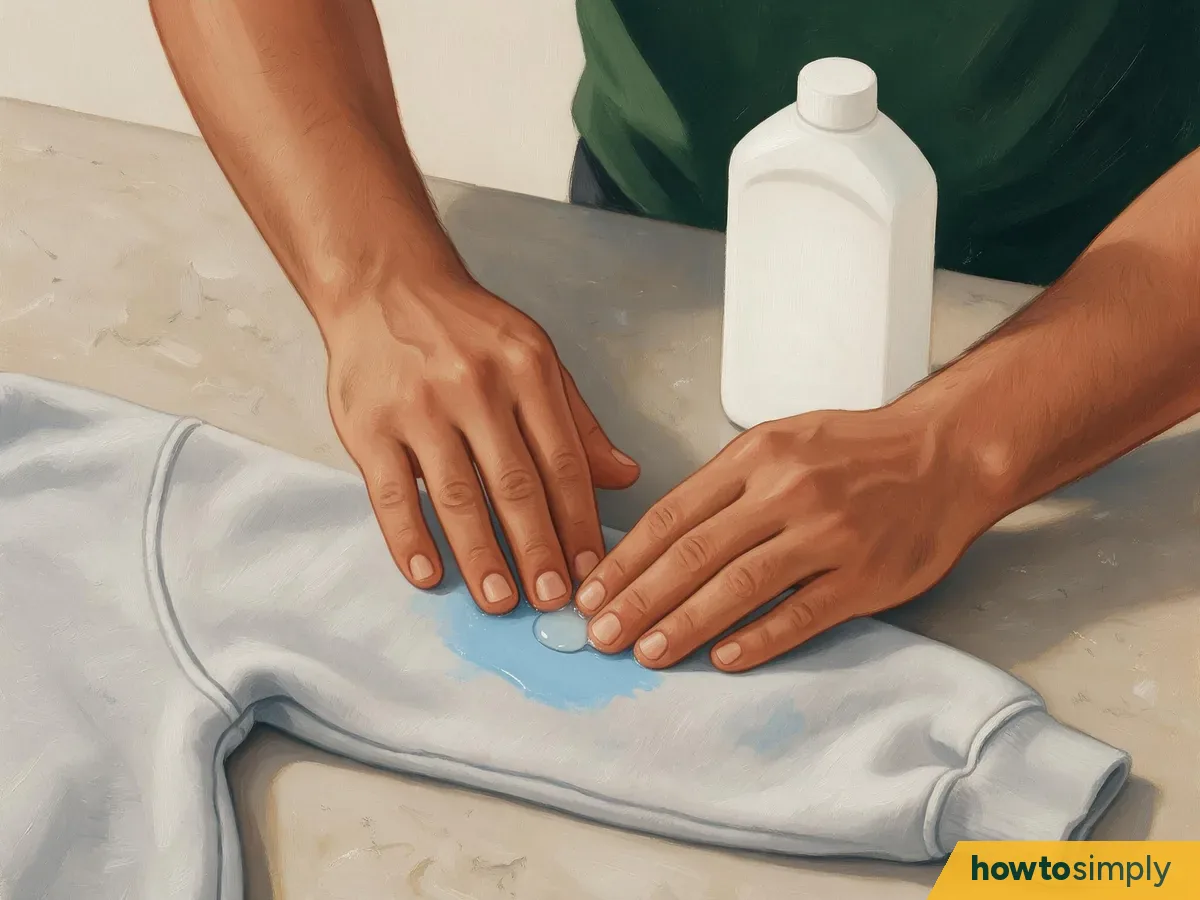
Illustration Apply liquid laundry detergent directly to the stain and gently massage with your fingers. Rinse thoroughly and repeat until water runs clear and colour stops transferring.
Water-based Paint: Prewash Stain Remover & Laundry Wash Cycle.
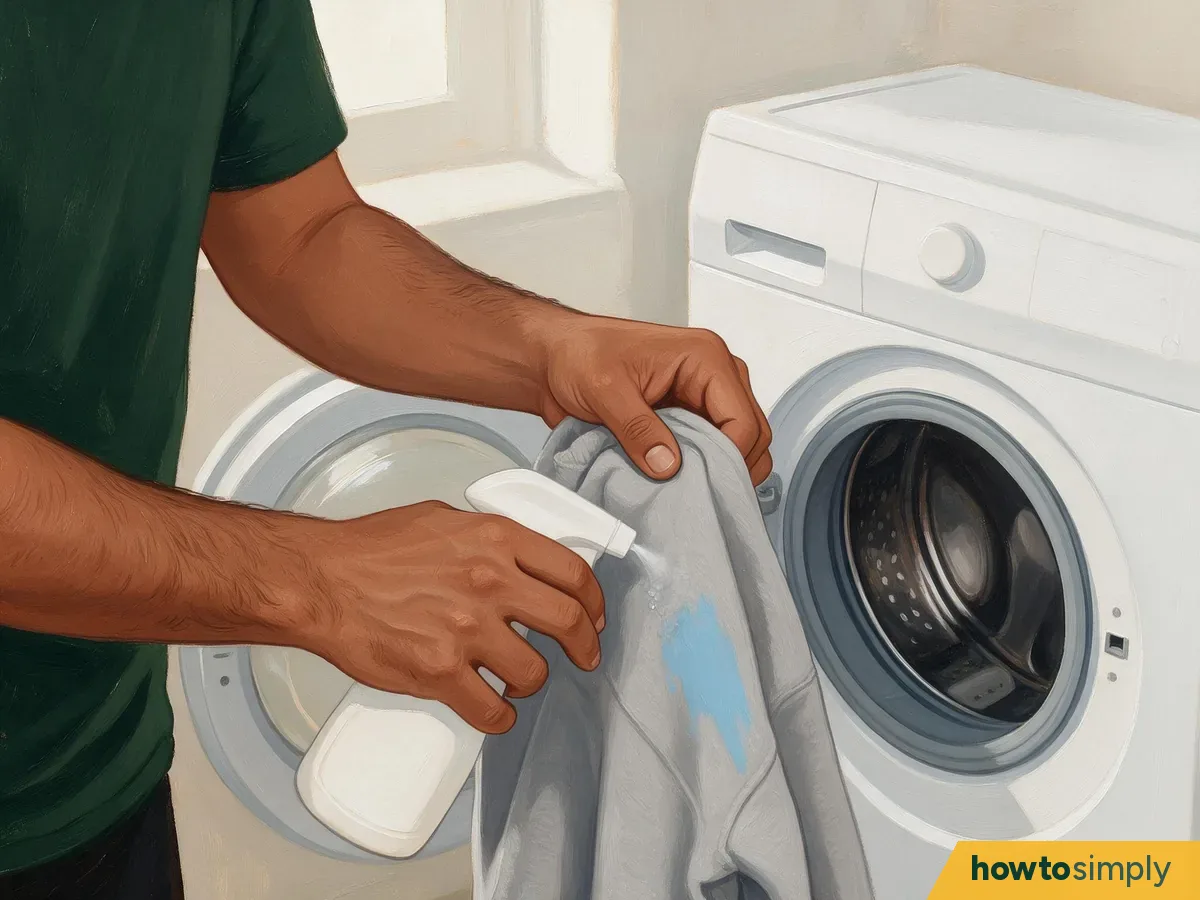
Illustration Follow manufacturer’s instructions and apply a pre-wash stain remover to remaining stains. Then wash the garment with heavy-duty liquid detergent according to the care label instructions. Proceed to #10.
Oil-based Paint: Apply Thinners/Solvent recommended on Tin.
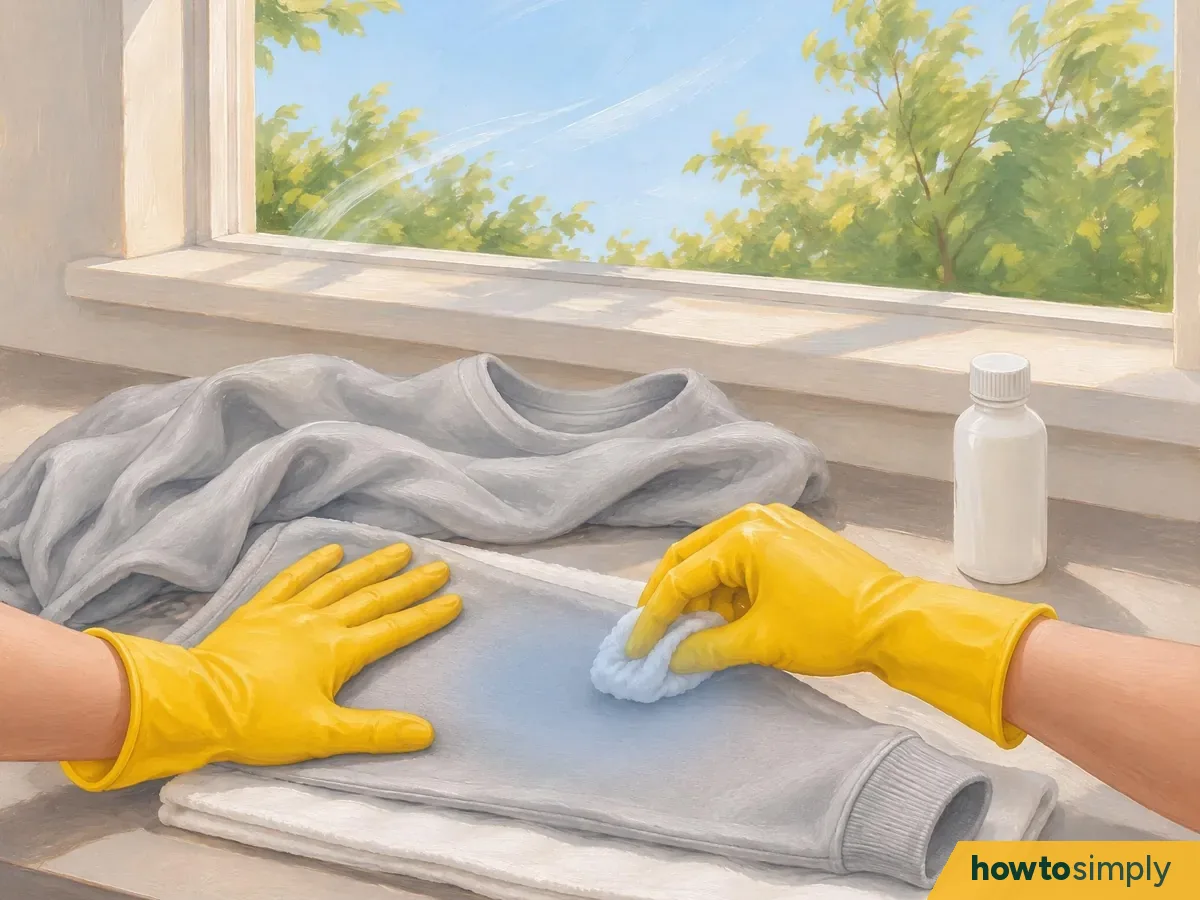
Illustration Use thinner/solvent recommended by manufacturer. If unable to obtain the original container, use Mineral Spirits/Turpentine instead. Always test new solvents on a hidden seam before applying to the actual stain. Apply to the backside of the stain, moving to a fresh section of cloth as you continue to wipe away the stain.
Oil-based Paint: Apply Liquid Detergent while Solvent is Still Wetting the Stain.
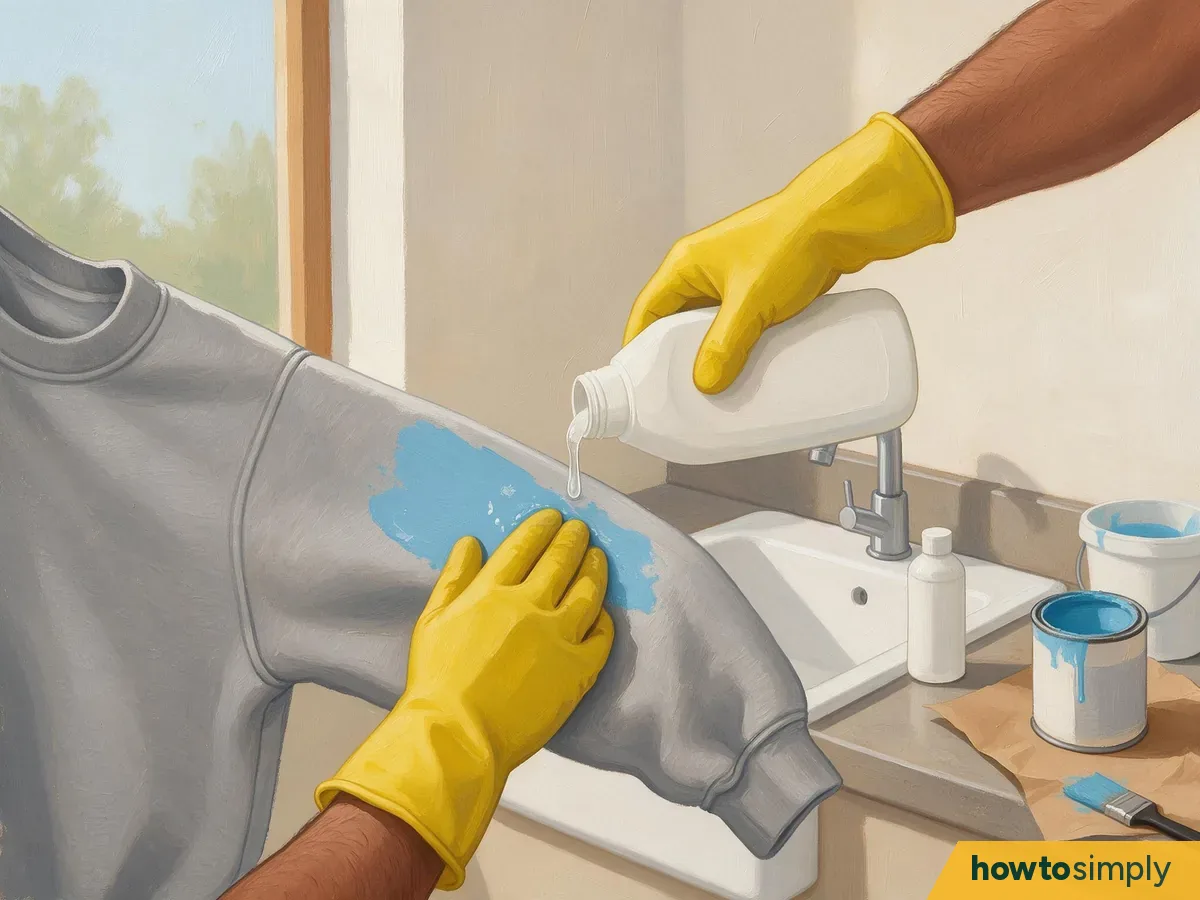
Illustration Never let the solvent evaporate; while the stain is still wet with solvent, apply liquid laundry detergent to the stain and massage gently with your fingers; rinse thoroughly.
Oil-based Paint: Soak Overnight if Remaining Mark Exists.
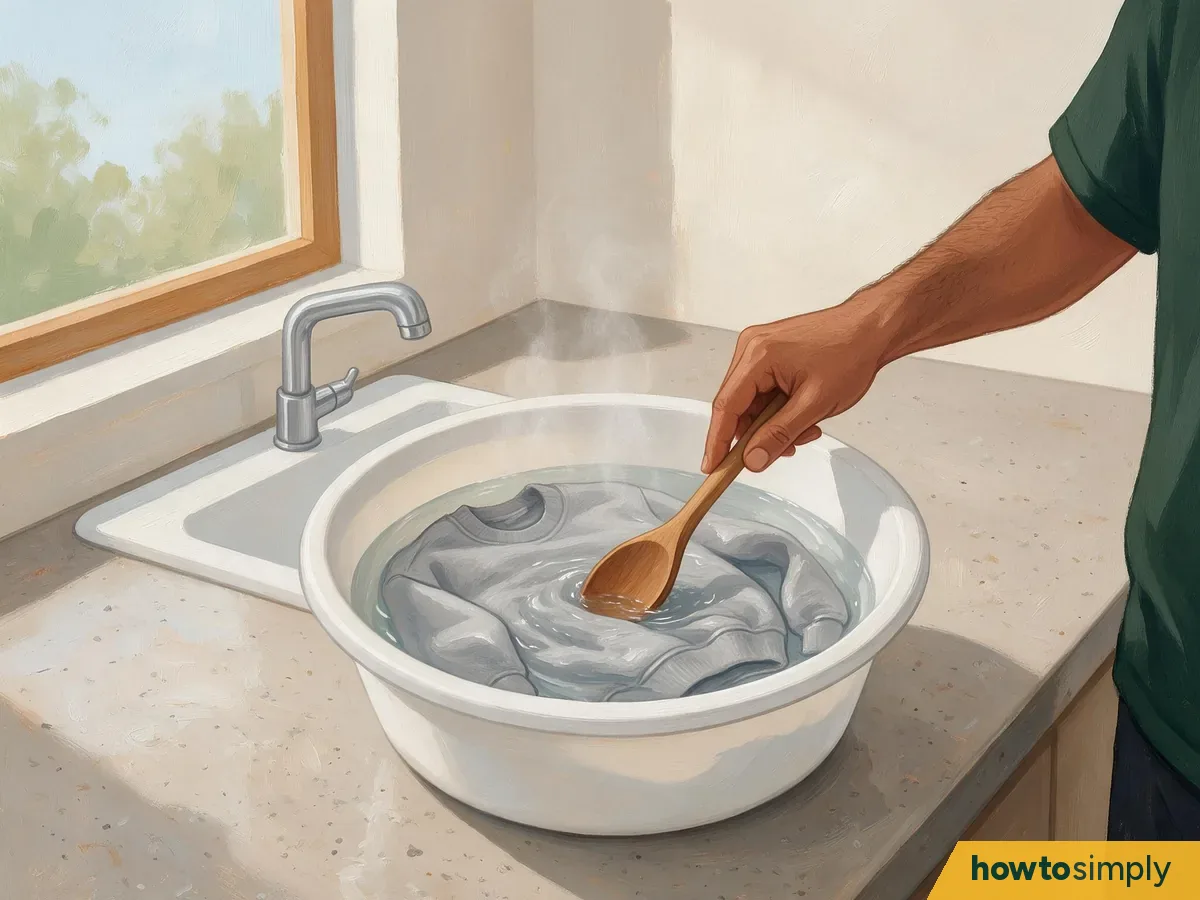
Illustration If you can still see any remnants of the paint, submerge the garment in hot water overnight (only if allowed per the garment care label). If the care label prohibits hot water, submerge it in the warmest water the label allows; then launder normally.
Confirm Removal of Stain Before Drying Garment
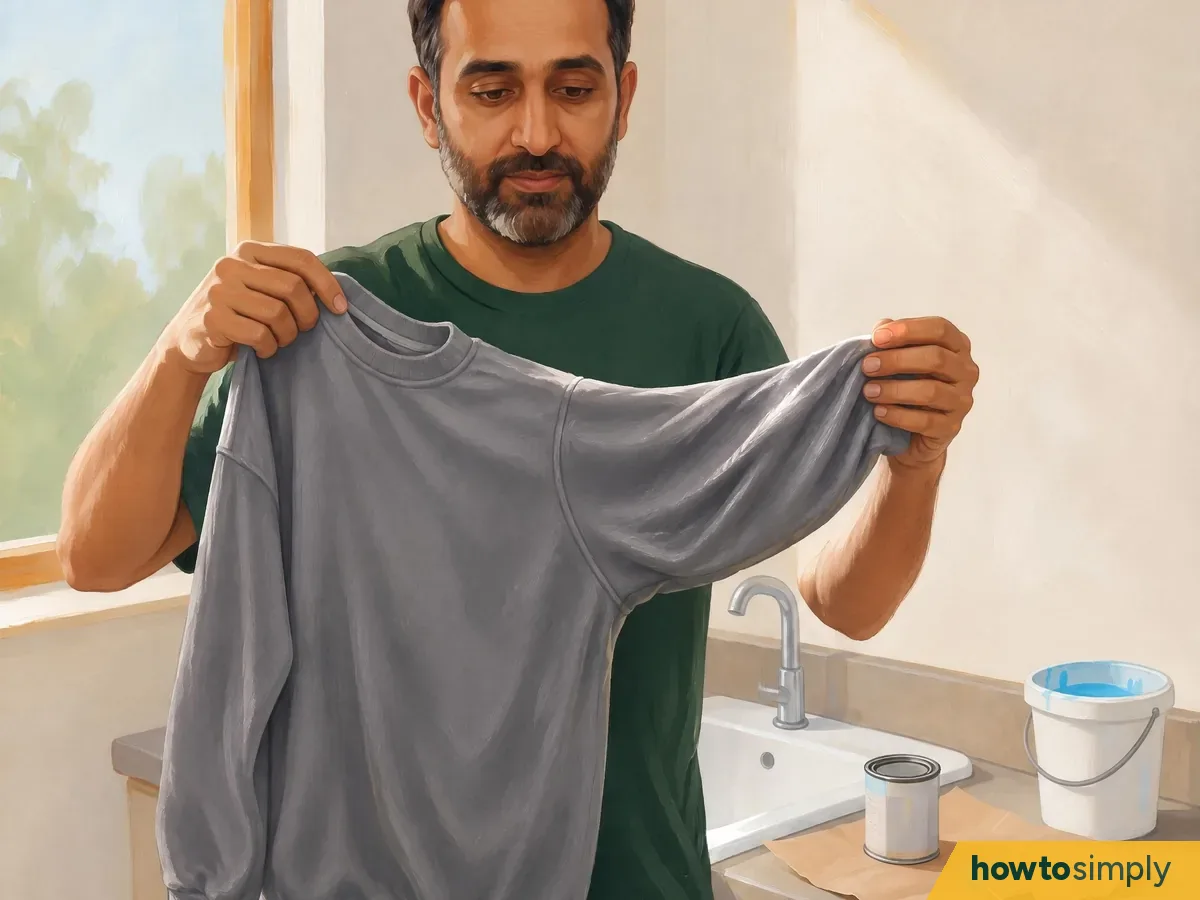
Illustration Examine the stained area closely while it is still wet. If you still see any sign of the paint, repeat applicable procedures above for your specific paint type. Only dry the garment when no signs of stain exist.
Frequent Errors
Delaying removal of wet paint = dried paint.
Applying water to oil-based paint = Use thinners first.
Rubbing hard = Spreads stain further into the fabric.
Working in a confined space using solvents = Open windows, wear gloves, maintain a safe distance from fire/flame sources.
Dryer usage to determine success = Heat from dryer can set remaining paint in garment. Inspect while wet.
If This Doesn't Work...
Remnants of stain exist even after laundering. Repeat procedures for your paint type while the garment is still wet.
Paint has already dried = Most likely, dried paint is irreversible; take the garment to a professional cleaner and inform them of the paint type.
Garment dye bleeds during test = Cease action and bring garment to professional cleaner.
Unable to identify paint type = Try Step 4 (water-based); if no results, test the oil-based procedure on a hidden seam.
Alternative Method: When Unable to Launder
If you are away from home or otherwise engaged in painting activities, hold the wet stain moistened with water (for water-based paint) or enclose it in a plastic or airtight bag (for oil-based paint), and treat it when you have the opportunity.
Additional Guides
- Guide: Cleaning Acrylic/Oil Brushes
- Guide: Reading Care Labels for Clothing
- Guide: Washing Dark Coloured Clothes/Jeans Without Fading
Closing Statement
We hope your favourite shirt survived intact. Thank you for liking/following our social media accounts if this guide helped. Our writers appreciate your support greatly. Next time…paint on the shirt you don’t mind losing!
Advice from: University of Georgia Cooperative Extension, Texas A&M AgriLife Extension, Cornell Cooperative Extension and Winsor & Newton.
About this article
- Written by
- howtosimply staff
- Pictures
- 12 illustrations drawn for this article, each marked Illustration (drawings, not photos).
Did this solve the problem?
What needs work?
What did you think?
Reaction counts are loading.