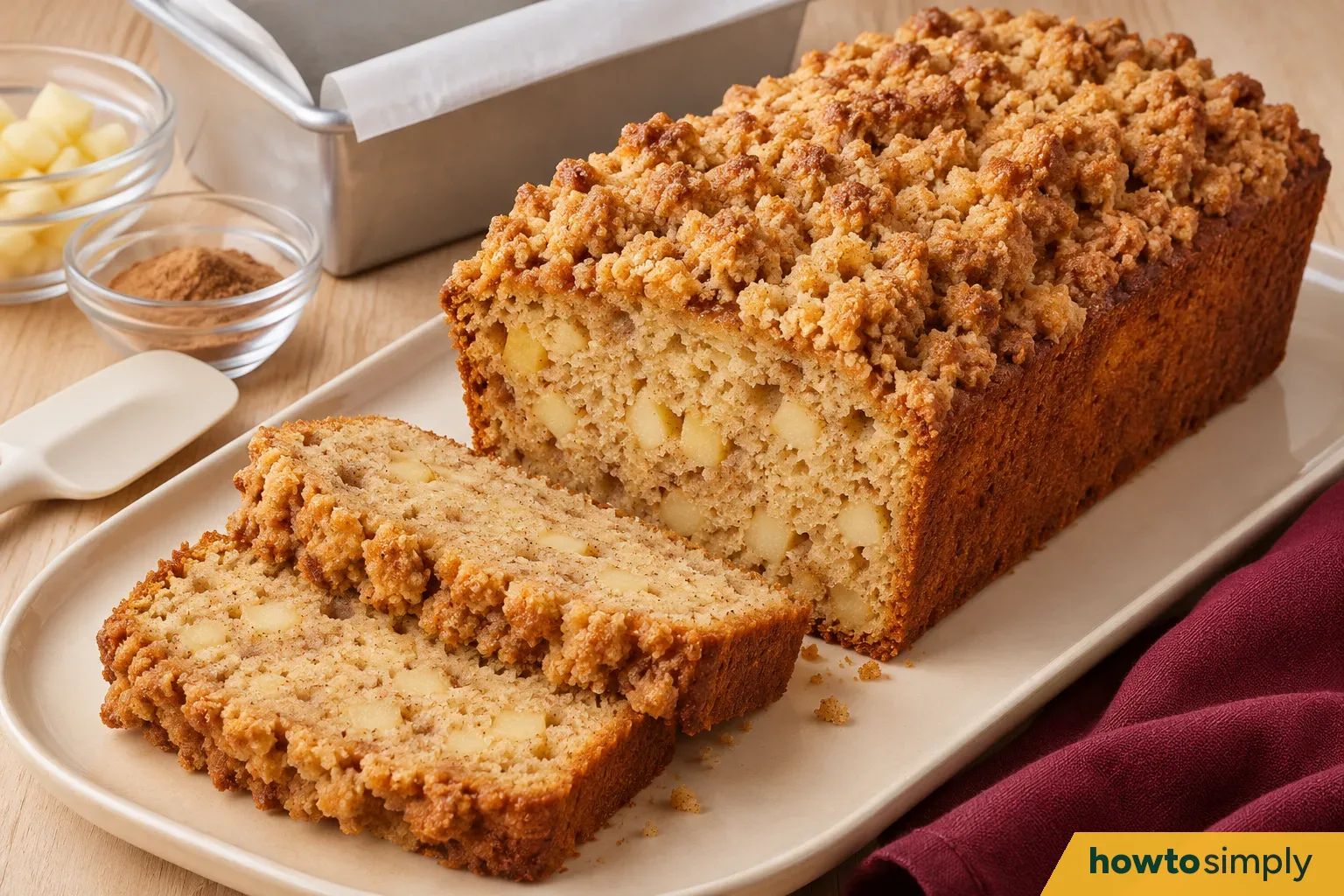
How to make vanilla and nutmeg Basque cheesecake
Researched by Abu Bakar Saadat4 min read
Last updated: 21 November 2026References
 Illustration
On this page 7 sections
In short
Mash cream cheese with sugar, whisk in eggs, a nutmeg and vanilla flour paste and cream, pour into a crumpled-paper-lined 18 cm tin and bake at 220°C (200°C fan) for 40–50 minutes, then chill for at least 4 hours. Serves 8.
Overview
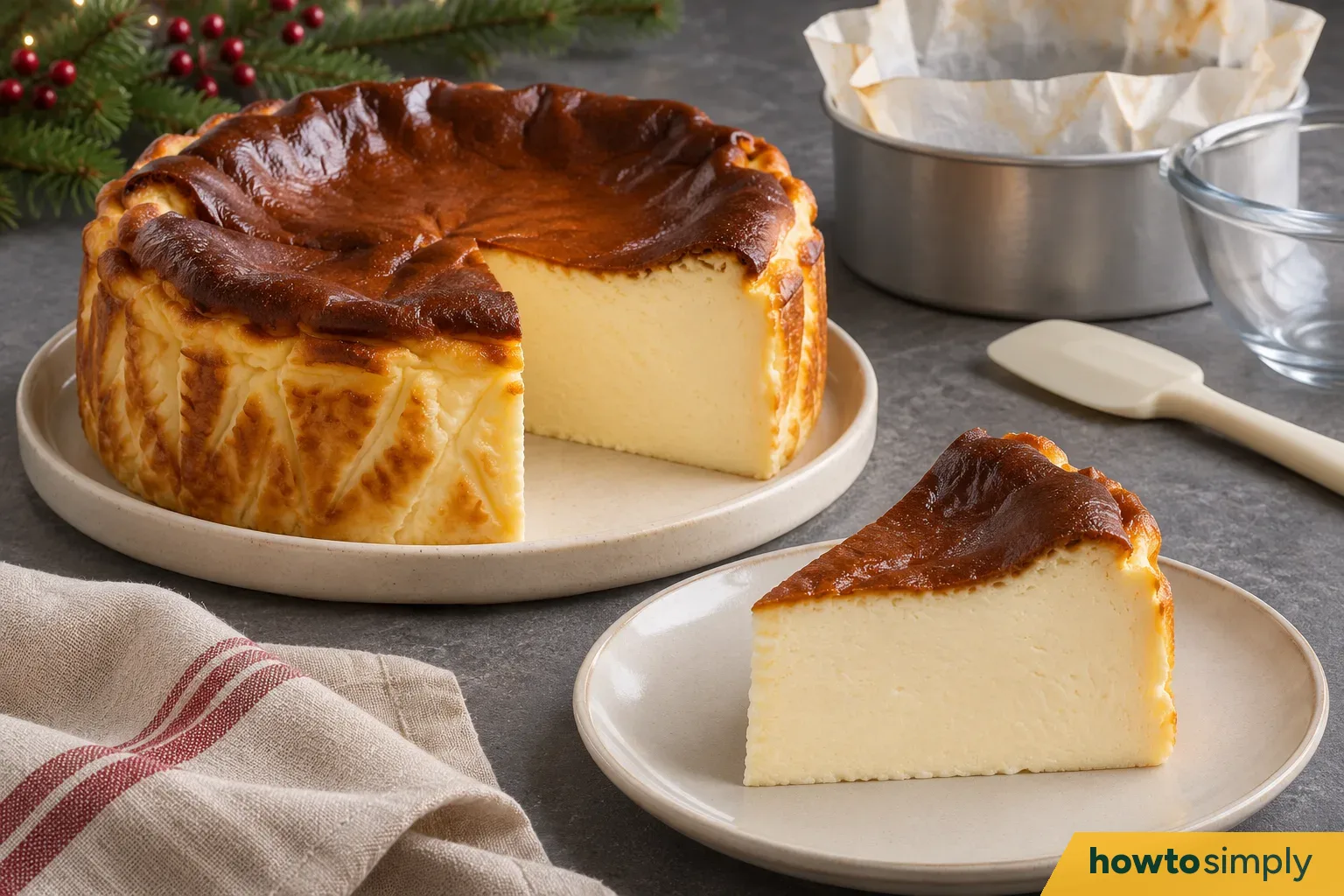
A Basque cheesecake has no biscuit base. It bakes in a very hot oven in a crumpled paper lining, so the top turns a deep chestnut brown while the middle stays soft and creamy. Vanilla and a little nutmeg make this one taste like Christmas custard. It needs at least 4 hours in the fridge, so it's easiest to make the evening before.
| What | This recipe |
|---|---|
| Makes | One 18 cm (7 inch) cheesecake, 8 slices |
| Oven | 220°C conventional, 200°C fan (about 425°F), middle shelf |
| Softening the cheese | 30 minutes |
| Hands-on | 15 minutes |
| Baking | 40–50 minutes |
| Cooling and chilling | 1 hour on the side, then at least 4 hours in the fridge |
| Total | About 6 hours 30 minutes, mostly waiting |
| Allergens | Contains milk (cream cheese, cream), egg and wheat (gluten) |
Before you start
- You'll need: a deep 18 cm (7 inch) round metal cake tin at least 7 cm (2¾ inches) high, two 42 cm squares of baking parchment, kitchen scales, a measuring jug, a large and a small mixing bowl, a flexible spatula, a whisk, a spoon and a wire rack.
- Check your baking parchment says it's safe at 220°C. Some cheaper papers scorch at that heat.
- Use full-fat block cream cheese, not the soft spread sold in tubs, which can make the cheesecake runny.
- Whipping cream here means cream with about 35% fat. In the US, use heavy cream.
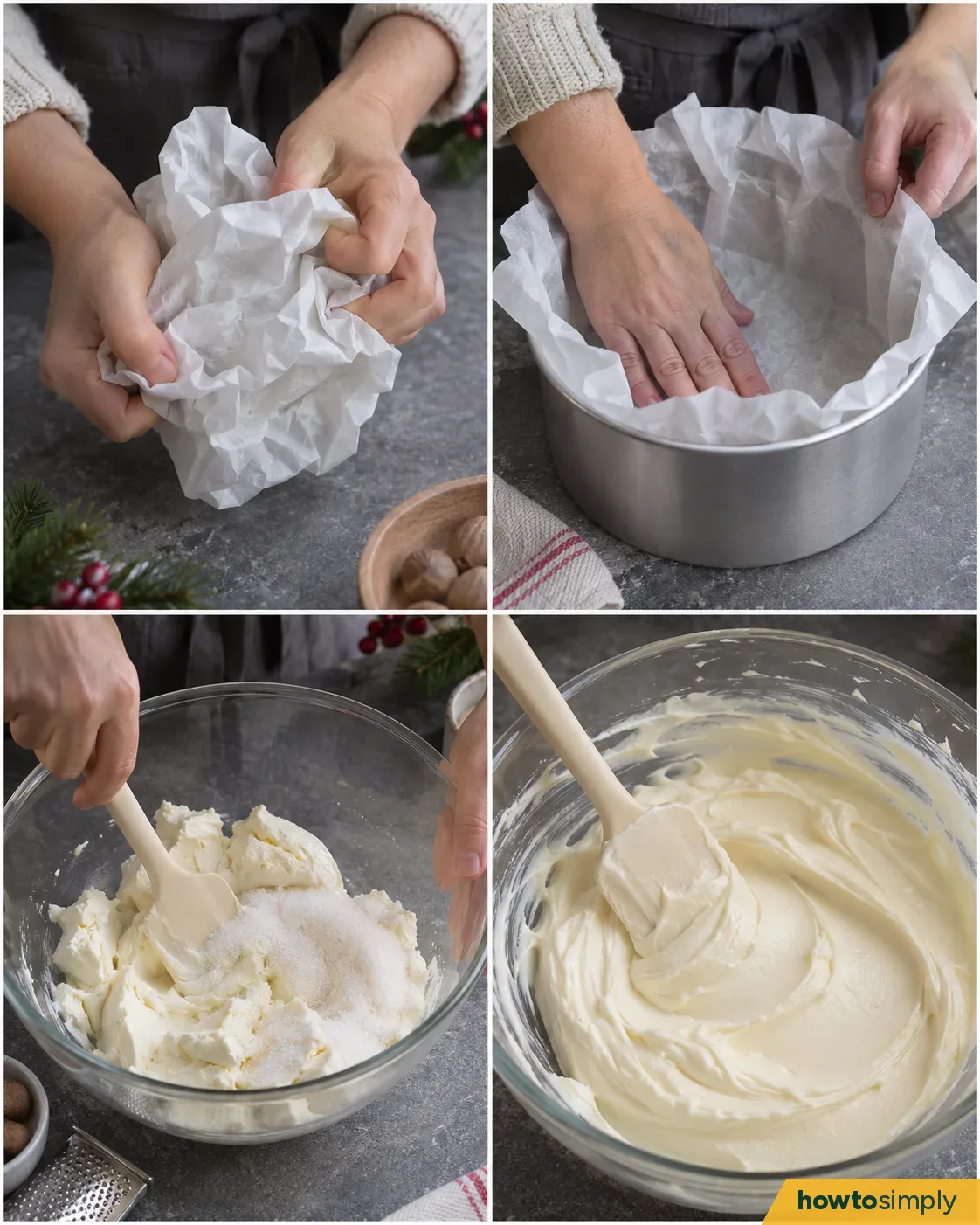
- Each step picture below shows four moments of its step. Read it from top left to bottom right.
Ingredients
- 600 g (about 21 oz) full-fat block cream cheese, cut into small pieces
- 150 g (about ¾ cup) caster sugar or fine granulated sugar
- 3 large eggs, about 150 g without their shells
- 15 g (about 2 tablespoons) plain flour (all-purpose flour)
- ½ teaspoon finely ground nutmeg
- ¼ teaspoon fine salt
- 240 ml (about 1 cup) whipping cream, split into 30 ml (2 tablespoons) for the flour paste and 210 ml for the batter
- 5 ml (1 teaspoon) vanilla extract
Steps
Line the tin and soften the cheese
Leave the cream cheese pieces out for about 30 minutes, until a spatula can press one flat. Heat the oven to 220°C conventional or 200°C fan (about 425°F), with a shelf in the middle.
Scrunch each sheet of parchment into a ball, open it out again and press both sheets into the tin, one on top of the other with the corners pointing in different directions. Push the paper well into the bottom edge. Leave about 4 cm standing above the rim, because the cheesecake rises a lot before it sinks.
Put the cream cheese and sugar in the large bowl and mash them together with the spatula for 2–3 minutes. Press any lumps against the side of the bowl until the mixture is smooth and holds soft ridges.
Add the eggs, spice and cream
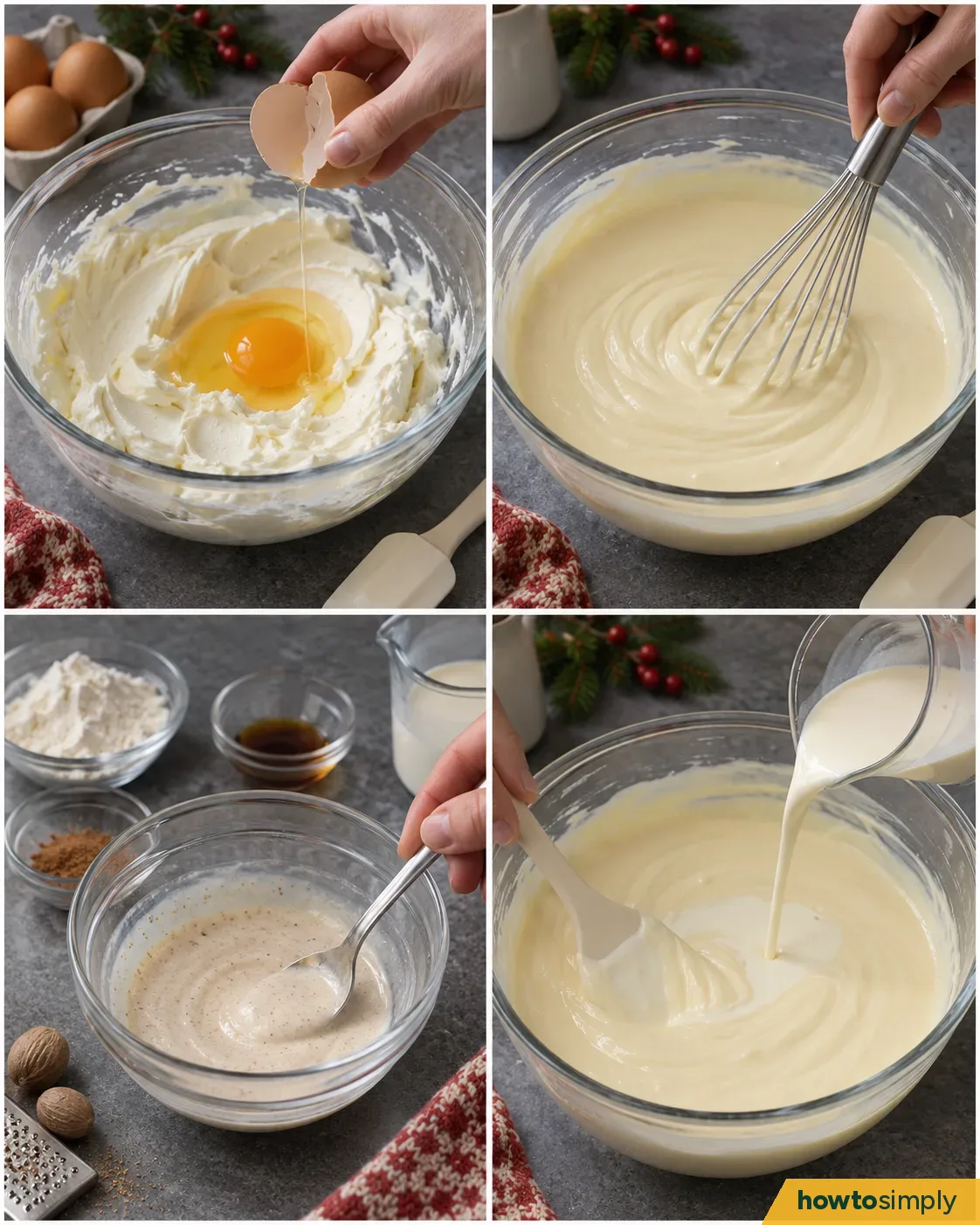
Add the eggs one at a time, whisking gently after each one until you can't see yellow streaks. Scrape the bottom of the bowl to catch any cheese that hasn't mixed in.
In the small bowl, stir the flour, nutmeg and salt together. Slowly stir in 30 ml of the cream and the vanilla to make a smooth paste. Stir the paste into the cheese mixture, then slowly mix in the other 210 ml of cream. Stop when the batter pours off the whisk in a steady ribbon, with tiny flecks of nutmeg through it.
Bake, chill and unwrap
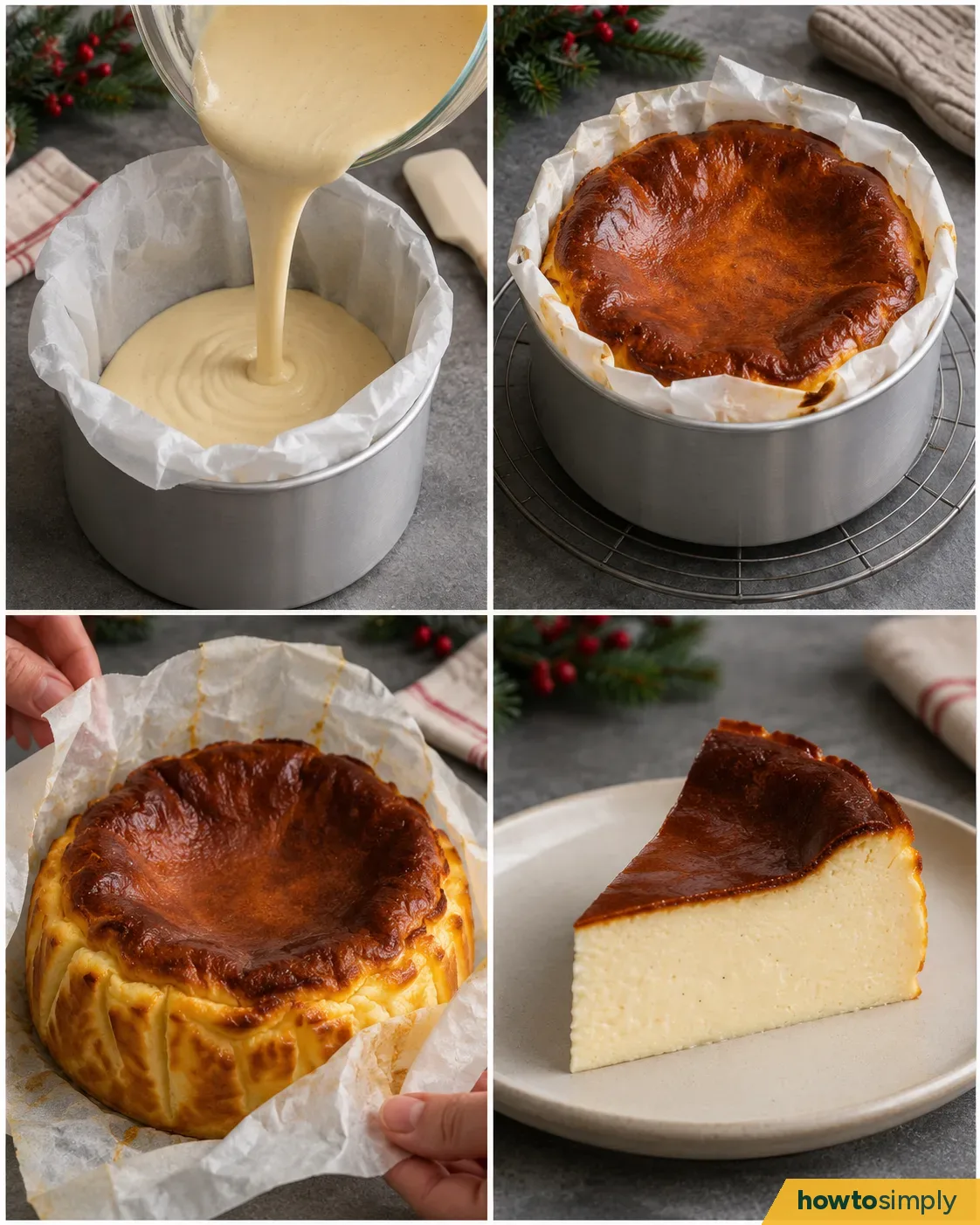
Pour the batter into the lined tin. Bake for 40–50 minutes, checking from 40 minutes. The top should be deep chestnut brown and the edge puffed and set. Give the tin a gentle nudge with an oven mitt: the middle should wobble as one soft patch. If liquid ripples across the top, bake for 3–5 more minutes and check again.
Cool the cheesecake in its tin on the rack for 1 hour. The top will sink and dip in the middle, which is normal. Then put it in the fridge for at least 4 hours, or overnight, covering it once it's cold. Lift it out by the paper onto a plate and peel the paper gently away from the sides. Slide a wide spatula underneath to ease out the paper from the base.
If this doesn't work
- There are lumps of cream cheese in the batter: pour it through a medium sieve into the lined tin, pressing the soft lumps through with the spatula.
- The top isn't dark after 40 minutes: your oven may run cool. Give it the extra 3–5 minutes, and if your oven has a thermometer, check it's reaching 220°C.
- The middle is too runny to slice: it needed longer in the fridge. Chill it for a few more hours; it firms up as it gets cold.
Serving and storing
Cut into eight wedges with a knife dipped in hot water and wiped dry between cuts. Serve it cold, straight from the fridge. Keep any leftovers covered in the fridge.
Related
- How to make clementine and speculoos parfaits
- How to make chocolate peppermint pots
- How to make maple pecan upside-down cake
The pictures in this recipe are illustrations.
Sources and method
- Researched by
- Abu Bakar Saadat
- Pictures
- 4 illustrations drawn for this article: drawings, not photos.
Did this solve the problem?
Where did you get stuck?
Get new guides by email
Our newest guides, sent to your inbox. Free, and you can unsubscribe in one click.
We'll email you to confirm. How we use your email
Follow howtosimply on Facebook
We share every new article on our Facebook page, so the next fix turns up in your feed.
Follow on FacebookWhat did you think?
Reaction counts are loading.