How to make espresso and hazelnut cupcakes
Researched by Abu Bakar Saadat5 min read
Last updated: 21 November 2026References
 Illustration
On this page 7 sections
In short
Dissolve instant espresso in hot water, mix most of it into a brown-sugar batter with ground hazelnuts, bake 12 cupcakes at 175°C (155°C fan) for 18–22 minutes, then spoon on an espresso icing and top with chopped hazelnuts.
Overview
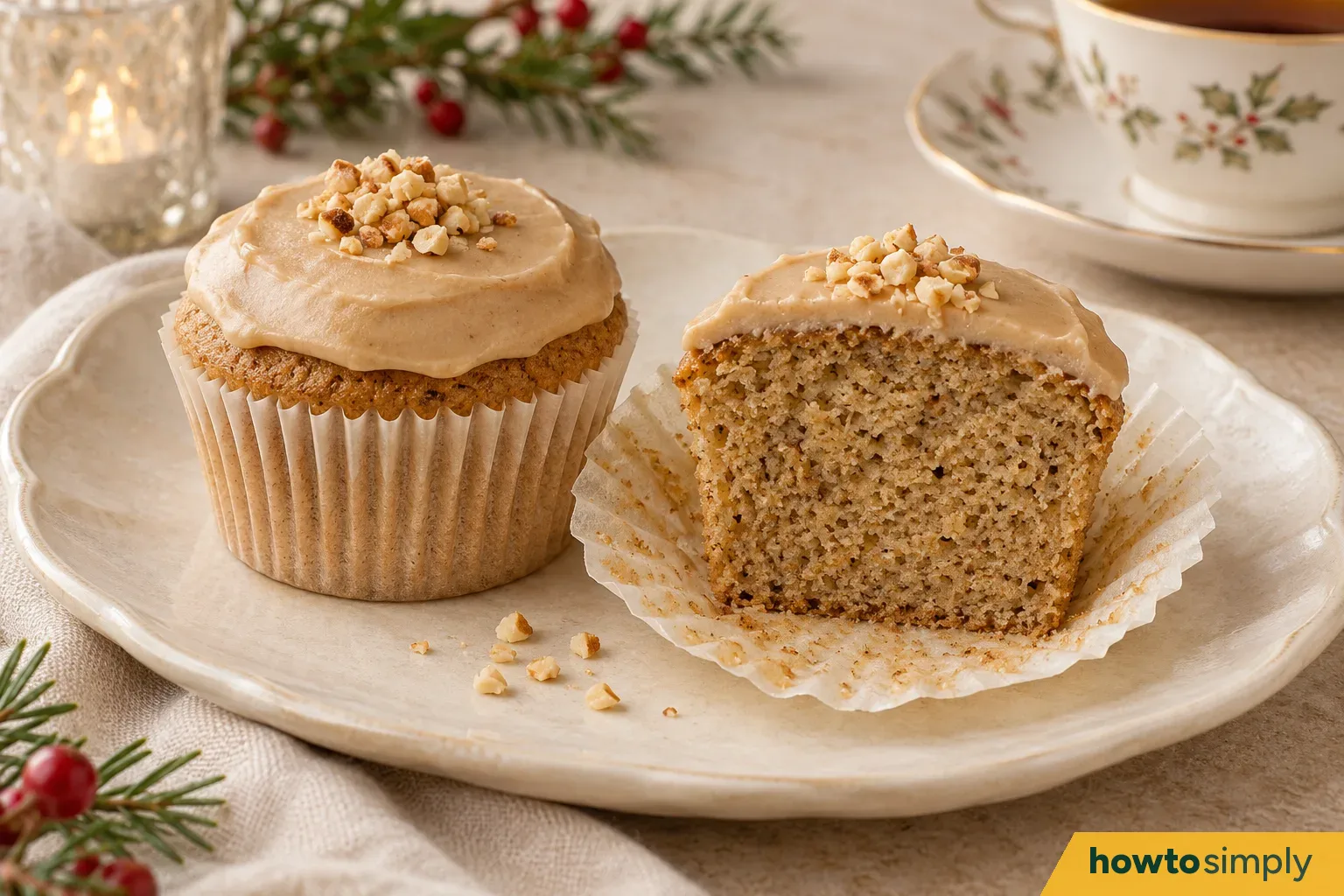
Twelve soft coffee cupcakes made with ground hazelnuts, finished with a spoon-on espresso icing and a pinch of chopped hazelnuts for crunch. You make one small cup of strong instant coffee and split it two ways: most goes into the batter and the rest flavours the icing. The batter is mixed by hand with oil, so there's no butter to soften.
| What | This recipe |
|---|---|
| Makes | 12 standard cupcakes |
| Oven | 175°C conventional, 155°C fan (about 350°F), middle shelf |
| Prep | 25 minutes, including icing |
| Baking | 18–22 minutes |
| Cooling and setting | 50 minutes: 5 in the tin, 30 on a rack, 15 for the icing |
| Total | 1 hour 33 minutes to 1 hour 37 minutes |
| Allergens | Contains hazelnuts (tree nuts), egg, milk and wheat (gluten). The coffee also means they contain caffeine. |
Before you start
- You'll need: a standard 12-hole metal muffin tin, 12 paper cases about 5 cm (2 inches) across the base, kitchen scales, a measuring jug and spoons, two small heatproof cups, a chopping board and knife, two mixing bowls, a whisk, a silicone spatula, a tablespoon, a teaspoon, a wooden skewer, a cooling rack and a small bowl for the icing.
- Use instant espresso powder, the kind that dissolves in water. Ground coffee for a coffee machine won't dissolve.
- You need two kinds of hazelnut: ground hazelnuts (hazelnut meal) for the batter and a few whole roasted ones to chop for the tops.
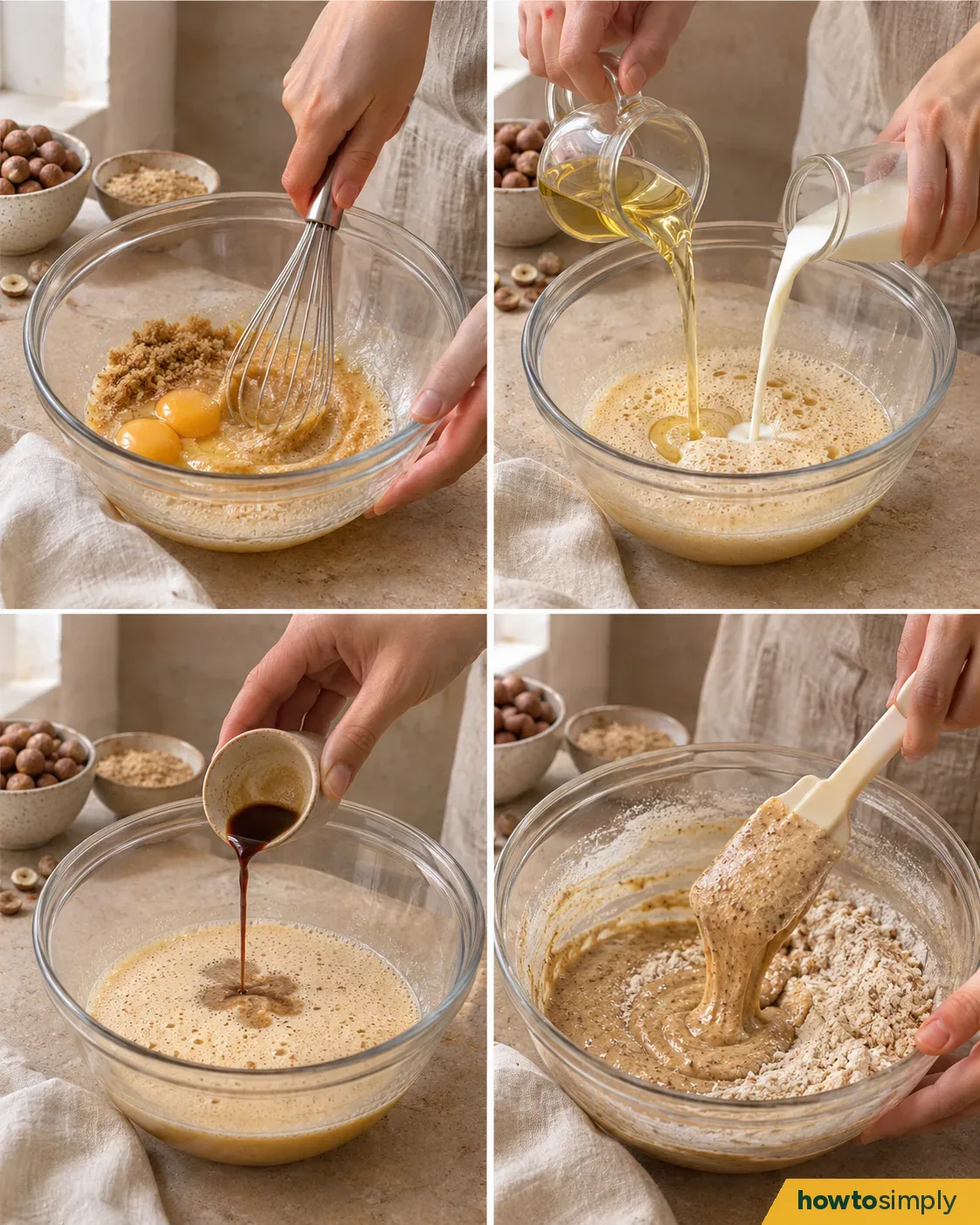
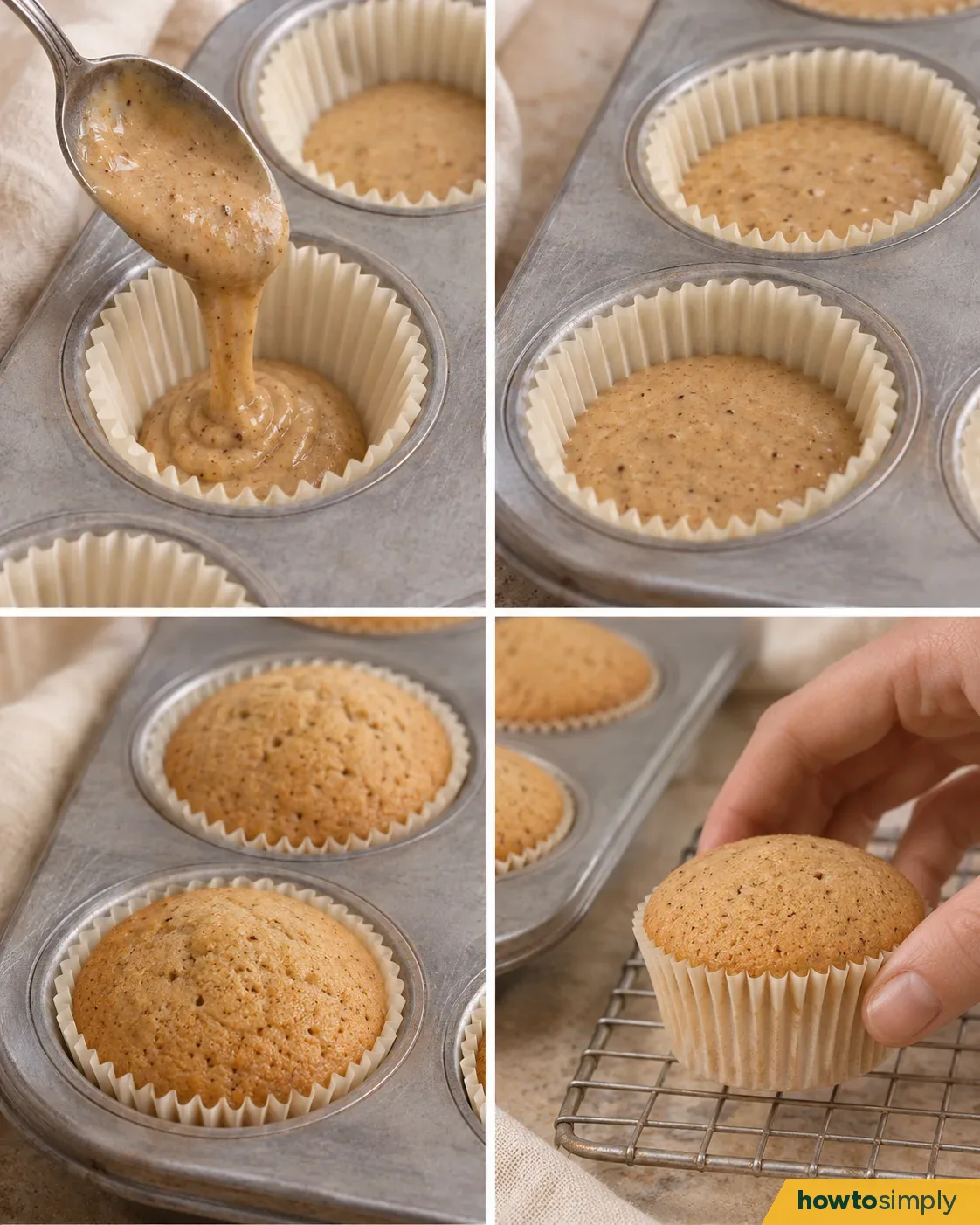
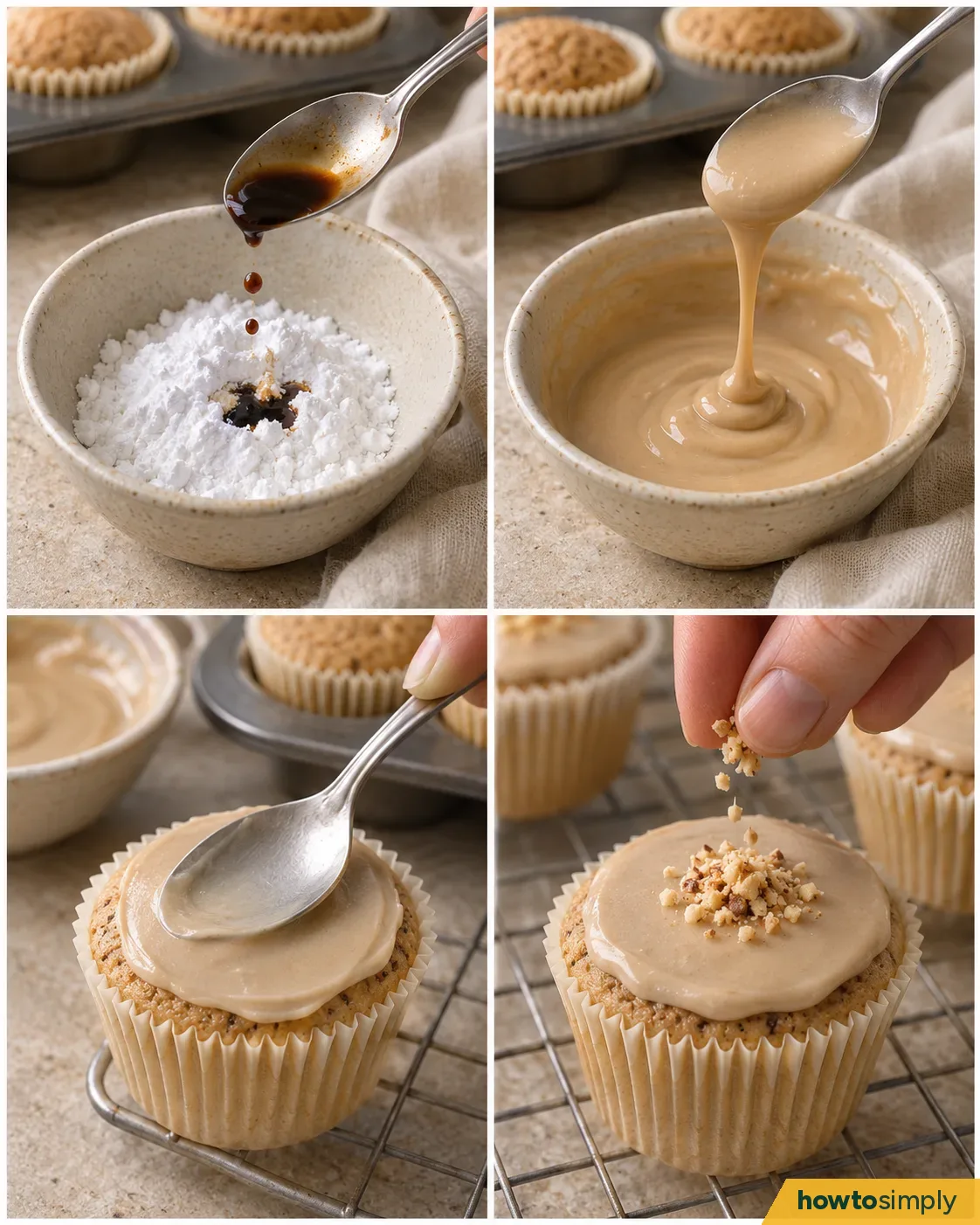
- Each step picture below shows four moments of its step. Read it from top left to bottom right.
Ingredients
- 5 g instant espresso powder
- 35 ml freshly boiled water
- 20 g whole roasted unsalted hazelnuts, for the tops
- 160 g (about 1⅓ cups) plain flour (all-purpose flour)
- 65 g finely ground roasted hazelnuts (hazelnut meal)
- 7 g (about 1¾ level teaspoons) baking powder
- 2 g (about ⅓ teaspoon) fine salt
- 2 large eggs, about 100 g without their shells
- 130 g soft light brown sugar
- 85 ml (about 6 tablespoons) sunflower oil
- 90 ml (about 6 tablespoons) whole milk
- 120 g icing sugar (powdered sugar), sifted if lumpy
Steps
Make the coffee and prepare the nuts and tin
Heat the oven to 175°C conventional or 155°C fan (about 350°F), with a shelf in the middle. Put a paper case in each of the 12 holes. Stir the espresso powder into the hot water for 30 seconds, until smooth. Pour 20 ml of this coffee into a second cup and keep it for the icing. Leave both cups to cool.
Chop the whole hazelnuts into pieces about the size of rice grains and set them aside for the tops. In one bowl, whisk the flour, ground hazelnuts, baking powder and salt together for 20 seconds, until the nut flecks are spread evenly.
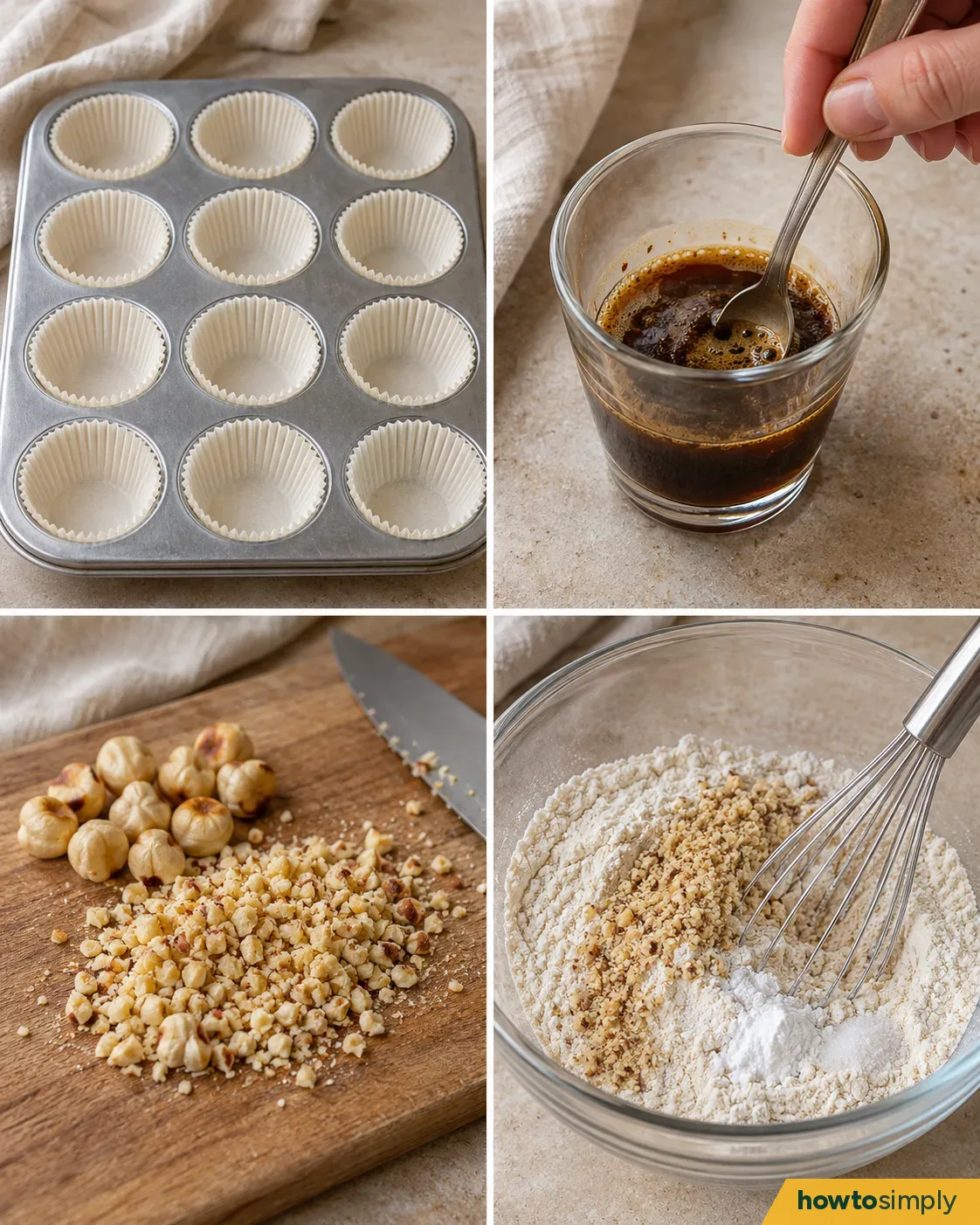
The nuts in the last panel look coarser than ground hazelnuts. Ground hazelnut meal is fine, like coarse flour.
Mix the batter
In the second bowl, whisk the eggs and brown sugar for 1–2 minutes, until foamy with no lumps of sugar. Whisk in the oil, the milk and the cup of coffee meant for the batter (not the 20 ml kept for the icing).
Tip in the flour mixture. Scrape the spatula along the bottom of the bowl and lift the batter up over the flour. Keep going for about 30 seconds and stop as soon as the last dry streak disappears. The speckled batter should fall off the spatula in a thick ribbon.
Fill the cases, bake and cool
Spoon the batter evenly into the cases, about 50–55 g in each, so they're roughly two-thirds full. Bake for 18–22 minutes, checking from 18 minutes. They're ready when the tops are lightly domed and spring back when you press gently, and a skewer in one of the middle cakes comes out clean or with a few crumbs.
Leave them in the tin for 5 minutes, then lift them out by the paper onto the rack. Let them cool for about 30 minutes, until the tops and bases no longer feel warm.
Spoon on the espresso icing
Stir 15 ml of the coffee you kept into the icing sugar. Add the last 5 ml a few drops at a time, only as much as you need. Stir for about 1 minute, then lift the spoon: a thick ribbon should sit on the surface for a moment before sinking back in.
Spread a small spoonful over each cool cake, leaving a narrow rim of sponge showing. Scatter a pinch of chopped hazelnuts in the middle while the icing is still wet. Leave them for 15 minutes, until the icing looks satiny rather than wet and the nuts stay put when you tilt a cake.
If this doesn't work
- The icing runs down to the paper: ice one cake first and check. If the cakes still feel warm, wait until they're fully cool. If the icing pours off the spoon in a thin stream, stir in another teaspoon of icing sugar and test the ribbon again.
- The icing is too stiff to spread: add more of the kept coffee a drop or two at a time.
- The skewer comes out with wet batter: bake for 2 more minutes and test again.
Serving and storing
Serve at room temperature once the icing has set. Keep them in a single layer in an airtight container somewhere cool. To freeze, freeze the cakes before icing, then thaw them covered at room temperature and ice them on the day.
Related
- How to make pistachio and rosewater friands
- How to make lemon and poppy seed madeleines
- How to make chocolate chestnut spoon cakes
The pictures in this recipe are illustrations.
Sources and method
- Researched by
- Abu Bakar Saadat
- Pictures
- 5 illustrations drawn for this article: drawings, not photos.
Did this solve the problem?
Where did you get stuck?
Get new guides by email
Our newest guides, sent to your inbox. Free, and you can unsubscribe in one click.
We'll email you to confirm. How we use your email
Follow howtosimply on Facebook
We share every new article on our Facebook page, so the next fix turns up in your feed.
Follow on FacebookWhat did you think?
Reaction counts are loading.