How to create a monthly budget
By howtosimply staff4 min read
Last updated: 15 November 2026References
 Illustration
On this page 3 sections
In short
A budget is really just a way to track where your money goes before it does – and all you need for that is a pen, paper & your pay slips.
At a glance
To make a budget, all you need is:
- Your pay slips
- Recent bills
- A piece of paper or notebook
- Spreadsheet software or apps — any of them will do
Track one month of spending, then create your budget. Once you know how you spent the previous month, you'll know exactly how much to allocate for the current month. The first month is the most important. This is where you discover where your money is going.
Step-by-step instructions to create a budget
Track what you spend over a week or month
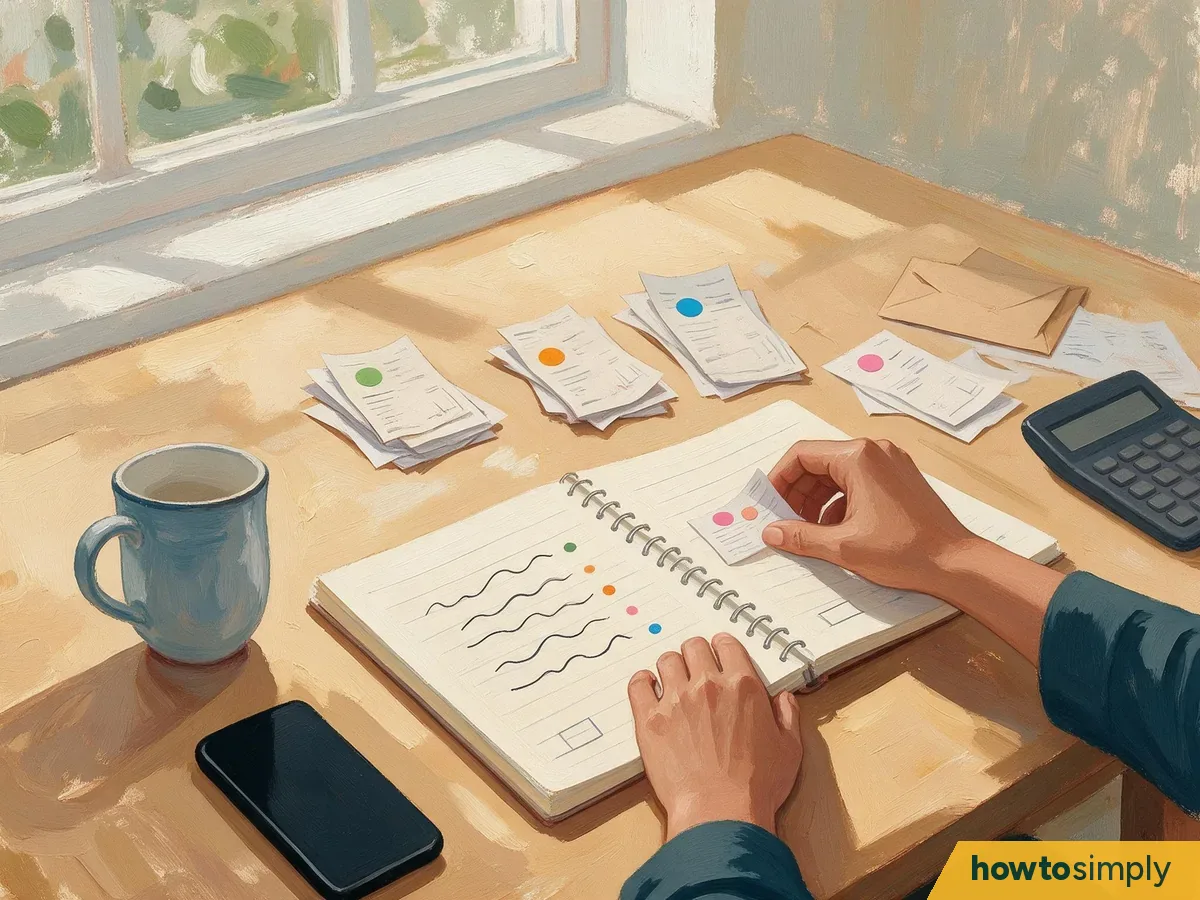
Illustration Record every single transaction you make during the week, whether it's a small bottle of water or a new TV. Categorize each purchase into areas such as:
- Groceries
- Transportation
- Dining out
- Clothing
- Travel
- Pet expenses
- Home maintenance
- Gifts
- Donations
- Subscriptions
- And anything else you feel you should include.
After you've tracked your spending for a week or month, categorize each item under one of those categories. This will allow you to determine which areas are costing you the most money.
Once you have recorded every transaction and categorized it, it will be easier to assign realistic amounts to each area.
Record your income

Illustration Using your pay stubs, record how much money you bring home each month. Include any additional forms of income, including child support, government benefits, etc.
If your income varies each month, use last year's take-home income and divide it by twelve to get a good idea of what to expect each month.
List your monthly bills along with their due dates

Illustration Monthly bills are the regular payments you make every month and consist of items such as:
- Rent
- Utilities (electricity, gas, cable)
- Internet
- Cell phone bill
- Car payment
- Credit card payments
- Insurance premiums
- Student loan payments
List each bill along with its due date and payment amount. Keep this list easily accessible, so you can refer to it each time you prepare to pay a bill.
List all of your other monthly expenses

Illustration Some common monthly expenses include:
- Food
- Gasoline
- Clothing
- Travel
- Gifts
- Hobbies
- Personal care items
- Subscriptions
Using your tracking list from step #1, assign a value to each item based on your experience. Be realistic with your estimates. Do not base your budget on what you hope to spend but rather what you realistically will spend. Also, consider small groupings of similar items, such as:
- Haircuts/beauty supplies
- Pet food/vet visits
- Charitable contributions
- Holiday spending
Calculate your total monthly expenses

Illustration Once you have completed steps #3 & #4, calculate the total amount of money required to cover all of your monthly expenses.
Add up all of your monthly bills and add up all of your other monthly expenses. These two totals combined represent your total monthly expenses.
Determine your net income

Illustration Compare your total monthly expenses to your net income (income after taxes).
When comparing these two figures, if your net income is higher than your total monthly expenses, your budget works! However, if your net income is lower than your total monthly expenses, you need to adjust some aspect of your expense column.
Find ways to lower your monthly expenses

Illustration Review your expense list carefully and ask yourself the following questions:
- Are there fees associated with my bills or credit cards that I can eliminate?
- Can I negotiate with my creditors to lower my payments?
- Am I paying more for certain products/services than necessary?
- Do I have any unused items or assets that I can sell?
Identify ways to decrease your monthly expenses and begin implementing them immediately. Begin with the largest potential savings and proceed from there.
Establish weekly limits for small purchases

Illustration Although small purchases appear insignificant individually, collectively they can consume large portions of your available funds.
Set limits on small purchases before the week begins, and adhere to them strictly until the end of the week. One technique is to withdraw a specific amount of cash at the beginning of each week and refrain from withdrawing additional funds until the end of the week.
Review your budget every month

Illustration At the end of each month, compare what you planned to spend with what you actually spent, and use that to plan the next month.
By reviewing your budgets periodically and making adjustments as needed, you can keep your spending aligned with your financial goals.
Consider using alternative methods such as a bill calendar

Illustration While creating a comprehensive budget provides a clear picture of your overall finances, it may not be feasible for everyone.
Consider using a bill calendar instead. Create a calendar (paper or digital) listing all bills due each month, along with the due date and payment amount.
Keep this calendar visible throughout the month and review it frequently to ensure timely payment of all obligations.
Guide articles
Conclusion
Congratulations! You have taken the first step in managing your finances by creating a budget. Now that you have completed this process, you will better understand how much you earn each month and where you are spending most of it.
Advice from: consumer.gov (US Federal Trade Commission) and the US Consumer Financial Protection Bureau (CFPB).
About this article
- Written by
- howtosimply staff
- Pictures
- 11 illustrations drawn for this article, each marked Illustration (drawings, not photos).
Did this solve the problem?
What needs work?
What did you think?
Reaction counts are loading.