How to make salmon with a lemon, dill and mustard crust
Researched by Abu Bakar Saadat4 min read
Last updated: 21 November 2026References
 Illustration
On this page 8 sections
In short
Mix panko with lemon zest, dill, salt and olive oil, spread Dijon over two salmon fillets, press on the crumbs and bake at 210°C (190°C fan) for 12–16 minutes, until 63°C (145°F) in the middle. Serves 2.
Overview
Two salmon fillets spread with a thin layer of Dijon mustard, then topped with crisp breadcrumbs flavoured with lemon zest and fresh dill. It all bakes on one small tray in about 15 minutes, which makes it an easy Christmas main for two.
| What | This recipe |
|---|---|
| Serves | 2 as a main course |
| Oven | 210°C conventional, 190°C fan (about 410°F) |
| Prep | 15 minutes, including heating the oven |
| Cooking | About 12–16 minutes |
| Total | About 27–31 minutes |
| Done when | 63°C (145°F) in the thickest part, flesh opaque and flaking apart |
| Allergens | Contains fish, mustard and wheat (gluten, in the breadcrumbs). Check the labels on your panko and mustard. |
Before you start
- You'll need: a 25 × 30 cm (about 10 × 12 inch) metal baking tray with a rim, baking parchment, a fine grater, a chopping board, a knife, a small bowl, a fork, kitchen scales, measuring spoons, kitchen paper, an instant-read food thermometer and a thin spatula.
- Panko are coarse, dry Japanese-style breadcrumbs. They stay crunchier than ordinary breadcrumbs.
- Zest is the thin yellow outer skin of the lemon. The white layer under it tastes bitter, so stop grating when you reach it.
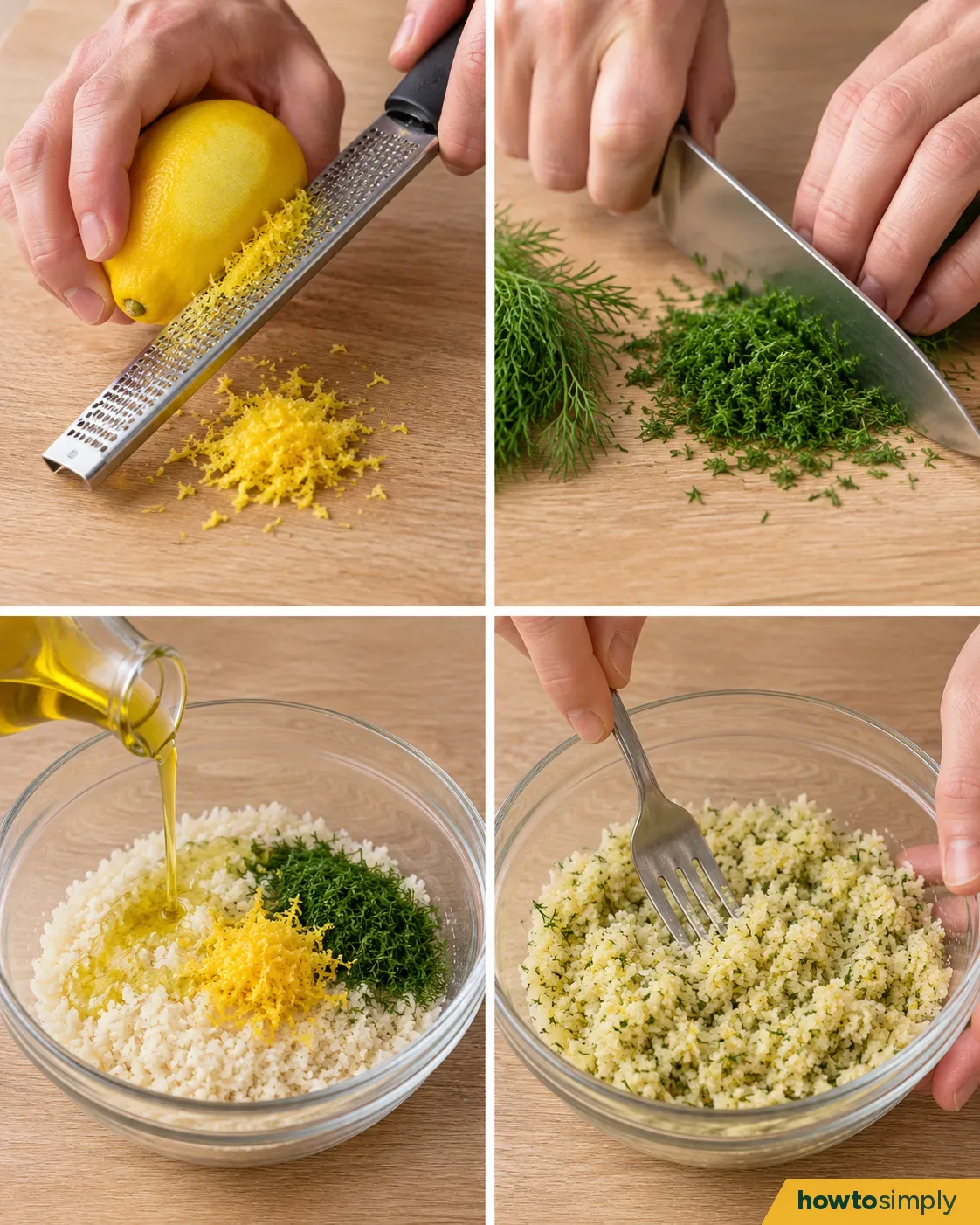
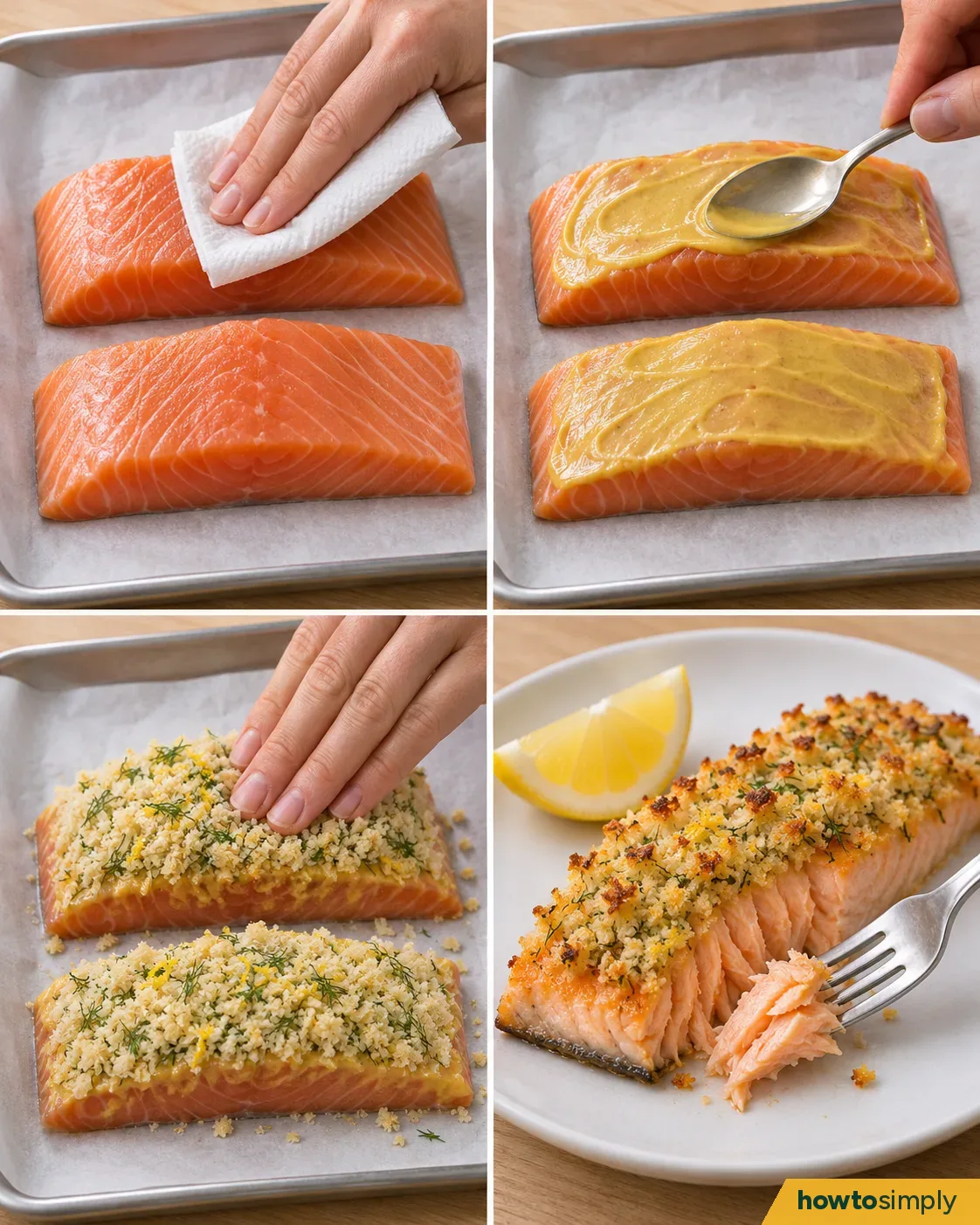
- Each picture below shows four moments of its step. Read it from top left to bottom right.
Ingredients
- 1 small unwaxed lemon, for 1 teaspoon finely grated zest and 2 wedges to serve
- 4 g fresh dill (about 2 tablespoons once finely chopped)
- 25 g panko breadcrumbs
- ⅛ teaspoon fine salt
- 10 ml (2 teaspoons) olive oil
- 2 boneless salmon fillets with skin, about 160 g (5½ oz) each and 2.5 cm (1 inch) thick, fully thawed if frozen
- 10 ml (2 teaspoons) smooth Dijon mustard
Steps
1. Make the lemon and dill crumbs
Put a shelf in the middle of the oven and heat it to 210°C conventional or 190°C fan (about 410°F). Line the tray with baking parchment. Wash and dry the lemon, then grate the yellow skin lightly until you have 1 teaspoon of zest. Cut 2 wedges from the lemon and set them aside for serving. Chop the dill finely.
Put the zest, dill, panko and salt in the small bowl. Drizzle in the oil and stir with the fork for about 30 seconds. The crumbs should look evenly damp and speckled green, but still loose and crumbly, not clumped together.
2. Coat and bake the fillets
Put the salmon skin-side down on the tray, leaving space between the pieces. Pat the tops dry with kitchen paper. Spread 1 teaspoon of mustard over the top of each fillet. Divide the crumbs between the two fillets and press them on lightly with your fingertips so they stick.
Bake for 12 minutes. Then push the thermometer in from the side until the tip is in the middle of the thickest part, and check both pieces. Each one is done at 63°C (145°F), when the flesh has turned from see-through to solid pink and comes apart in flakes.2 If it isn't there yet, bake for 2 more minutes and check again. Lift the fillets onto plates with the spatula and serve with the lemon wedges.
If this doesn't work
- The crust is browning before the middle is done: lay a loose piece of foil over the tray, leaving space above the crumbs. Keep baking in 2-minute bursts until the middle reaches 63°C.
- The crumbs slide off: the fish was probably still wet. Pat it dry before the mustard goes on, and press the crumbs on firmly enough to stick.
- Your fillets are thinner or thicker than 2.5 cm: thinner pieces cook faster, so start checking at 9–10 minutes. Thicker ones may need a few more 2-minute bursts.
Serving and storing
Serve hot with roast potatoes or green beans. Squeeze the lemon over the fish just before you eat, so the crumbs stay crisp. Get any leftovers into the fridge, covered, within 1–2 hours, and eat them within 48 hours.1
Sources
- Food Standards Agency, How to chill, freeze and defrost food safely, section 1, "Chilling food".
- FoodSafety.gov, Safe minimum internal temperatures, "Seafood": fin fish 145°F, or until the flesh is opaque and separates easily with a fork.
Related
- How to make roasted Brussels sprouts with hazelnuts
- How to make rosemary and sea salt focaccia
- How to make stuffed acorn squash
The pictures in this recipe are illustrations.
Sources and method
- Researched by
- Abu Bakar Saadat
- Pictures
- 2 illustrations drawn for this article: drawings, not photos.
Did this solve the problem?
Where did you get stuck?
Get new guides by email
Our newest guides, sent to your inbox. Free, and you can unsubscribe in one click.
We'll email you to confirm. How we use your email
Follow howtosimply on Facebook
We share every new article on our Facebook page, so the next fix turns up in your feed.
Follow on FacebookWhat did you think?
Reaction counts are loading.