How to make rosemary and sea salt focaccia
Researched by Abu Bakar Saadat4 min read
Last updated: 21 November 2026References
 Illustration
On this page 7 sections
In short
Stir a no-knead dough of bread flour, yeast, salt and water, let it double, spread it in an oiled 20 cm pan, let it puff up, then dimple, top with rosemary and flaky salt and bake at 220°C (200°C fan) for 22–27 minutes. Makes 9 squares.
Overview
A soft, airy Italian pan bread with a crisp, olive-oily base and a top dotted with rosemary and flakes of sea salt. There's no kneading: you stir a sticky dough, let it rise twice and press dimples into it before baking. Cut it into squares to pass around the Christmas table.
| What | This recipe |
|---|---|
| Makes | One 20 cm (8 inch) square loaf, 9 pieces |
| Oven | 220°C conventional, 200°C fan (about 425°F) |
| Hands-on prep | 15 minutes |
| Rising | 1½ to 2¼ hours, in two rises |
| Baking | 22–27 minutes |
| Cooling | 15 minutes |
| Total | About 2 hours 22 minutes to 3 hours 12 minutes. Allow longer in a cool kitchen. |
| Allergens | Contains wheat (gluten) |
Before you start
- You'll need: kitchen scales, a measuring jug, measuring spoons, a large mixing bowl, a whisk, a flexible spatula, clean covers for the bowl and the pan (a plate, a tea towel or a large upturned bowl), a 20 × 20 cm (8 × 8 inch) metal baking pan at least 5 cm (2 inches) deep, a cooling rack and a serrated knife.
- Strong white bread flour has more protein than plain flour, which makes the bread chewier and helps it hold big bubbles. In the US it's sold as bread flour.
- Instant dried yeast (also called fast-action or easy-blend yeast) goes straight in with the flour. It doesn't need to be mixed with water first.
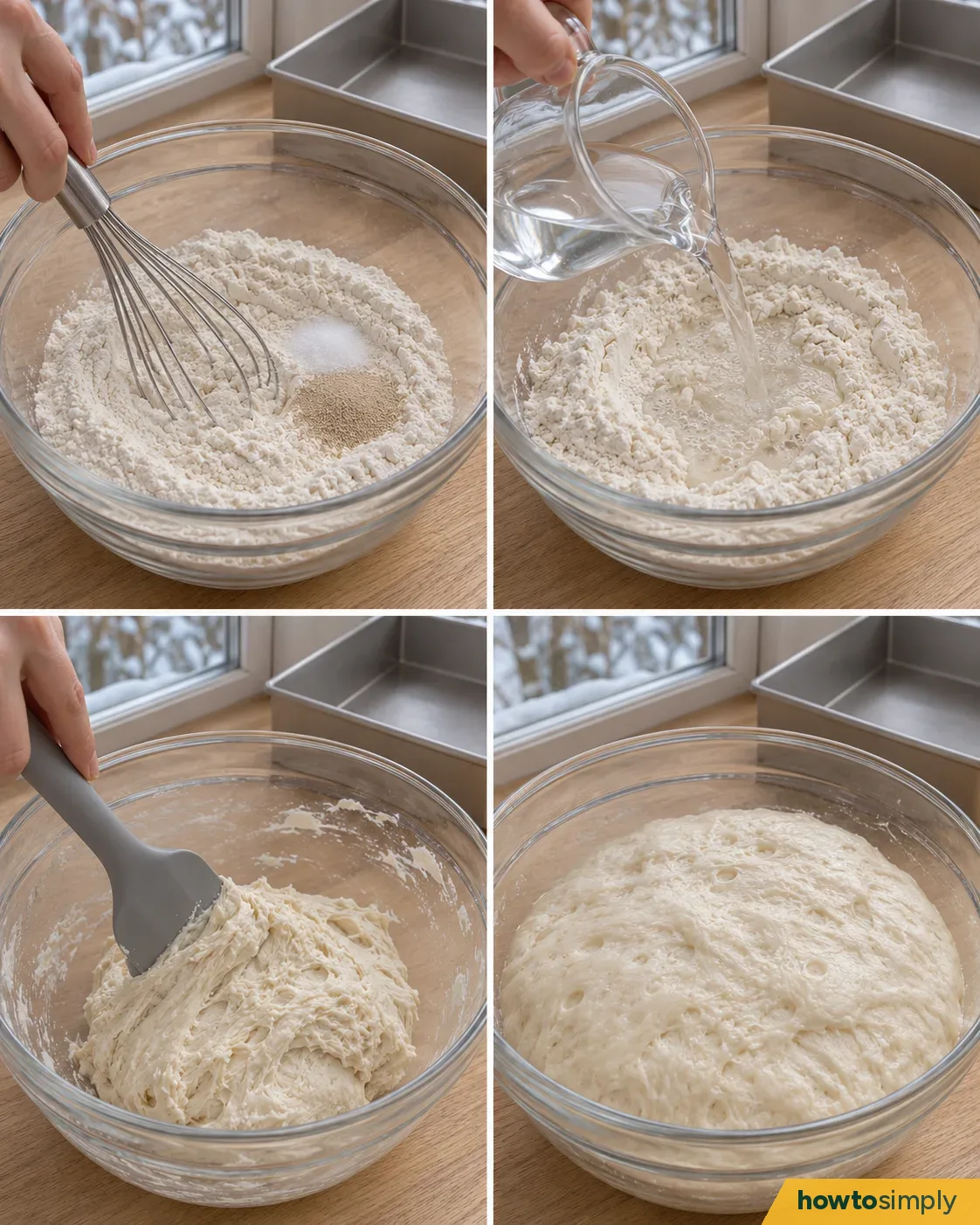
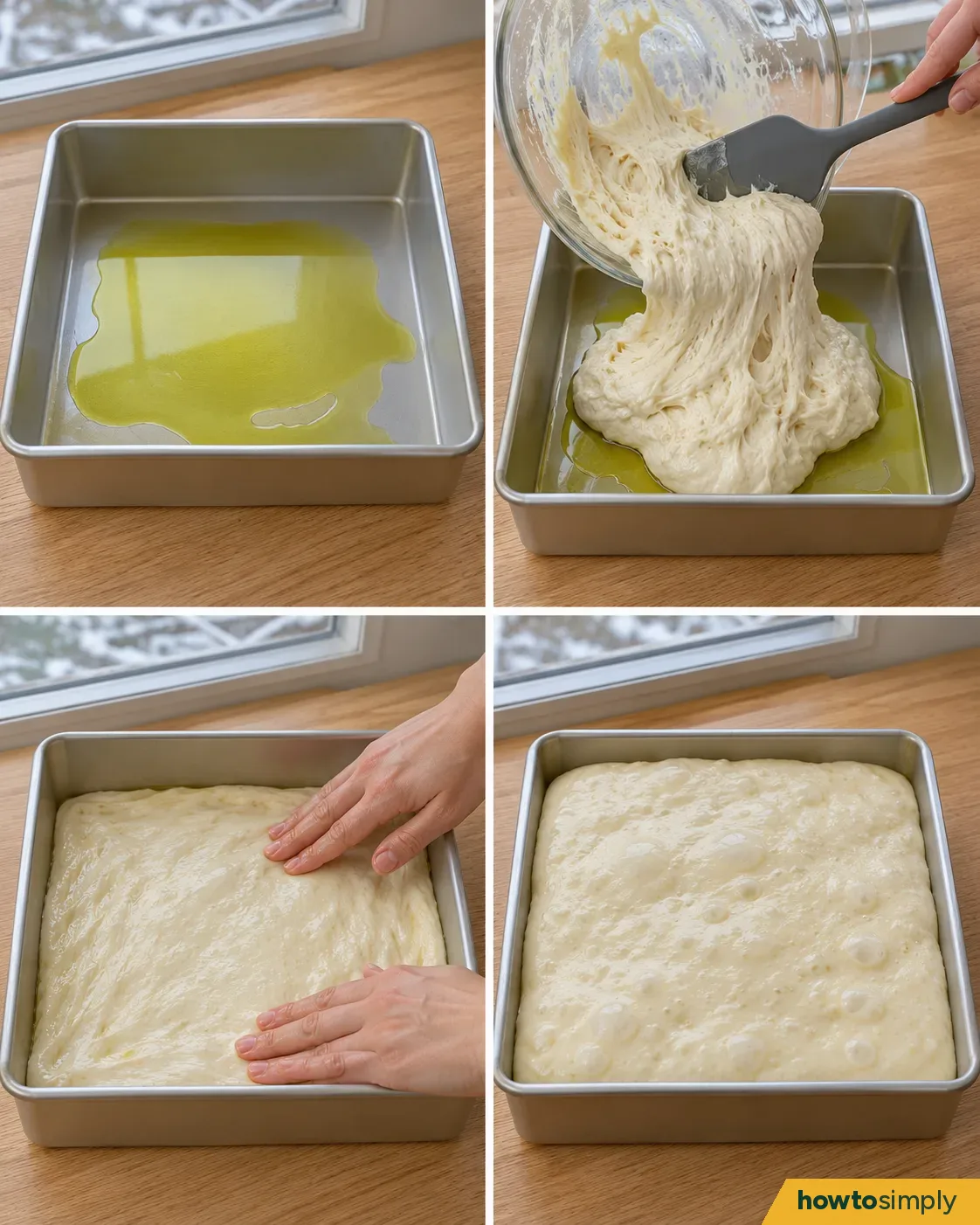
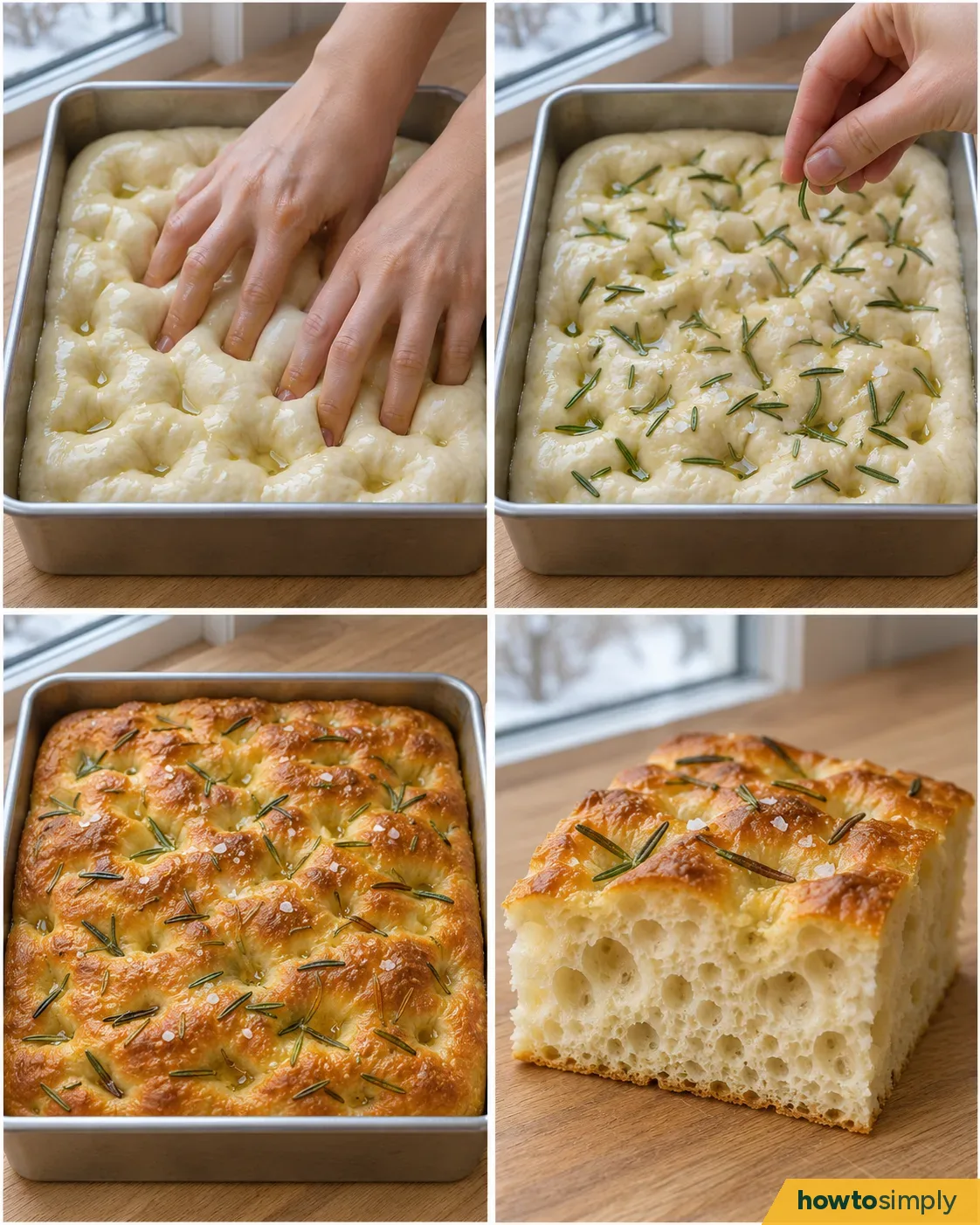
- Each picture below shows four moments of its step. Read it from top left to bottom right.
Ingredients
- 300 g (2½ cups) strong white bread flour
- 6 g fine salt
- 4 g instant dried yeast
- 240 ml (1 cup) lukewarm water, about 30°C (86°F), which feels barely warm on your wrist
- 30 ml (2 tablespoons) olive oil, split into 15 ml (1 tablespoon) for the pan and 15 ml for the top
- 2 teaspoons fresh rosemary leaves, pulled off the woody stems
- ½ teaspoon flaky sea salt
Steps
Mix the sticky dough and let it rise
Whisk the flour, fine salt and yeast together in the large bowl. Pour in the water. Stir hard with the spatula for 2 minutes, scraping up the flour from the bottom of the bowl, until you have one sticky lump of dough with no dry patches. It will look rough and shaggy, which is right.
Cover the bowl and leave it somewhere warm for 60–90 minutes. It's ready when the dough has roughly doubled in size and you can see small bubbles on the top.
Spread the dough in the pan and let it puff up
Spread 15 ml of the olive oil over the base and sides of the pan. Scrape the dough into the pan. Dip your fingers in the oil around the dough and gently ease the dough out towards the corners. Don't force it; if it shrinks back, see the tip below.
Cover the pan loosely and leave it for 30–45 minutes, until the dough looks puffy and wobbles when you nudge the pan. While it rises, put a shelf in the middle of the oven and heat it to 220°C conventional or 200°C fan (about 425°F).
Dimple, season and bake
Drizzle the other 15 ml of oil over the dough. Spread your fingers and press them straight down, almost to the bottom of the pan, all over the dough to make little hollows. Scatter the rosemary leaves and flaky salt over the top. Bake for 22–27 minutes, until the top is deep golden and the edges have pulled slightly away from the pan.
Leave it in the pan for 5 minutes. Run the spatula around the edges, lift the bread onto the rack and let it cool for 10 more minutes. Cut it into three rows and three columns with the serrated knife to make 9 squares.
If this doesn't work
- The dough keeps springing back from the corners: cover it and leave it alone for the first 10 minutes of the second rise. Once it has relaxed, ease it out again with oiled fingertips. Cover it and finish the rise, waiting for that puffy, wobbly surface before you make the dimples.
- The dough hasn't doubled after 90 minutes: your kitchen is probably cool. Give it longer, checking every 15 minutes. The size and bubbles matter more than the clock.
- The top is golden but the base is pale: bake for a few more minutes. A metal pan browns the base better than a glass dish.
Serving and storing
Serve warm with soup or alongside a Christmas roast. Once it has cooled completely, wrap any leftovers airtight. To crisp the edges again, warm the squares on a baking tray at 180°C conventional or 160°C fan (about 350°F) for 5–8 minutes.
Related
- How to make cheddar and sage biscuits
- How to make stuffed acorn squash
- How to make roasted Brussels sprouts with hazelnuts
The pictures in this recipe are illustrations.
Sources and method
- Researched by
- Abu Bakar Saadat
- Pictures
- 3 illustrations drawn for this article: drawings, not photos.
Did this solve the problem?
Where did you get stuck?
Get new guides by email
Our newest guides, sent to your inbox. Free, and you can unsubscribe in one click.
We'll email you to confirm. How we use your email
Follow howtosimply on Facebook
We share every new article on our Facebook page, so the next fix turns up in your feed.
Follow on FacebookWhat did you think?
Reaction counts are loading.