How to make gingerbread snacking cake
Researched by Abu Bakar Saadat3 min read
Last updated: 20 November 2026References
 Illustration
On this page 8 sections
In short
Whisk 200 g flour with baking powder, ginger, cinnamon and salt; whisk eggs, brown sugar, molasses, oil and milk; fold together, bake in a lined 20 cm square tin at 175°C (155°C fan) for 28–35 minutes until a skewer comes out with only damp crumbs, then rest 20 minutes and cut 9 squares.
At a glance
Overview
A soft, dark ginger cake you cut into squares and eat while it's still a little warm. It's one bowl for the dry ingredients and one for the wet, with no creaming butter and no mixer. The molasses turns the batter deep brown before it even goes in the oven, so go by the skewer, not the colour.
| What | This recipe |
|---|---|
| Makes | 9 squares |
| Oven | 175°C conventional, 155°C fan (about 350°F) |
| Prep | 15 minutes, including heating the oven |
| Bake | 28–35 minutes |
| Rest | 20 minutes in the tin |
| Total | About 1 hour 3 minutes to 1 hour 10 minutes |
Before you start
- You'll need: a 20 × 20 cm (8 × 8 inch) square metal cake tin at least 5 cm (2 inches) deep, baking parchment, kitchen scales, a measuring jug and spoons, two mixing bowls, a whisk, a flexible spatula, a wooden skewer, oven gloves, a cooling rack and a knife.
- Weigh the molasses straight into the bowl. Put the bowl on the scales and pour until it reads 100 g more. It's much less messy than a spoon.
- Allergens: contains egg, milk, and wheat (gluten) from the flour.
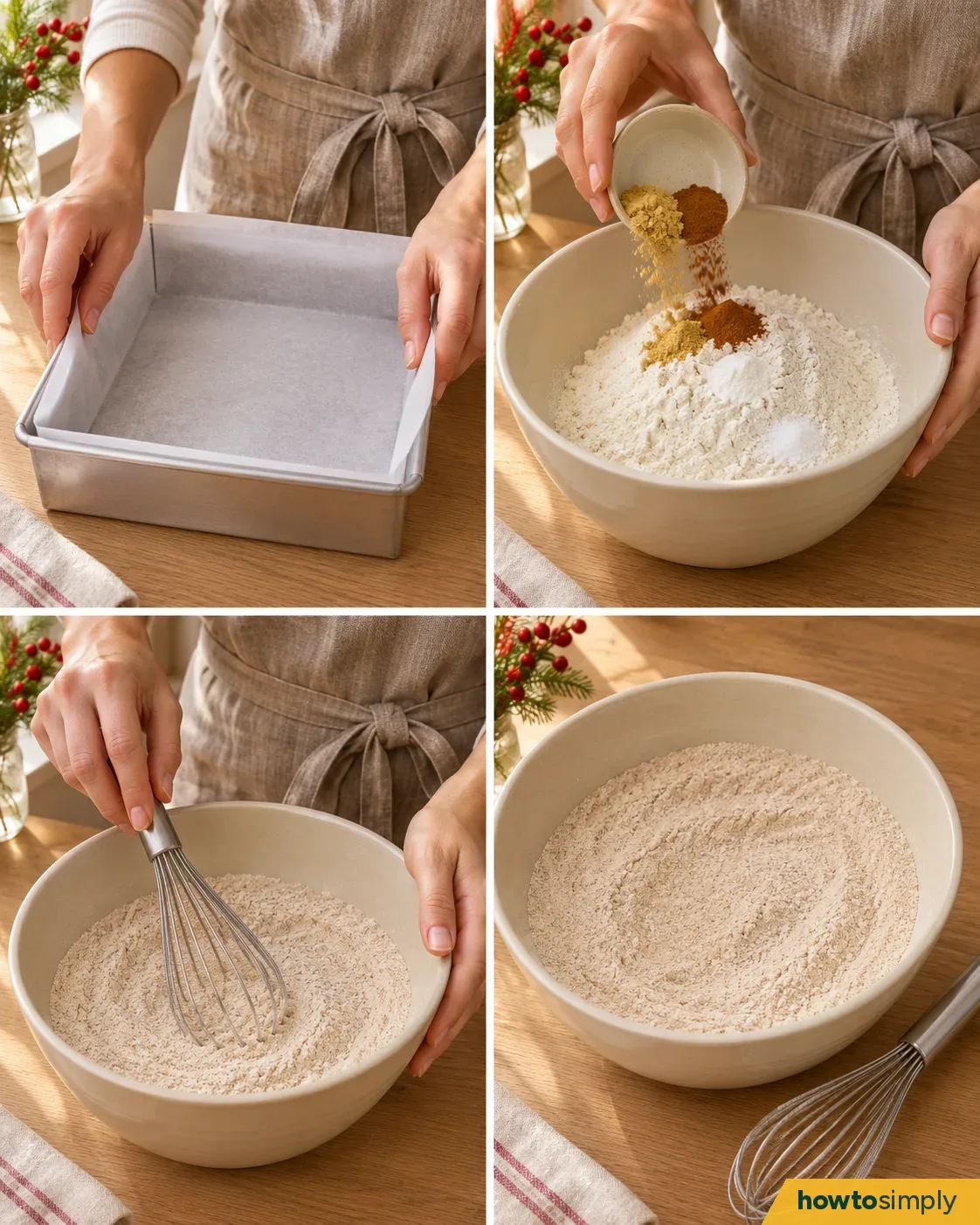
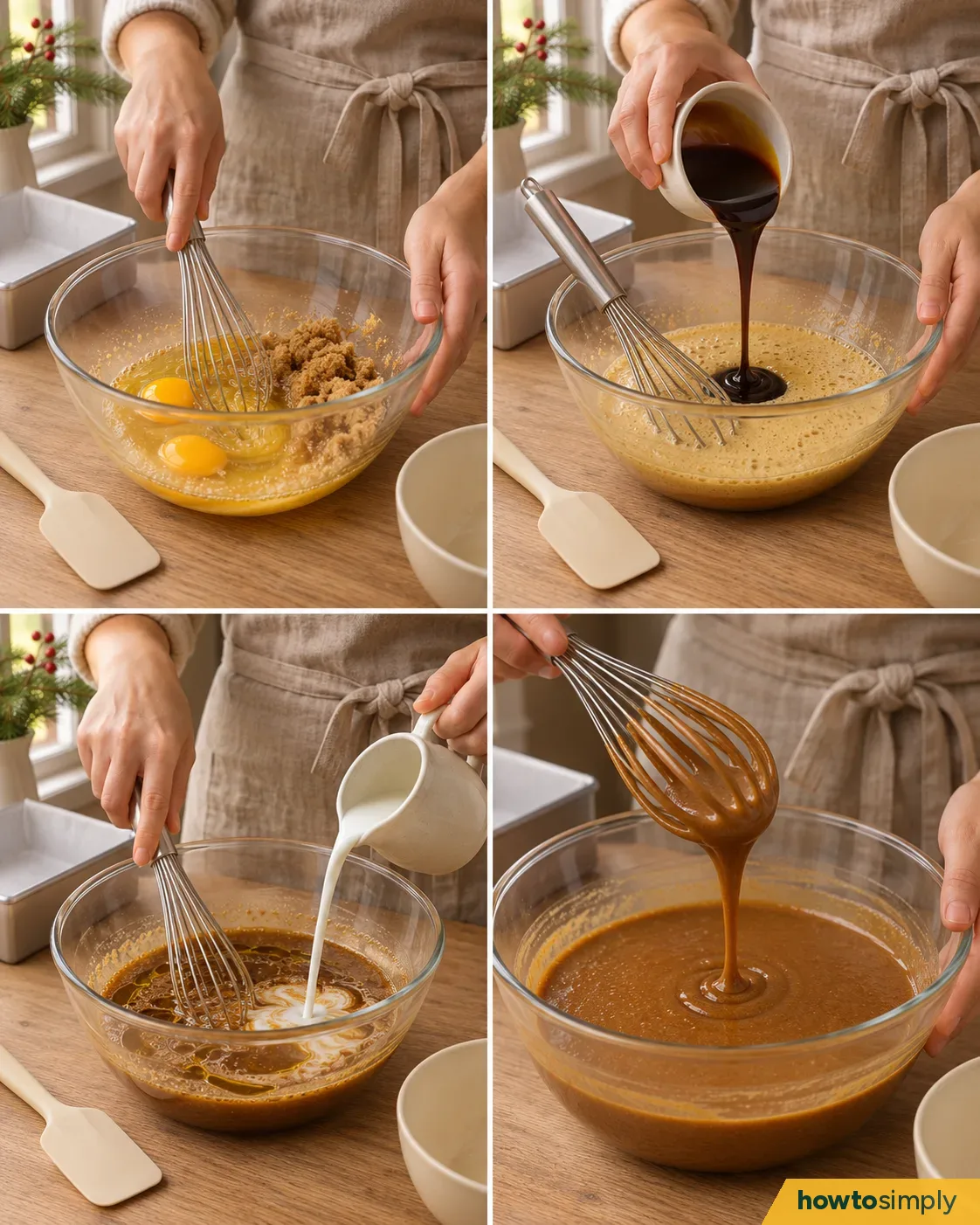
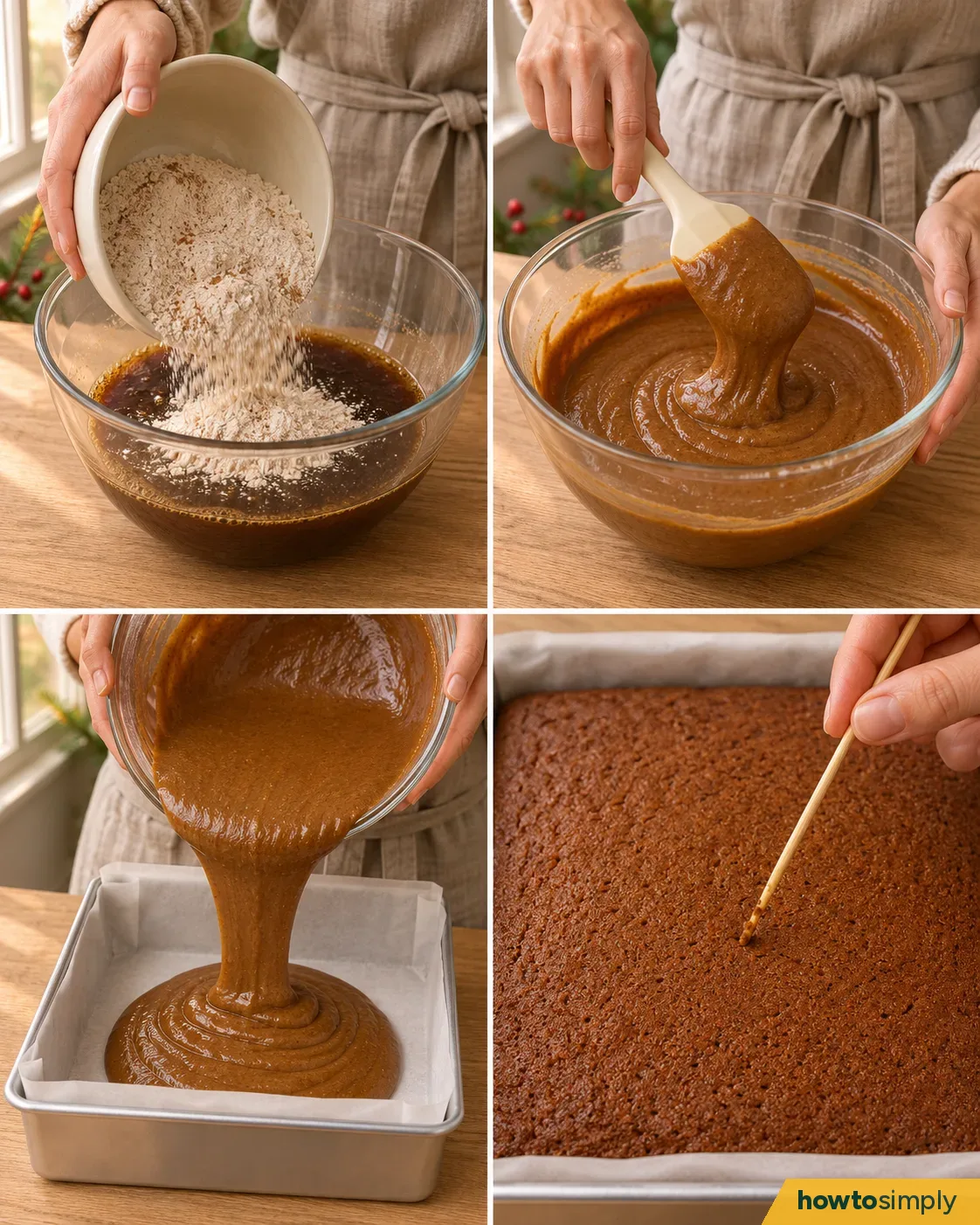
- Each picture below shows four moments of its step. Read it from top left to bottom right.
Ingredients
Dry
- 200 g (about 1⅔ cups) plain flour (all-purpose flour)
- 2 teaspoons (8 g) baking powder
- 2 teaspoons ground ginger
- 1 teaspoon ground cinnamon
- ¼ teaspoon fine salt
Wet
- 2 large eggs
- 80 g soft light brown sugar
- 100 g mild unsulphured molasses (look for "original" or "mild" on the label)
- 75 ml (5 tablespoons) neutral oil, such as sunflower oil
- 100 ml (a little under ½ cup) whole milk
Steps
Line the tin and mix the dry ingredients
Put a shelf in the middle of the oven and heat it to 175°C conventional or 155°C fan (about 350°F).
Press baking parchment into the tin, folding it at the corners and leaving two edges long enough to grip later.
In the first bowl, whisk the 200 g of flour, the baking powder, ginger, cinnamon and salt for about 30 seconds, until you can't see any streaks of cinnamon.
Whisk the wet ingredients
In the second bowl, whisk the 2 eggs and the 80 g of brown sugar for about 1 minute, pressing any sugar lumps against the side of the bowl. Scrape in the 100 g of molasses, then whisk in the 75 ml of oil and the 100 ml of milk.
Keep whisking for another 30–60 seconds. It's ready when it's evenly brown, with no dark syrup stuck to the bottom of the bowl and no pools of oil on top.
Fold, bake and check the middle
Tip the dry ingredients into the wet. To fold, sweep the spatula along the bottom of the bowl and turn the mixture over on itself, rather than stirring round and round. Stop as soon as the last dry pockets disappear, after about 1 minute. Pour the batter into the lined tin and gently spread it into the corners.
Bake for 28–35 minutes. At 28 minutes, push the skewer into the centre and pull it straight out. A few damp crumbs are fine. If a shiny streak of wet batter sticks to it, bake for 3 more minutes and check again.
Set the tin on the rack for 20 minutes so the crumb can firm up before you cut it.
Serving and storing
Lift the cake out by the paper, with a hand under the base. Cut it three rows each way to make 9 squares, and serve slightly warm with a cup of tea. Once leftovers are completely cool, keep them in an airtight container.
If this doesn't work
- The edges are browning but the middle is still wet: lay a loose tent of foil over the tin, leaving room above the cake, and keep baking. Check the middle with the skewer every 3 minutes.
Sources
- Cup equivalent for flour: King Arthur Baking, Ingredient weight chart (all-purpose flour 120 g a cup).
Related
The pictures in this recipe are illustrations.
Sources and method
- Researched by
- Abu Bakar Saadat
- Pictures
- 3 illustrations drawn for this article: drawings, not photos.
Did this solve the problem?
Where did you get stuck?
Get new guides by email
Our newest guides, sent to your inbox. Free, and you can unsubscribe in one click.
We'll email you to confirm. How we use your email
Follow howtosimply on Facebook
We share every new article on our Facebook page, so the next fix turns up in your feed.
Follow on FacebookWhat did you think?
Reaction counts are loading.