How to make cinnamon shortbread fingers
Researched by Abu Bakar Saadat3 min read
Last updated: 20 November 2026References
 Illustration
On this page 8 sections
In short
Beat 150 g soft butter with 75 g caster sugar, mix in 225 g plain flour, 1 tsp cinnamon and a pinch of salt, press into a lined 20 cm square tin, bake at 170°C (150°C fan) for 25–30 minutes, then cut 16 fingers while warm.
At a glance
Overview
Five ingredients, one square tin and no rolling or cutters. The trick is the timing: you cut the fingers while the shortbread is still warm, then leave them in the tin to firm up, so every finger comes out with a clean edge.
| What | This recipe |
|---|---|
| Makes | 16 fingers |
| Oven | 170°C conventional, 150°C fan (about 340°F) |
| Prep | 15 minutes, with the butter already soft |
| Bake | 25–30 minutes |
| Cool | About 45 minutes (5 minutes before cutting, then about 40 in the tin) |
| Total | About 1 hour 25–30 minutes |
Before you start
- Soften the butter first. It should dent easily when you press it with a fingertip. The 15 minutes of prep doesn't include softening time.
- You'll need: kitchen scales, measuring spoons, a medium mixing bowl, a wooden spoon, a 20 × 20 cm (8 × 8 inch) square metal baking tin, baking parchment, a fork, oven gloves, a heatproof rack, a straight-edged knife and a cutting board.
- Allergens: contains wheat (gluten) from the flour and milk from the butter.
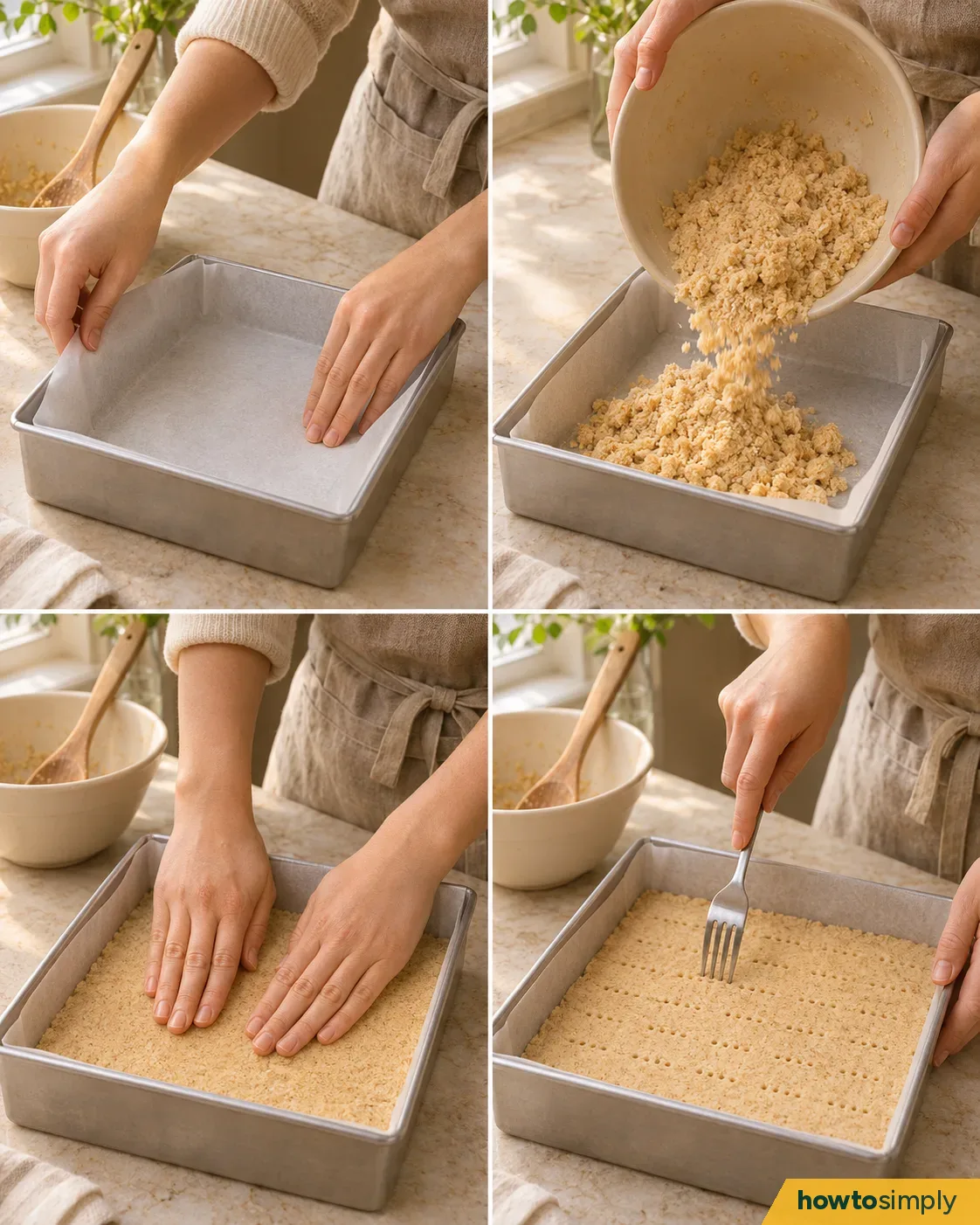
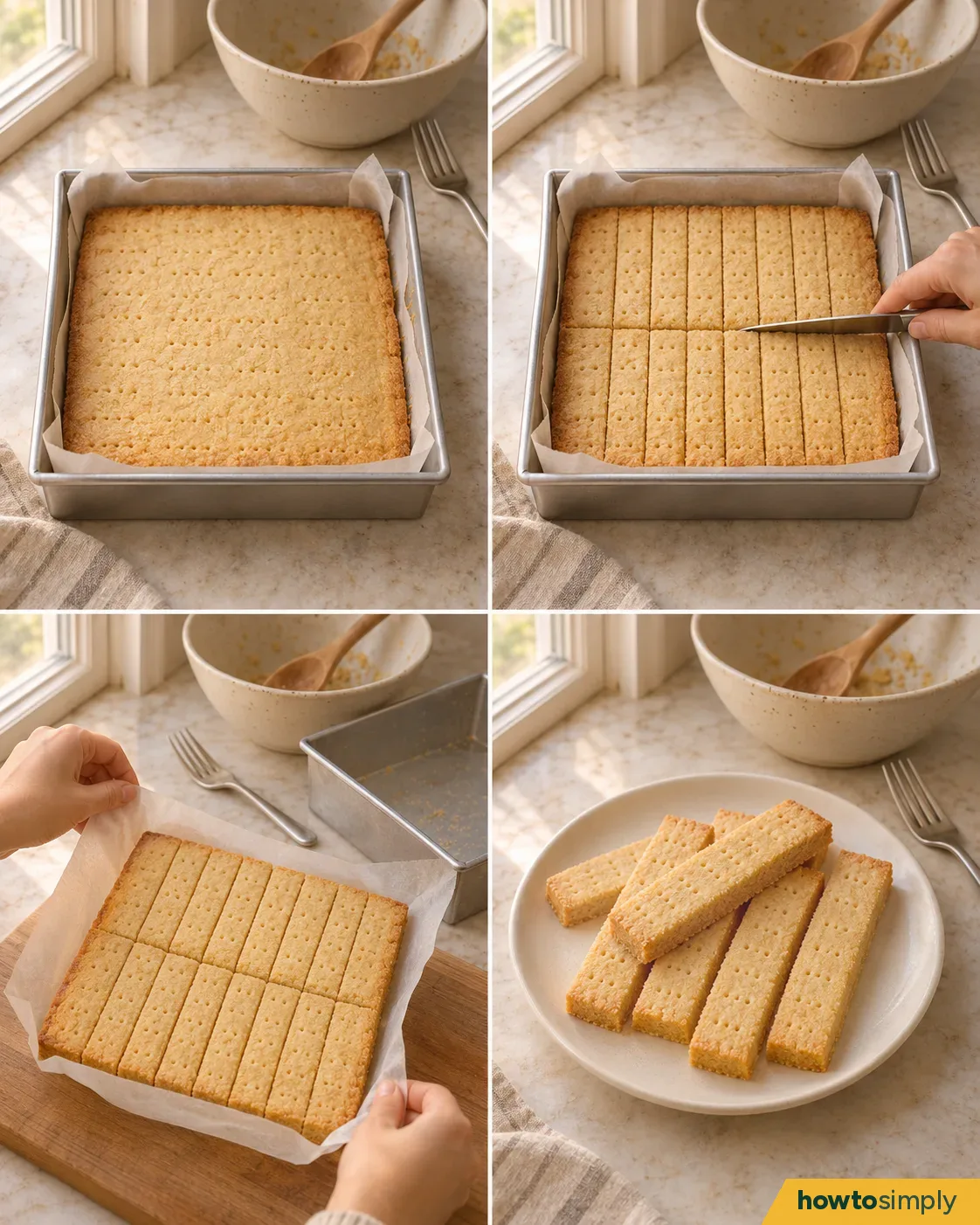
- Each picture below shows four moments of its step. Read it from top left to bottom right.
Ingredients
- 150 g (about ⅔ cup) unsalted butter, softened
- 75 g (about ⅓ cup plus 1 tablespoon) caster sugar (superfine sugar)
- 225 g (about 1⅞ cups) plain flour (all-purpose flour)
- 1 teaspoon ground cinnamon
- ¼ teaspoon fine salt
Steps
Mix the dough
Put a shelf in the middle of the oven and heat it to 170°C conventional or 150°C fan (about 340°F).
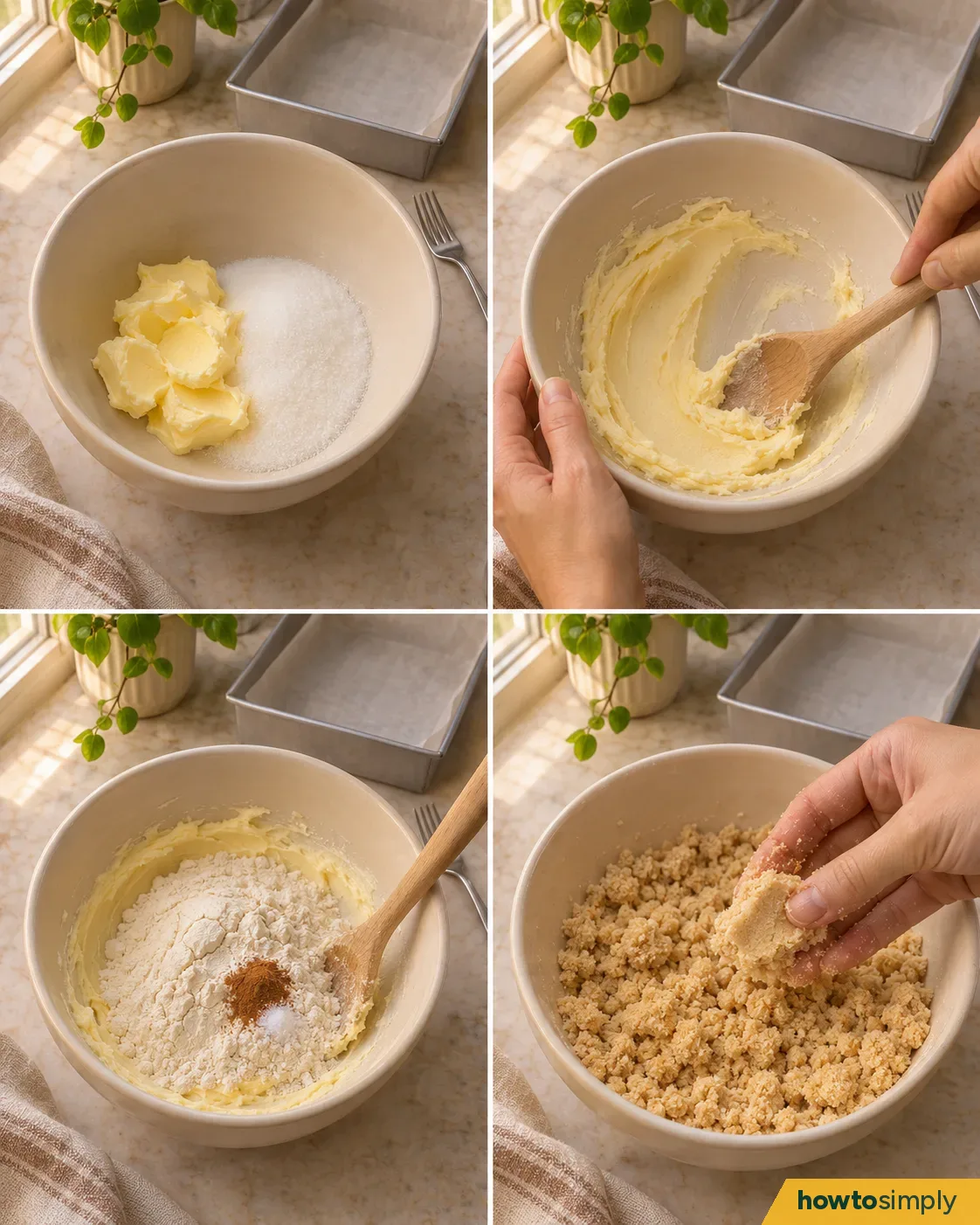
Beat the 150 g of soft butter and the 75 g of sugar with the wooden spoon for 2–3 minutes, pressing any lumps out against the side of the bowl. When the mixture looks smooth, stir in the 225 g of flour, the cinnamon and the salt for 1–2 minutes.
Pinch a few crumbs between your fingers. If they hold together, the dough is ready, even if the bowl still looks sandy.
Press it into the tin
Line the tin with baking parchment, leaving enough paper above two sides to grip later. Tip in the crumbs.
Press them down with your fingertips for 2–3 minutes, pushing some into each corner. Run your hand across the top to feel for an even layer about 1 cm (about ⅜ inch) thick. Prick the surface in rows with a fork, pushing about halfway down each time. The holes help the shortbread bake evenly.
Bake, cut and cool
Bake for 25–30 minutes, and start checking at 25. It's done when the middle looks dry and pale gold and the edges are a shade darker. Lift the tin out with oven gloves and set it on the heatproof rack.
After 5 minutes, while the slab is still warm, press the knife straight down to cut 8 equal strips. Then cut across their middles to make 16 fingers. Press down rather than sawing, so the edges stay clean.
Leave them in the tin for about 40 minutes more, until cool and firm. Lift the paper out onto the board and gently separate the fingers along the cuts.
If this doesn't work
- The crumbs fall apart in the pinch test: squeeze and release small handfuls in the bowl for 30 seconds. The warmth of your hands helps the butter bind the flour. Pinch again, and stop as soon as it holds.
Serving and storing
Serve at room temperature with tea or hot chocolate. Once they're completely cool, pack them into an airtight tin with parchment between the layers. They're crispest within a week.
Sources
- Cup equivalents: King Arthur Baking, Ingredient weight chart (all-purpose flour 120 g a cup; butter 113 g a half cup; superfine sugar 190 g a cup).
Related
The pictures in this recipe are illustrations.
Sources and method
- Researched by
- Abu Bakar Saadat
- Pictures
- 3 illustrations drawn for this article: drawings, not photos.
Did this solve the problem?
Where did you get stuck?
Get new guides by email
Our newest guides, sent to your inbox. Free, and you can unsubscribe in one click.
We'll email you to confirm. How we use your email
Follow howtosimply on Facebook
We share every new article on our Facebook page, so the next fix turns up in your feed.
Follow on FacebookWhat did you think?
Reaction counts are loading.