How to get water out of your ear
By howtosimply staff5 min read
Last updated: 15 November 2026References
 Illustration
On this page 8 sections
In short
Just tilt your head so the waterlogged ear is facing downward. Then, gently pull your earlobe in different ways. Finally, use a towel to dry your outer ear. If there is still water in there, use a hair dryer set to low, held several inches away. But never insert anything into your ear.
At a glance
At a glance
Hi. Welcome to howtosimply.com. That clogged or muffled sensation in your ear after taking a dip in the pool or having a shower is really frustrating; however, in almost all instances, gravity and a towel will be enough to extract the excess moisture. These are gentle methods for extracting water from your ear canal without damaging the delicate structures of your ear. Follow each step in sequence until you find one that works.
Preparation before you begin
Never stick any objects into your ear canal. Objects include cotton buds, fingers, pens, paper clips, and keys. Your ear canal needs to be left alone, and your earwax is present to protect your ear from potential infections.
If you already experience discomfort, itching, inflammation, or fluid oozing from your ear, please proceed directly to “when to seek help” below. Trapped water in the ear canal does not typically produce these symptoms.
If you have ear tubes (grommets) or a damaged eardrum, do not apply any ear drops unless specifically directed by a medical professional.
Steps
Tilt your head so the blocked ear faces down.
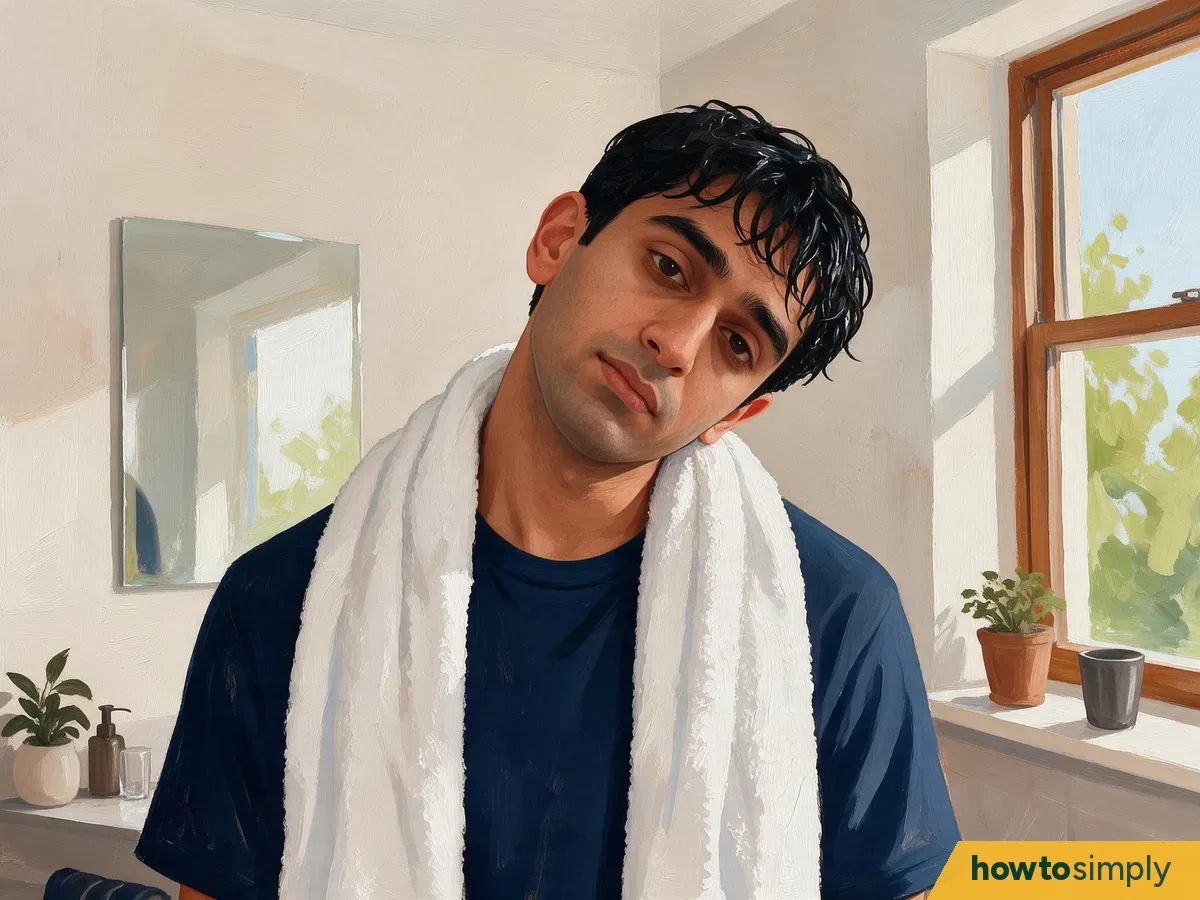
Illustration Tilt your head to the side until the ear that contains the water is pointing downward toward the ground. Allow gravity to help remove the water from the ear canal. Alternatively, lie on your side on a towel for a few minutes.
Gently pull on the earlobe in all directions.
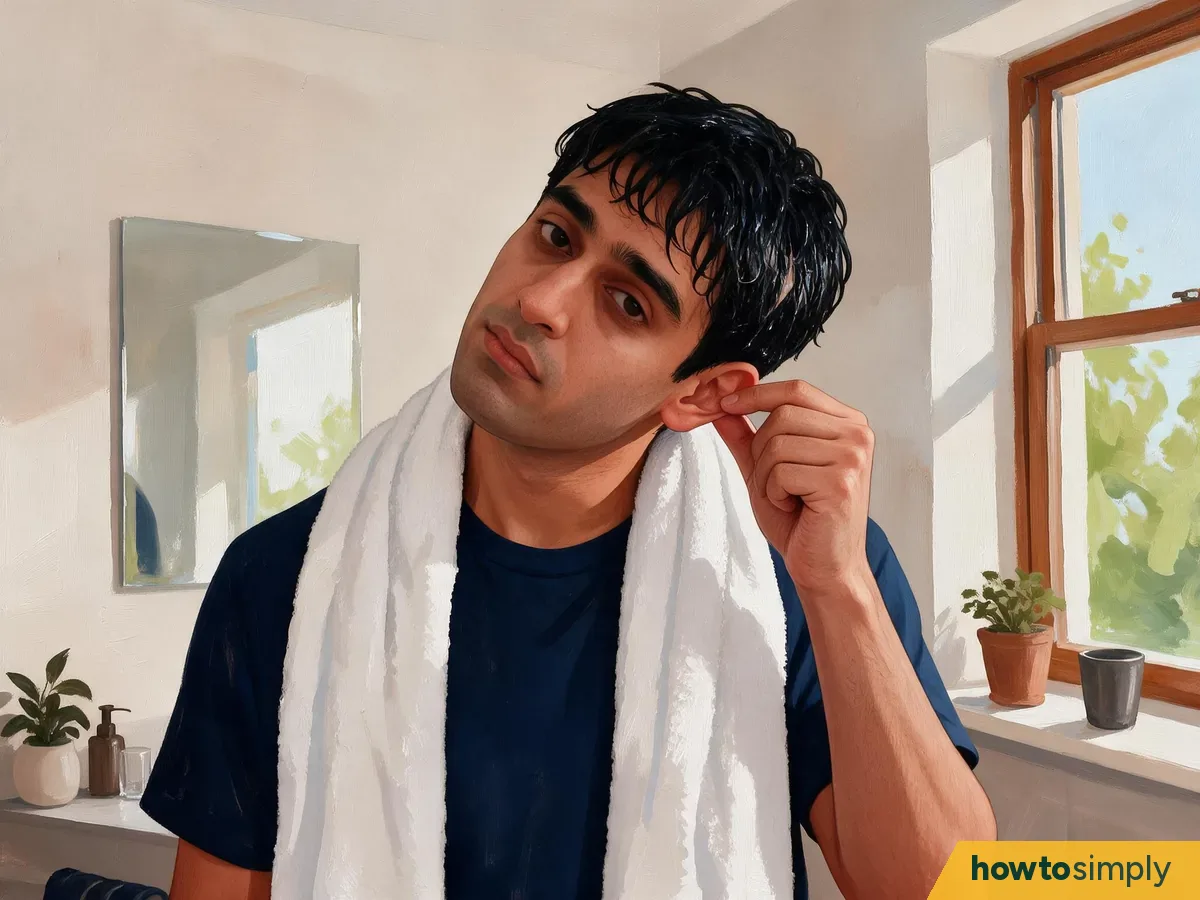
Illustration As described above, continue to hold the affected ear down. Hold your earlobe between your finger and thumb and pull down gently, then backward, and finally to the side. It may take some trial and error to determine the correct direction(s) to pull. Be gentle, as you want to encourage the water to exit the ear canal rather than force it.
Repeat step 2 with your other ear.
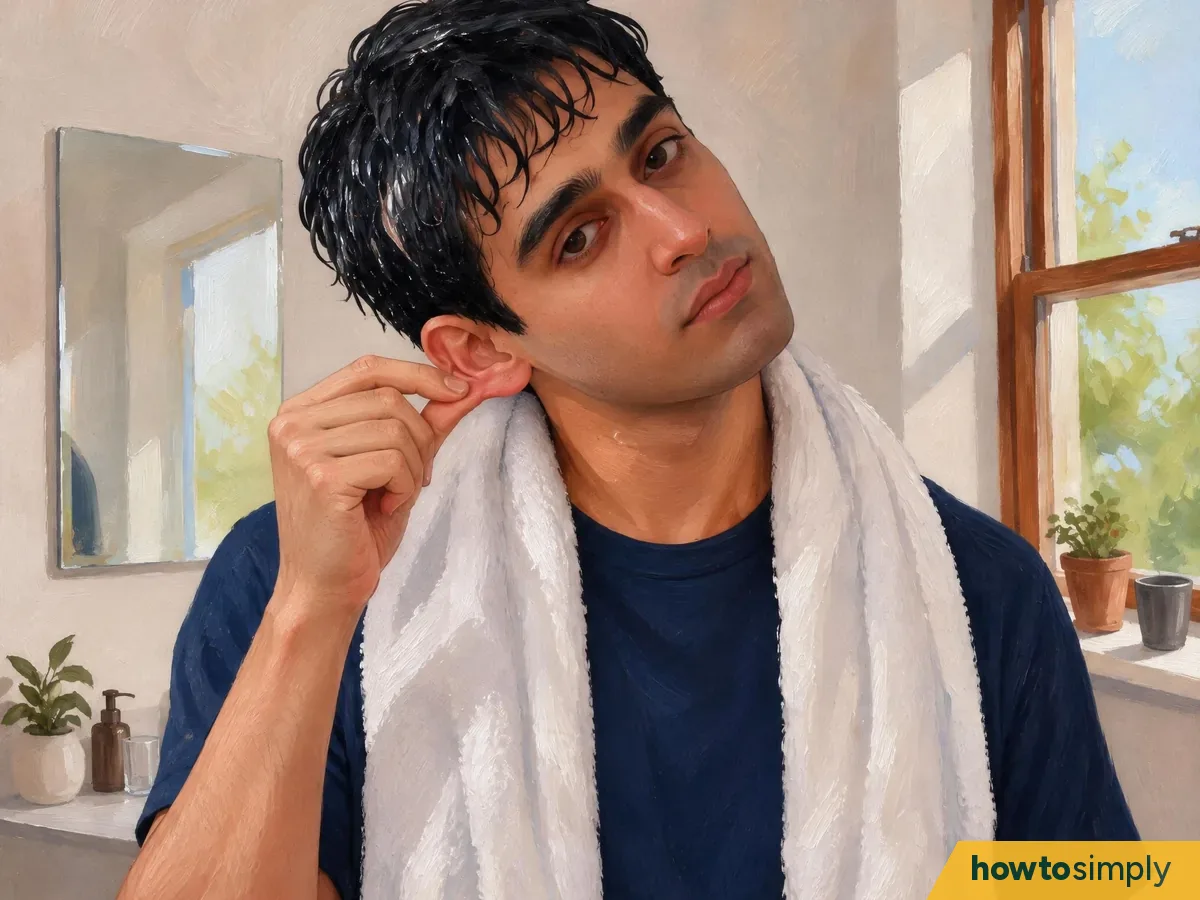
Illustration Flip your head to the opposite side so that the second ear is now pointed downward. Repeat Steps 1 and 2.
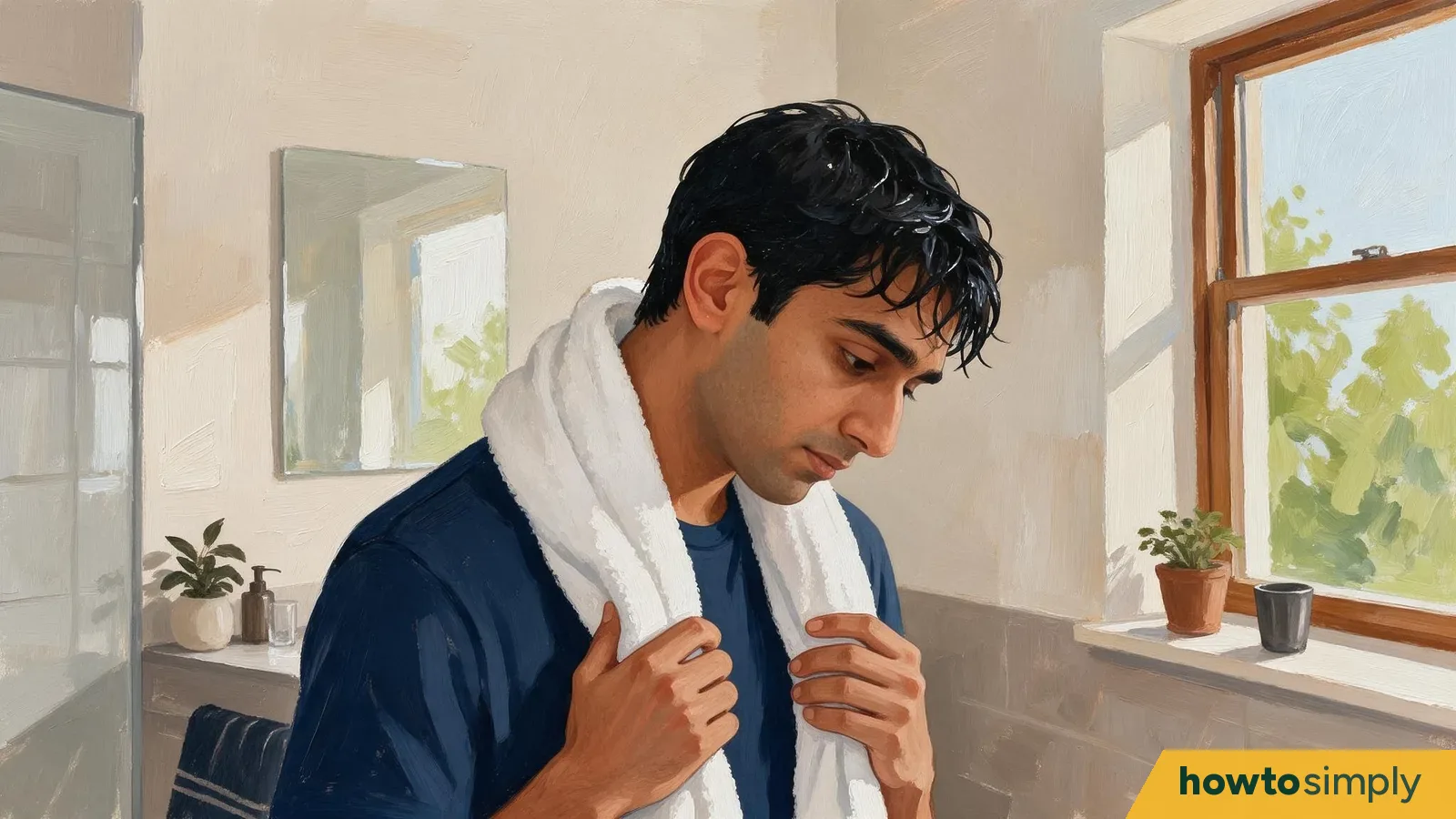
Dry your outer ear with a clean towel.
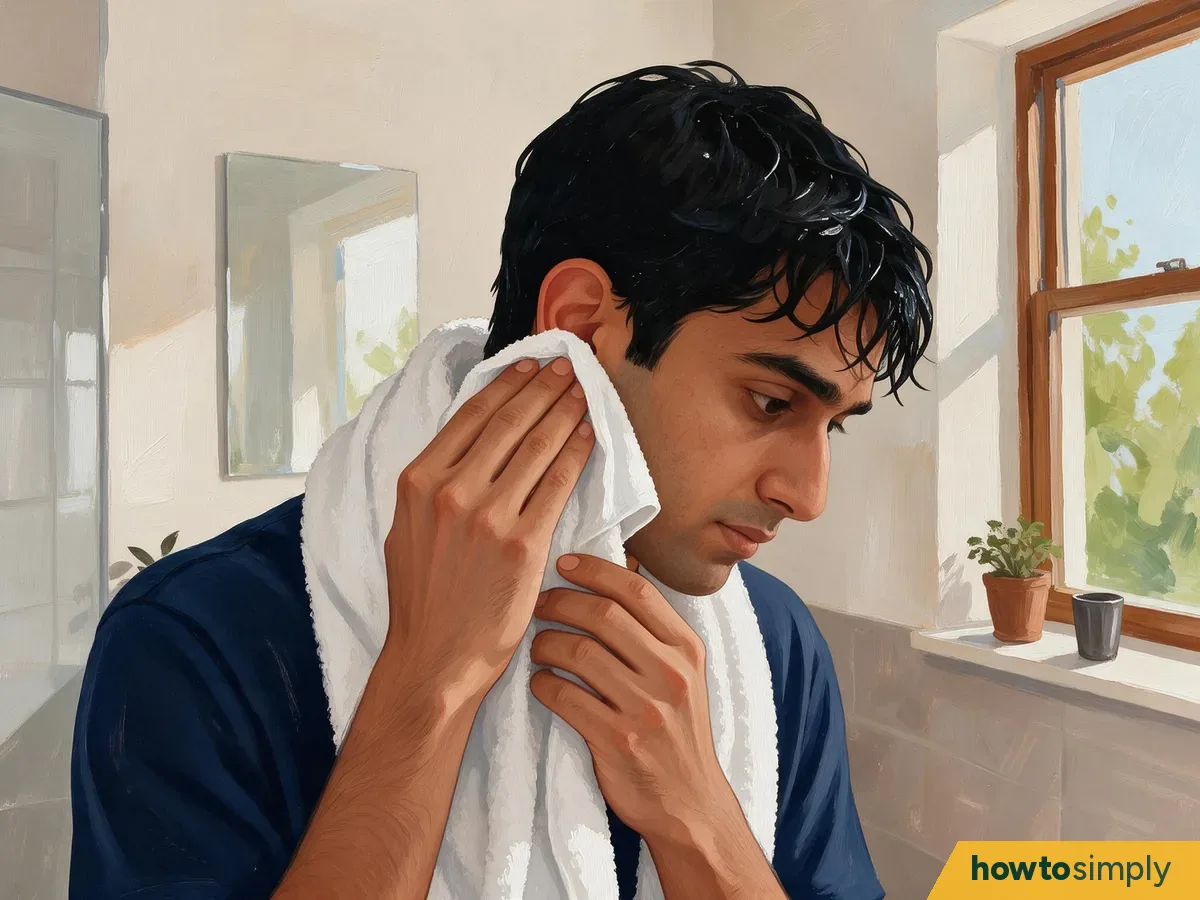
Illustration After each swim or bathing session, use a clean, dry towel to blot the area surrounding your ear’s opening and the outside portion of the ear canal. Dry only the outside of the ear. Never push the towel into the ear canal.
Apply a blow dryer set on its lowest temperature and speed if water remains in the ear.
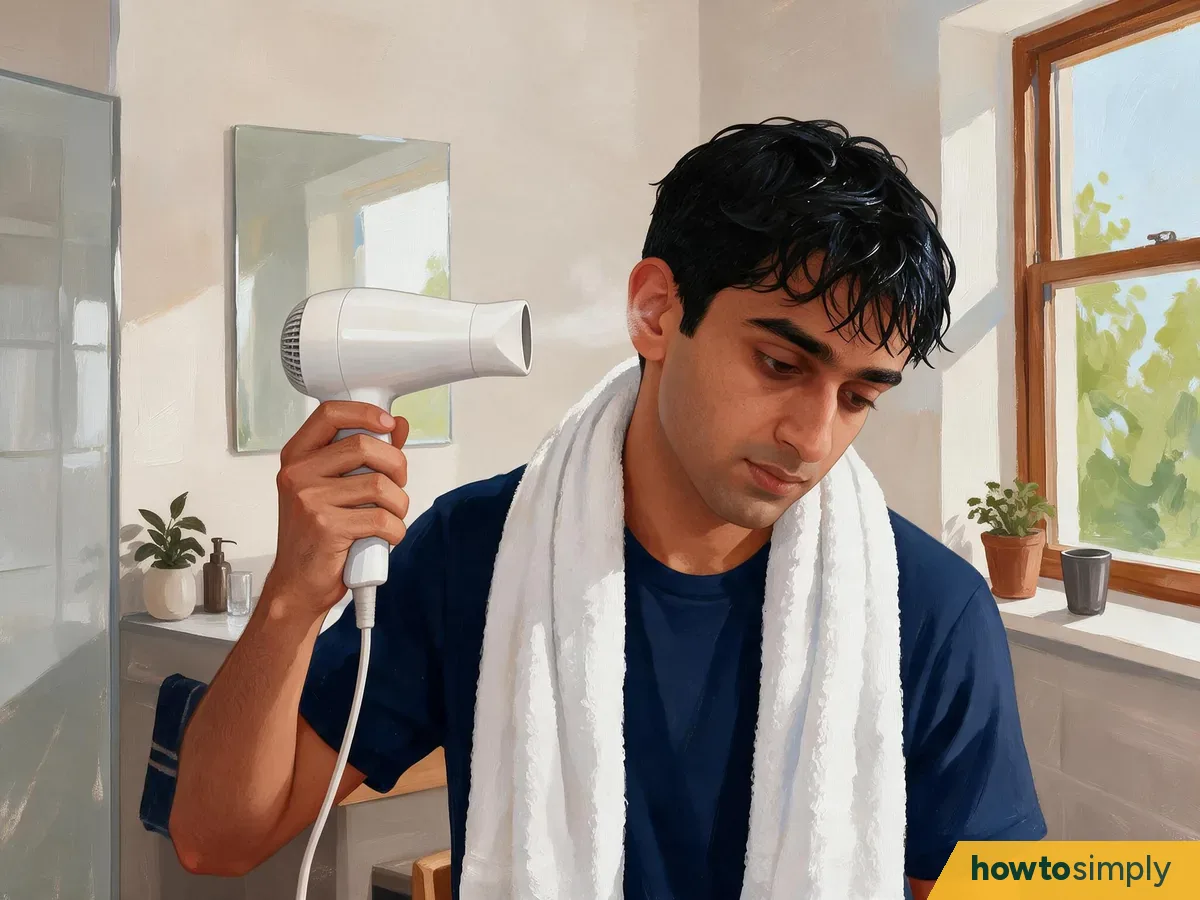
Illustration Adjust your hair dryer settings to their lowest temperature and speed. Position the hair dryer several inches away from your ear and allow it to circulate warm air through your ear canal. Do not place it too close to your ear, and stop immediately when your ear canal appears clear of water.
Leave your ear alone after you’ve removed the majority of the water.
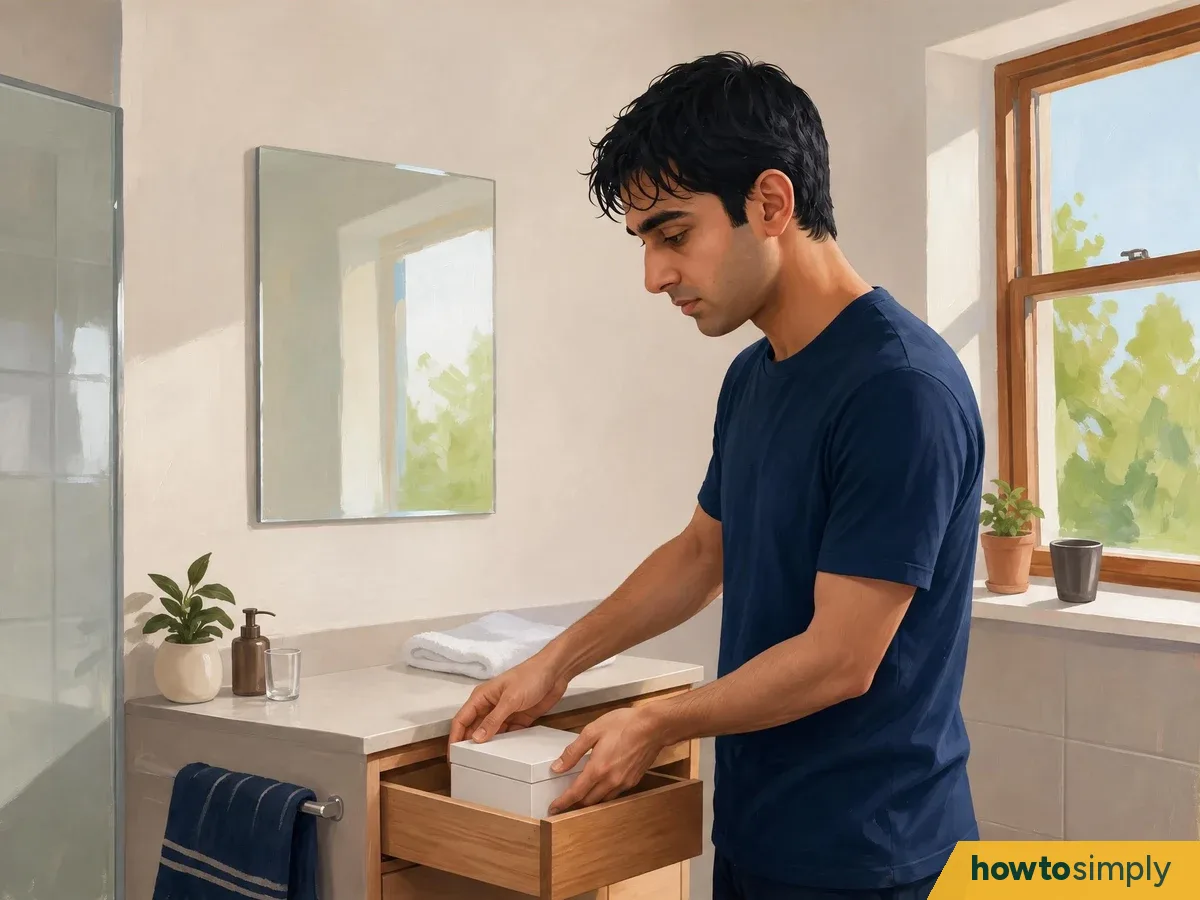
Illustration Once you've cleared your ear canal of most of the trapped water, stop attempting to remove the remaining amount. Refrain from using cotton buds to “clean out” remaining water, and do not attempt to remove excess earwax manually; allowing your ear canal to remain undisturbed helps maintain its overall health.
Monitor for signs of an infection during the next week.
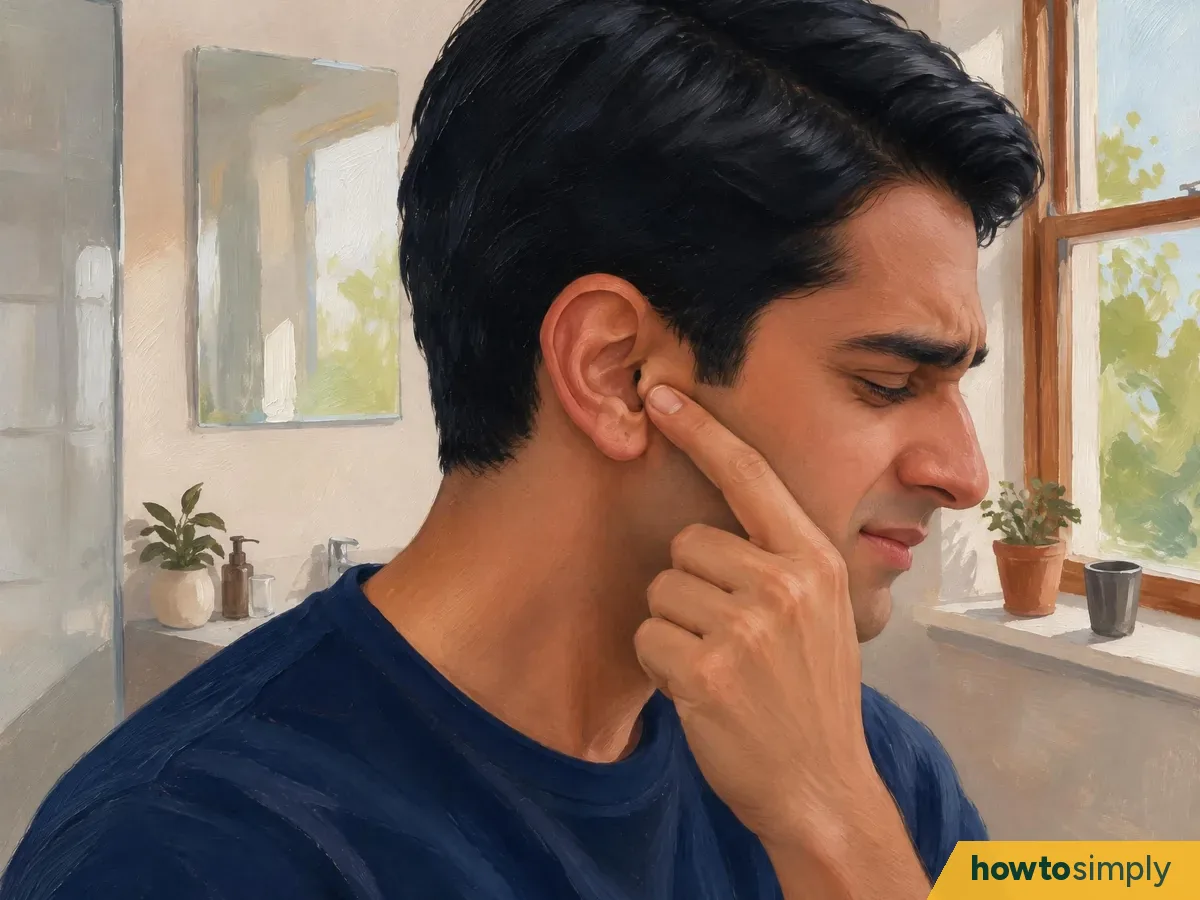
Illustration Excess moisture in the ear canal can irritate and lead to infection. Outer ear infections often develop within a few days post-swimming/bathing. Monitor for: itching inside your ear, redness/swelling, a sharp pain when tugging on or pressing on the small flap in front of your ear canal, or discharge from the ear canal. If you notice any of these symptoms, please proceed to “When to seek help.”
Trapped water vs something else?
| What you notice | what it probably means | what to do |
|---|---|---|
| Blocked or muffled sensation after swimming/shower; no pain | water in ear canal | follow Steps 1 – 6 |
| Itchy/sore ears | possible infection | consult pharmacist or doctor |
| Sharp pain when pulling on the ear or pressing the flap in front of the ear canal | possible infection | consult doctor |
| Discharge/pus from ear canal | Needs immediate medical attention | get urgent appointment |
| Loss/hearing change | Needs immediate medical attention | get urgent appointment |
Most common mistakes
Sticking a cotton swab into your ear canal to absorb excess moisture. Nothing should be inserted into your ear canal.
Probing with fingers, keys, or pens. Remember: nothing in your ear canal!
Placing a hair dryer too close/using high heat. Keep the hair dryer several inches away, using low heat/low speed settings.
Applying ear drops when you already have an infected sore ear/ear tubes/damaged eardrum. Ask a doctor first.
Swimming again while having an infected sore ear. Wait until it clears up!
Additional methods if none worked
Water still feels stuck in your ear despite completing all previous Steps. Complete Steps 1 & 2 again. Lying on that side on a towel may aid in removal.
You start feeling discomfort/irritation/pus oozing from the ear canal. Immediately cease home remedies and proceed to “when to seek help”
If you have an earache that has not improved after three days. Schedule a doctor visit
Other method: Ear drying drops
There are products available called “ear drying drops” for removing water after swimming. However, always check with your doctor/pharmacist before utilizing them. Do not apply them if you have: Ear tubes/a damaged or perforated eardrum/an ear infection/oozing fluid from your ear canal.
Tips to prevent future occurrences
Wear a swim cap over your ears/insert custom-fit swim plugs/moulds during swimming sessions.
Follow Steps 1 through 4 after every swimming session/shower.
Do not expose your infected ear to water/shampoo during shower/bath and avoid swimming until your infection clears up.
When to seek help
Consult a physician if:
- Ear pain/oozing fluid from ear canal
- Three-day duration since initial complaint without improvement in symptoms
- Frequent recurring ear infections
- Child under twelve months old and suspect they may have developed an ear infection
Schedule urgent appointment if:
- Generally unwell
- fluid coming out of your ear
- Change/hearing loss
Advice from: the US Centers for Disease Control and Prevention (CDC), the Minnesota Department of Health and the NHS.
About this article
- Written by
- howtosimply staff
- Pictures
- 8 illustrations drawn for this article, each marked Illustration (drawings, not photos).
Did this solve the problem?
What needs work?
What did you think?
Reaction counts are loading.