How to make cranberry orange soda bread
Researched by Abu Bakar Saadat4 min read
Last updated: 20 November 2026References
 Illustration
On this page 7 sections
In short
Whisk flour, baking soda, salt and sugar, stir in dried cranberries and orange zest, then mix in buttermilk, shape a round, cut a cross and bake at 200°C (180°C fan) for 35–40 minutes. No yeast and no rising time.
At a glance
Overview
A lightly sweet round loaf for Christmas breakfast. Dried cranberries give each slice a tart bite, and fresh orange zest scents the dough. There's no yeast and no rising time: buttermilk and baking soda make the bread rise in the oven, so heat the oven before you mix them.
| What | This recipe |
|---|---|
| Makes | 1 round loaf, about 8 thick slices |
| Prep | 20 minutes, while the oven heats |
| Baking | 35–40 minutes |
| Cooling | 30 minutes |
| Total | 1 hour 25–30 minutes |
| Allergens | Contains wheat (gluten) and milk |
Before you start
- You'll need: a baking sheet at least 25 × 30 cm (about 10 × 12 inches), baking parchment, a fine grater, kitchen scales, a measuring jug and spoons, a large mixing bowl, a whisk, a wooden spoon, a sharp knife, oven gloves, a wire rack and a serrated bread knife.
- Use cultured buttermilk, the thick, tangy kind sold in cartons. Its acid is what makes the baking soda work.
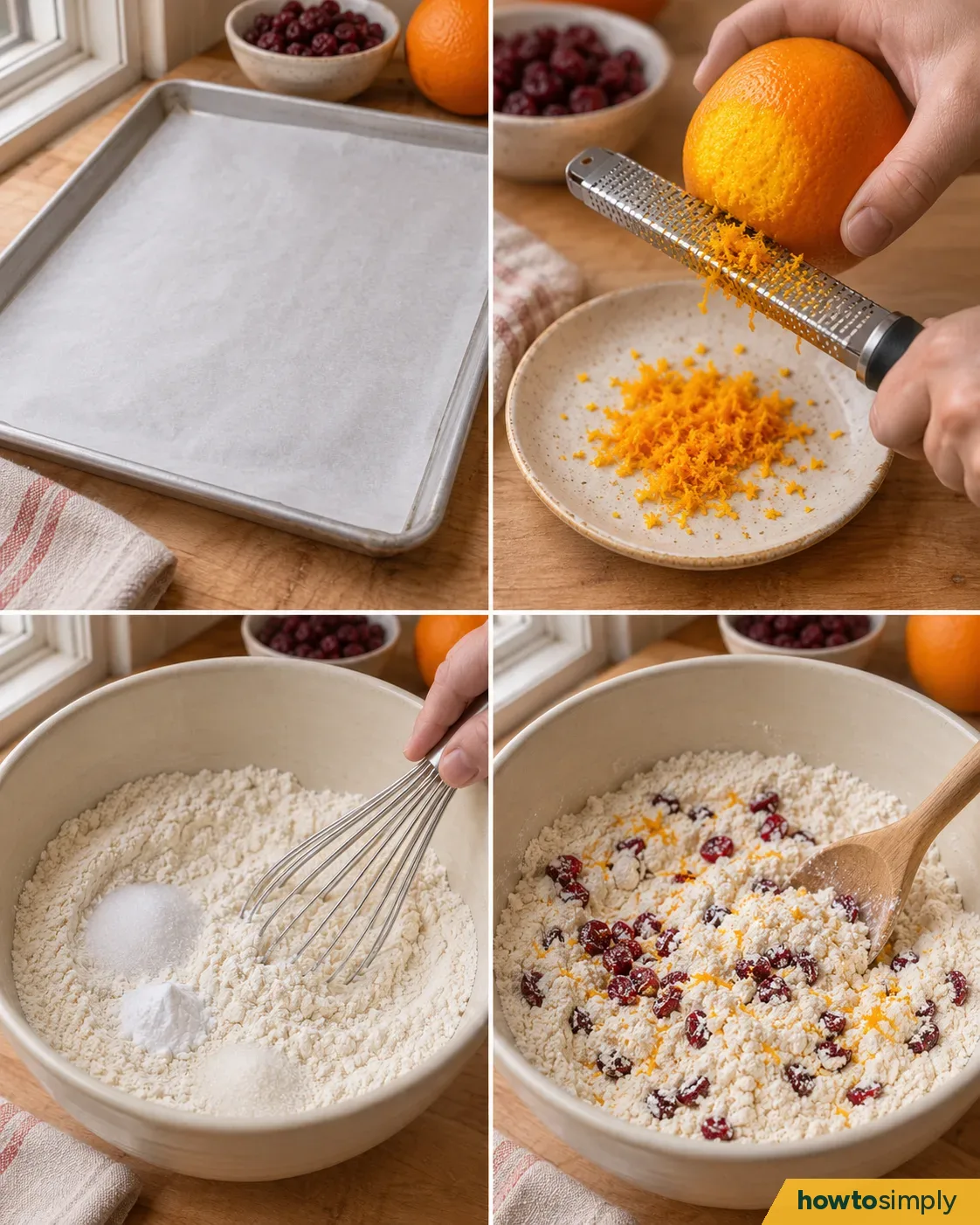
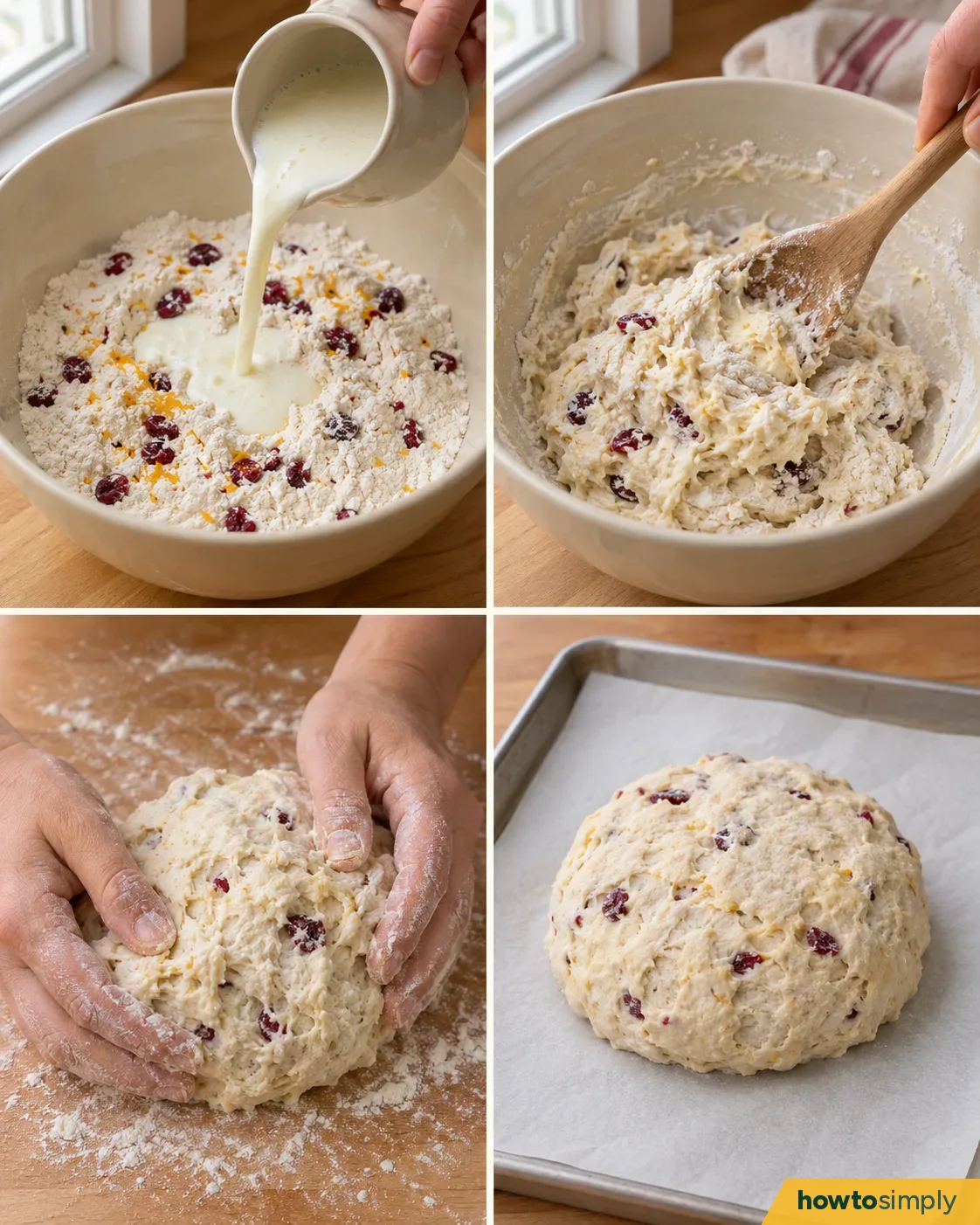
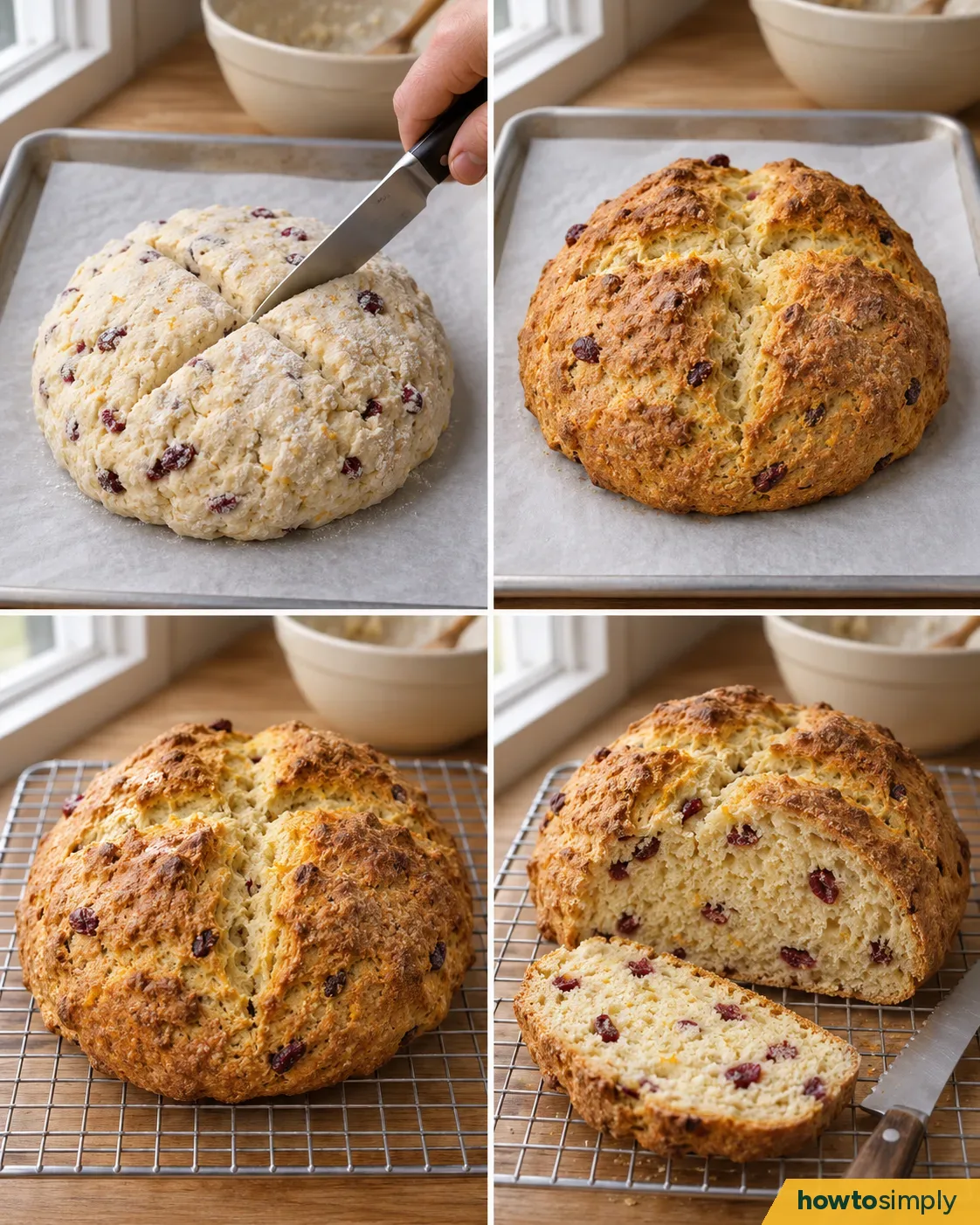
- Each picture below shows four moments of its step. Read it from top left to bottom right.
Ingredients
- 1 medium orange, for 2 teaspoons finely grated zest
- 355 g plain flour (all-purpose flour): 350 g (a scant 3 cups) for the dough and 5 g for dusting
- ¾ teaspoon baking soda (bicarbonate of soda)
- ¾ teaspoon fine salt
- 25 g (2 tablespoons) granulated sugar
- 80 g dried cranberries, roughly chopped if large
- 275 ml cultured buttermilk: 260 ml (about 1 cup plus 1 tablespoon) to start, and up to 15 ml (1 tablespoon) more if the dough needs it
Steps
Prepare the tray and mix the dry ingredients
Heat the oven to 200°C (180°C fan, about 400°F) with a shelf in the middle. Line the baking sheet with parchment.
Wash and dry the orange. Grate off only the thin orange layer of the peel, called the zest, and stop when the white layer shows. Measure out 2 teaspoons.
In the large bowl, whisk the 350 g of flour with the baking soda, salt and sugar for about 30 seconds. Stir in the cranberries and zest, breaking up any clumps of fruit.
Bring the dough together and shape the loaf
Once the oven is hot, pour the 260 ml of buttermilk into the bowl. Stir for about 30 seconds, scraping along the bottom, and stop when the mixture forms soft clumps.
If loose dry flour is left, drag the clumps through it first. Then add the extra buttermilk 5 ml (1 teaspoon) at a time, only as much as you need. The dough should feel slightly sticky and hold together when you squeeze it.
Dust your hands and the work surface with the 5 g of flour. Tip out the dough and gently gather the edges into a ball. Move it to the tray and pat it into a round about 16 cm (6 inches) across and 5 cm (2 inches) high. A rough surface is fine. Go straight on to the next step.
Cut a cross, bake and cool
With the sharp knife, cut an X about 1.5 cm (⅝ inch) deep across the top, running each cut almost from edge to edge. Bake for 35–40 minutes, checking at 35.
It's ready when the crust is deep golden and the cross has opened and looks dry in the middle. Another check: wearing oven gloves, lift the loaf and tap the base. It should feel firm and sound hollow. If the middle of the cross still looks wet, bake for another 5 minutes and check again.
Cool the loaf on the wire rack for 30 minutes so the middle can set. Cut thick slices with the serrated knife, using a gentle sawing motion.
If this doesn't work
- The crust is already dark but the middle still looks damp: lay a loose sheet of foil over the loaf and keep baking in 5-minute bursts. The foil protects the crust while the middle finishes.
Serving and leftovers
Serve it slightly warm, plain or with butter. Once the loaf is completely cool, wrap it tightly. Toast leftover slices, or freeze them one by one so you can take out a single slice when you want it.
Related
- How to make cranberry orange sauce
- How to make gingerbread snacking cake
- How to make mulled apple juice
The pictures in this recipe are illustrations.
Sources and method
- Researched by
- Abu Bakar Saadat
- Pictures
- 3 illustrations drawn for this article: drawings, not photos.
Did this solve the problem?
Where did you get stuck?
Get new guides by email
Our newest guides, sent to your inbox. Free, and you can unsubscribe in one click.
We'll email you to confirm. How we use your email
Follow howtosimply on Facebook
We share every new article on our Facebook page, so the next fix turns up in your feed.
Follow on FacebookWhat did you think?
Reaction counts are loading.